
Two kinds of Terenure house
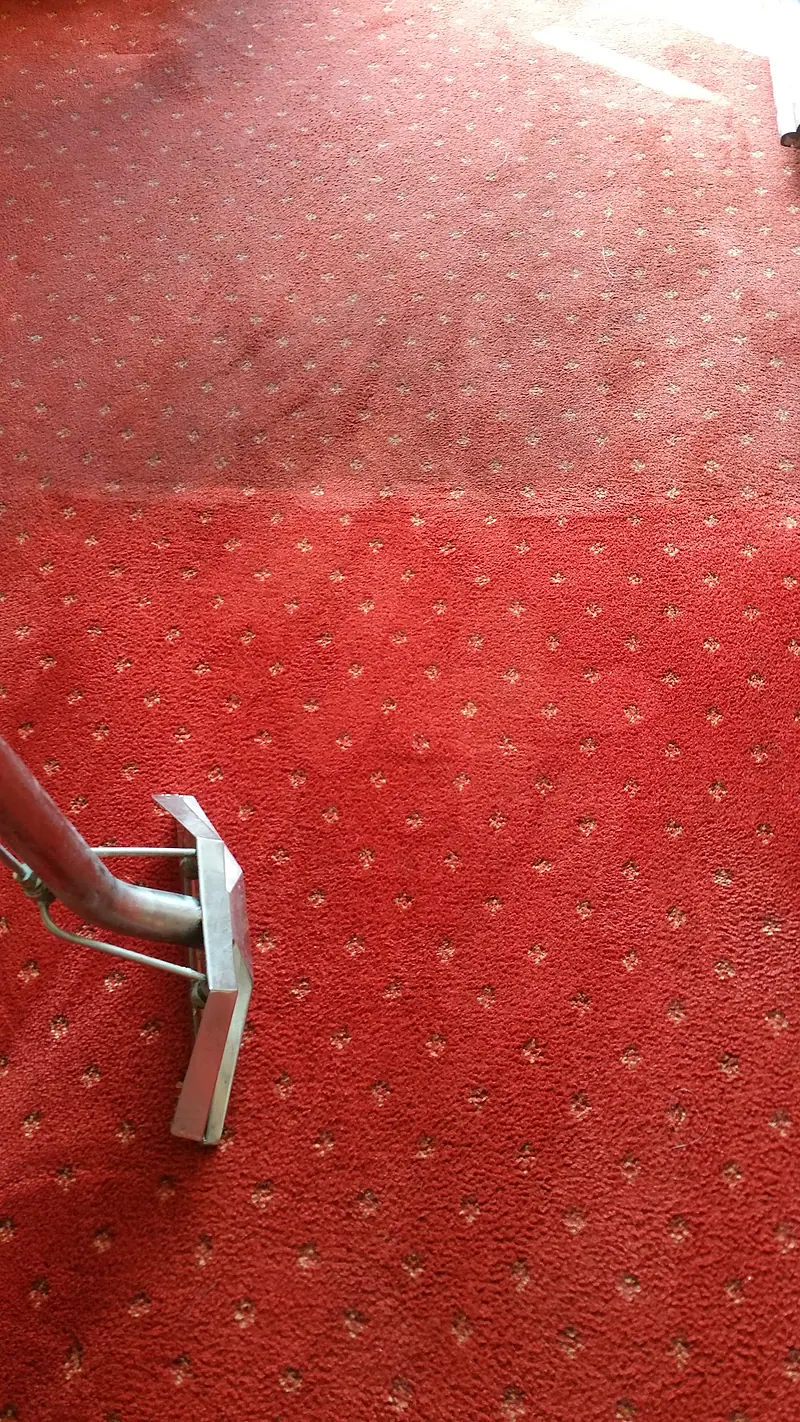
Terenure's housing falls into two broad groups. Towards Rathgar and along the older roads there are Victorian and Edwardian red-brick houses, with tall rooms, long halls and stairs that often carry a runner. Further out, towards Kimmage and Templeogue, there are 1930s semis and terraces: smaller rooms, a compact stairs, and often a good wool carpet that somebody chose to last.
Both have a lot of wool in them, and that's what this page is mostly about.
| Red-brick period house | 1930s semi | |
|---|---|---|
| Stairs | A runner, with bare timber showing at each side | Fitted carpet from wall to banister |
| Main carpet | Wool or wool blend, often older | Wool twist or wool blend, sometimes replaced with a synthetic |
| Rooms | High ceilings, cooler, slower to dry | Smaller and warmer, quicker to dry |
| Watch out for | Old dyes and painted or varnished stair margins | Heavy wear in a small hall that everyone crosses |
Runners on red-brick stairs
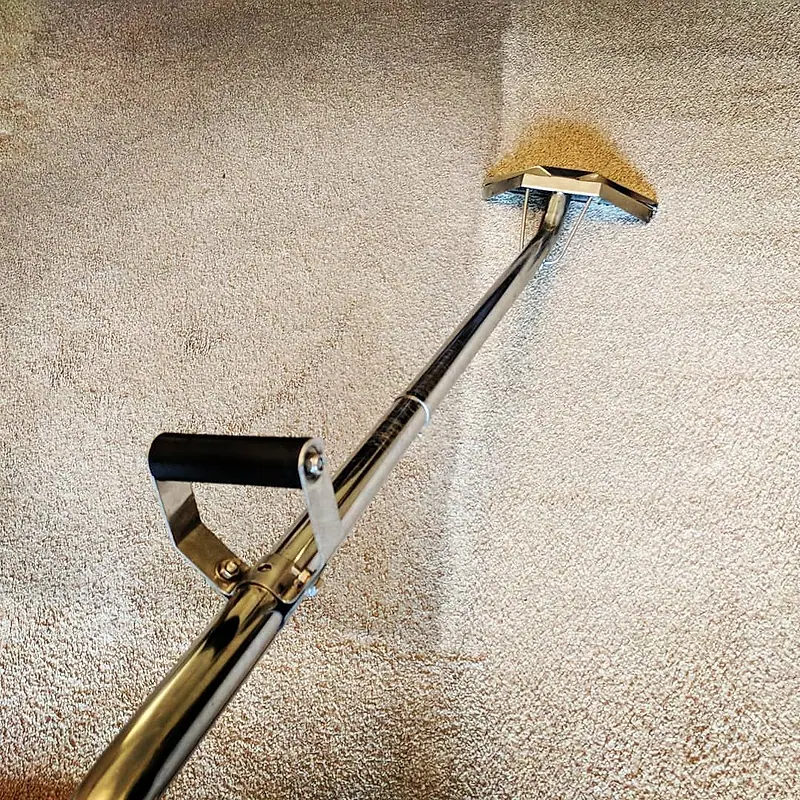
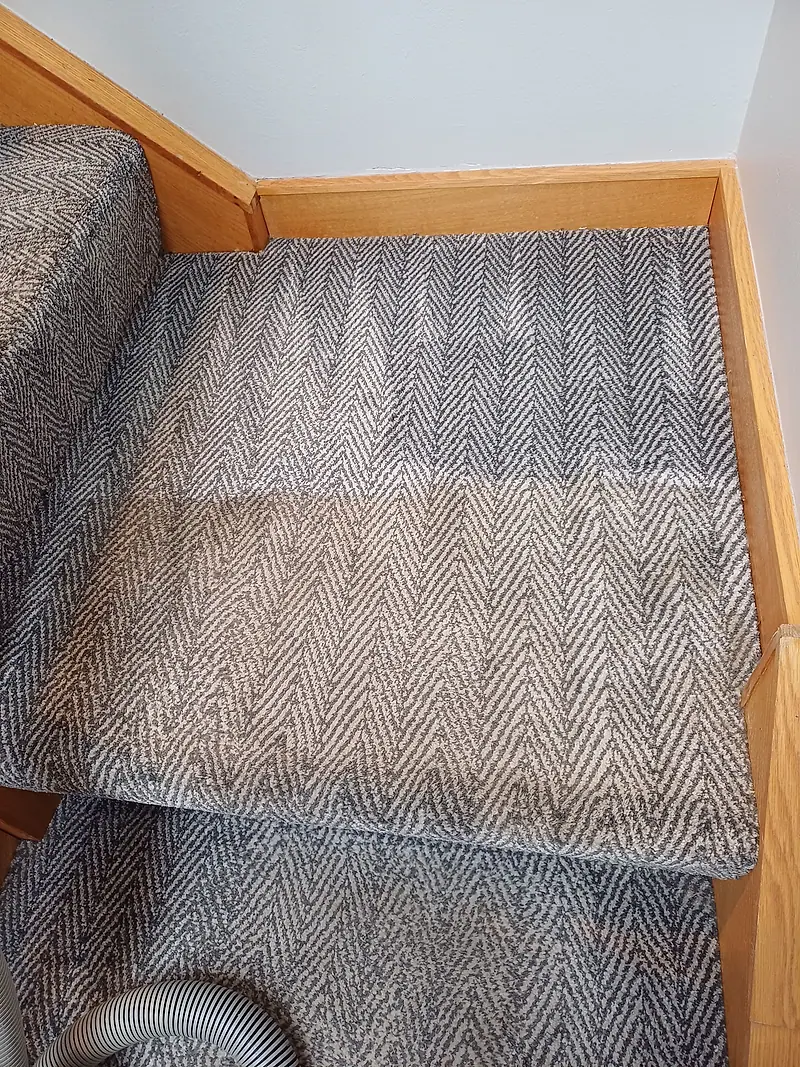
A runner leaves a strip of timber on each side of every step, and the job is to clean the fabric without soaking the wood beside it. We use the small hand tool on each tread and riser, keep the moisture low near the edges, and wipe any splash off the timber straight away.
Runners have their own quirks. The binding tape stitched along each side can be a different fibre from the runner itself, so it's tested separately. Striped and herringbone patterns hide dirt well, which means a runner can look fine until the test patch shows how much colour is underneath. And the nosing of each step, where the runner turns over the edge, carries the most grit and the most wear.
 spotless.ie
Why wool needs a lighter touch
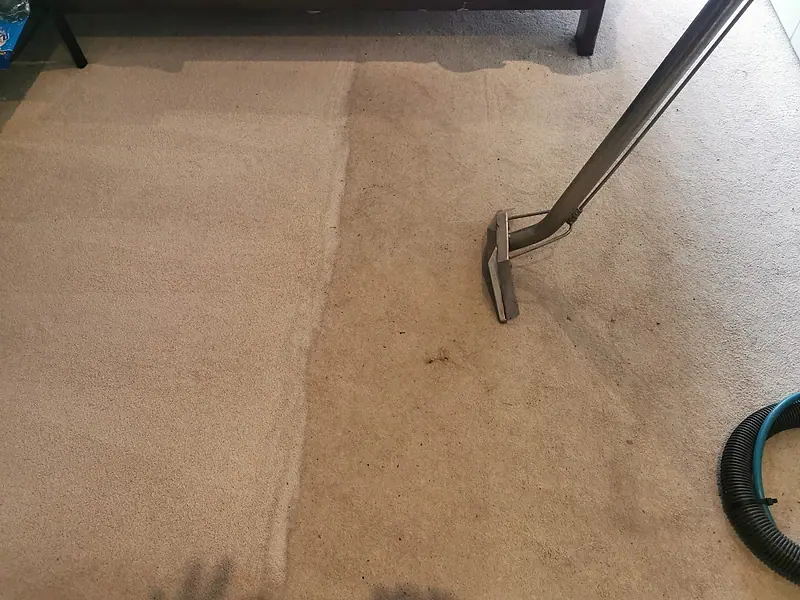
Wool is a forgiving fibre in some ways: it hides dirt, springs back and responds well to cleaning. But it doesn't like being soaked, or cleaned with the wrong chemistry. Too much water, or a solution that's too harsh, can leave brown marks as it dries, and very wet wool can pull back from the edges of a fitted carpet.
So with wool we:
- Test first, on a hidden corner or inside a wardrobe
- Use a solution suited to wool, not a general-purpose one
- Keep the water down, with more passes of the vacuum and fewer of the spray
- Speed up drying, with air movers and as much airflow as the room allows
Our carpet work is led by Ciprian, who is fully trained (Prochem carpet-cleaning course, 2018, certificate 2018/020).
Not sure whether your carpet is wool? Send a photo of the carpet, and the back of an offcut if you have one, on WhatsApp. We'll tell you what to expect and give you a fixed price, usually the same day.
1930s semis: small halls, hard wear
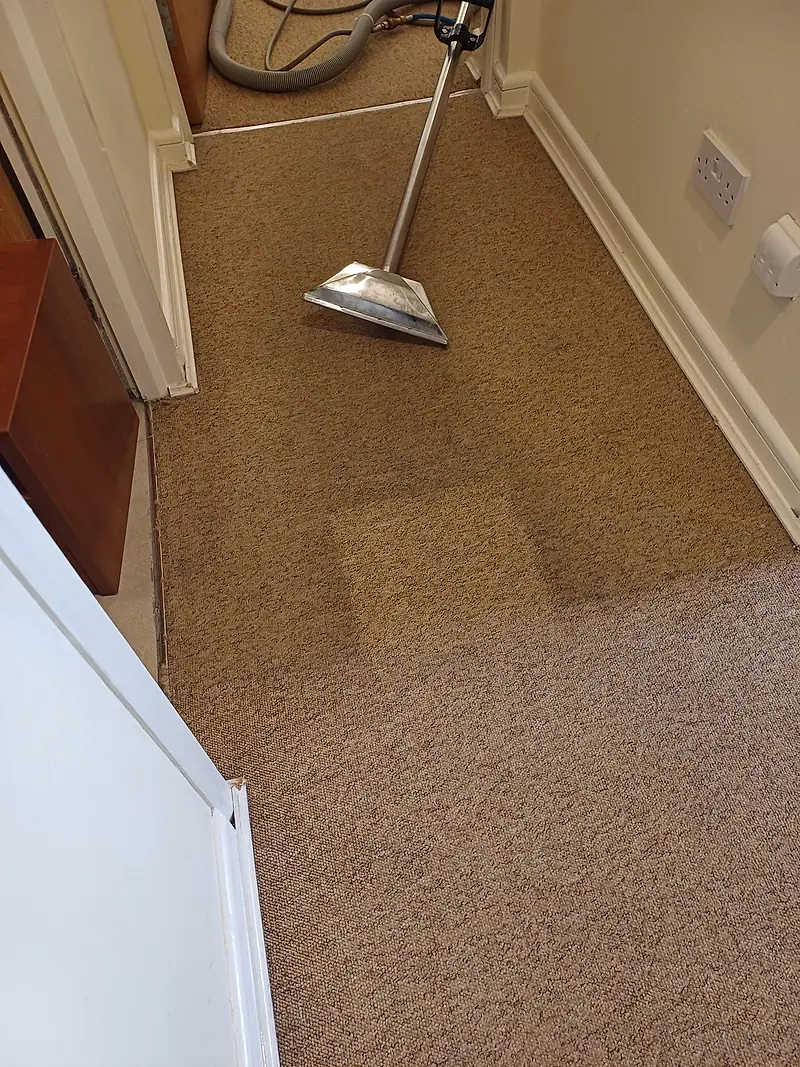
The 1930s houses towards Kimmage and Templeogue have a different problem from the red-bricks. The hall is small, the stairs rises straight from it, and every person who comes into the house crosses the same few square metres of carpet. That patch, and the bottom three or four steps, are usually the darkest carpet in the house.
They respond well to a pre-treatment and a slow, thorough rinse. Where the original wool has worn thin at the bottom step or by the front door, cleaning brings back the colour but can't replace pile that's gone.
Rugs on boards and over carpet
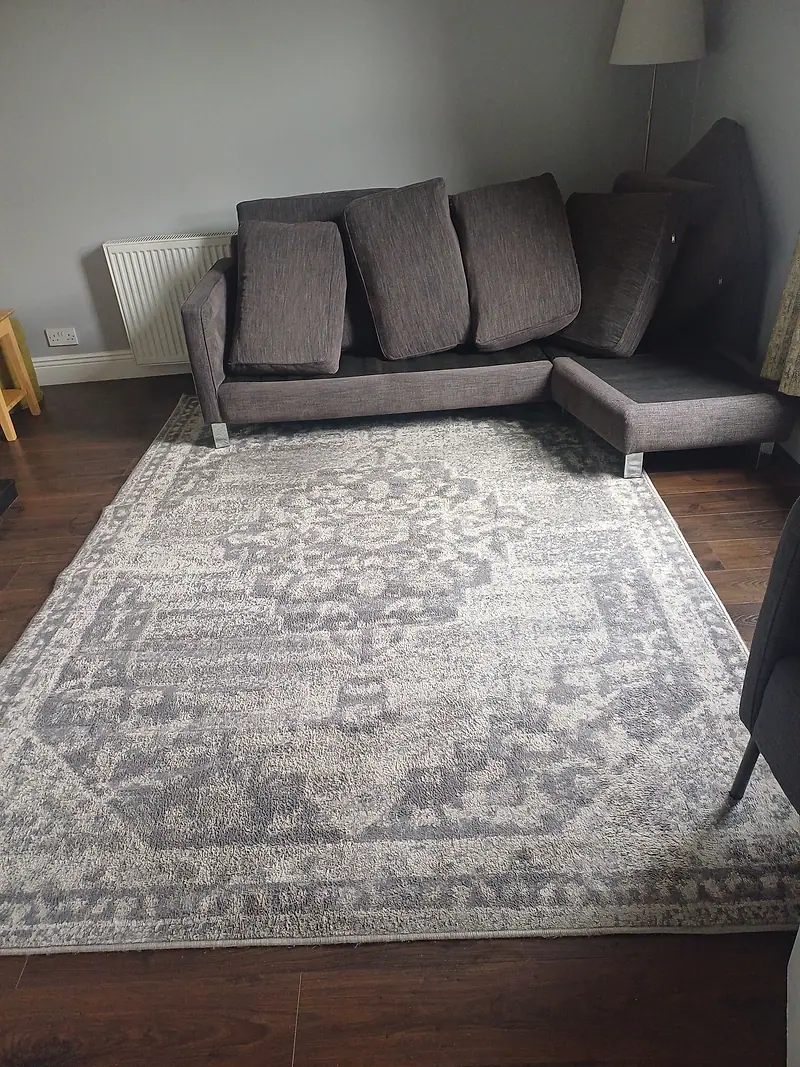
Plenty of Terenure homes have stripped or painted floorboards with a rug in the front room. Rugs are cleaned on site after a colour test, with the fringes handled separately. Don't put a rug back on timber until it's dry right through, so plan for it to stay rolled back for the afternoon. Silk and valuable hand-knotted rugs are better with a specialist, and we'll say so. See rug cleaning for the detail.
Drying in a tall, cold room
A red-brick front room with a high ceiling and sash windows is lovely to live in and slow to dry. Wool in a cold room can still be damp by evening. A few things help:
- put the heating on for a few hours after we leave
- open a window slightly, even in winter, so the moisture has somewhere to go
- leave internal doors open for airflow
- keep outdoor shoes off the carpet until it's dry
The smaller 1930s rooms dry faster, especially with the heating on. Our drying guide goes into more detail.
Terenure and around
We cover Terenure village and the roads around it, Rathgar, Templeogue, Kimmage and Harold's Cross. Our Dublin 6 carpet cleaning page covers the wider area, and Ranelagh has its own page. For armchairs and suites, see upholstery cleaning in Terenure, and for velvet and period chairs nearby, sofa cleaning in Rathgar. If you're clearing a Terenure house before a sale, our clearance team works locally too: see house clearance in Terenure.
The price depends on the rooms, the stairs and runner, any rugs and their condition, and it's fixed before booking. We're fully insured, and the method is explained in full on our Dublin carpet cleaning page.