
What usually comes out, and what might not
Every stain is different. What happens depends on what it is, what the carpet is made of, how long it's been there and what has already been tried on it. As a rough guide, from the stains we see most:
| Stain | What to expect | Why |
|---|---|---|
| Mud and soil | Usually comes out well | Mostly loose particles once dry |
| Coffee and tea | Usually comes out, especially if recent | Tannin stains respond well to the right pre-treatment |
| Red wine and fruit juice | Often comes out or fades to nothing | Older wine on wool can leave a faint shadow |
| Most food and soft drinks | Usually comes out well | Sugary drinks leave a sticky patch that needs a thorough rinse |
| Fresh pet accidents | Usually comes out, smell included | Caught before it reaches the underlay |
| Grease and cooking oil | Usually lifts with the right pre-spray | Polypropylene holds onto oily soiling |
| Old pet urine | May only lighten, and odour can return | It soaks into the backing and underlay |
| Curry, turmeric and spices | Often lightens; a yellow trace may stay | Strong natural dyes |
| Hair dye, ink and felt-tip | May only lighten | They're made to colour things permanently |
| Rust | Often lightens, sometimes clears | Needs a specific treatment |
| Bleach and strong cleaners | Won't change | The colour has been removed, so there's nothing to clean out |
| Burns from irons, candles or straighteners | Won't change | The fibre itself is melted or scorched |
We never promise a stain will come out before we've seen it and tested it. What you can count on is an honest view from your photo, and a careful attempt that stops before it does any harm.
Why we test before we treat
A stain treatment that works beautifully on one carpet can damage another. So before anything goes on a mark, we check four things:
- The fibre. Wool is a protein fibre and dislikes strong alkaline products, while nylon takes stains readily and polypropylene shrugs off water-based spills but clings to oil. The right treatment depends on which one you have.
- The dye. A little solution goes on a hidden spot and a white cloth is pressed onto it. If colour moves onto the cloth, the approach changes.
- The stain. Tea, blood, grease and dye each need a different chemistry. A spotter that lifts coffee can set a protein stain like milk or egg.
- What's been on it. Household sprays, washing-up liquid, vinegar and baking soda all leave something behind, and that changes how the stain reacts. Tell us everything that's been tried.
Stains are handled by Ciprian, who runs Spotless, or by his small crew. He's fully trained in carpet cleaning (Prochem course, 2018, certificate no. 2018/020).
 spotless.ie
How a stain is treated
Once we know what we're dealing with, the treatment follows a steady order:
- Lift what's dry. Solids are scraped off and the area vacuumed, so nothing gets smeared deeper.
- Apply a matched spotter. The product suits the stain and the fibre, and it's given time to work. Protein stains get a cool rinse first, because heat can cook them into the fibre.
- Work it gently. The spotter is eased in with a soft brush or tamped with a cloth, never scrubbed, so the pile doesn't fuzz or distort.
- Rinse and extract. Hot-water extraction flushes the loosened stain and the product out together, so no residue is left to attract dirt.
- Repeat or stop. If it's still improving, it gets another round. If it has stopped moving, more work would only risk the carpet.
When a stain comes back as the carpet dries
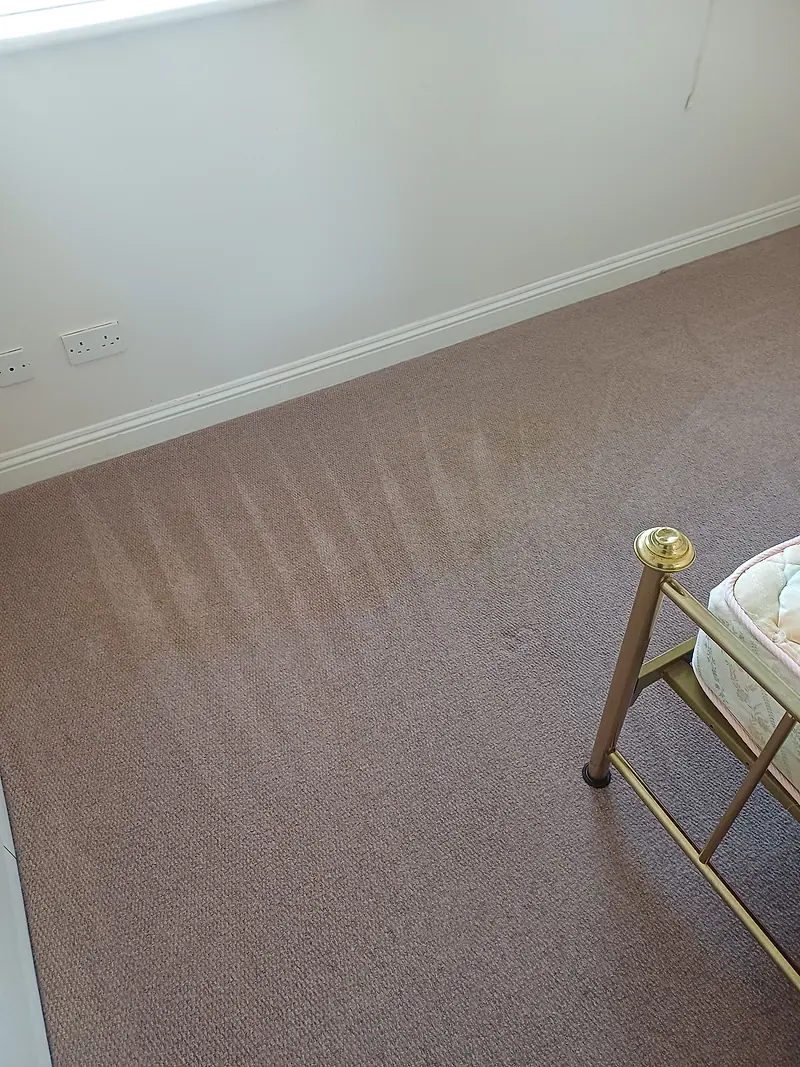
Now and then a mark that looked gone reappears a few hours later, often as a brownish ring. This is called wicking. Part of the stain was sitting deep in the backing or the underlay, and as the carpet dries from the top, moisture carries it back up to the tips of the pile.
It's most likely after a big spill, a whole glass rather than a drip, or after an earlier attempt that soaked the area. We reduce the risk by extracting thoroughly and drying fast with air movers. If a mark does come back once the carpet is dry, send us a photo. A second, lighter treatment often shifts it.
One stain, or the whole room?
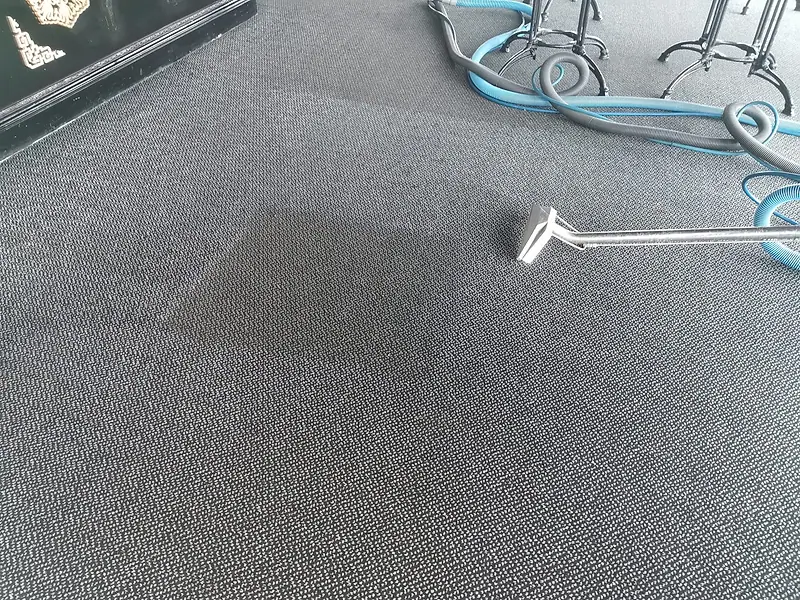
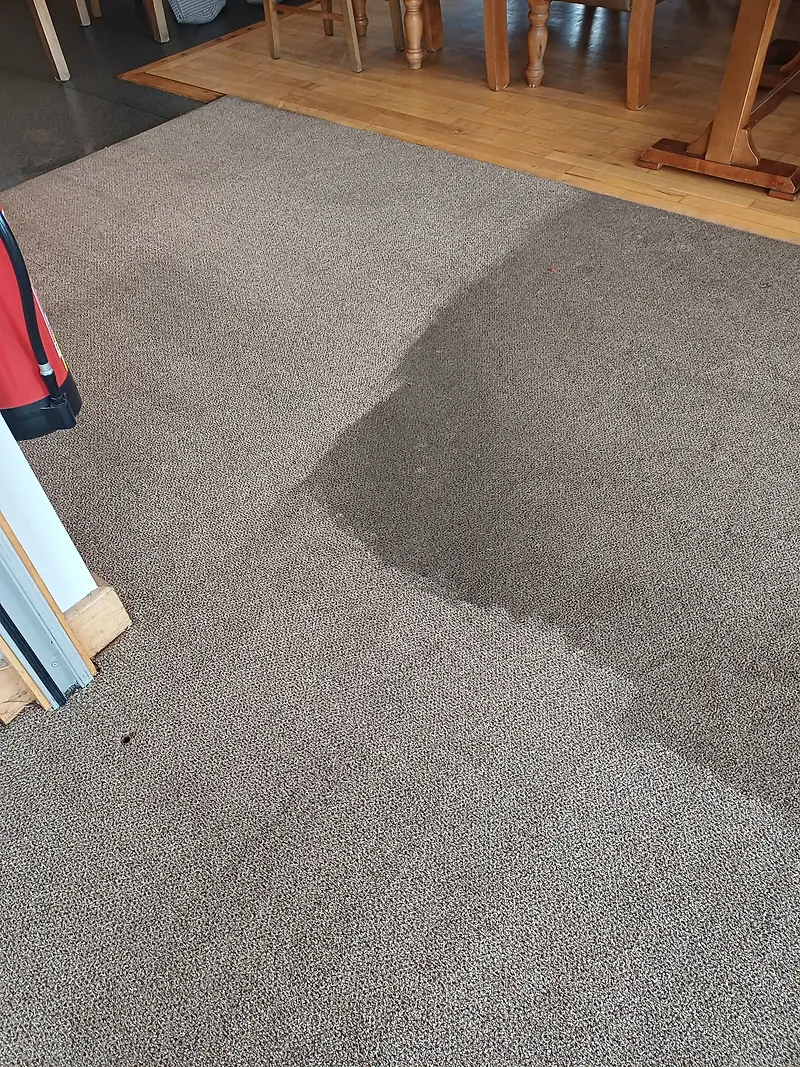
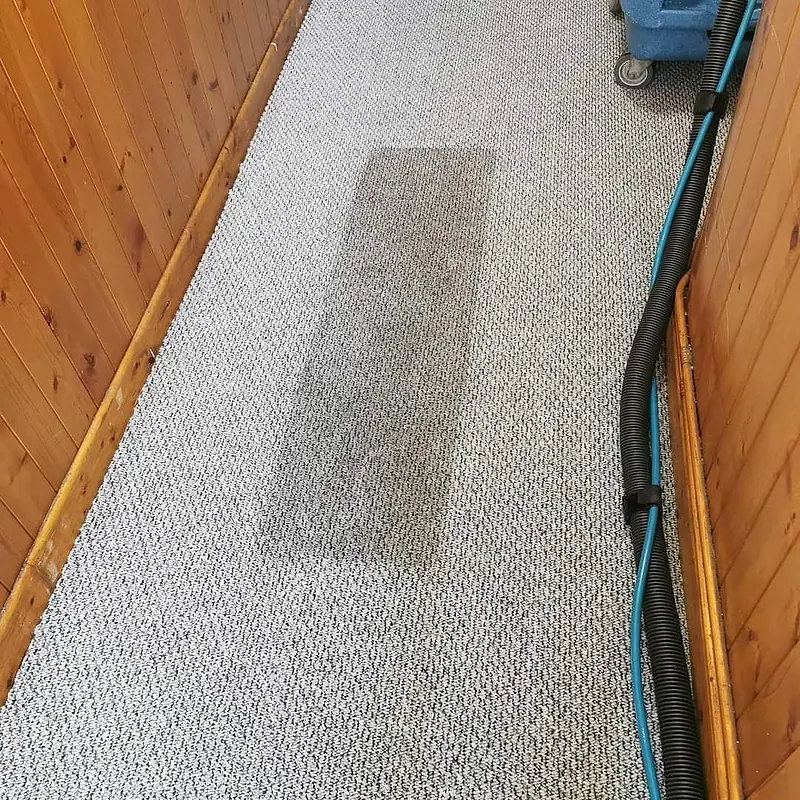
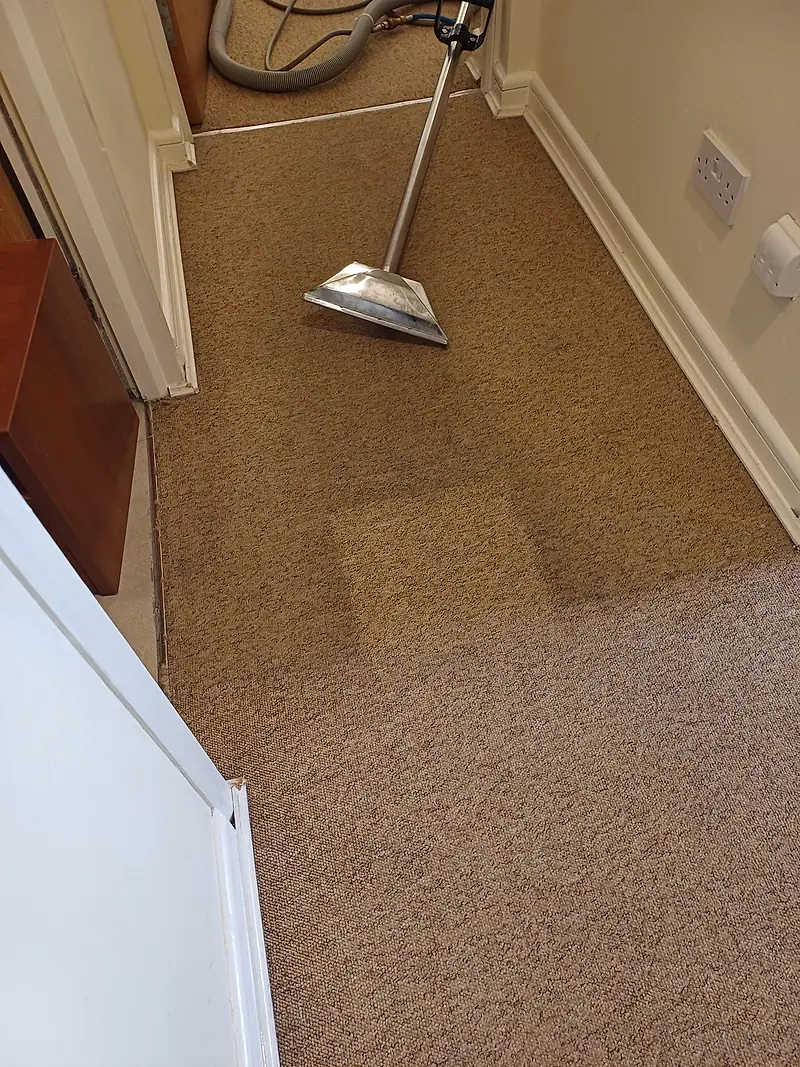
Cleaning a single spot in a carpet that hasn't been cleaned for years can leave a bright patch that looks like a stain in reverse. That's why we sometimes suggest doing the walking lane or the whole room along with the stain. We'll say which makes sense from your photos.
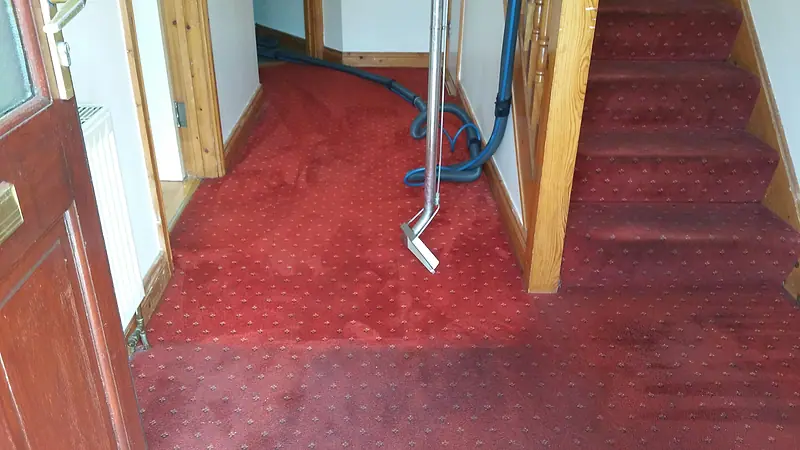
It works the other way, too. Some of what people call stains are really soiling: a grey patch in front of the armchair, a dark arc inside the door, a shadow where the dog lies. Those aren't single spills, and they respond far better to a full clean of the area than to spot treatment.
The same thinking applies to fabric furniture and rugs. Stains on sofas and armchairs are covered by upholstery cleaning, rugs need their own checks under rug cleaning, and marks on mattresses are dealt with under mattress cleaning.
Not sure if your stain will shift? Send a close-up of the stain in daylight and a photo of the room on WhatsApp, with a note of anything that's been used on it. You'll get an honest answer and a price, usually the same day.
Before we arrive
What you do in the meantime matters more than people think:
- Blot, don't rub. Soak up what you can with a white cloth, working from the outside in. Our guide to red wine, coffee and tea on carpet walks through the first few minutes.
- Stick to cold water. Hot water can set protein stains, and bleach removes colour for good.
- Stop at one attempt. Layering product on product is what turns a treatable stain into a stubborn one. Our page on DIY versus professional carpet cleaning explains why residue causes trouble.
- Note what you used. Keep the bottle or photograph the label.
Pet accidents have their own quirks, especially once urine reaches the underlay. See pet carpet cleaning and our guide to pet accidents on carpet. Wool carpets need gentler products than synthetics, explained on our wool carpet cleaning page.
Stains are usually priced as part of cleaning the room they're in, through our carpet cleaning service in Dublin. Heavy or stubborn stain work can add time, so a photo of each mark helps us give you an accurate figure before we come out.