
Why Ireland has a moss problem
Moss and algae love exactly what Irish weather offers: mild temperatures, frequent rain and long spells when surfaces never quite dry out. Add shade from trees, walls or the house itself, and a north-facing drive, path or roof can go from clean to green surprisingly quickly.
Moss grows most in the cool, damp months, from autumn through to spring. In a dry summer it often turns brown and crispy, which can make it look as if it's dying. It isn't. It greens up again as soon as the rain comes back.
Know what you're dealing with
Not everything green, red or black is the same thing, and the difference matters for how well it comes off:
| Growth | What it looks like | Where it grows |
|---|---|---|
| Moss | Green cushions, brown when dry | Paving joints, edges of drives, roofs, wall tops, steps |
| Green algae | A slimy green film, slippery when wet | Paths, patios, decking, shaded walls and steps |
| Red algae | Rusty orange to red-brown staining | Render, walls and paving, often on the shadier side |
| Lichen | Crusty grey, yellow or black spots | Stone, concrete, patios and roofs |
Moss and green algae sit mostly on top of the surface and usually come off well. Red algae carries a pigment that soaks into porous materials, so it may need more than one go to clear fully. Lichen is the slowest of all, because it anchors into the surface itself; even once the growth is gone, a ghost of each spot can linger for months.
Moss and algae removal, surface by surface
Driveways and block paving
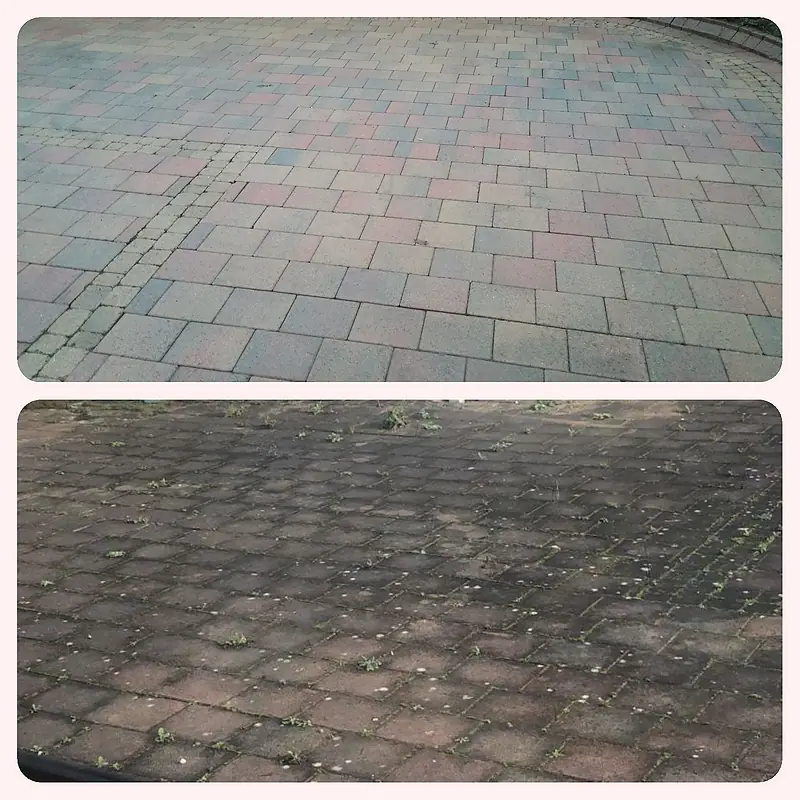
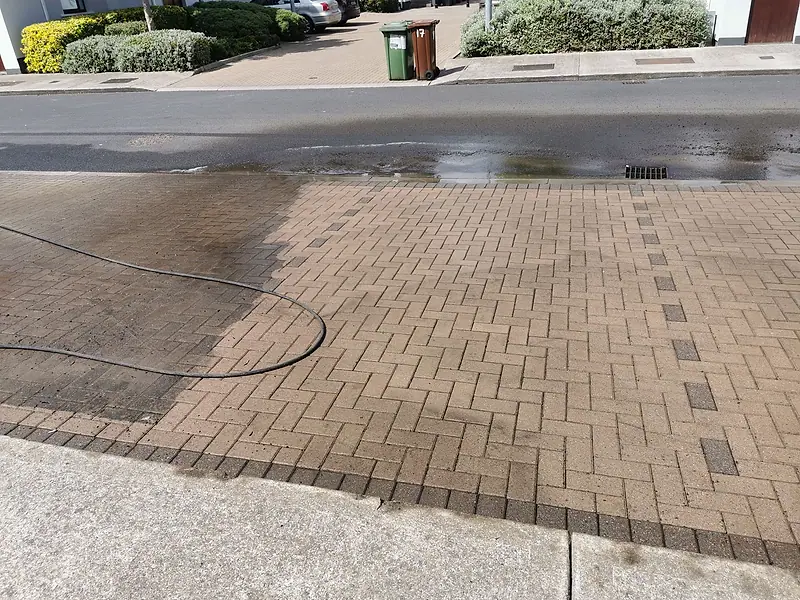
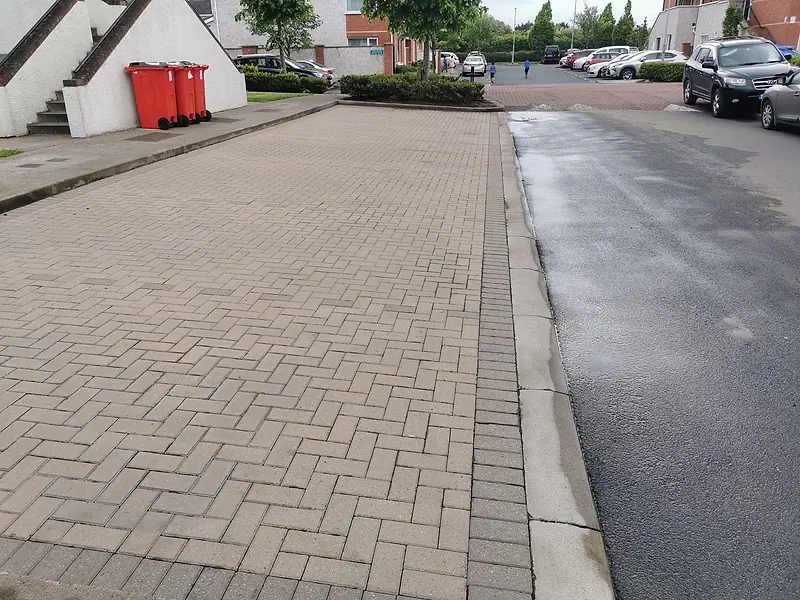
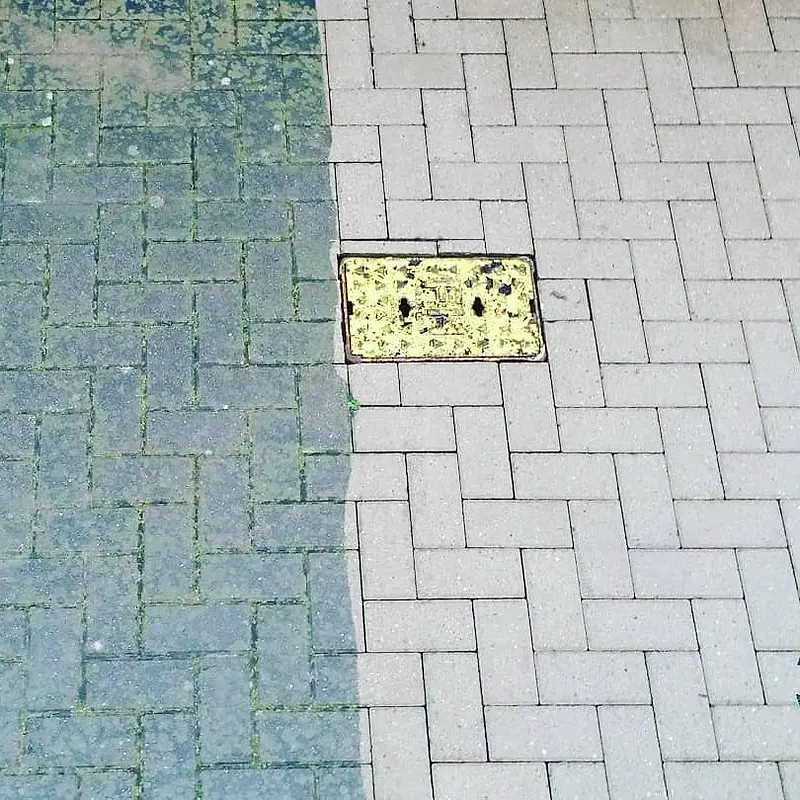
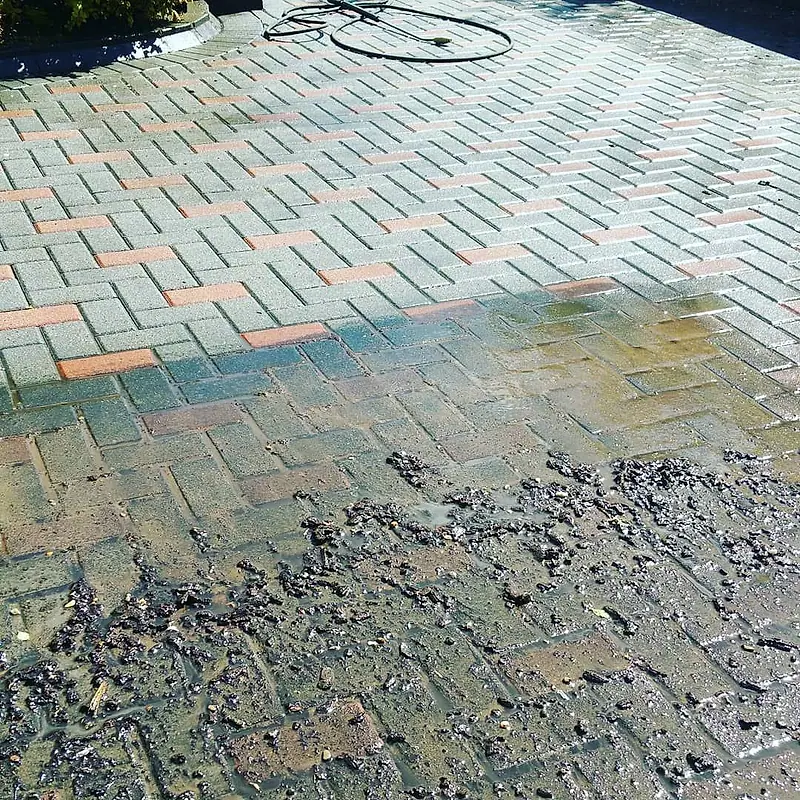
Moss roots into the joints between blocks and along the edges, where soil and leaves collect. Washing lifts it out, along with the dirt and some of the jointing sand. Re-filling the joints afterwards helps keep weeds and moss out, and we'll advise on that when we quote. There's more on our driveway cleaning page.
 spotless.ie
Patios, paths and steps
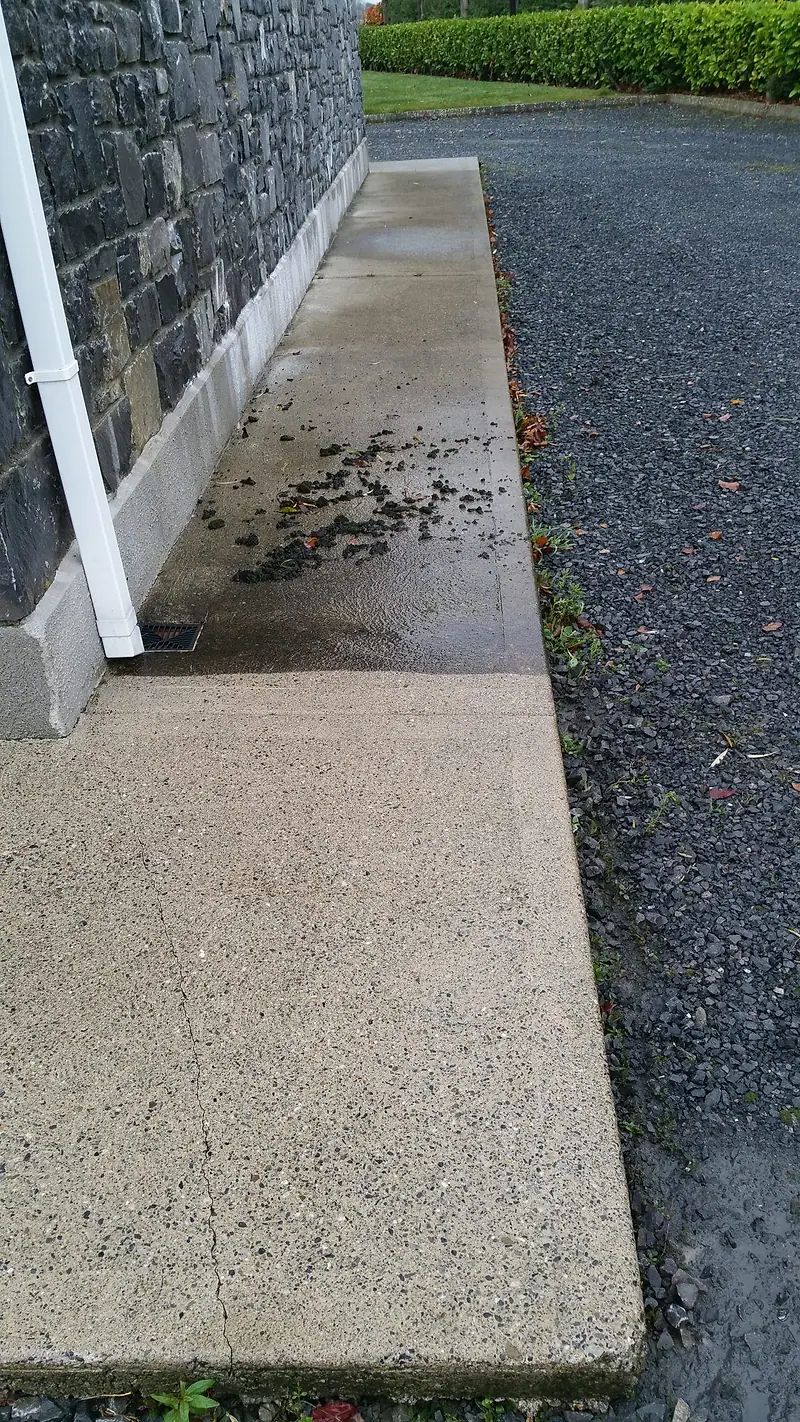
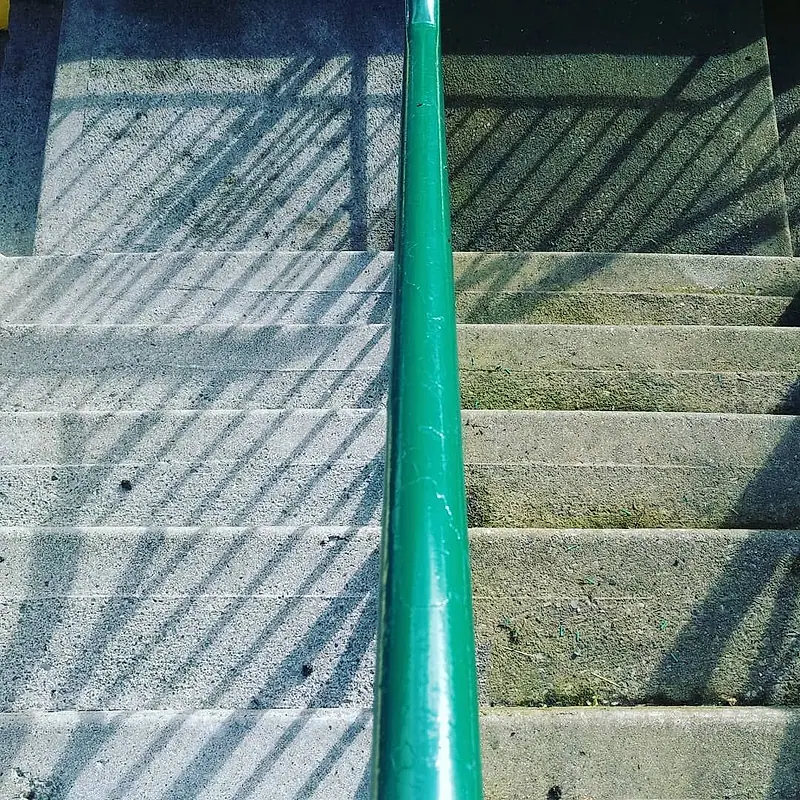
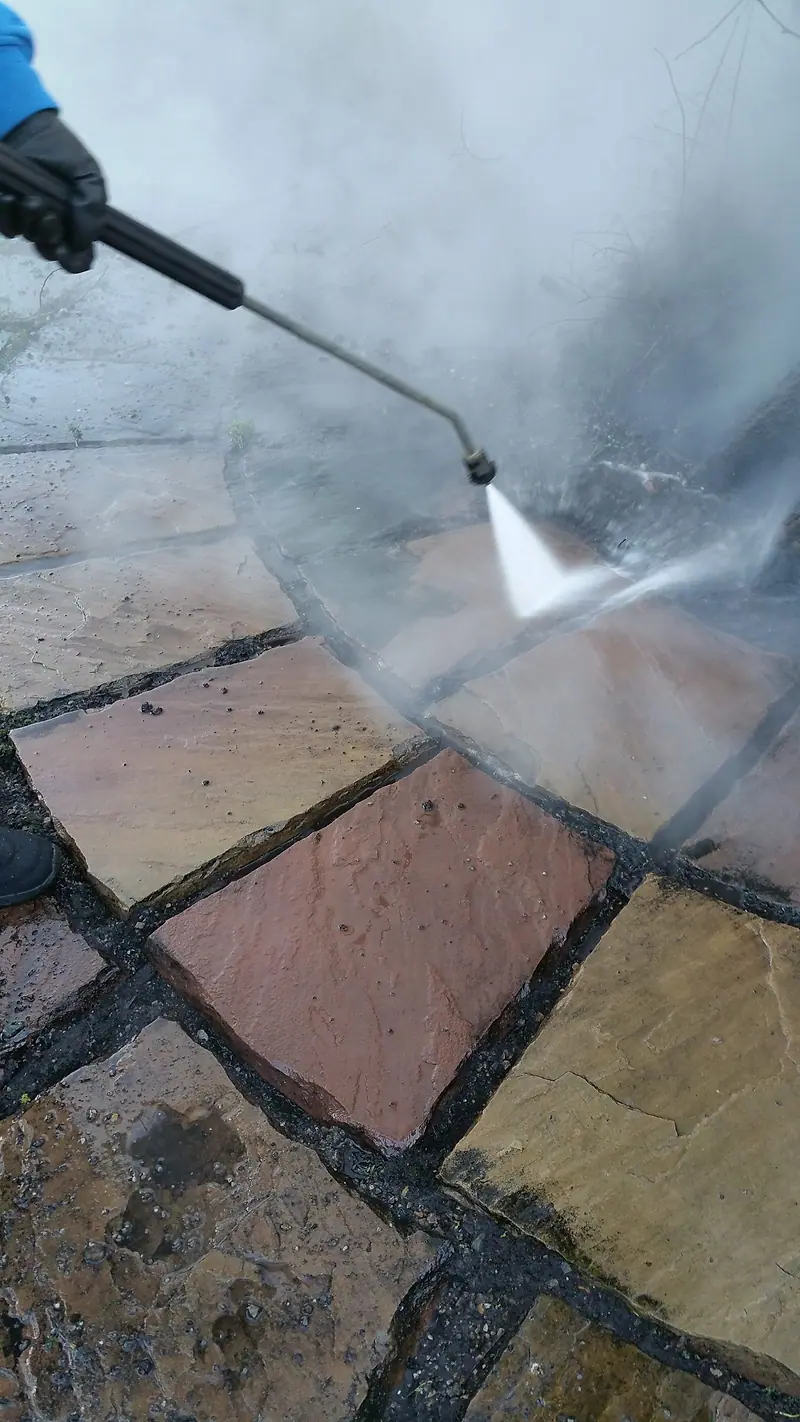
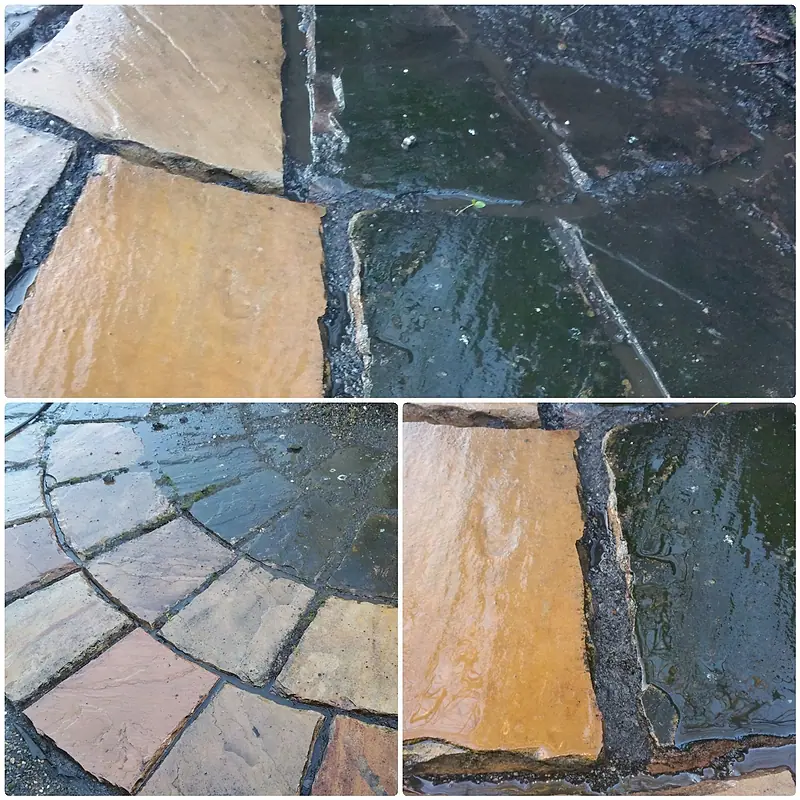
Green algae turns slabs, paths and steps slippery, which makes it a safety issue as much as a cosmetic one. Porous slabs like sandstone also pick up red and black staining. See patio cleaning for slabs, and stone, brick and concrete cleaning for steps, paths and garden walls.
Walls and render
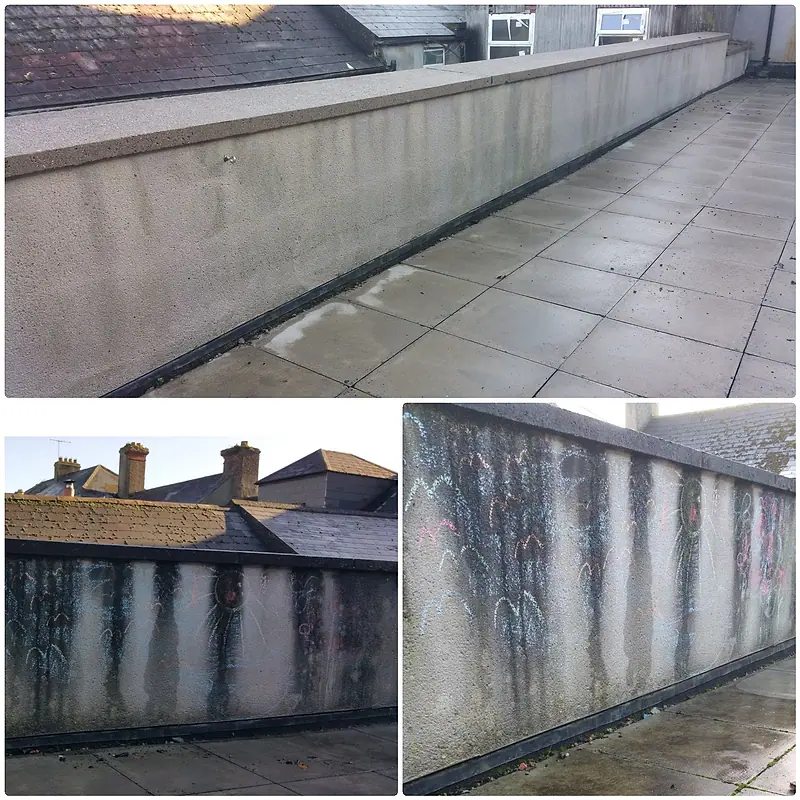
High pressure can damage render and painted walls, so we use soft washing instead: low pressure, matched to the surface. Red algae streaks and green staining under windowsills and around leaking downpipes are typical on Irish walls, especially on the side that gets least sun.
Roofs and gutters
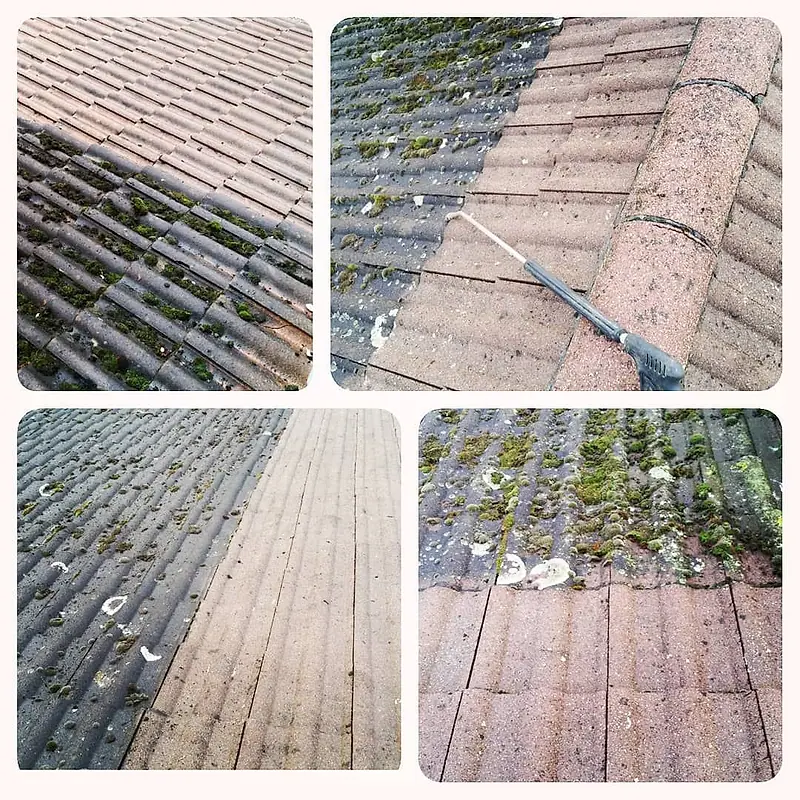
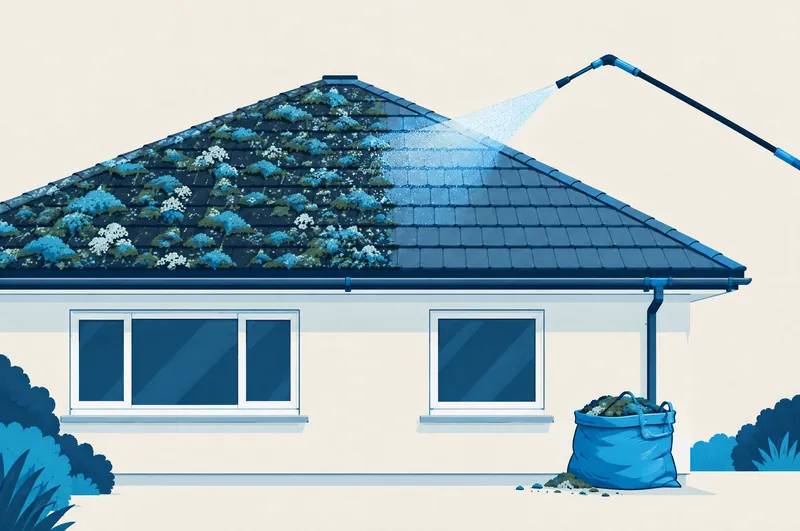
Moss on roof tiles holds water against the roof. As it thickens it can work its way under tile edges, and clumps that break off end up in the gutters, where they block downpipes and cause overflows. Roofs need a careful approach, and we remove moss without blasting the tiles. See roof cleaning for how it works. Because roof moss ends up in the gutters, it makes sense to have the gutters cleaned at the same time.
Decking
Algae makes timber and composite decking dangerously slippery, and too much pressure ruins softwood. See decking cleaning.
What a moss removal visit includes
Whatever the surface, the job is more than spraying the green bits:
- Moss and algae lifted from the surface, the joints and the edges, not just the open middle
- The debris dealt with: the soil and leaf litter the moss was growing in is rinsed off rather than left in the corners
- The right method for each surface: hot-water pressure washing on paving and concrete, a low-pressure soft wash on render, and no blasting on roof tiles
- Flower beds, lawn edges and front doors kept clear of spray and debris while the moss comes off
- Honest aftercare advice on joints, drainage and the things that will bring it back
If there are several surfaces, say a drive, a side path and the front steps, we can do them all on one visit and price them together.
Why moss comes back, and how to slow it down
We'll be straight with you: no wash leaves a surface that stays clean forever. Moss and algae reproduce by microscopic spores carried on every breeze, so new ones land constantly, and if the conditions that let them grow are still there, they'll return.
What brings it back:
- Shade and damp that don't change
- Spores left behind in joints, pores and cracks
- Leaves, soil and grit that give new growth somewhere to root
- Open joints in paving, which hold water and debris
- Water from above: overflowing gutters, dripping trees and poor drainage
What slows it down:
- sweep leaves and debris off regularly, especially in autumn
- keep the joints in paving filled
- cut back branches that shade the surface
- make sure gutters and downpipes aren't overflowing onto walls and paths
- give paths and steps a brush before new growth gets established
On paving and concrete, heated water on its own usually clears the growth with no product needed. If regrowth is your main worry, we'll give you our honest advice on whether a follow-up treatment is worth it for your surface.
When to book
We remove moss all year round, but timing makes a difference:
- Spring clears the winter's growth before you want to use the garden.
- Late summer and early autumn gets on top of it before the wet months, when growth takes off again.
- Winter is fine for most ground-level work, but not in frost, when water left on the surface can freeze.
Want a price for moss removal? Send photos of the moss or algae, the surface it's on and your area on WhatsApp. We'll reply with a fixed price, usually the same day.
How moss removal is priced
A light green film on a sunny path is a quick job. Thick cushions packed into every joint of a shaded drive, or moss on a roof that needs access equipment, take a lot longer. So the main things that shape a moss removal price are how much area there is, what it's made of, how established the growth has become, whether any of it is at height, and how many separate surfaces you want done.
A photo of each area with a rough idea of its size lets us work it out, and the figure we give you is fixed before anything is booked. For more on what pushes a price up or down, read our guide to power washing costs, and our power washing page lists everything we clean.