
What soft washing is
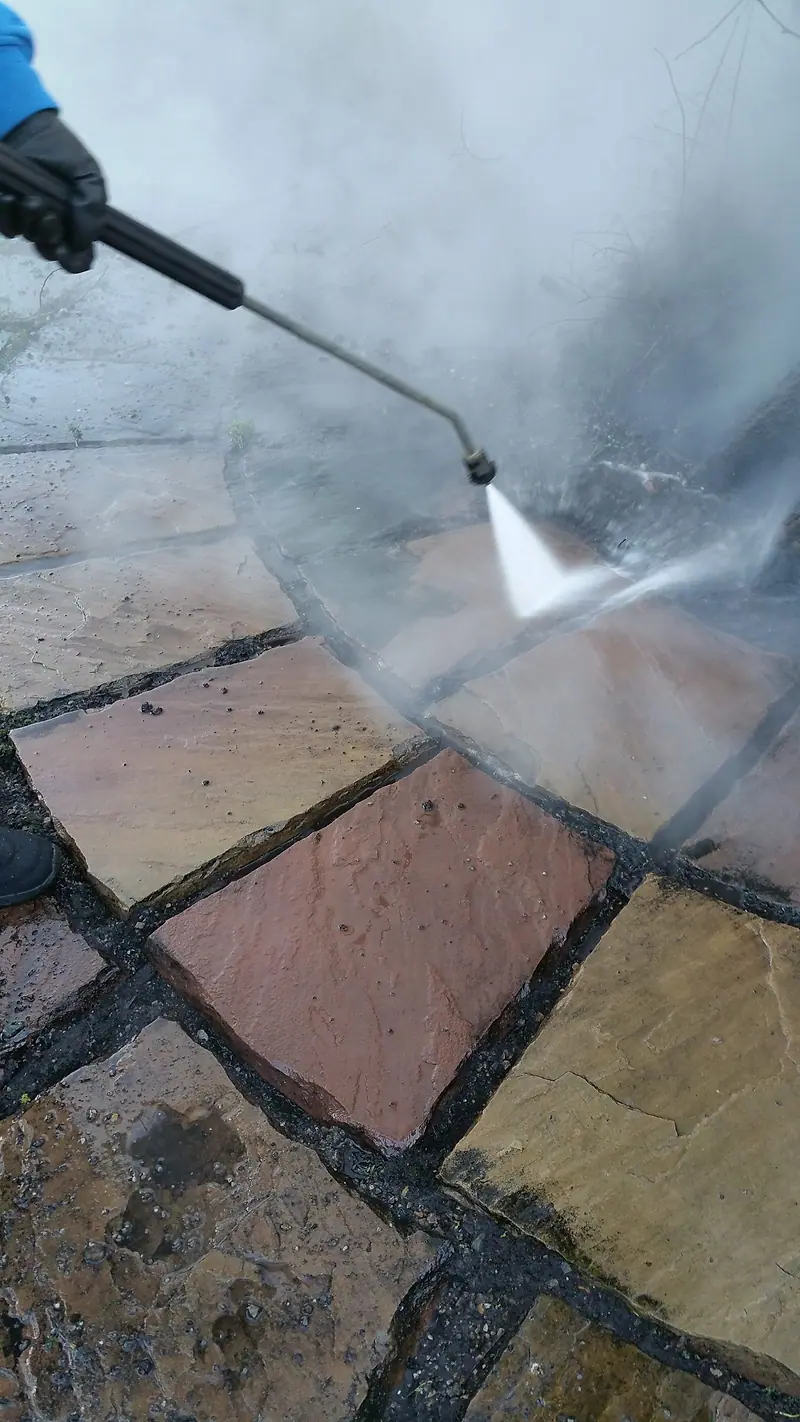
Soft washing is the opposite of blasting. A pressure washer uses a powerful jet to knock dirt off a surface. A soft wash keeps the pressure low, applies a suitable cleaning solution gently, gives it time to work on the algae and grime, and then rinses it away.
The result is a clean surface without the damage high pressure causes on anything soft, painted, porous or fixed in place with joints. It also tends to last longer, because it deals with the growth itself rather than only the surface layer of dirt.
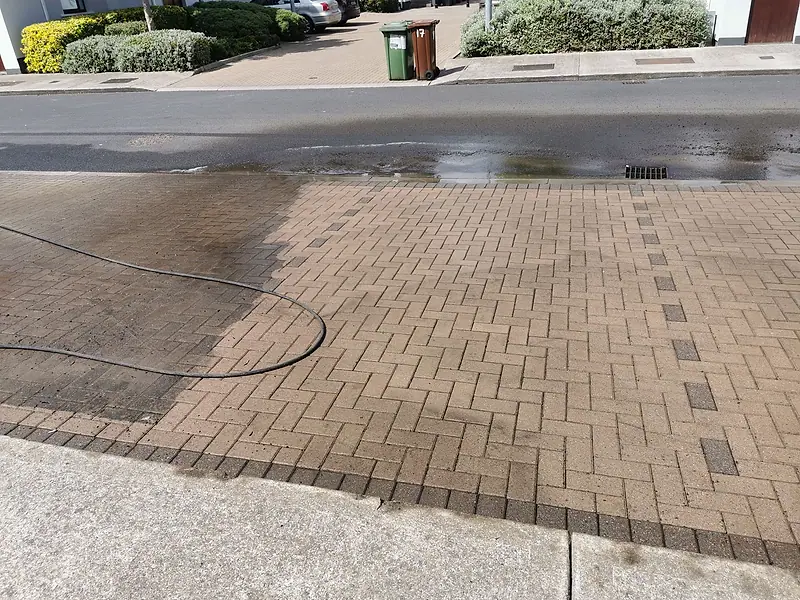
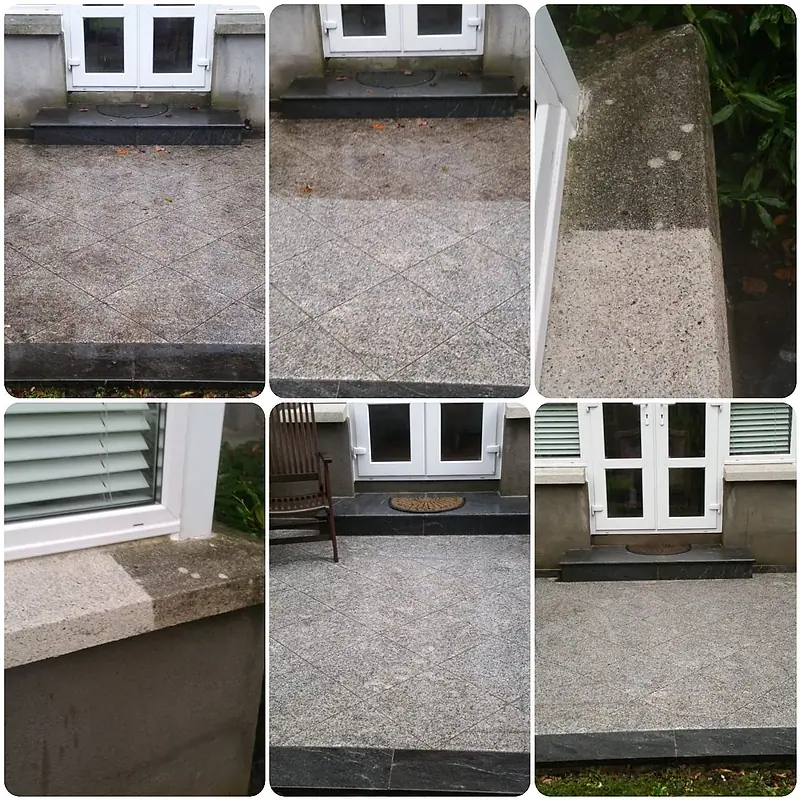
We use both methods, and choosing between them is the most important decision on any job. Hard paving gets a hot-water pressure wash; walls, render, roofs and painted finishes get a soft wash. Plenty of houses need both: the driveway and patio pressure washed, the walls soft washed.
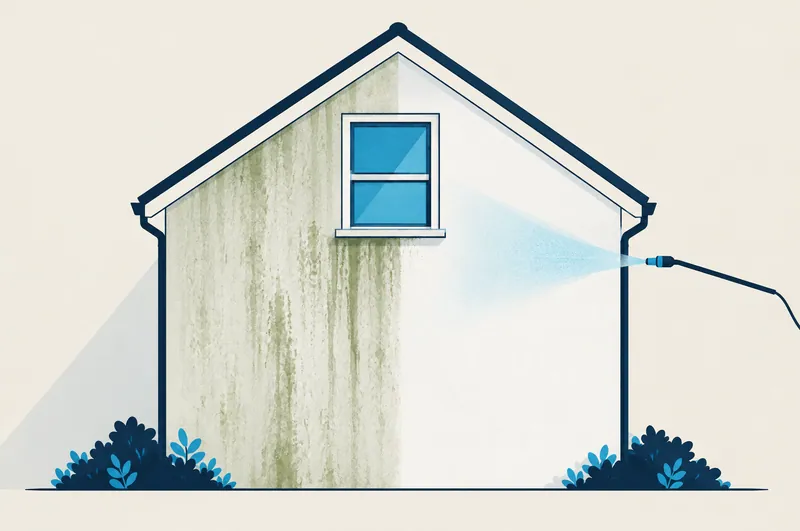
When soft washing is better than pressure
| Surface | Why high pressure is a bad idea |
|---|---|
| Render (sand and cement, painted or through-coloured) | Can crack, scar or erode the finish and drive water into hairline cracks |
| Pebble-dash | Knocks the stones out, leaving bald patches |
| Painted masonry | Lifts and strips sound paint along with the dirt |
| Cladding (uPVC, composite, painted boards) | Forces water behind the panels and through the joints |
| Roof tiles and slates | Strips the tile surface, cracks tiles and pushes water under the overlaps (see roof cleaning) |
| uPVC fascias, soffits and gutters | Scratches the surface and drives water into vents (see fascia and soffit cleaning) |
If a surface is hard, dense and unpainted, like concrete paving or granite, a pressure wash is usually the better choice. Brick, sandstone and older stonework sit in between and are judged case by case on our stone cleaning page.
Green walls and streaks under sills
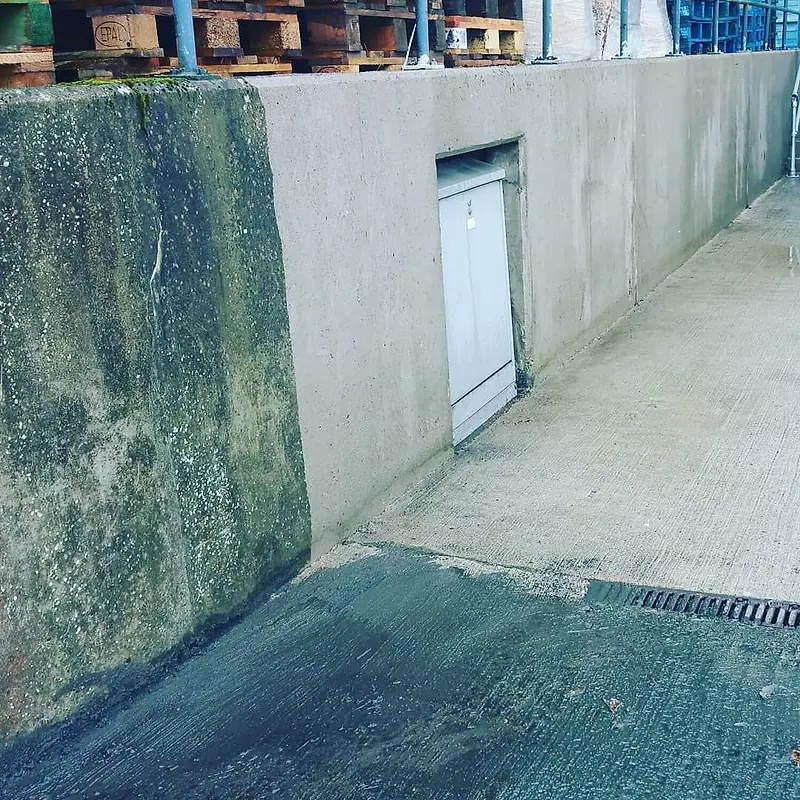
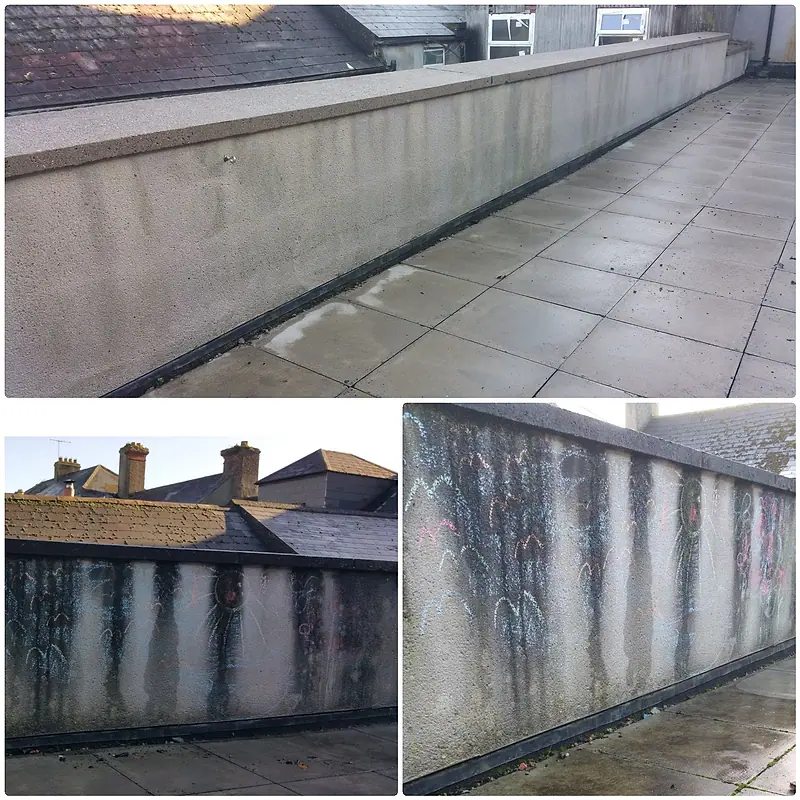
Most walls go green in the same places. Under window sills, rain runs off the edge and down the wall, carrying dirt and keeping a strip of render damp, so you get dark or green streaks below every window. Under gutters, overflow does the same on a larger scale. North-facing gables, walls behind hedges and anything near trees go green across the whole surface.
On some houses the staining is orange or rusty red rather than green. That's usually a type of algae too, not rust, and it's common on render and painted walls in damp, sheltered spots.
Soft washing lifts all of these. Some streaks are gone on the day; deeper staining can keep fading over the following weeks as the treatment finishes working and the rain rinses the wall. If overflowing gutters caused the streaks, it's worth having the gutters cleared at the same time, or they'll come straight back.
 spotless.ie
Render, pebble-dash and cladding
Render is the most common wall finish on Irish houses. Traditional sand-and-cement render is often painted; newer houses and extensions may have through-coloured render where the colour is in the material itself. Both clean well at low pressure, and both can be damaged by a jet.
Pebble-dash, or dashing, is on countless Irish houses, from older estates to bungalows. It hides dirt well for years, then suddenly looks tired all at once. It's the surface that suffers most from pressure washing, because the stones come loose, so it's a soft wash only.
Cladding on extensions, apartment blocks and commercial buildings collects a grey film and green growth along the panel edges. A low-pressure wash cleans the face of the panels without forcing water through the joints behind them.
Painted walls, from a garden wall to the whole front of a house, are a common reason people think they need to repaint. Often they don't. A wall that looks grey and green can come up close to its original colour with a soft wash, as long as the paint underneath is sound. If it isn't, we'll tell you, and cleaning before you paint is still the right first step.
Protecting plants, windows and the garden
Soft washing uses a cleaning solution, so we're careful with everything around the wall:
- Plants and beds near the wall rinsed down before and after.
- Drains protected, and run-off managed.
- Windows, doors and sills rinsed so nothing dries on the glass.
- Paths and patios below rinsed at the end.
- Pets and children kept away until we tell you it's fine.
Tell us about ponds, vegetable beds, climbing plants or anything delicate when you send photos, and we'll plan the job around them.
Want a soft washing price? Send photos of each wall on WhatsApp, with a close-up of the staining. We'll come back with a fixed price, usually the same day.
What soft washing won't fix
Soft washing is a clean, not a repair, and it's better to know its limits before you book:
- Flaking or failed paint will still be flaking, and some loose flakes may come away
- Cracked or blown render will still be cracked, and may be easier to see once it's clean
- White salty deposits (efflorescence) come from moisture inside the wall and need the cause dealt with
- Rust stains from metal brackets and fixings need specific treatment and may not fully clear
We'll point out anything like that from your photos, so you can decide whether to sort it before or after the clean.
How soft washing is priced
Every wall is priced on:
- Area: how many walls, and how high
- Surface: render, pebble-dash, painted masonry or cladding
- Condition: a light green film or years of heavy staining
- Access: extensions, conservatories, side passages and anything below the wall
- Extras: gutters, fascias, a roof clean or paving on the same visit
You'll get a fixed price before anything is booked. See the power washing overview for everything else we clean, and our power washing guide for more on pressure versus soft washing.