 spotless.ie
Three materials, three approaches
These surfaces turn up all over a house: the granite steps up to a Georgian front door, a red-brick garden wall, the concrete path round the side, a set of steps down to the back garden. They all go green and dark in Irish weather, but they don't all take the same treatment. Concrete is tough. Old brick and the lime mortar holding it together are not. Getting it right is mostly about knowing which is which.
| Surface | Where you'll find it | How we approach it |
|---|---|---|
| Granite | Georgian and Victorian front steps, sills, kerbs, gate piers | Very hard. Hot water does most of the work, but tooled faces hold dirt in every pit |
| Limestone | Steps, sills, older walls and paving | Softer than granite and damaged by acid cleaners, so it gets a gentler wash |
| Brick | Garden and boundary walls, house fronts | Hardness varies a lot. Old soft brick and lime mortar need low pressure |
| Concrete | Paths, steps, yards, garden walls, garage aprons | Takes hot-water pressure washing well. Algae, tyre marks and rust are the usual problems |
Granite steps and Georgian stonework
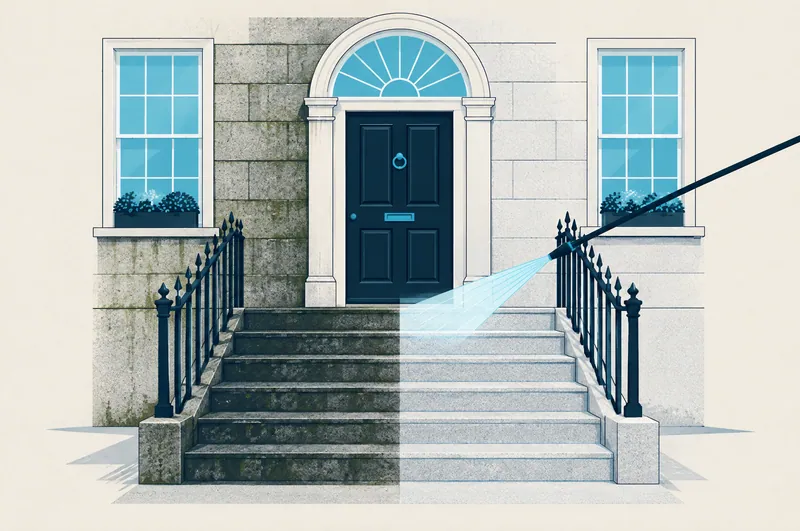
Dublin's Georgian terraces and squares, and plenty of later houses, have granite front steps, granite sills and granite kerbs. Granite is very hard and copes well with hot water. What makes it tricky is the finish: many old steps are tooled or rough-dressed, and every tiny hollow holds dirt, algae and the black spots of lichen.
Hot water and patient work bring most granite back to a clean, even grey. Black lichen spots are the exception. On a tooled step the lichen sits down in the chisel marks, out of reach of anything gentle enough to be safe on old stone, so some spots can stay visible as faint marks for a while before the weather finishes them off. If we see it in your photos, we'll tell you.
If your house is a protected structure
Many period houses in Dublin and elsewhere are on their local authority's Record of Protected Structures. Cleaning the front of a protected structure can affect its character, and aggressive cleaning does lasting harm to old stone and brick. If your house is protected, talk to the council's conservation officer before any cleaning of the front, and share what they say with us so we can plan the job around it.
Brick walls, garden walls and house fronts
Brick goes green on north-facing sides, black under dripping gutters and patchy where plants have grown against it. A wash brings back the colour, but older brickwork needs care:
- Soft and handmade brick can lose its hard outer face if the pressure is too high, which lets water in and speeds up decay.
- Lime mortar, used in most older houses, is meant to be softer than the brick. A strong jet will wash it straight out of the joints.
- Cracked or loose pointing gets worse under any pressure. We look first, and tell you before we start if the joints aren't up to washing.
White, powdery marks on brick are usually efflorescence: salts carried to the surface by water. Soaking a wall can bring more salt out as it dries, so we'll look at it before deciding whether washing is the right answer at all.
Rendered, pebbledashed and painted walls are a different job. For those, low-pressure soft washing is usually the better method. If a wall has been tagged, see graffiti removal.
Concrete paths, steps and yards
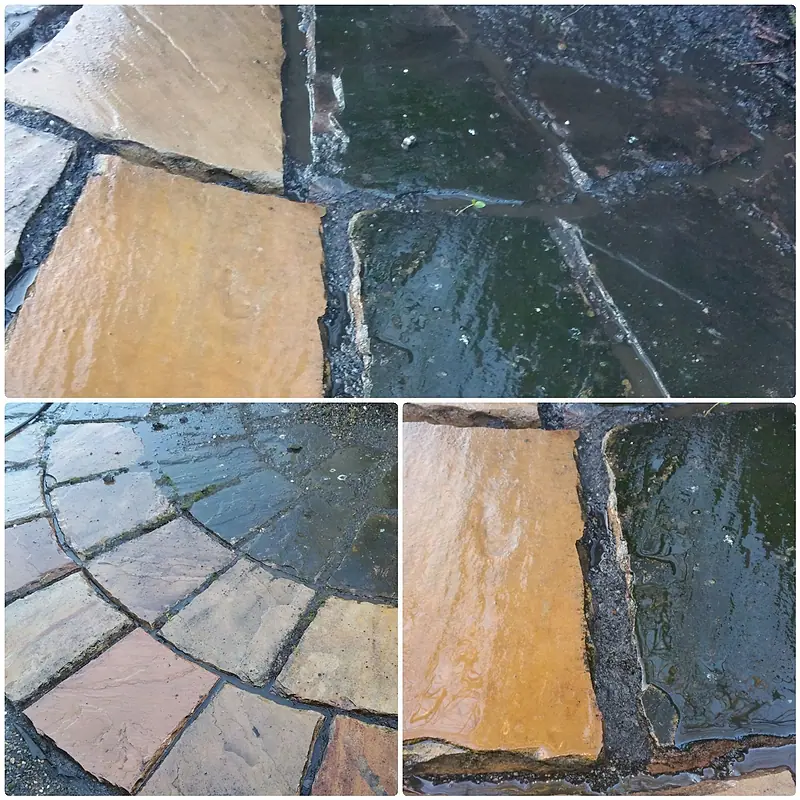
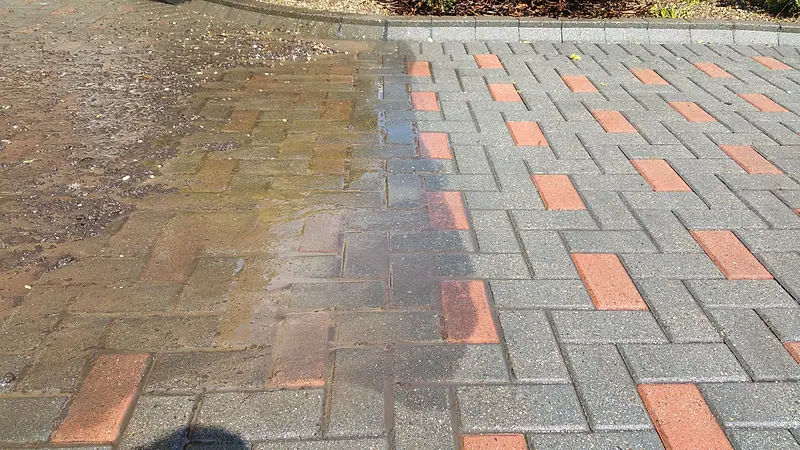
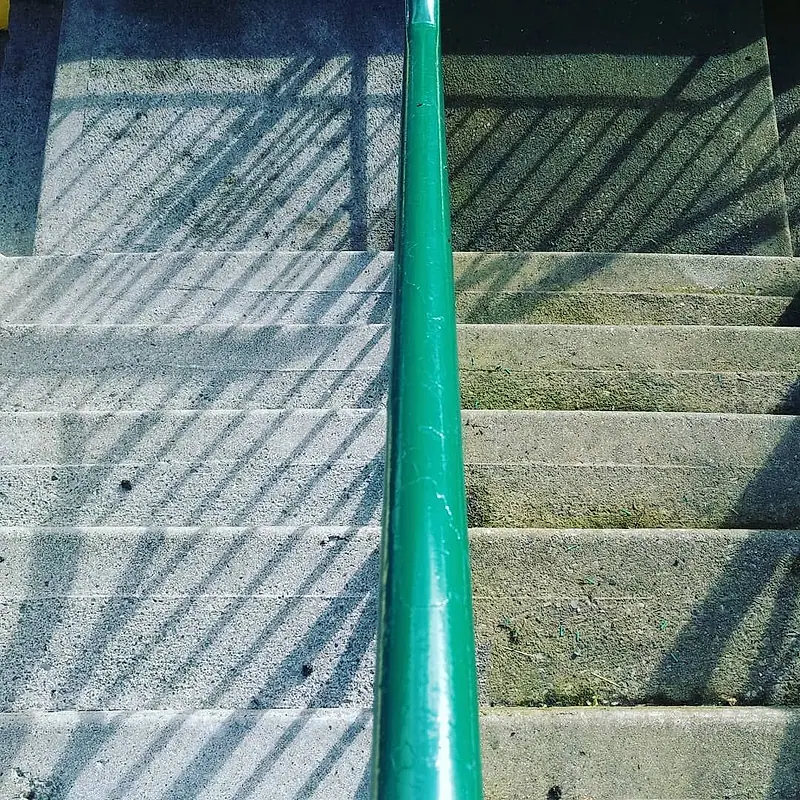
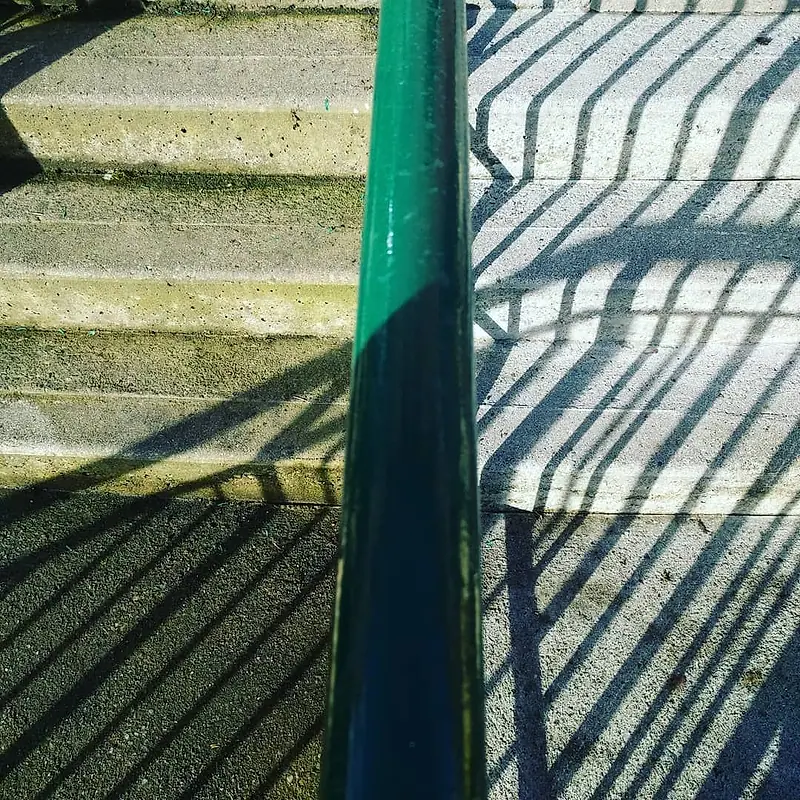
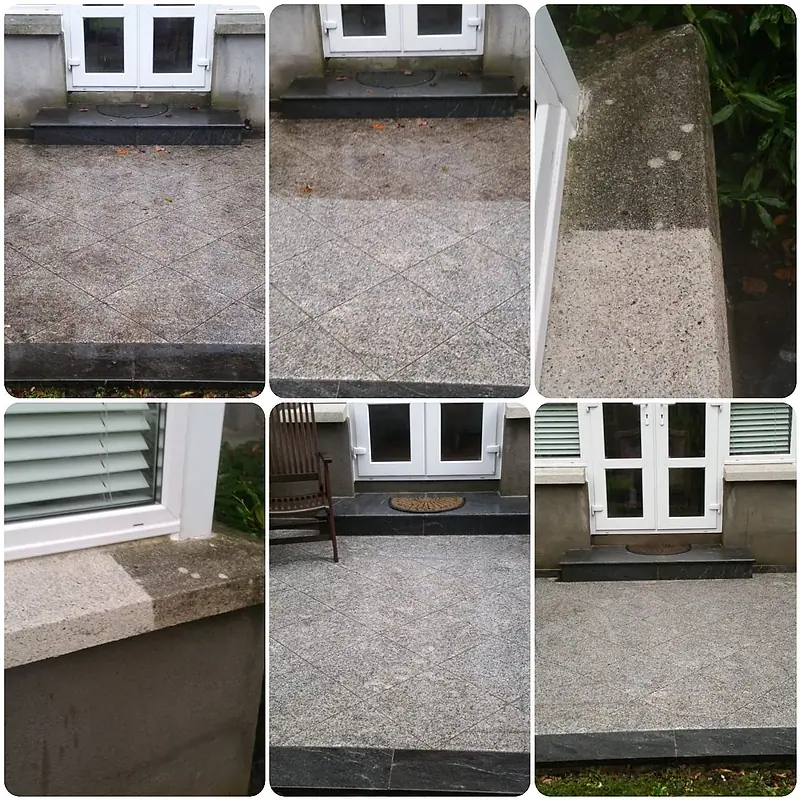
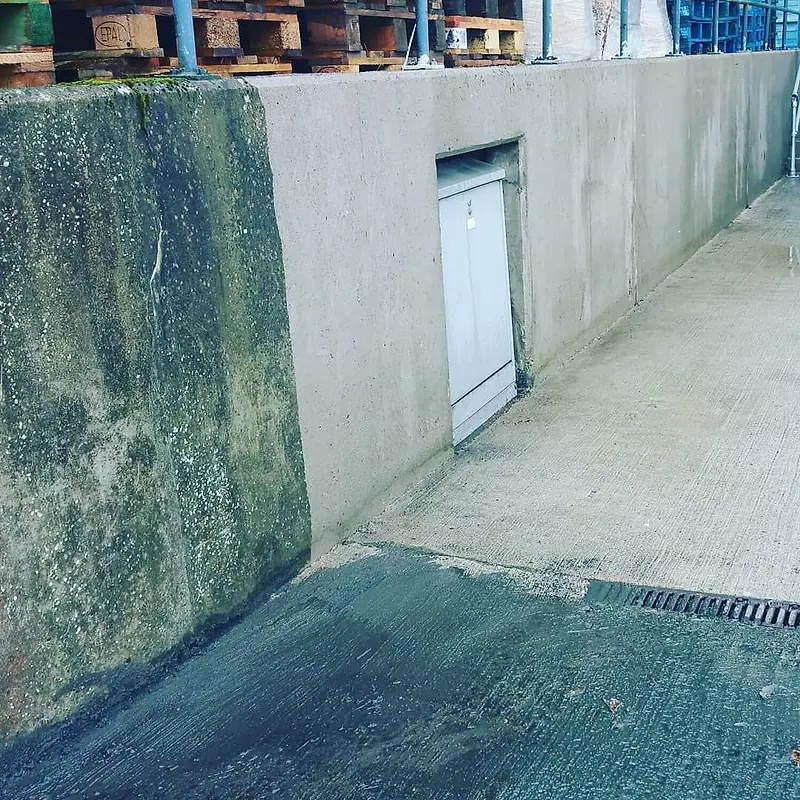
Concrete is the most forgiving of the three. It takes hot-water pressure washing well, and the change on a green, slimy path or flight of steps is usually dramatic, as the steps at the top of this page show.
Typical concrete jobs include:
- side passages and back paths that stay damp and grow algae
- front and back steps that have turned slippery
- garden walls, block walls and wall capping
- garage aprons and yards with tyre marks and oil drips
Rust marks from garden furniture, metal planters and old railings can often be lightened, but deep rust staining may not come out with washing alone. Brushed and textured finishes hold more dirt than smooth ones, and very old concrete can be soft on the surface, so we adjust as we go.
Slippery steps are a safety issue
Algae on steps is more than a cosmetic problem. Wet green growth on concrete or stone is slippery, and steps are exactly where people fall. If you have older relatives visiting, a front step that never sees the sun, or steps down to a basement or back garden, keeping them clean is worth it for that reason alone.
Steps rarely go green on their own, though. Shade, leaves and water dripping from above are usually behind it. A wall stained black under an overflowing gutter will go again unless the gutters are cleared, and moss shedding from the roof ends up on paths and steps below. Our page on moss and algae removal explains how to slow regrowth.
Want a price for steps, paths or walls? Send photos of the steps, paths or walls, a rough size and your area on WhatsApp. We'll reply with a fixed price, usually the same day.
What's included and how it's priced
- A method chosen for the material, from hot-water pressure washing on concrete to a gentler wash on old brick and limestone
- Edges, joints and treads done properly, not just the open surface
- Front doors, railings and window sills rinsed down so no grime is left splashed on paintwork or glass
- A walk-round at the end so you can see the result for yourself
We price on the area involved (square metres of path, the number of steps, the length and height of a wall), the material and its condition, how heavy the growth is, and access. A photo of each surface plus rough measurements, such as the number of steps or a wall's length, is normally all it takes, and you'll have a fixed figure before anything is booked. The guide to power washing costs goes through the pricing factors in more detail.
Front steps and paths often lead straight to a driveway or round to a patio, and it usually makes sense to wash them on the same visit. See everything we clean on our power washing page.