What pets do to a carpet
Living with a dog or a cat changes how a carpet gets dirty. It isn't just the obvious accidents. The everyday wear shows up in a few ways:
- Hair works its way down into the pile and binds with dust, so a carpet can look clean on top while holding a lot underneath.
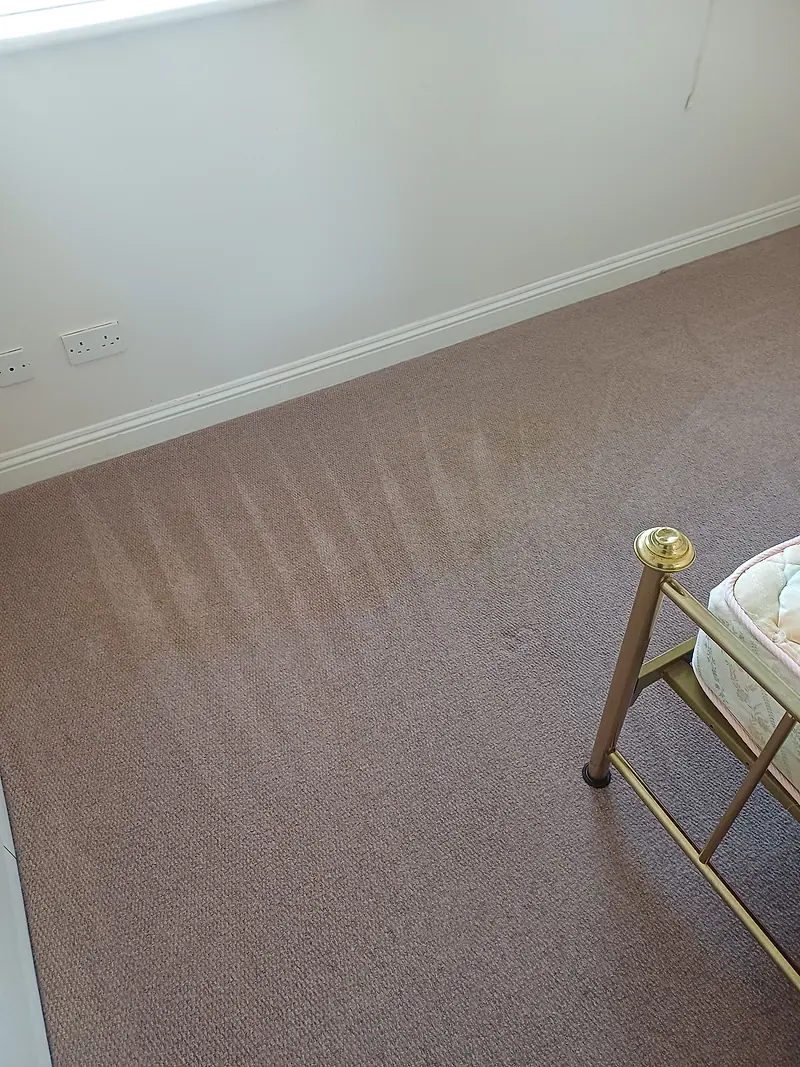
- Coat oils leave a grey, slightly greasy shadow wherever a pet lies regularly: in front of the fire, beside the radiator, at the foot of the stairs.
- Muddy paws wear a lane from the back door to the water bowl, the sofa or the dog's bed.
- Accidents happen in every pet home at some point, from puppies and kittens to older animals.
Most of that responds very well to a thorough hot-water extraction clean. The exception is urine that has been left long enough to reach the underlay, and that's worth understanding before you book.
Hair first, then water
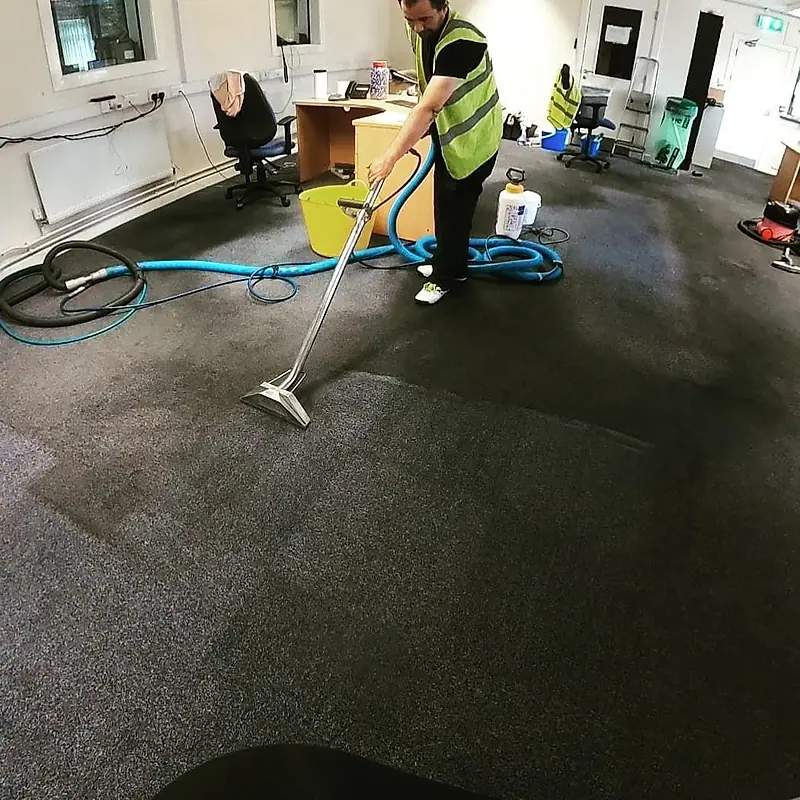
Pet hair is the reason a pre-vacuum matters so much in these homes. Once hair gets wet it clumps into the base of the pile and clogs equipment, so we go over the carpet thoroughly while it's dry, more than once in the worst spots, and pay attention to edges and under the radiators where hair collects.
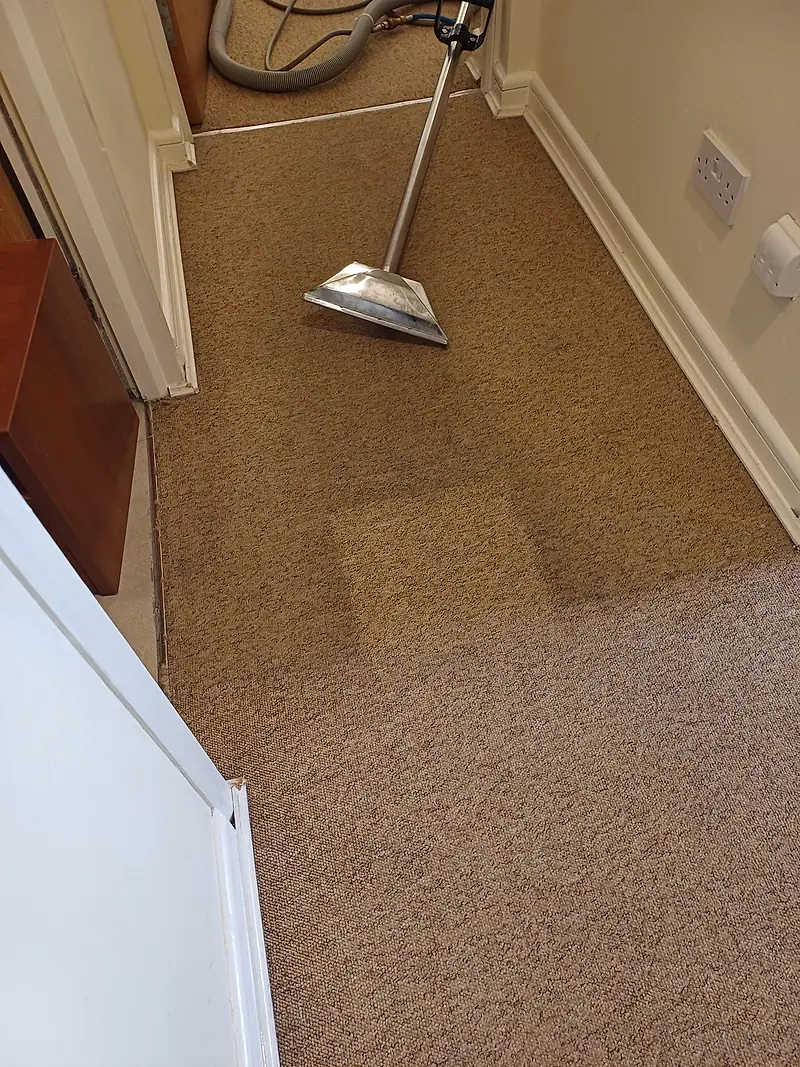
Then the walking lanes and the pet's favourite spots get a pre-spray suited to oily soiling, and the carpet is rinsed and extracted. The water that comes out of a pet home is usually a good deal darker than people expect.
Between cleans, a rubber-bristled brush or a slightly damp rubber glove drawn across the carpet pulls up hair that the vacuum leaves behind. Vacuum more often in spring and autumn, when most dogs and cats moult hardest, and empty the vacuum outside so the hair doesn't drift straight back.
Before we arrive
A few things make the day go better in a pet home:
- Pick up toys, bowls and beds so the floor is clear.
- Show us the accident spots. Old ones don't always show on a patterned carpet, and we'd rather treat every one.
- Walk the dog first, so it's settled and happy to stay in another room.
- Mention any sick or elderly pets, so we can keep noise and disruption near them to a minimum.
Muddy paws and the back-door lane
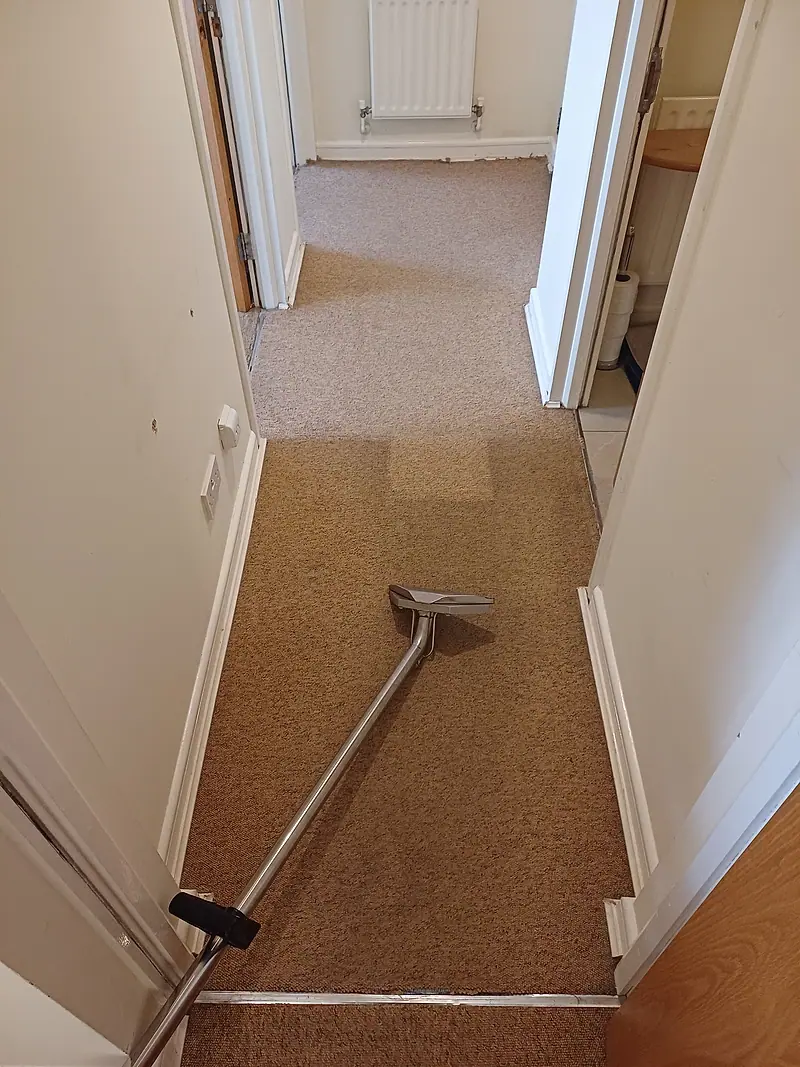
Irish weather means muddy paws for half the year. Mud on its own usually comes out well, because once it's dry most of it is loose soil. What builds up over months is the grey lane where damp paws carry fine grit across the same few metres of carpet every day.
A clean brings that lane back up. To keep it at bay afterwards, a washable mat outside and a towel by the back door make a real difference. So does letting mud dry fully before vacuuming it up, because wiping wet mud only spreads it.
 spotless.ie
Accidents, and the honest truth about old urine
Fresh accidents and old ones are completely different jobs. Here's what usually happens:
| Situation | What to expect |
|---|---|
| A fresh accident, blotted up quickly | Usually comes out well, smell and all |
| A few weeks old, on the surface | Often comes out or lightens a lot |
| Months of accidents in the same spot | Stain may only lighten; odour may return in damp weather |
| Sick on the carpet | Usually comes out; strong stomach acid can leave a pale mark on some dyes |
| Soaked through to the floorboards | Beyond what a surface clean can reach |
Old urine is hard for two reasons. It soaks down through the carpet into the underlay and sometimes the floor beneath, where no surface clean can rinse it fully. And as it dries it leaves salts behind that draw moisture from the air, which is why a smell can come back on a wet day even after a good clean. Urine can also change the colour of some carpet dyes permanently, so a pale or yellowish patch may remain once the stain itself has gone.
We treat urine spots with products made for the job and extract them thoroughly, and on many jobs the improvement is big. What we won't do is promise a smell will be gone for good when it's been building for months. In the worst cases, a carpet fitter lifting the carpet and replacing a section of underlay is the real fix, and a clean afterwards finishes the job.
For what to do the moment an accident happens, see our guide to pet accidents on carpet. Other marks are covered on our carpet stain removal page.
Pets and a carpet that needs help? Send photos of the rooms on WhatsApp, with a close-up of any marks and a note of how old they are. We'll give you an honest view and a clear price, usually the same day.
Keeping pets off while it dries
After the clean, the carpet is damp for a few hours. Keep pets off it until it's completely dry, for a few reasons:
- Paw prints. Damp pile picks up every speck of dirt from a paw and holds onto it.
- Curiosity. A spot that's just been treated smells different, and some dogs want to investigate it, or mark it again.
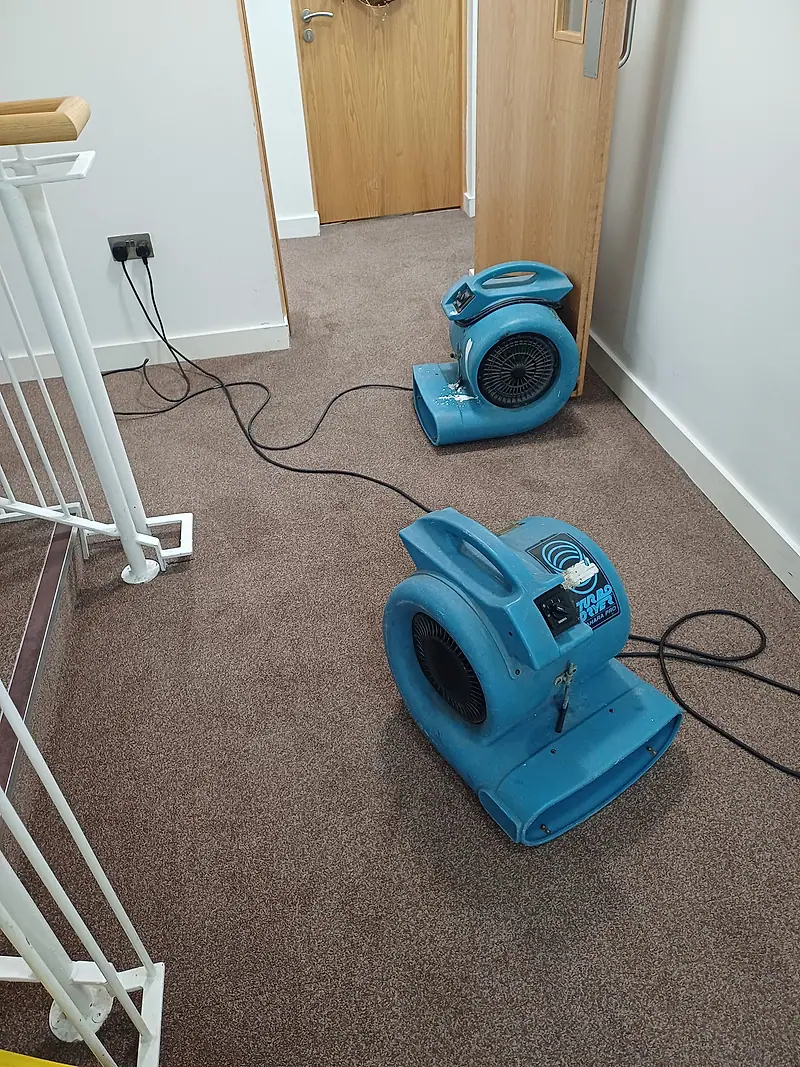
- Air movers and hoses. Cats in particular like to explore humming machines and cables.
A walk, a shut door with water and a bed, or a few hours in the garden on a dry day all work. Our guide to carpet drying times explains what speeds drying up. Pets on the stairs are covered under stair carpet cleaning.
Sofas, rugs and the dog's favourite spot
Pets rarely stick to the carpet. If the dog sleeps on the sofa or the cat has claimed the bed, it makes sense to do those on the same visit:
- Sofas and armchairs collect hair and oils in the seat cushions and on the arms. See upholstery cleaning.
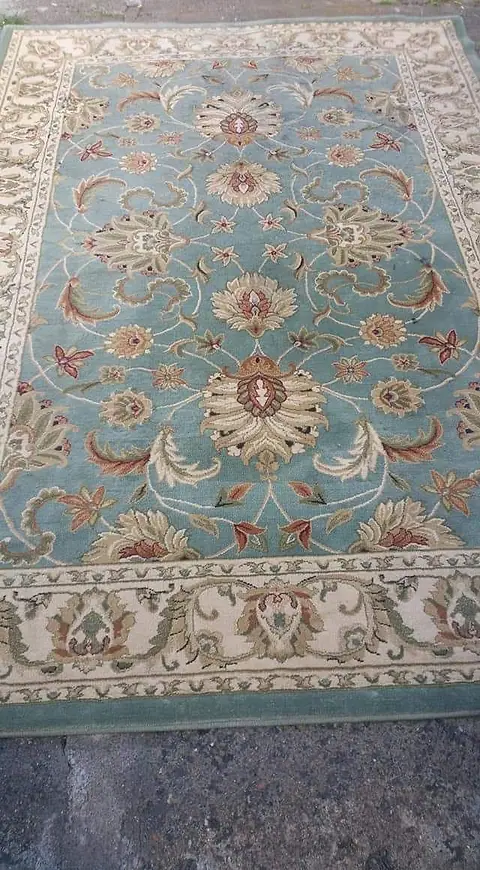
- Rugs need extra care, especially where urine has gone through to the backing. See rug cleaning.
- Mattresses where a pet sleeps on the bed can be cleaned too. See mattress cleaning.
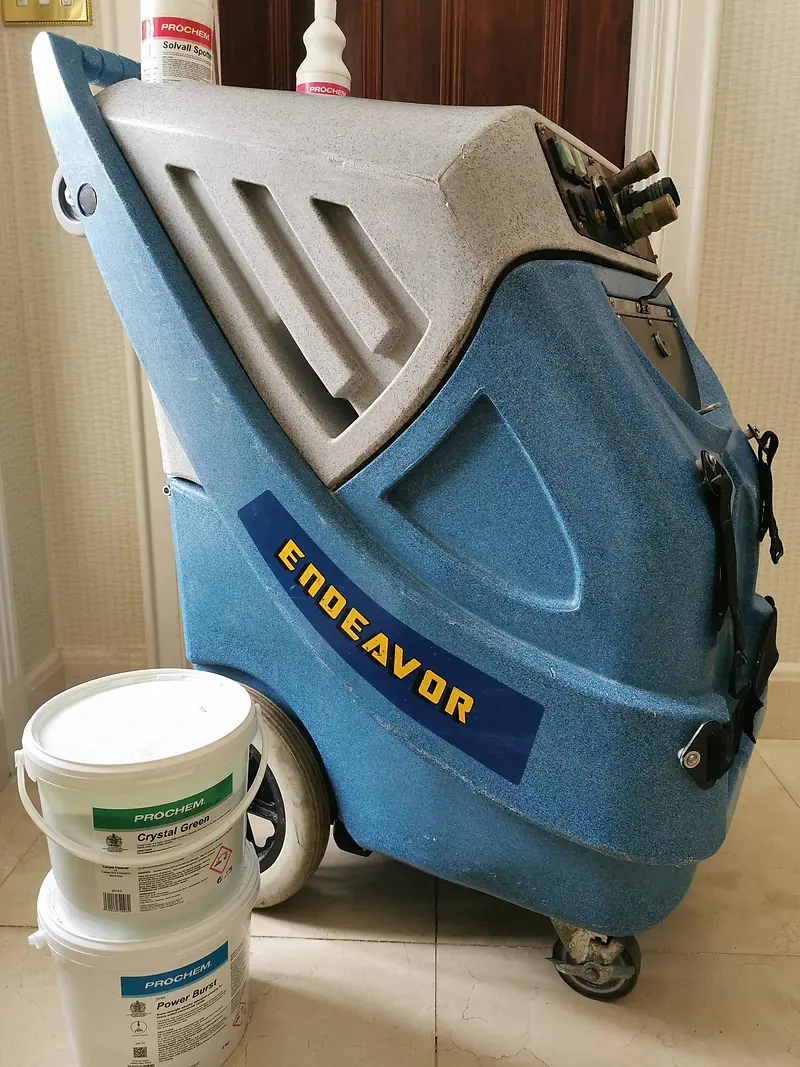
Ciprian, who runs Spotless, is fully trained in carpet cleaning through a Prochem course in 2018 (certificate no. 2018/020). Pet homes are priced the same way as any other, by the rooms, the stairs and anything else being cleaned, with extra time allowed for heavy staining. For the whole house, see our carpet cleaning service in Dublin.