
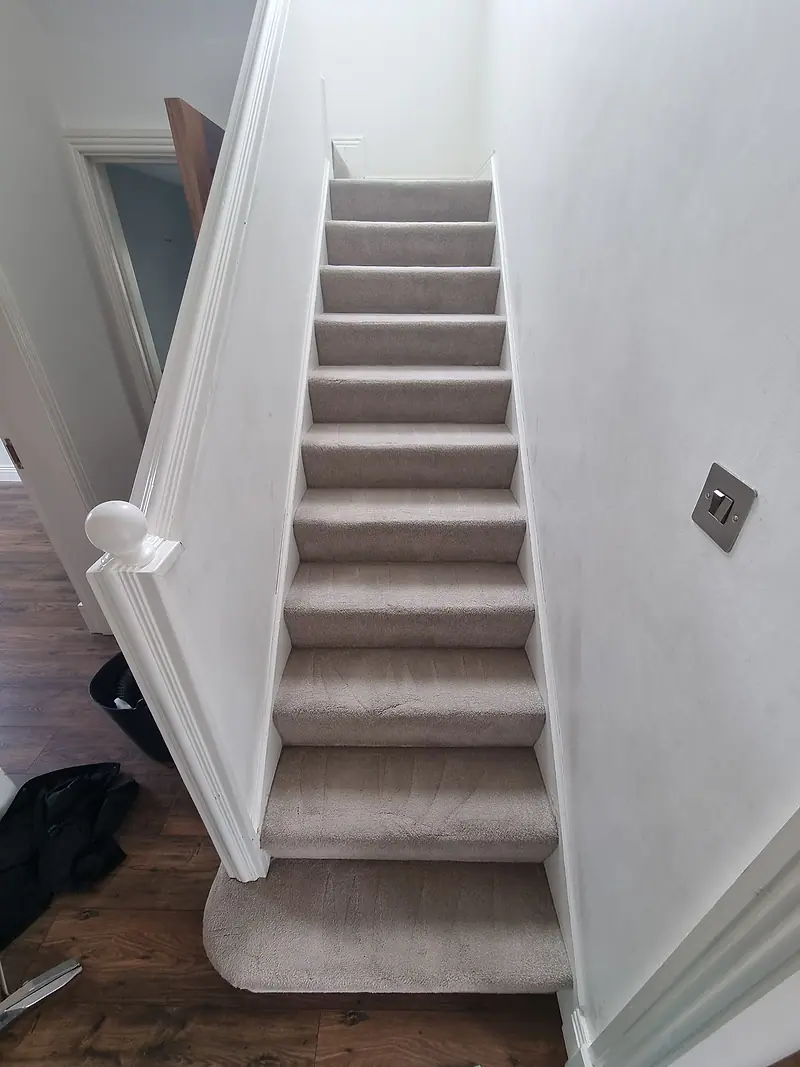
Why stairs look tired before anything else
Stair carpet has a hard life. Every footstep lands on a small area, and on the way down your heel strikes the front edge of each step, just where the carpet bends over the timber. Grit gets ground in right there. Add children sitting on the stairs, pets running up and down and bags dragged to the top, and it's no surprise the stairs show dirt first.
They're also the hardest carpet to look after. A vacuum doesn't sit flat on a step, the corners collect fluff, and it's easy to give them a quick once-over and move on. A little extra care each week makes a real difference to how long they keep looking good.
Vacuuming stairs properly
The difference between vacuumed stairs and properly vacuumed stairs is mostly about the tools and the order:
- Work from the top down, so dust and grit fall onto steps you haven't done yet.
- Crevice tool along the back of each tread, where it meets the riser. That corner holds more fluff than anywhere else.
- Brush tool on the tread and nosing. Go across the step, then over the front edge, where most of the grit sits.
- Do the edges, beside the wall and the spindles, every couple of weeks.
- Finish with the landing and the hall at the bottom.
For safety, keep a heavy upright on the floor at the bottom or on the landing and use the hose, rather than balancing the whole machine on the step above you. A light cordless vacuum makes the job quicker, and quicker means it actually gets done.
Aim for once a week on the stairs in a busy house, more often if there are pets shedding. It takes ten minutes and does more for the carpet than anything else.
Worn nosings
The nosings almost always wear out first, because they take the most weight and friction. Some of the grey you see there is soiling, which a clean lifts. Some may be crushed or thinning pile, which no clean can replace. A few things slow the wear:
- Vacuum the nosings properly, because grit left there wears them fastest.
- Shoes off on the stairs, especially outdoor shoes with grit in the treads.
- Good underlay. Thin or crumbling underlay on the stairs lets the carpet grind against the edge of the timber. A carpet fitter can tell you if it's worn.
- Clean before the wear sets in. Grit and soiling left for years wear the pile faster.
When the backing shows through on the front edges, the carpet is reaching the end of its life on the stairs, even if the rest still looks well. That's the honest point to start thinking about replacing it.
 spotless.ie
Runners and rods
Runners need a little extra care, mostly around the edges:
- Timber margins. Dust the painted or varnished wood either side of the runner, and wipe it with a barely damp cloth rather than a wet one, so water doesn't creep under the runner's edge. Avoid spray polishes that can drift onto the runner and leave a slippery film.
- Rods and clips. Wipe the rods now and then and check that the clips are firm. A loose rod lets the runner shift, which wears it unevenly and can be a trip hazard.
- Moving the wear. Some runners were fitted with extra length folded under at the top or bottom. A carpet fitter can sometimes move these a short way, so worn patches come off the nosings.
- Wool runners. Many runners in older houses are wool. Our wool carpet care guide covers vacuuming, spills and moths.
Spills and accidents on stairs
A spill on stairs behaves differently from one on a floor, because it runs. A cup of tea dropped on the third step can end up on the riser below, the nosing beneath that and a tread further down.
- Work from the top of the spill downwards, blotting each step, its riser and its nosing in turn.
- Use cold water sparingly. Stairs are steep, and too much water runs down to the next step.
- Press each step dry with a folded towel.
Pet accidents on the stairs or landing are especially common with puppies and older dogs. Our page on pet carpet cleaning explains what can be done, and carpet stain removal covers what to expect from other marks.
Stairs looking grubby? Take one photo looking up the stairs, one of the landing and a close-up of the worst step, and send them on WhatsApp. You'll get a clear price, usually the same day.
Stairs in a busy house
A few habits help in houses where the stairs see constant use:
- A good mat inside the front door catches grit before it reaches the bottom step.
- Keep the stairs clear. Baskets, shoes and laundry left on the steps mean people tread on the edges and around obstacles, which wears the carpet unevenly.
- Stair gates. Check the fixings now and then, as a gate that rubs can wear a line in the carpet.
- Children sitting on the stairs is part of family life, but snacks on the stairs aren't.
When to book a clean
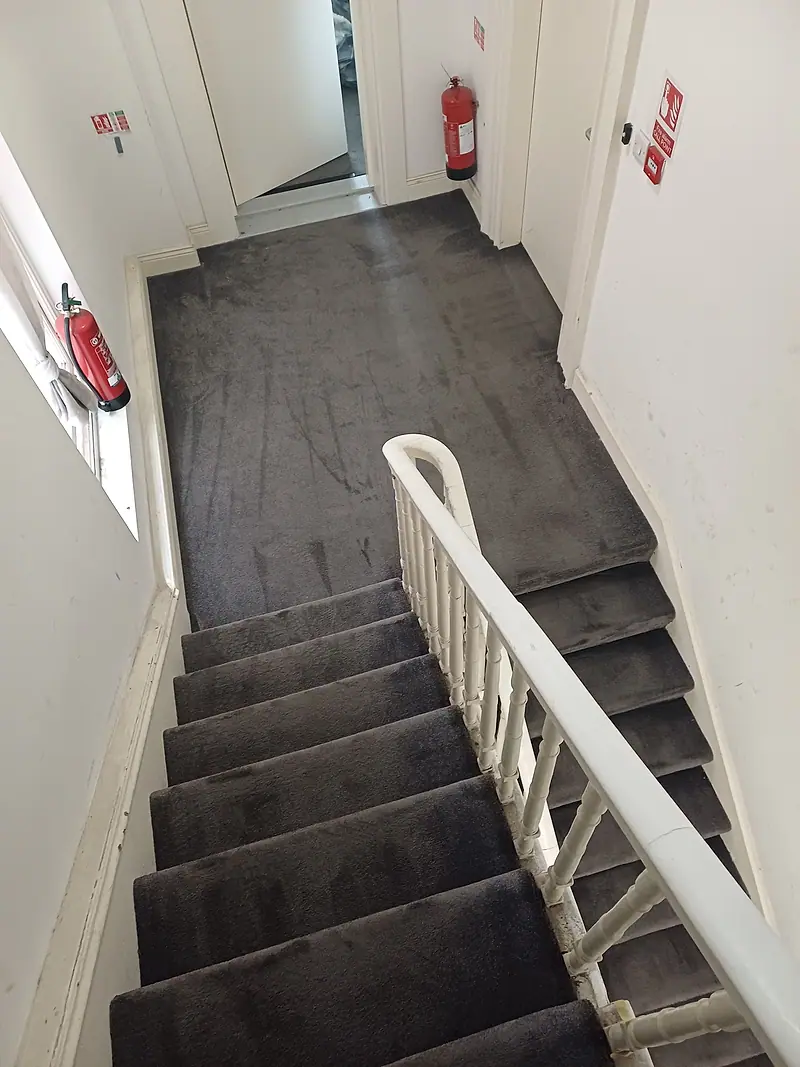
Signs the stairs are due:
- the nosings are visibly darker than the rest of each step
- there's a grey lane up the middle of the stairs
- the corners at the back of the treads stay dark after vacuuming
- dark lines have appeared along the edges by the wall
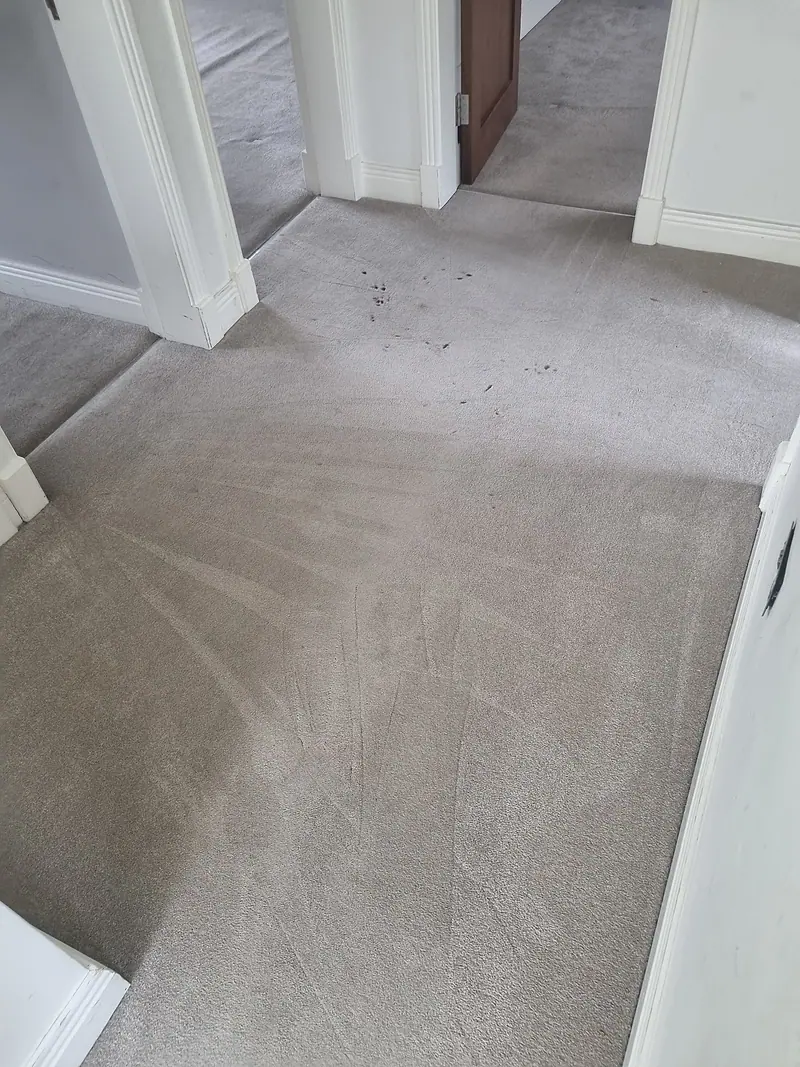
- the landing has a worn path from the top step to the bathroom
Timing matters if there's other work planned. If the hall, stairs and landing are about to be painted or wallpapered, book the carpet clean for after the decorators have finished, because ladders, dust sheets and drips all end up on the steps. The same goes for new banisters, a stairlift being fitted or anything else that involves tradespeople going up and down for days.
For most homes, the stairs, landing and hall are worth doing about once a year, often more frequently than the bedrooms. Our guide to how often carpets should be cleaned breaks that down by household.
When you book, stairs are cleaned by hand, one step at a time, which our page on stair carpet cleaning explains in full. You can walk on them carefully in clean socks soon afterwards, and they usually dry in a few hours, as covered in our guide to carpet drying times. For the rest of the house, see carpet cleaning in Dublin.
