Why roof moss is worth removing
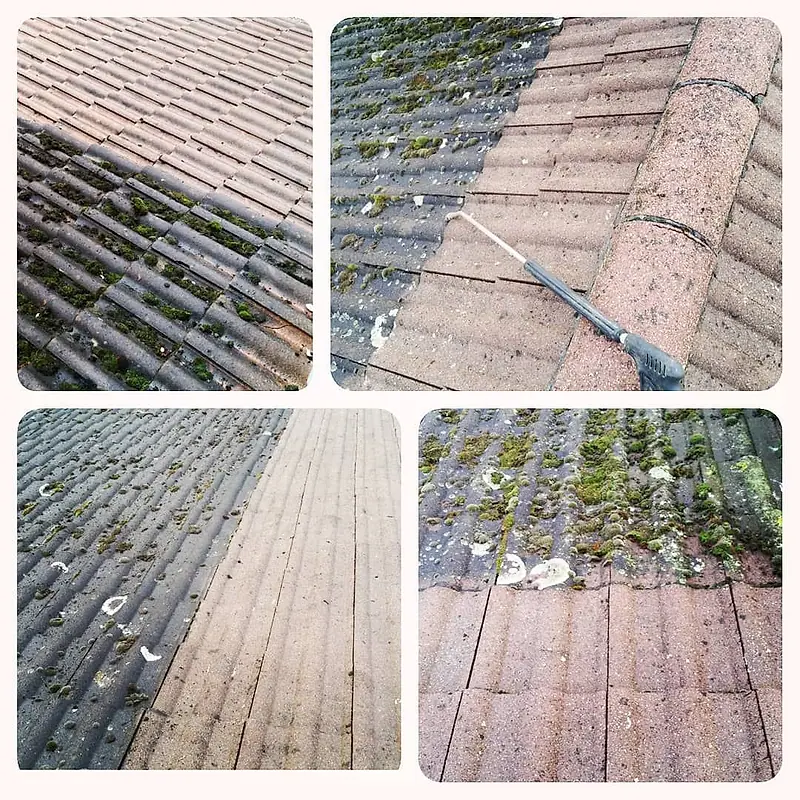
Irish roofs grow moss. The mild, damp weather suits it, and north-facing slopes and roofs near trees can go from a few green patches to a thick carpet in a handful of years. For a while it's just a look. After that, it starts causing problems.
Thick moss holds rainwater against the tiles and keeps the roof damp long after a shower. It works into the gaps where tiles overlap and along the ridge. And it sheds: every heavy shower or windy night washes clumps into the gutters, where it builds up until the gutter overflows down your walls. Often the first sign of a mossy roof isn't the roof at all, it's a gutter spilling over or green streaks on the render below.
Removing the moss before it gets to that stage is cheaper and simpler than dealing with blocked gutters and damp walls later.
Signs it's time
You don't need to climb a ladder to check. From the garden or across the road, look for:
- green or dark patches spreading across the tiles, especially on the north-facing side
- moss building up along the ridge, at the edges and around chimneys and roof windows
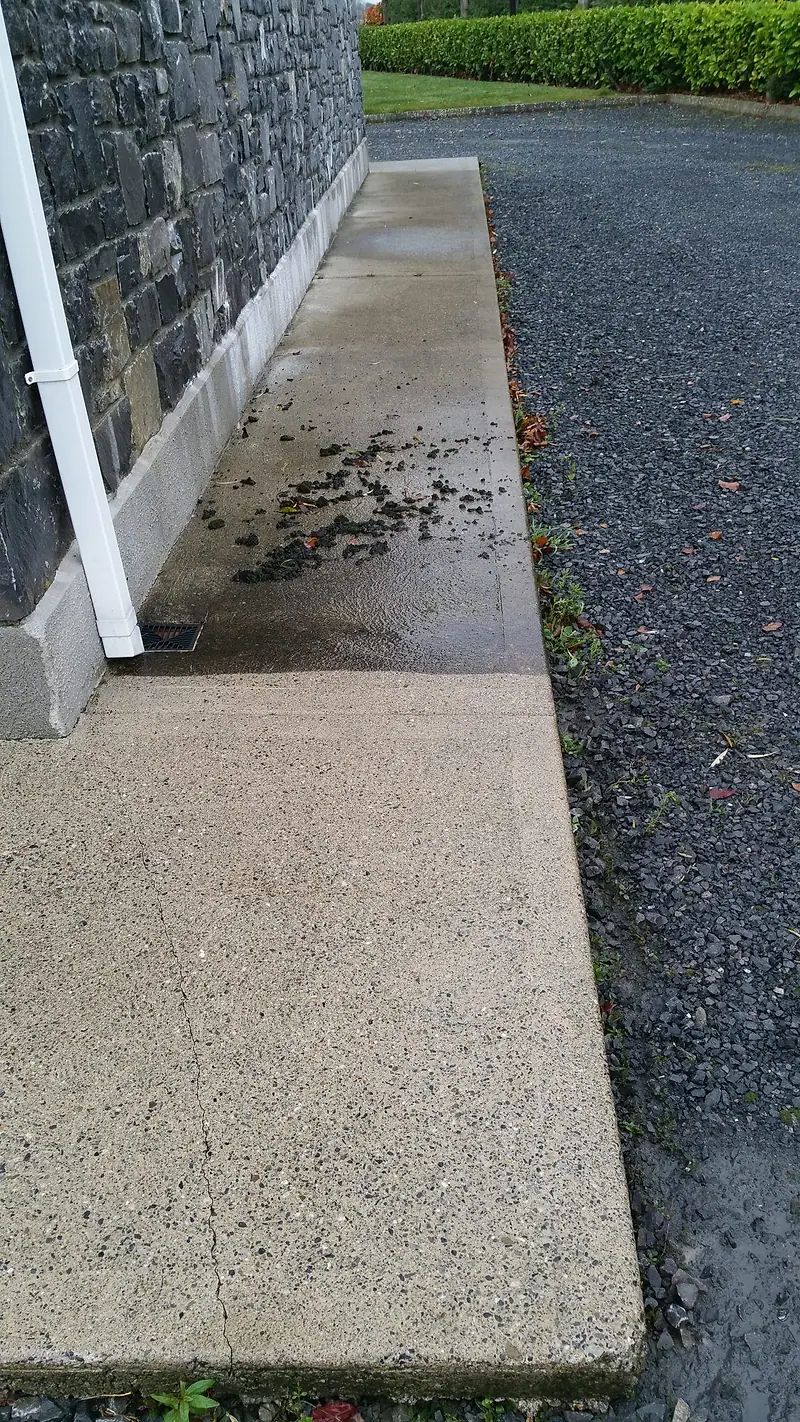
- clumps of moss on the drive, paths or patio after a windy night
- gutters overflowing in rain, or weeds growing out of them
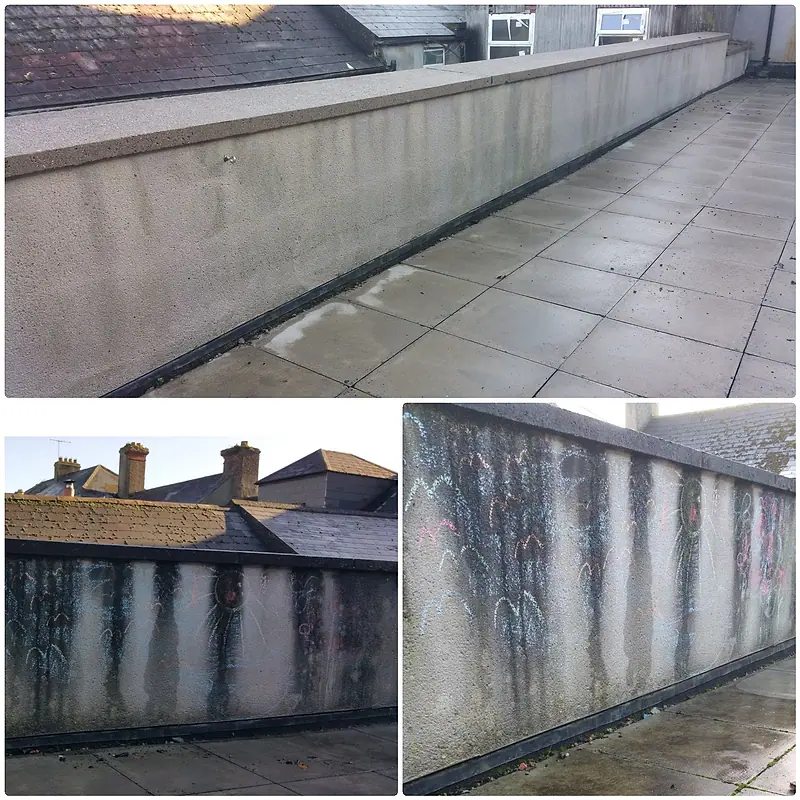
- green streaks running down the walls under the gutters
A photo from the street or the back garden is usually enough for us to judge it.
Why we don't blast roof tiles
You'll see roofs being cleaned with a high-pressure jet. It looks impressive and it's quick, but it's the wrong tool for a roof:
- It strips the tile surface. Concrete tiles have a surface layer that sheds water. Blasting wears it away, leaving the tile more porous, so moss comes back faster.
- It cracks and dislodges. Older tiles, slates and ridge mortar can crack or loosen under a strong jet.
- It pushes water where it shouldn't go. Tiles are designed to shed rain running down the roof, not water fired up under the overlaps. That water can end up in the felt, the insulation or the attic.
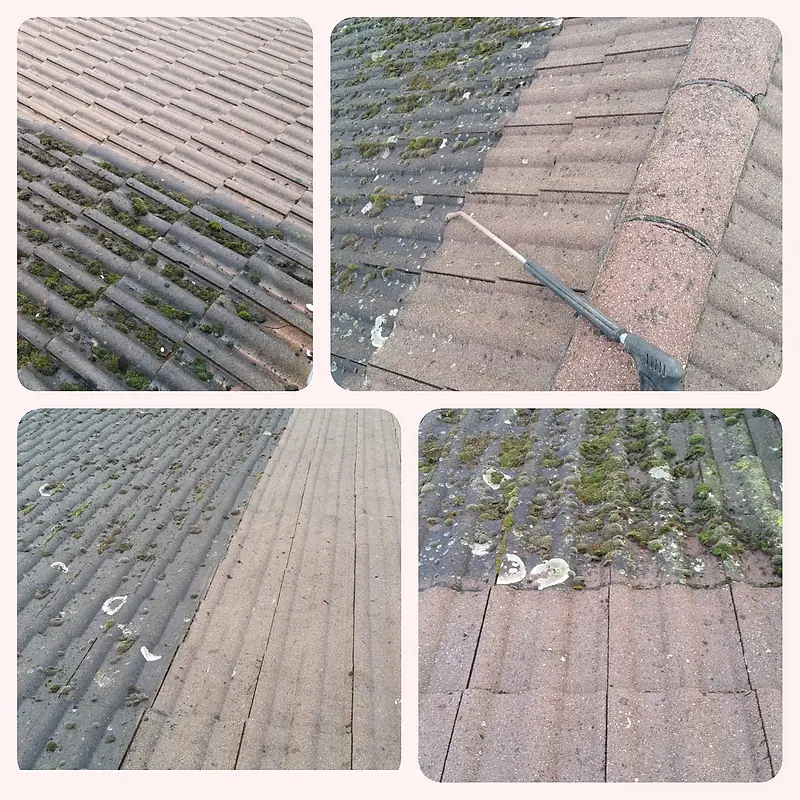
Our approach is gentler. The bulk of the moss is removed first, then the tiles are soft washed at low pressure so the remaining growth and staining come away without damaging the roof. Our soft washing page explains the method in more detail.
 spotless.ie
How a roof clean works
- Photos and a look at access. From your photos we can see the roof type, how much moss there is and how we'll reach it.
- Protecting what's below. Paths, plants, cars, windows and anything fragile under the roofline are protected or moved.
- Moss removal. The thick growth comes off first, working down the roof so it doesn't get pushed up under the tiles.
- Low-pressure soft wash. The tiles are cleaned gently to lift what's left.
- Gutters cleared. Moss always ends up in the gutters, so we empty them and check the downpipes are running freely (gutter cleaning).
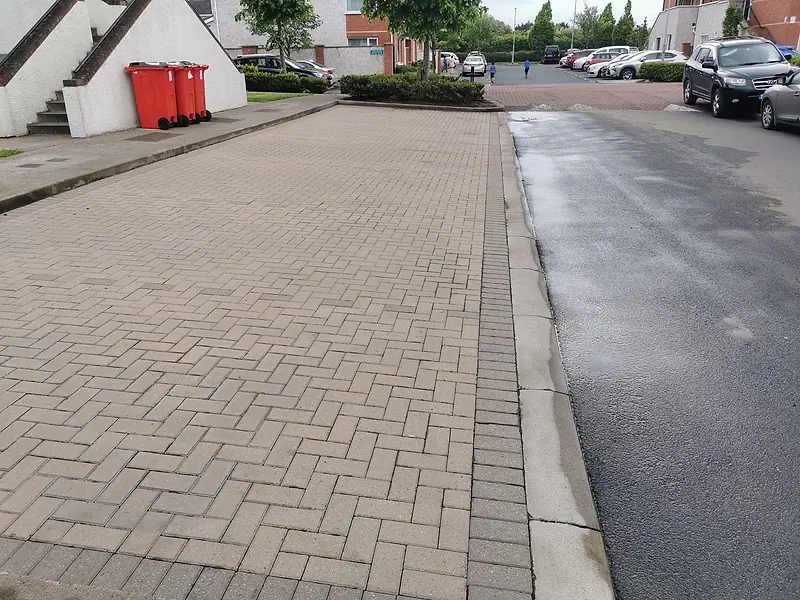
- Clean-up below. Anything that's landed on the drive, paths or patio is cleared and rinsed away.
If the fascias and soffits are green too, it makes sense to do them on the same visit. See fascia and soffit cleaning.
Tiles, slates and roofs we're careful with
| Roof | What to know |
|---|---|
| Concrete tiles | The most common roof on Irish houses. Moss loves the texture. Low pressure protects the surface. |
| Clay tiles | Attractive and durable, but older ones can be brittle. Gentle handling only. |
| Natural slate | Smooth, so moss tends to grow at the edges and joints. Slates can crack or slip if handled roughly. |
| Fibre-cement slates | Many made before 2000 contain asbestos. Never pressure washed or scraped. Tell us the age of the house. |
If we look at your roof and don't think it's safe to clean, or that cleaning would do more harm than good, we'll say so.
Safety and access
Roof work is work at height, and we treat it that way. How we reach a roof depends on its height, its pitch and what's underneath it. A bungalow is a very different job from a three-storey townhouse or a roof above a conservatory.
When you send photos, include one of the front, one of the back and one of the side if you can, so we can see the access. Some roofs need extra access equipment, and if yours does, we'll tell you when we quote. We don't work on roofs in high wind, frost or ice, and if the weather turns on the day we'll rearrange rather than rush.
Want a roof price? Send photos of the roof from the front and back, plus the side of the house, on WhatsApp. We'll come back with a fixed price, usually the same day.
After the clean
A freshly cleaned roof can look a little patchy for a few weeks while the last of the staining weathers off. That's normal, and it evens out with the rain.
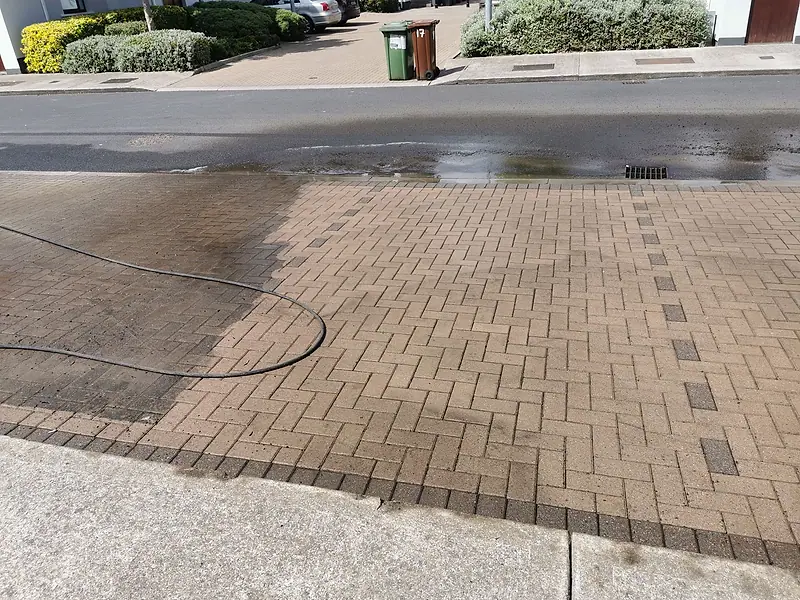
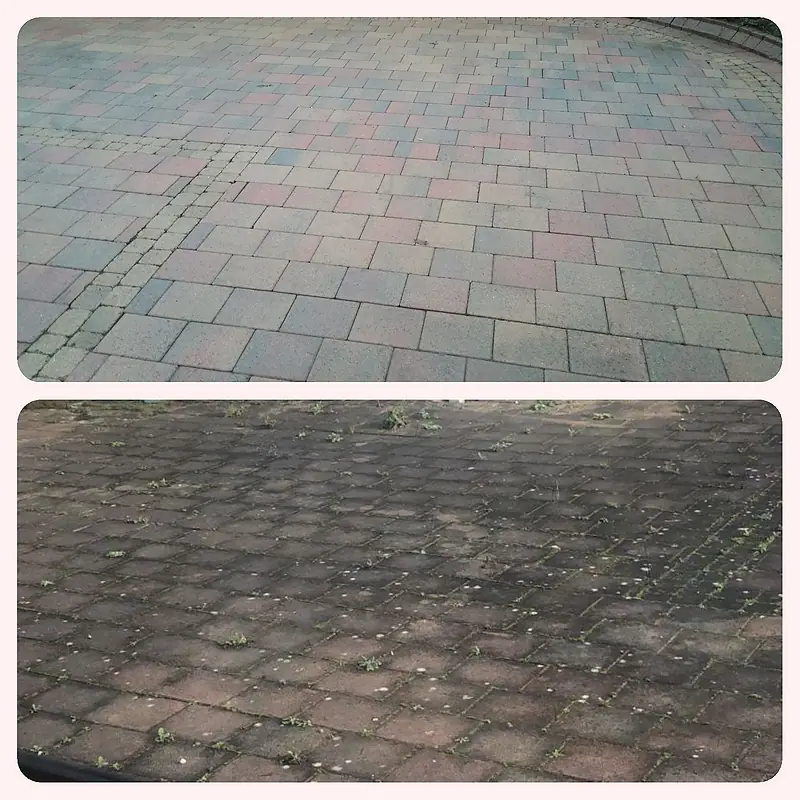
To keep moss away for longer, cut back branches that overhang the roof, keep the gutters clear, and keep an eye on the north-facing slope, which is always the first to green up again. If moss from the roof has been washing down onto the driveway or the patio, it's worth cleaning those once the roof is done rather than before.
How roof cleaning is priced
Roofs are priced individually, based on:
- Size and shape: a simple pitched roof, or valleys, dormers and extensions
- Height and access: bungalow, two storeys or three, and what's below
- Amount of moss: a light covering or years of thick growth
- Roof type: concrete tiles, clay, slate
- Extras: gutters, fascias and soffits, and paving below
You'll get a fixed price before anything is booked. Our roof cleaning guide covers roof moss in more depth, and the power washing overview shows everything else we clean.