 spotless.ie
What an attic clearance with us involves
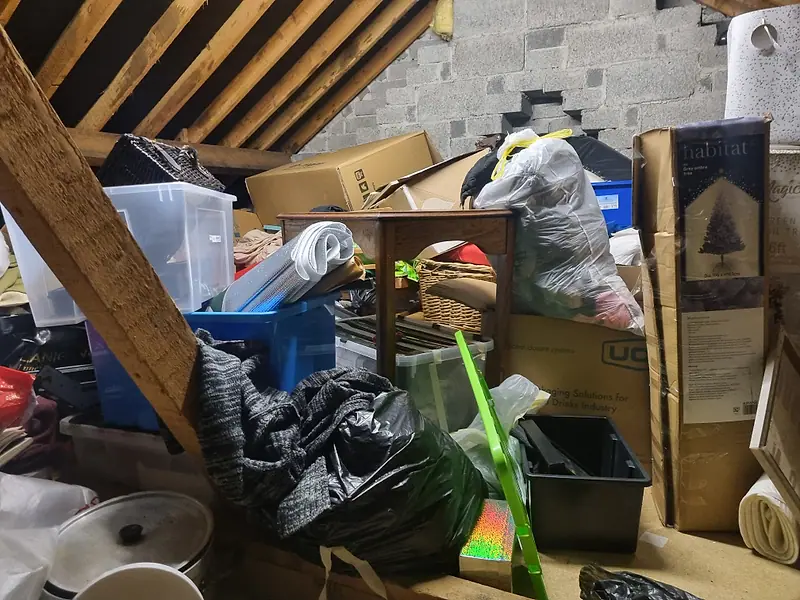
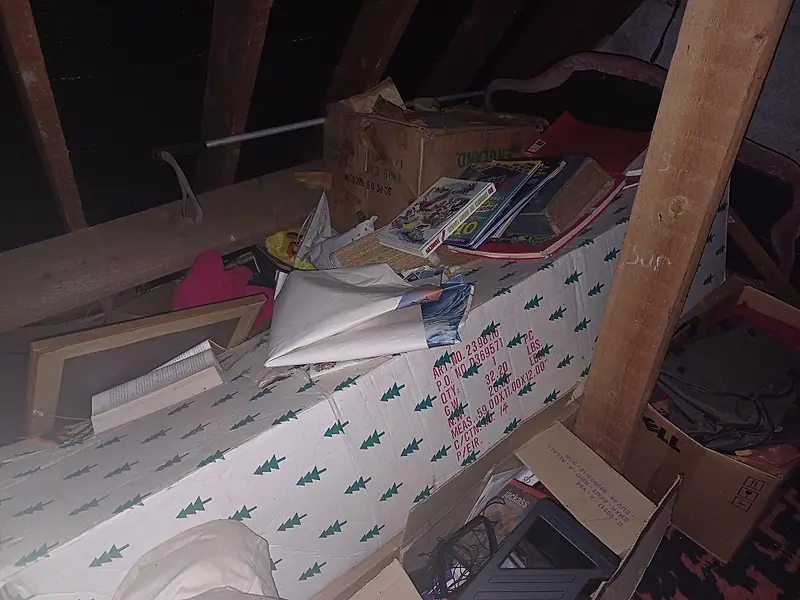
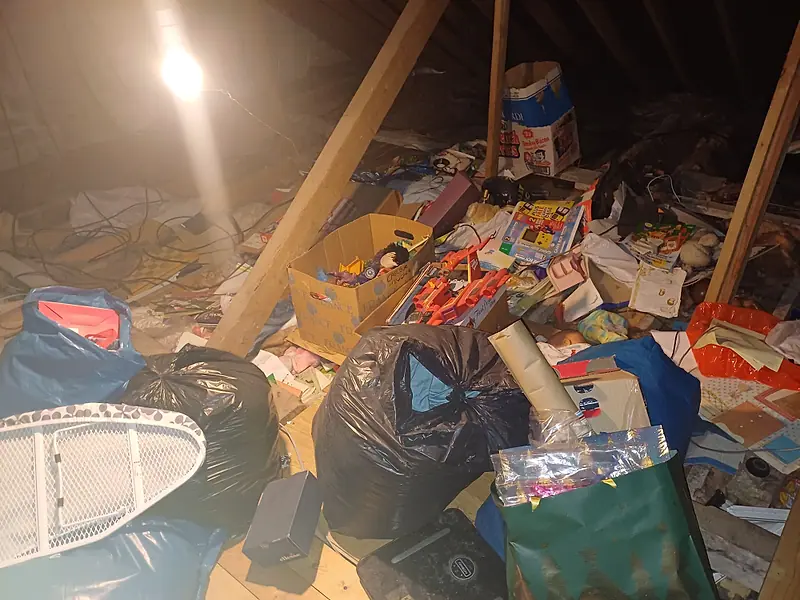
An attic clearance means we bring everything down from the loft, take away what you don't want, and leave the space clear. It sounds simple. In practice the attic is the fiddliest part of most houses: a narrow hatch, a folding ladder, dust, insulation underfoot and decades of boxes, most of them unopened since the day they went up.
Here's how we handle it:
- Covers on the stairs and landing first. Attic dust travels, so carpets are covered before the first box comes down.
- Time to check before anything goes. You can look through each bag and box before it's carried to the van. Nothing leaves until you're happy.
- Loose items gathered up. Odds and ends, old papers and broken bits are bagged, not left scattered across the boards.
- Leftovers from old jobs removed. Offcuts of timber, old flooring and rolls of carpet left behind by tradespeople go too.
- Nothing put back unless you ask. If you're keeping things, we can put them back up neatly or leave them downstairs for you.
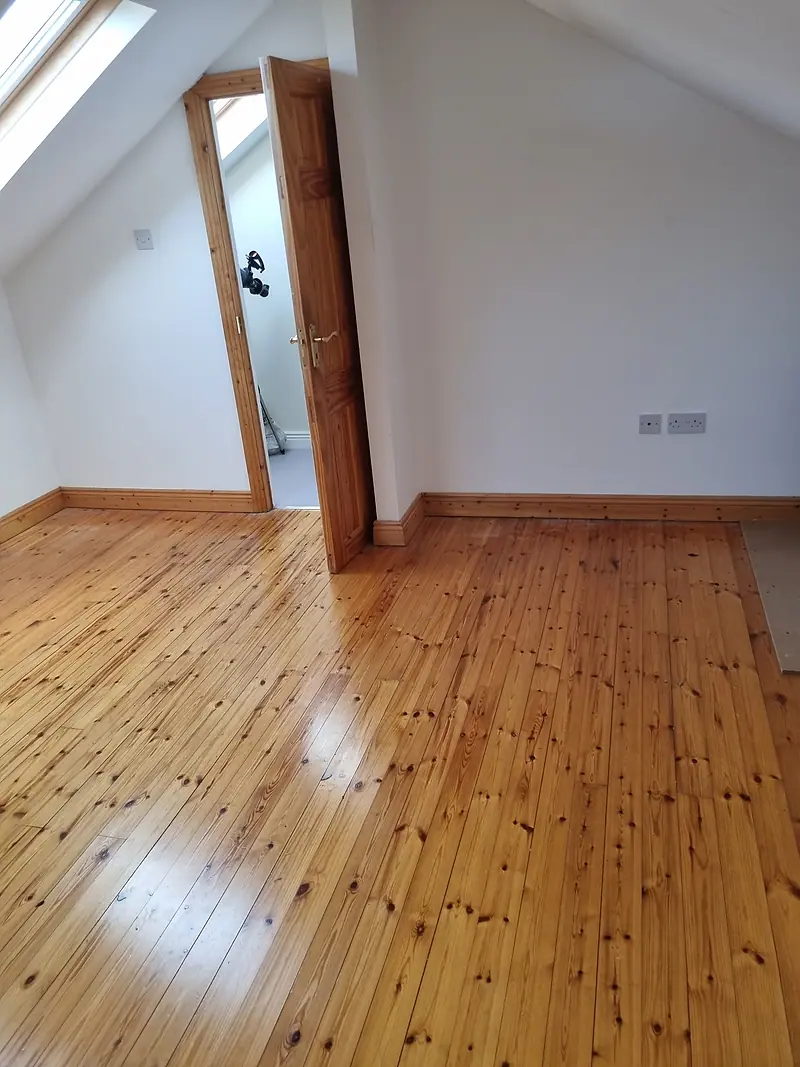
- Boarded floors swept. Ready for shelving, storage or simply a fresh start.
Attic clearance or attic cleaning service?
People search for this as attic cleaning, an attic clear-out or loft clearance. To us it's the same job: emptying the space and leaving it swept. If you went looking for an attic cleaning service, this is usually what you need: everything down the ladder, the boards swept and the loft ready to use again. We don't offer specialist work such as mould treatment or pest control, and we'll say so if we spot signs of either.
Hatches, ladders and lofts
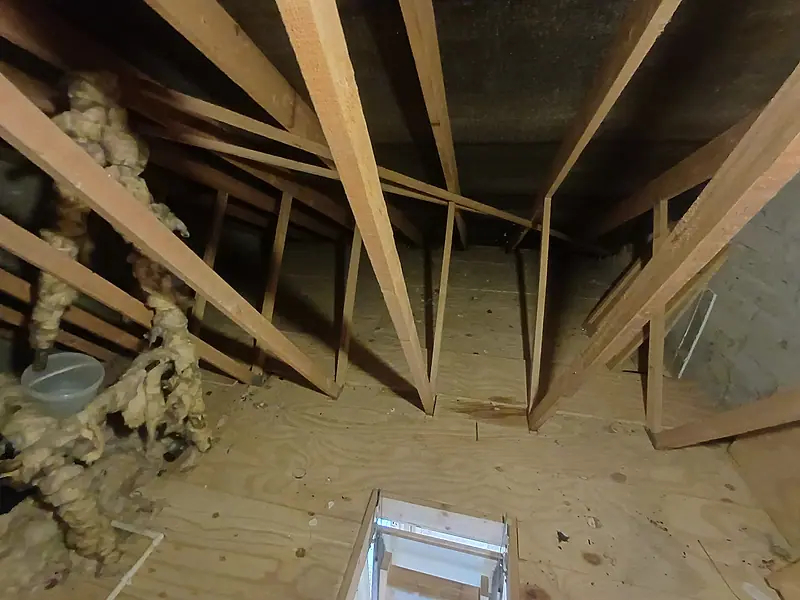
Most of the planning for an attic clearance is about access. When you send photos, include one of the hatch and ladder from the landing as well as a few of the attic itself.
The hatch and the ladder
A folding Stira-style ladder makes the job quicker. A hatch with no ladder, or a very small opening, means more careful handling and more time. Large items that went up in pieces, such as a cot, a bed frame or old shelving, usually have to come down in pieces too, so we take them apart in the attic.
Boarded or unboarded
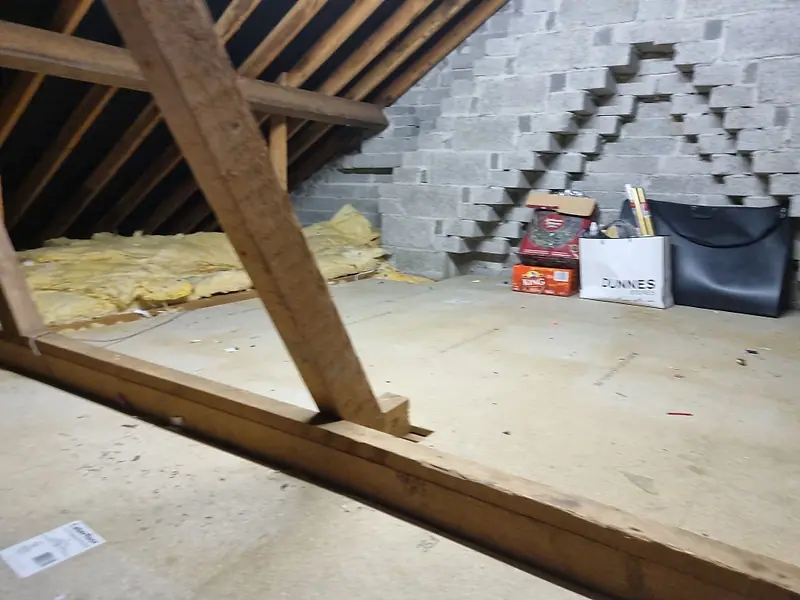
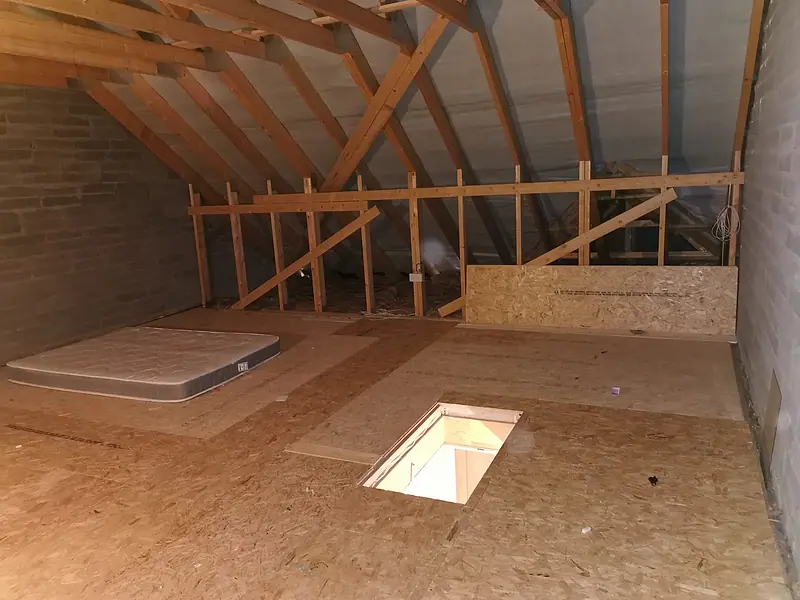
A fully boarded loft is easy to work in. In a partly boarded or unboarded attic, we only step on the joists and keep our weight off the plasterboard between them, because the ceiling below won't hold a foot. Items stored on loose boards laid across the joists come off slowly and carefully.
Insulation and dust
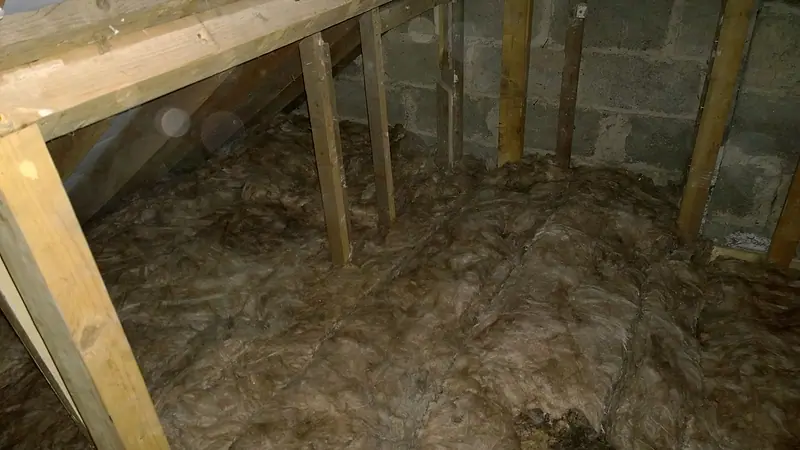
Most loft insulation is mineral wool, which irritates skin, eyes and lungs, and older attics are dusty. We wear dust masks and gloves, work around the insulation rather than through it, and don't pull it up or flatten it to reach things. If it has been disturbed or is missing in places, we'll tell you so you can have it looked at.
Attic rooms, conversions and eaves storage
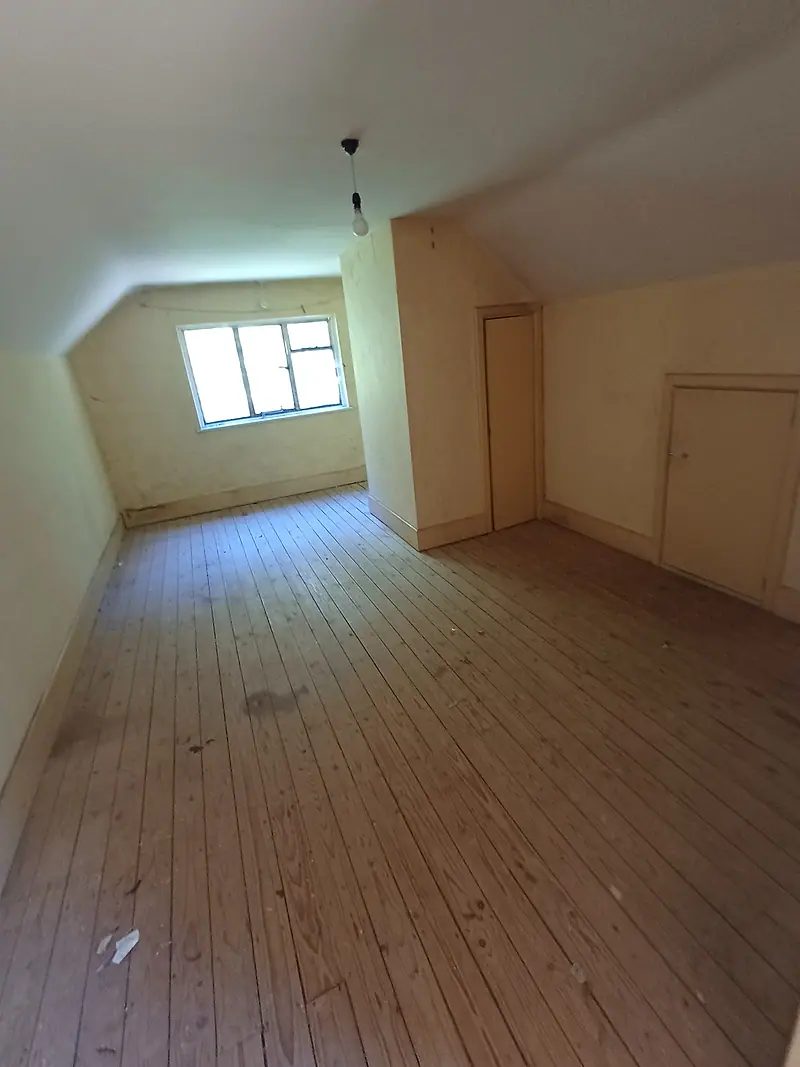
Not every attic is a loft you climb into. Plenty of Dublin houses have a converted attic room with proper stairs and a dormer or roof windows, and dormer bungalows often have long eaves cupboards behind small doors in the walls.
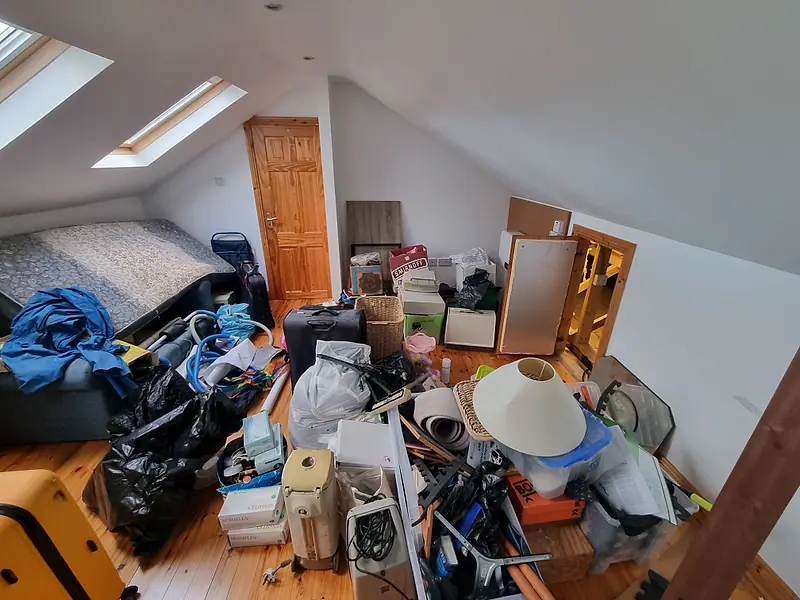
A converted room is cleared much like a bedroom: furniture comes apart where it needs to, the stairs are covered, and everything is carried down rather than lowered through a hatch. The awkward part is usually the furniture that was built or assembled up there, such as a wardrobe under the slope of the roof or a bed that went up in flat-pack. Eaves cupboards take patience, because everything has to come out on hands and knees from a low, narrow space. There's more about clearing rooms like these on our loft clearance page.
Keepsakes, decorations and things you forgot you had
Attics are where families keep the things they can't quite throw out: photo albums, children's drawings, a wedding dress, old letters, school reports and Christmas decorations collected over decades. That's why we never rush one.
Customers mention in their reviews how much they valued being given time to check before every bag left the house, and finding things they hadn't seen in years. You can sort through things with us on the day. There's no need to haul everything you want to keep out of the attic before we arrive.
A few things come up again and again:
- Christmas decorations. Tell us what's staying. The rest is set aside for reuse where it's in good condition.
- Paperwork. Bank statements, old bills and anything with personal details are put aside for you to keep or shred, never thrown loose into a bag.
- Children's things. Toys, prams, cots and high chairs. Those in good condition are set aside for reuse where possible.
- Anything that might matter. Old coins, jewellery boxes, medals, paintings and letters. If something looks valuable or personal, we stop and ask.
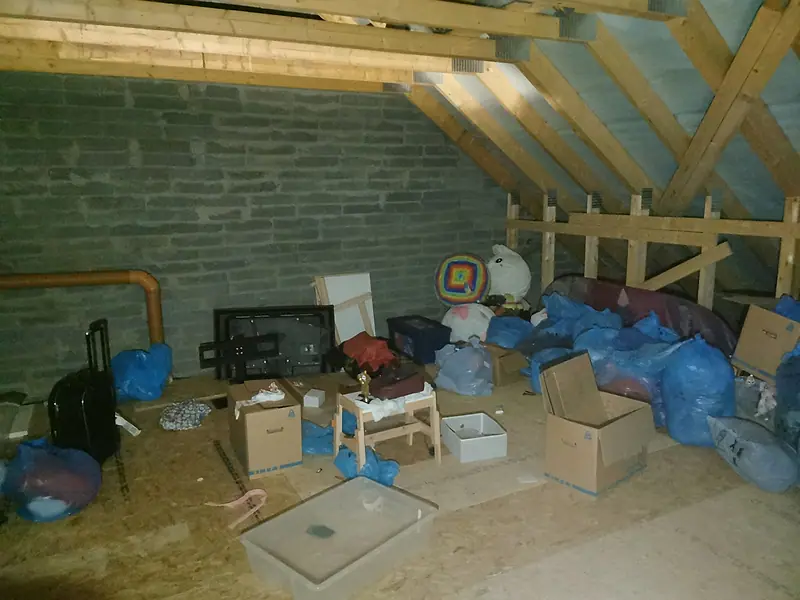
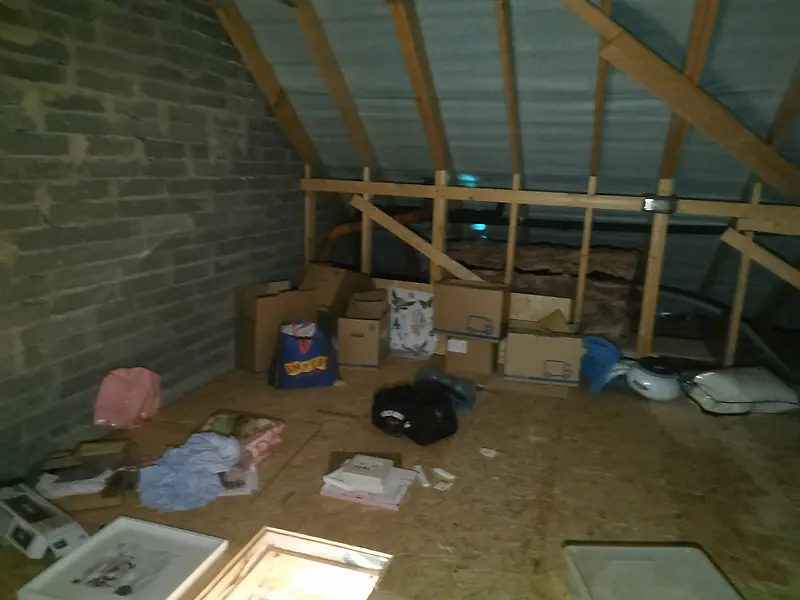
What we usually bring down
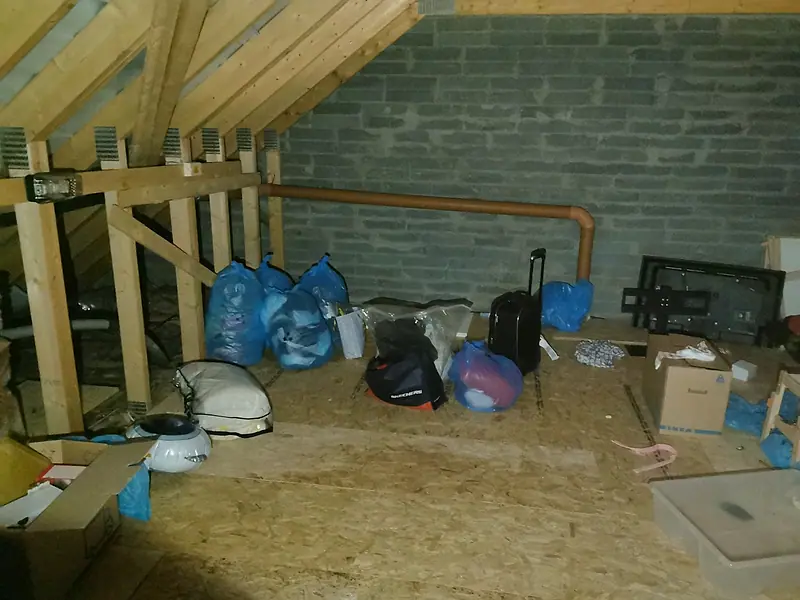
- boxes and suitcases, many of them still full
- old toys, cots, high chairs and prams
- artificial Christmas trees and boxes of decorations
- books, magazines, records and paperwork
- lamps, small furniture and broken chairs
- curtains, bedding and old clothes
- offcuts of timber, old flooring, carpet rolls and other leftovers from past building work
Some things we can't take: paint, solvents, oils and chemicals, or anything you suspect might contain asbestos. Take paint and chemicals to a civic amenity site or a hazardous waste collection, and we'll clear the rest of the attic.
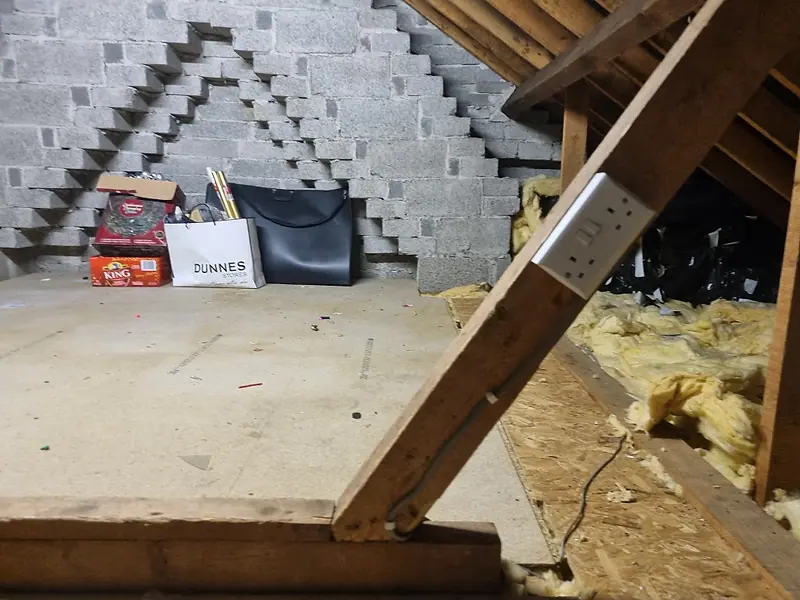
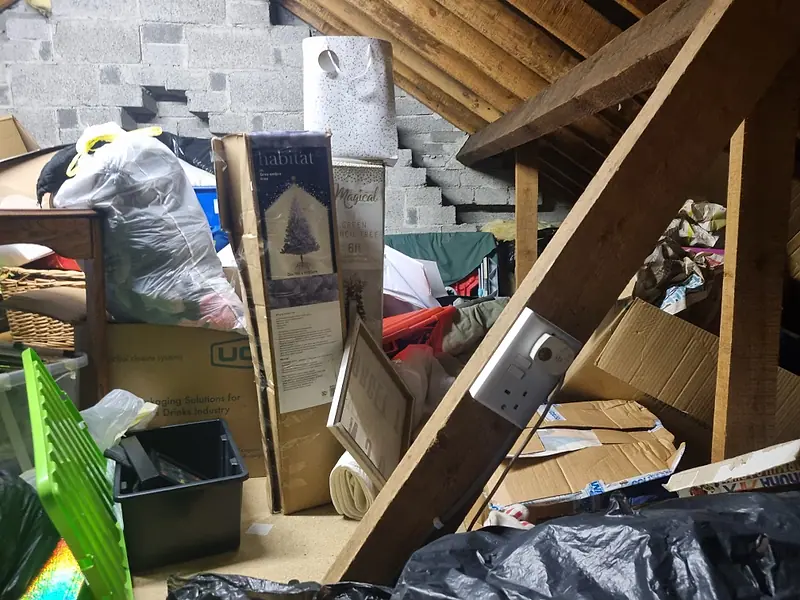
Clearing the attic before building work
A lot of attic clearances are booked because something else is about to happen up there: a conversion, new insulation, roof repairs, a new folding ladder or boarding laid over the joists. Whoever is doing the work will want the space completely empty, and they won't want to spend their first morning carrying boxes down your stairs.
Tell us the date the work starts and we'll clear the attic a day or two before, so the floor is swept and the hatch is free when the builder or installer arrives. If you're keeping some of what comes down, think about where it will live in the meantime, because it can't go back up until the work is finished. Our page on attic clearance before building work covers the timing with contractors in more detail.
Price and timing
Every attic quote is a fixed price, worked out from your photos and confirmed before we book. What affects it:
- Volume: how much is up there, and whether it's packed to the rafters or a few rows of boxes.
- Access: the size of the hatch, whether there's a ladder, and how many flights of stairs lie between the landing and the front door.
- Boarding: working from joists takes longer than working on a boarded floor.
- Special items: anything heavy, awkward or needing specialist disposal.
How long it takes depends on the same things, and we'll give you a realistic time with the quote. As a rough guide:
| Attic | What it means for the time |
|---|---|
| Boarded loft with a folding ladder, a few rows of boxes | The quickest kind of attic job |
| Partly boarded, with items spread onto the joists | Slower, because every step has to be on a joist |
| Small hatch with no ladder | Noticeably slower, with more careful handling of each item |
| Converted attic room with fixed stairs | Similar to clearing a bedroom |
| Packed to the rafters, decades of contents | Can take most of a day, especially if you're sorting as we go |
When the attic is part of a full house clearance, we normally start at the top and work down, so the rest of the house only gets walked through once.
Where everything from the attic goes
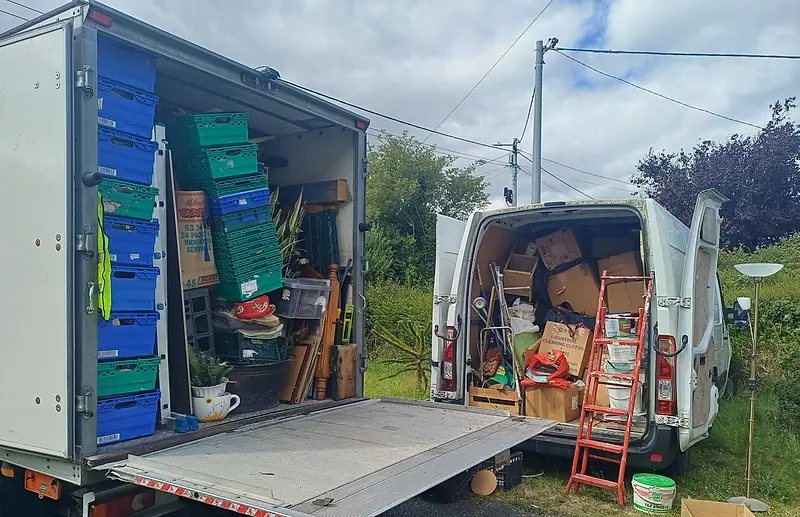
Things are sorted as they come down the ladder. Decorations, toys, books and small furniture that are still in good condition are kept apart so they can be reused where possible. Metal, old electricals and flattened cardboard boxes, of which there are always plenty, go for recycling. Whatever's left is taken to licensed waste facilities.
Spotless is an authorised waste carrier, holding waste collection permit NWCPO-25-13287-01, and every attic we clear is fully insured, ladder and all. We're based in Dublin and cover Dublin and all of Leinster.
Attic clearance around Dublin
The attic you have depends a lot on where the house is, and we have pages for a few areas where we're asked to clear attics often:
- Drumcondra. Red-brick terraces and 1930s houses, with some of the tightest hatches in the city.
- Ranelagh. Victorian and Edwardian houses, steep stairs and attics cleared ahead of renovation work.
- Sandyford. Dublin 18 estate houses with folding ladders and attics filled over twenty years of family life.
- Carrickmines. Newer, larger homes with big attic floors, often cleared before a conversion.
Just the attic, or the whole house?
An attic can be a job on its own: before shelving goes in, before a conversion, or simply to use the space again. It's often part of something bigger, though.
If the garage and shed are full too, see garage clearance and shed clearance; we can do them on the same visit. For a whole property, house clearance covers every room, and our Dublin house clearance page has local detail for the city and county. When the attic belongs to a parent or relative who has died, our bereavement clearance service works at the family's pace. And if the attic is one part of a home that has become very full, we offer discreet, staged clearances.
Want a price for your attic? Take a few photos of the attic and one of the hatch from the landing, add your area, and send them on WhatsApp. We'll reply with a fixed price, usually the same day.
Before we come
- clear a path on the landing under the hatch
- tell us if there's no light in the attic
- point out anything you definitely want to keep, if you already know
- tell us if shelving, flooring or a conversion is booked to follow, and we'll leave the space clear and swept for them
Our attic clearance guide covers clearing an attic safely, if you'd like to do some of it yourself first.