
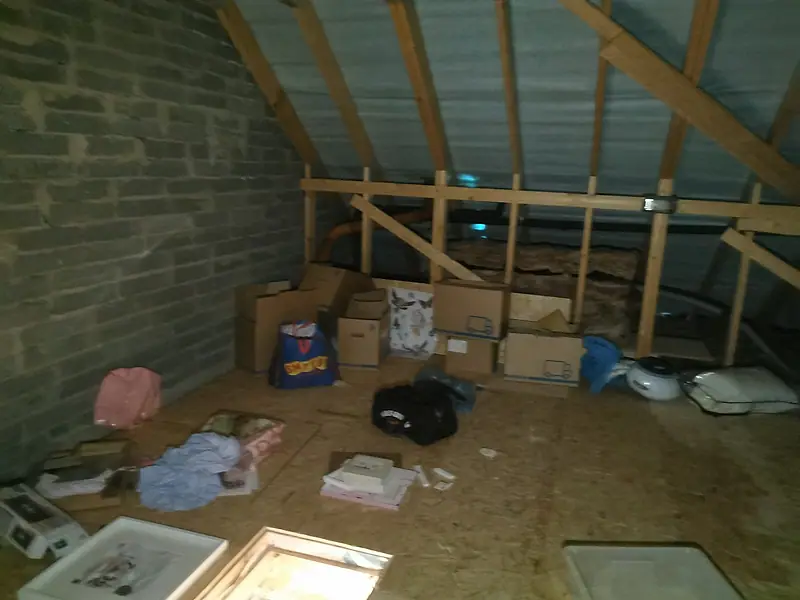
Before you go up: the hatch and the ladder
Most attic accidents happen getting in and out, not in the attic itself. Sort out the access before you touch a single box.
- Check the ladder. A folding loft ladder should open fully, lock into place and sit firmly on the landing floor. Check the weight limit on the label, and remember it includes whatever you're carrying.
- Use a step ladder only if it reaches properly. You should be able to climb through the hatch without standing on the top step. Never stack anything to gain height.
- Keep both hands free. Don't carry boxes up or down the ladder. Pass them through the hatch to a helper instead.
- Have a second person in the house. If you slip or the ladder moves, someone needs to know.
- Clear the landing. Leave room under the hatch to stand, set things down and pass them on.
If the hatch is small, measure it. Cots, bed frames and shelving usually went up in pieces and will have to come down the same way, so bring a screwdriver set.
Light, air and heat
Many attics have one bare bulb or no light at all. A battery LED work light or a good head torch makes the job safer and quicker. Don't trail an old lamp across the insulation, and don't use anything that gets hot.
Attics are dusty and the air can be stale. Wear a dust mask, gloves and long sleeves, and take regular breaks downstairs.
Heat is the one people forget. Under a slate or tile roof on a sunny day, the attic can get far hotter than the rest of the house. In summer, work early in the morning, bring water up with you, and come down straight away if you feel light-headed. Winter has its own problems: cold hands, short days and very little natural light.
Boards, joists and the ceiling below
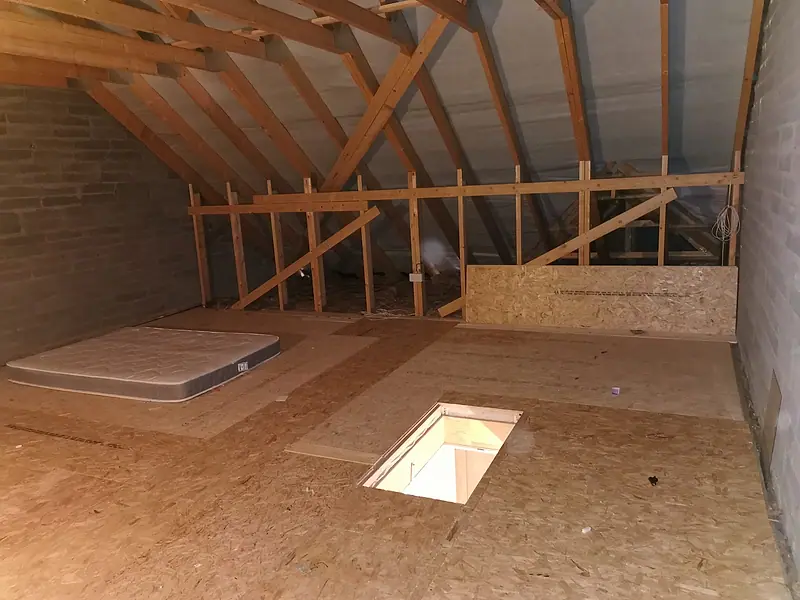
The floor of an attic is the ceiling of the rooms underneath. Only some of it will take your weight.
| Surface | Safe to stand on? | Notes |
|---|---|---|
| Boarded floor, screwed down | Yes | Check boards near the edges, which may be loose or cut short |
| Joists (the timber beams) | Yes, carefully | Step from joist to joist; lay a board across several for kneeling |
| Plasterboard between joists | No | It won't hold a foot. This is how ceilings come down |
| Insulation | No | It hides where the joists are, so feel for the timber first |
| Loose boards laid across joists | Only once checked | Make sure both ends rest on a joist |
In an unboarded attic, a sturdy length of board laid across three or four joists gives you a safe platform to kneel on while you reach. Move it along as you go.
 spotless.ie
Insulation, pipes, wiring and wildlife
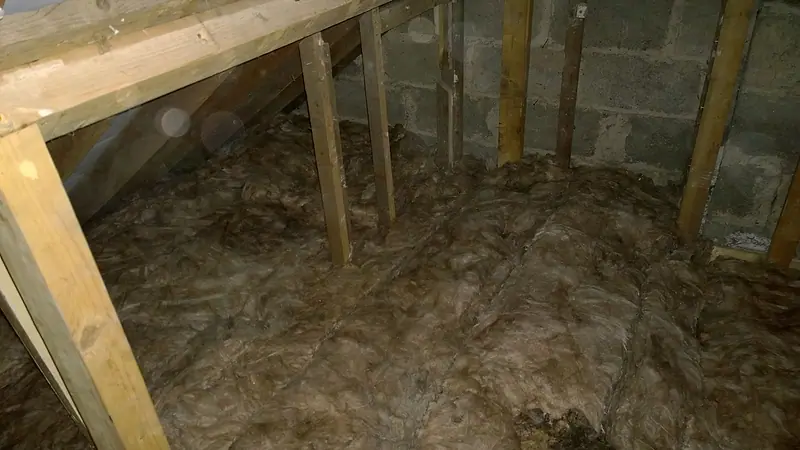
Insulation. Most loft insulation is mineral wool, which irritates skin, eyes and lungs. Wear gloves and a mask, and don't drag boxes across it. Squashing insulation down makes it work less well, so if you're keeping things up there, store them on boards rather than flattening it.
The water tank and pipes. Many Irish houses have a cold-water tank in the attic, with pipes running across the joists. Don't lean on them, stand on them or knock them with boxes.
Wiring. Leave cables where they are. Don't pull them to free a box or pin them under anything heavy. If you spot damaged or very old wiring, have an electrician look at it.
Wildlife. Wasps' nests, birds and mice are common finds. Leave an active wasps' nest alone and call a pest controller. If you think bats are roosting, don't disturb them: bats are protected in Ireland, and the National Parks and Wildlife Service can advise. If you see droppings, wear gloves and a mask and bag anything affected.
Sorting as you go
The easiest way to clear an attic is with one person up top and one below. The person in the attic brings things to the hatch, and the person on the landing takes them and sorts them. Nobody climbs the ladder with their arms full.
Sort into four groups on the landing or in a spare room:
- Keep, downstairs. Things you want to use or look through properly.
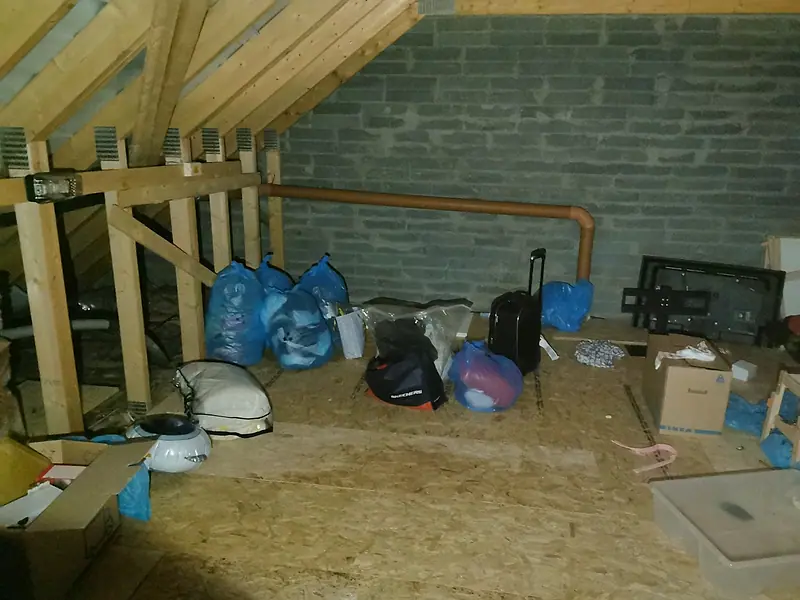
- Keep, back up. Things that genuinely belong in the attic, like suitcases and the Christmas decorations.
- Give away or sell. Toys, prams, cots and small furniture in good condition.
- Let go. Broken items, paperwork you've checked, and leftovers from building work.
Go slowly with keepsakes. Attics hold photo albums, children's drawings, letters, school reports and wedding things. Open every box, even ones that look like rubbish, because labels are often wrong and important papers turn up in unexpected places. Paperwork with personal details should be shredded, not binned loose.
Be honest about the decorations, too. If a box hasn't been opened in years, it probably won't be.
Rather not do the ladder work yourself? Take a few photos of the attic and one of the hatch from the landing, and send them on WhatsApp. We'll reply with a fixed price, usually the same day.
What not to store in an attic
Attics swing between hot and cold, and many are damp in winter. That's hard on a lot of the things people put up there.
| Avoid storing | Why | Better place |
|---|---|---|
| Photos, letters and important documents | Heat and damp fade, curl and stick them together | A box in a wardrobe or under a bed |
| Candles, vinyl records, crayons | They soften and warp in summer heat | A press in the house |
| Paint, aerosols and chemicals | Heat makes them unsafe, and they go off | The garage or shed, or proper disposal |
| Clothes and bedding in open bags | Moths, damp and musty smells | Sealed boxes, if they must go up |
| Electronics and batteries | Heat and damp damage them | Indoors, or electrical recycling |
| Food, including pet food | It attracts mice | The kitchen |
| Heavy items | Ceiling joists in many houses weren't built to carry heavy loads | Ask a builder before storing anything heavy |
| Things you use often | You won't climb up for them | Somewhere you can reach |
When it's worth getting help
Plenty of attics can be cleared by two people in a weekend. It's worth calling in help when:
- the attic isn't boarded and there's a lot to bring across the joists
- the ladder or hatch makes carrying awkward
- there are heavy or bulky items that need taking apart
- climbing a ladder isn't safe for you
- the attic is one part of a bigger job, like a whole house before a sale
Our attic clearance service brings everything down, gives you time to check each bag before it goes, and leaves the boarded floor swept. If the garage and shed are full too, garage clearance and shed clearance can be done on the same visit, and for a whole property see house clearance. Clearing a parent's attic after a death? Our bereavement house clearance service goes at the family's pace. Where the attic is part of a home that has become very full, see our discreet, staged hoarder clearance. Our house clearance cost guide explains how a price is worked out.
Keeping the attic organised afterwards
- Keep a clear walkway from the hatch, with storage either side.
- Use clear plastic boxes with lids, labelled on two sides.
- Store things on boards, raised above the insulation if you can.
- Keep a list of what's up there on your phone.
- Look through it once a year, ideally when the decorations come down.
Doing the whole house? Our room-by-room clear-out guide suggests an order to work in, and what happens to furniture after a clearance explains where things go once they leave.
