
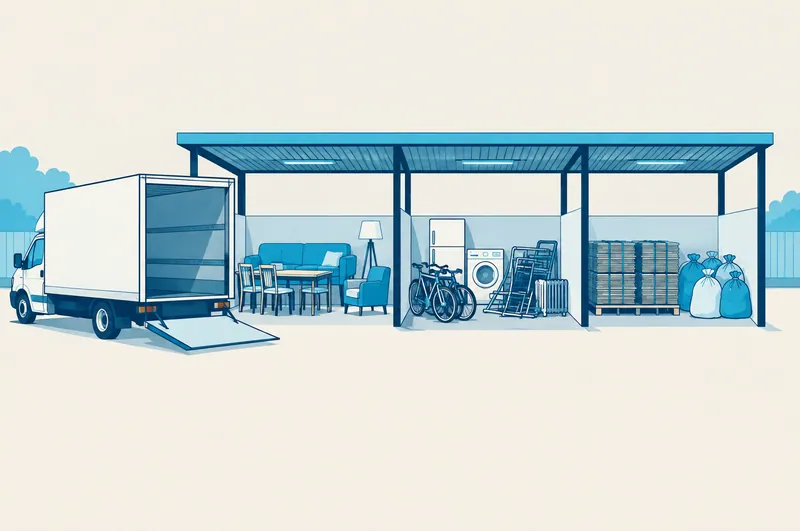
Three routes out of the house
Everything that leaves a house during a clearance goes one of three ways. As we load the van, items are sorted on the spot rather than thrown in together.
| Route | What usually goes this way | What it depends on |
|---|---|---|
| Reuse | Sound wooden tables and chairs, dressers, bookcases, good bed frames, clothes and household items in decent condition | Condition, cleanliness, and whether someone can genuinely use it |
| Recycling | Metal frames, filing cabinets, appliances, electricals, cardboard and glass | Separating materials as we load |
| Licensed disposal | Sofas past their best, flat-pack that fell apart, mattresses, damaged and mixed items | Nothing else being possible |
There's no fixed split between the three, because it changes completely from one house to the next. A house of solid older furniture and good clothes sends far more to reuse than a rental full of broken flat-pack.
What can be reused, and why it's less than you'd hope
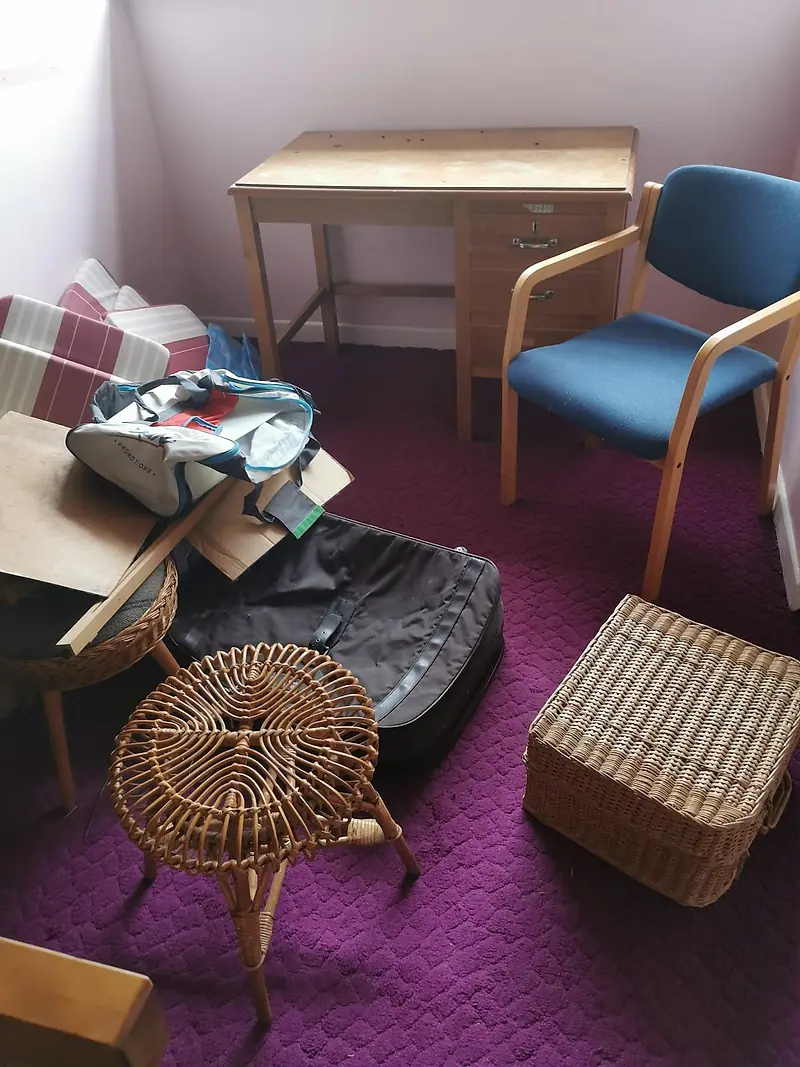
The furniture with the best chance of a second life is solid, clean and in one piece: wooden tables and chairs, dressers, sideboards, chests of drawers, bookcases and sound bed frames. Older solid-wood pieces often do better than newer ones, because they survive being moved.
Plenty of furniture struggles, though:
- Sofas and armchairs. Upholstered furniture sold in Ireland has to meet fire-safety rules, and charity shops generally want to see the original fire-safety label. No label, a stain or a tear, and they usually can't take it.
- Flat-pack. Chipboard rarely survives being taken apart and rebuilt, so most of it can't be reused.
- Anything damp, stained or smelling of smoke. It doesn't matter how good the piece once was.
- Very large items. Huge wardrobes and corner units are hard to rehome simply because most homes don't have the room.
Be wary of any company that claims the entire contents of a house go to charity; that simply isn't how it works. What we can say is that reusable items are set aside where possible, rather than everything going into one skip.
 spotless.ie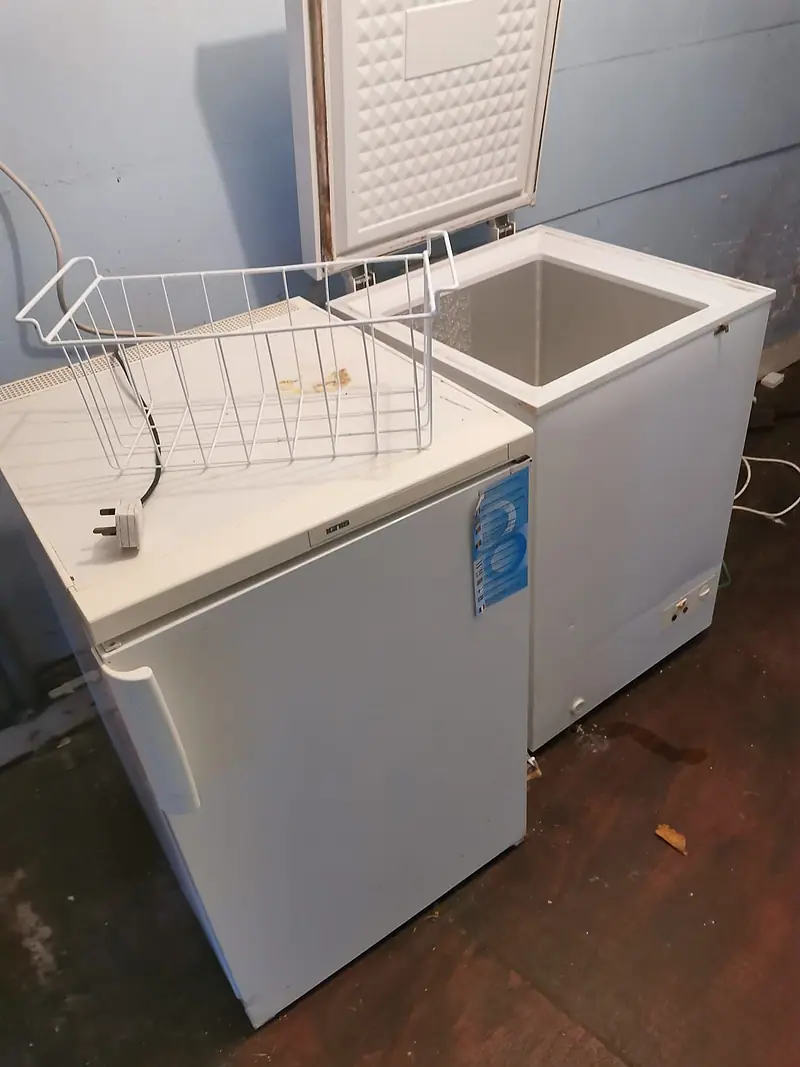
Charity and house clearance in Dublin
A lot of families in Dublin contact a charity first, hoping it will take the whole house. It rarely works out that way. Charity shops and furniture reuse schemes choose the specific pieces they know they can sell or pass on, often from photos, and they need them clean, complete and, for upholstery, still carrying the fire-safety label. They collect when their own schedule allows, which may not line up with a closing date or the end of a lease.
The order that tends to work is simple: send the charity photos of your best pieces, let them take what they choose, then book the clearance for everything that's left. If time is too short for that, point out the pieces you think deserve a second life. We set reusable items aside where possible as we load, but we can't promise where any particular piece ends up. Our house clearance in Dublin page explains how the rest of the job runs.
Electricals and appliances (WEEE)
Anything with a plug or a battery counts as waste electrical and electronic equipment, usually shortened to WEEE. It can't go in your household bin, and it shouldn't go to general waste, because it contains both recoverable materials and harmful ones.
Here's roughly what happens to each kind once it reaches a treatment facility:
- Fridges and freezers are degassed first: the refrigerant is drawn out of the cooling circuit, then the cabinet is broken up in an enclosed system so the gases trapped in the foam insulation are captured too. Only then are the steel, plastic and copper separated.
- Washing machines, cookers and dryers are largely steel. Once any hazardous parts are taken out, they're shredded and the metals are sorted for reprocessing.
- TVs, monitors, computers and small electricals are stripped down so the circuit boards, glass, plastics and metals can each go their own way. Nobody along the line wipes your data, so clear computers and phones yourself before the clearance, or keep the hard drive.
An appliance handed back to a shop when you buy its replacement goes into the same treatment system, so that route is just as good if a new one is already on order.
Mattresses
Mattresses are among the hardest things to deal with. Hygiene rules out reuse for almost all used mattresses, they're far too bulky for household bins, and they can't just be left out on the street. Used mattresses go to licensed facilities that accept bulky waste.
If a mattress is fairly new and sound, and you'd rather keep it than replace it, mattress cleaning is worth a thought before it goes. The same goes for a good sofa with grubby covers: upholstery cleaning can make it worth keeping.
Furniture that needs to go? Send a photo of each piece on WhatsApp with the floor it's on and the parking. We'll reply with a fixed price, usually the same day.
What goes to licensed disposal
Whatever can't be reused or recycled goes to a licensed waste facility. In Ireland, a waste facility needs a permit or licence, from the local authority or the Environmental Protection Agency, to accept waste, and it has to handle that waste under the conditions it's been given. That's a world away from the back of a field or a ditch on a quiet road.
Typically this means worn sofas without labels, broken furniture, mixed bags of household odds and ends, and used mattresses.
Disposal isn't always the end of sorting, either. Mixed loads are often picked over again at the facility to pull out more metal, timber and cardboard, and only what's genuinely left goes on to energy recovery or landfill.
Why it matters who takes your furniture
You can only follow your furniture if the first link in the chain is legitimate. In Ireland, a business may only take household waste away for a fee if it holds a waste collection permit, and a permitted collector can only bring that waste to authorised facilities, which keep records of what comes in. That's the trail from your hall door to wherever each item ends up. With an unpermitted collector, the trail stops at the end of your road.
There's a personal reason to care as well. Dumped furniture and bags often carry clues to where they came from, and the household that handed them over can be held liable even though someone else did the dumping. "Anything taken for cash" offers on social media are a common source of exactly that. Before anything leaves your hands:
- get the collector's permit number in writing
- look it up on the public register kept by the National Waste Collection Permit Office
- ask which facilities they use, and expect a specific answer
We hold waste collection permit NWCPO-25-13287-01. Our junk removal guide covers the other legal ways of getting rid of unwanted things.
Pianos, hospital beds and other awkward items
A few things need a little more thought before clearance day:
- Pianos. Old upright pianos are very hard to rehome, because few people have the space and many need restoring. If yours is a good instrument, ask a piano dealer or tuner first; otherwise it can go with the clearance. Tell us about it in advance so we bring enough hands.
- Hospital beds, hoists and wheelchairs. If they were supplied on loan, for example by the HSE or a charity, contact the supplier to collect them rather than putting them in the clearance.
- Garden furniture and barbecues. Metal frames go for recycling. Plastic chairs that have gone brittle in the sun usually can't be reused.
- Office furniture. Metal desks and filing cabinets go for metal recycling. Clear out the drawers beforehand, and hold on to anything confidential so it can be shredded securely.
Giving your furniture the best chance of a second life
- Donate or sell first. Offer good pieces to family, a charity shop or an online listing before the clearance. We'll take whatever's left.
- Keep the labels. Don't cut the fire-safety label off sofas and armchairs.
- Keep it dry. Furniture stored for years in a damp garage or shed rarely makes it to reuse. Bring good pieces inside if the clearance is weeks away.
- Keep sets together. Six matching chairs are far easier to rehome than one.
- Point out the good pieces. Tell the crew what you think is worth saving, so it's handled with that in mind.
For single pieces, see furniture removal; for a mixed load, junk removal; and for a whole property, house clearance, from the attic to the shed. If the furniture belonged to someone who has died, read how bereavement clearance works for what to check before anything goes, and what house clearance costs explains how special items affect the price.
