
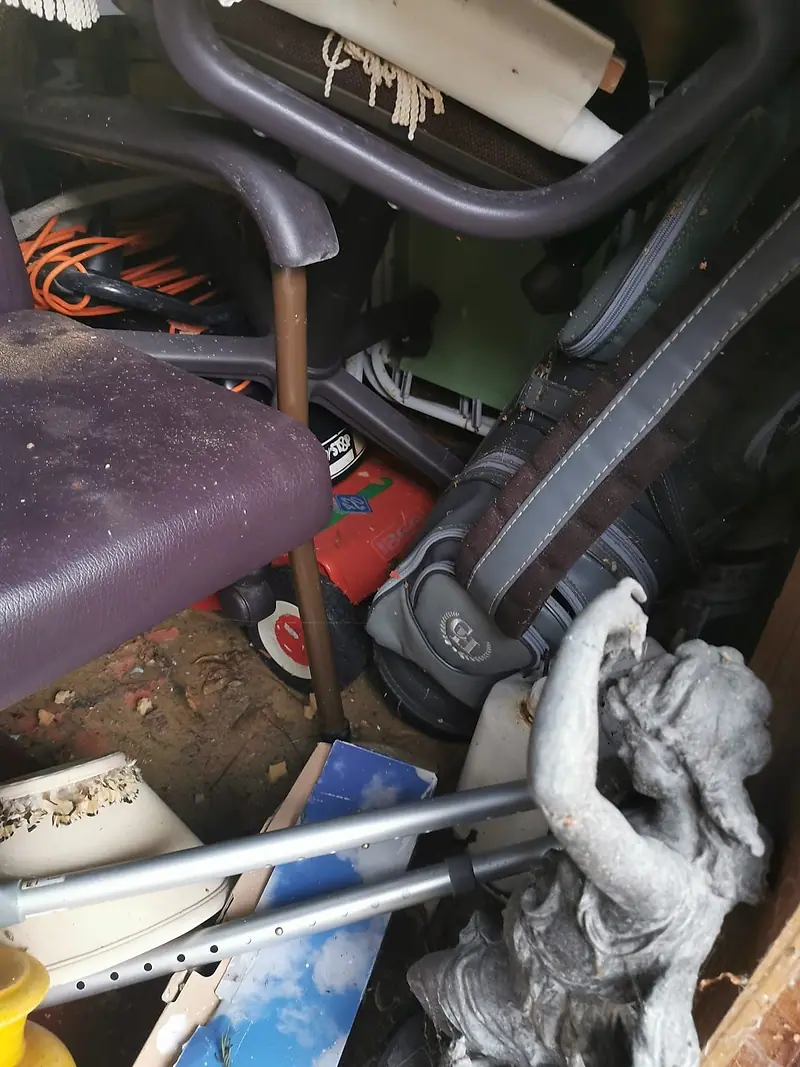
What counts as junk
Junk is anything you no longer want that's too big, too awkward or not allowed to go out with your household bins. In most Dublin homes that means:
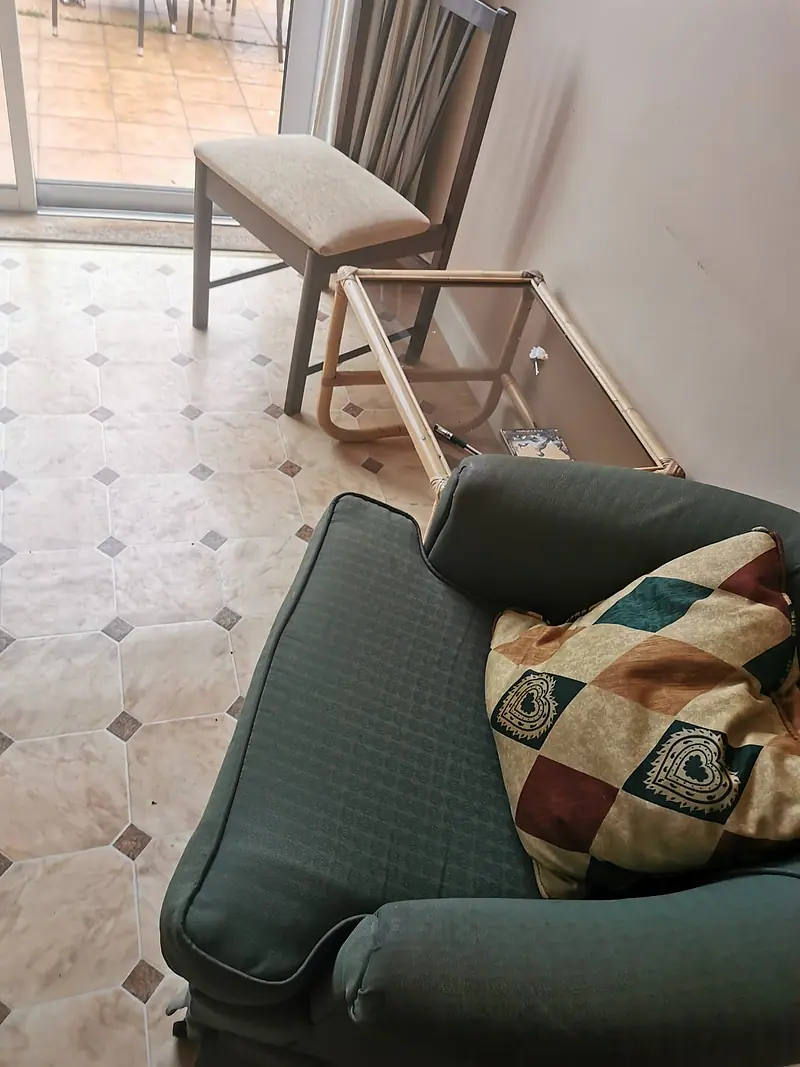
- broken or unwanted furniture: sofas, beds, wardrobes, tables
- old appliances: fridges, washing machines, cookers, microwaves
- electricals: TVs, computers, printers, cables, small kitchen gadgets
- bags of clutter from a spare room, the attic or a wardrobe clear-out
- boxes, packaging and cardboard from a move
- bikes, toys, garden furniture, barbecues and trampolines
- DIY leftovers: old doors, kitchen units, timber and lifted carpet
Some things that look like junk aren't ordinary waste at all. Asbestos, chemicals, solvents, gas cylinders and clinical waste need specialist handling, and nobody should be taking them away in a van with your old sofa.
Your options, honestly
There's more than one way to get rid of junk, and booking us isn't always the right one.
| Option | Suits | Watch out for |
|---|---|---|
| Your bin collection | Household waste and recycling that fits in the bin | Bulky items don't go in wheelie bins; ask your bin company whether it does bulky collections |
| Shop take-back | Old appliances when you buy a new one | Ask when you order, so the old one goes when the new one arrives |
| Selling or giving away | Furniture and items in good condition | Takes time, and buyers don't always turn up |
| Doing it yourself | A few bags and a car | You need a big enough vehicle and a legal place to bring it |
| A skip | Renovation rubble and heavy waste over several days | Restrictions on fridges, mattresses and electricals; permits on public roads |
| A permitted collector | Bulky items, mixed loads, anything you can't lift or transport | Check the permit number before you hand anything over |
If you're weighing up a skip, our skip vs clearance comparison sets out the pros and cons.
One item or a van load?
Junk removal is priced mainly on volume: how much of the van your junk will fill.
- A single item, like a sofa, a fridge or a mattress, is a small job. It's still worth booking if it's heavy, upstairs or won't fit in a car. See furniture removal for one-off pieces.
- A mixed load, like a broken chair, a few bags, an old microwave and some boxes, is classic junk removal.
- A full room, garage or shed is closer to a clearance. See garage clearance and shed clearance.
- A whole house, attic included, is a house clearance.
If you've a few things to go, it usually makes sense to group them into one collection rather than booking several small ones.
Moving house is the other big source of junk: flat-pack that won't survive another move, a mountain of boxes, the fridge that doesn't fit the new kitchen. Booking a collection for just after the removal van leaves gets it all gone in one visit.
Bulky items: sofas, beds and mattresses
Big furniture is the most common reason people call us. A wardrobe or a three-seater won't fit in a hatchback, needs two people on the stairs, and the bin company won't touch it. A few things worth knowing:
- Sofas often went in before the door or banister was changed. Corner sofas usually unbolt into sections, while a sofa bed hides a steel mechanism that makes it far heavier than it looks.
- Wardrobes and bed frames usually need taking apart, which we do on site.
- Mattresses are almost never accepted for reuse, so plan on disposal rather than donation. Don't leave one in the garden while you decide: it soaks up rain like a sponge and becomes a soggy two-person lift.
- Furniture in good condition may find a second home. The guide to where cleared furniture ends up explains what can and can't be reused.
 spotless.ie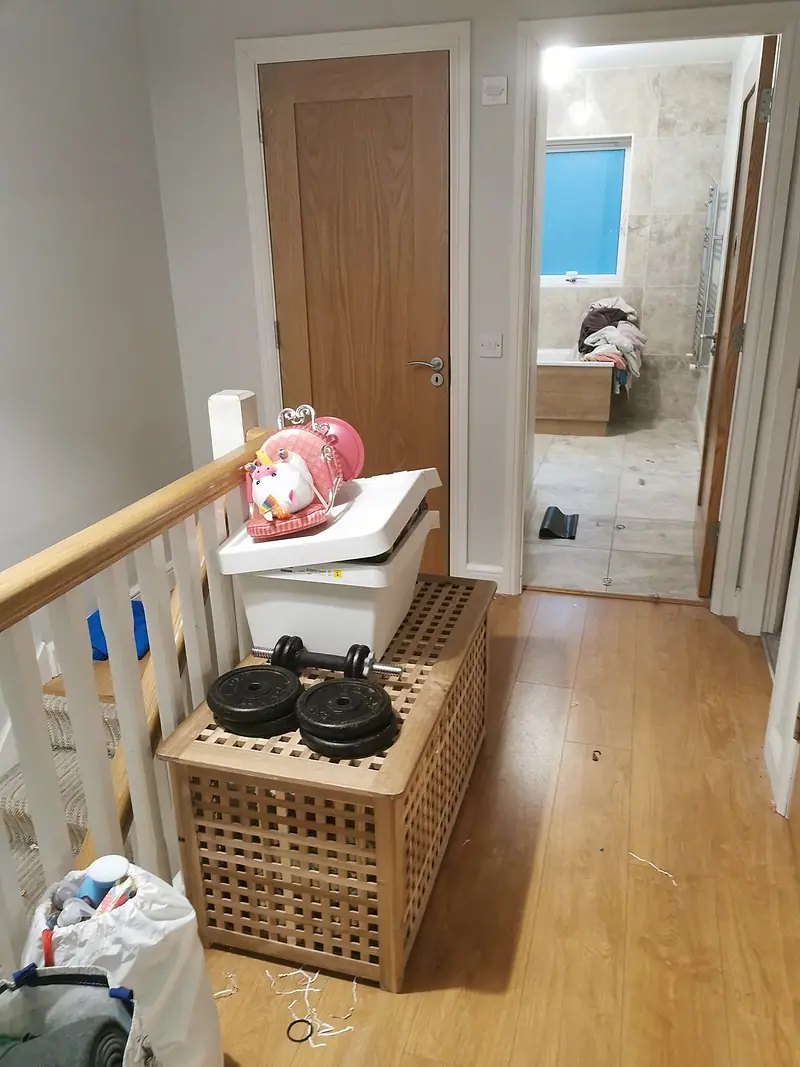
White goods and electricals
Fridges, freezers, washing machines, dryers, dishwashers and cookers are known as white goods. They're heavy, and all of them count as electrical waste (WEEE), which can't go in your bin.
- Buying a replacement? Retailers have to take back the old appliance free on a one-for-one basis, so raise it when you book delivery.
- Gas cookers need a Registered Gas Installer to cap the supply first. Nobody should simply pull one out from the wall.
- Fridges and freezers hold gases that must be recovered at a specialist plant, so they should leave upright and in one piece, with the pipework untouched.
- Laptops, phones and PCs should be factory reset, or have their storage taken out, before they leave the house.
If there's no new appliance coming, or the old one is in the attic or garage, we take it away for appliance recycling.
Got junk that needs to go? Take a few photos with something for scale, add your area, and send them on WhatsApp. We'll reply with a fixed price, usually the same day.
What not to do
Getting rid of junk the wrong way can cost far more than doing it properly.
- Don't dump it. Leaving furniture or bags in a lane, a field or beside a bottle bank is illegal dumping. Local authorities investigate dumped waste, and fines or prosecution can follow.
- Don't leave it on the footpath. Even with a "free" sign, furniture left on a public footpath can be treated as littering.
- Don't burn it. Burning household waste in the garden or in a barrel is illegal in Ireland, and foam and treated wood give off toxic smoke.
- Don't hand it to someone without a permit. Your responsibility for waste doesn't end at the gate. If an unpermitted collector dumps it, the trail can lead back to your address, and you could be the one facing the fine.
The last one catches out the most people. Offers on social media or through the letterbox to take "anything, any time" for cash often come from collectors with no permit and nowhere legal to bring it.
How to check a collector is legitimate
Any business that charges to take household waste away must hold a permit from the National Waste Collection Permit Office (NWCPO). Checking one takes about a minute:
- Before you book, ask for the permit number. Anyone legitimate will have it to hand.
- Search for it on the NWCPO's online register, and make sure the holder's name is the one on the van, the ad or the invoice.
- Ask what happens to your junk afterwards. A real answer names reuse, recycling and authorised facilities; a shrug is a warning sign.
- Get the price in writing, even if it's just a WhatsApp message.
Ours is NWCPO-25-13287-01, if you'd like to try the check on us first.
Getting a price
Send us photos of what needs to go, with something in the shot that shows the size, like a doorway or a wheelie bin. Tell us where it is (upstairs, the attic, the garage, the back garden), the floor and lift situation if it's a flat (apartment clearance covers buildings with management rules), and your area or Eircode.
You'll get a fixed price back, normally on the day you ask. Once you accept, there's often a collection slot free in the next couple of days. Crews are out from 8am to 8pm, Monday to Saturday, covering Dublin and all of Leinster. For cuttings and garden rubbish, see garden clearance.
