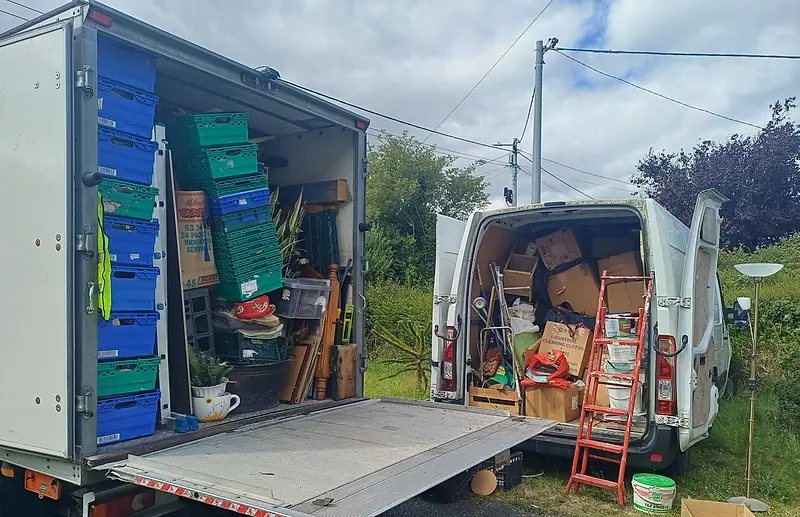

Commercial clearance, planned around your operation
Clearing a factory or warehouse is a different job from clearing a house. There's more volume, more dismantling and, usually, a business still running around you. The aim is to clear what needs to go without stopping production, blocking the loading doors or leaving your staff working around a mess.
When Spotless takes on a commercial clearance, you get:
- A price agreed up front. Based on photos or a video walk-through, or a site visit for larger units.
- A phased plan. We clear area by area, so the parts of the unit you're still using stay usable.
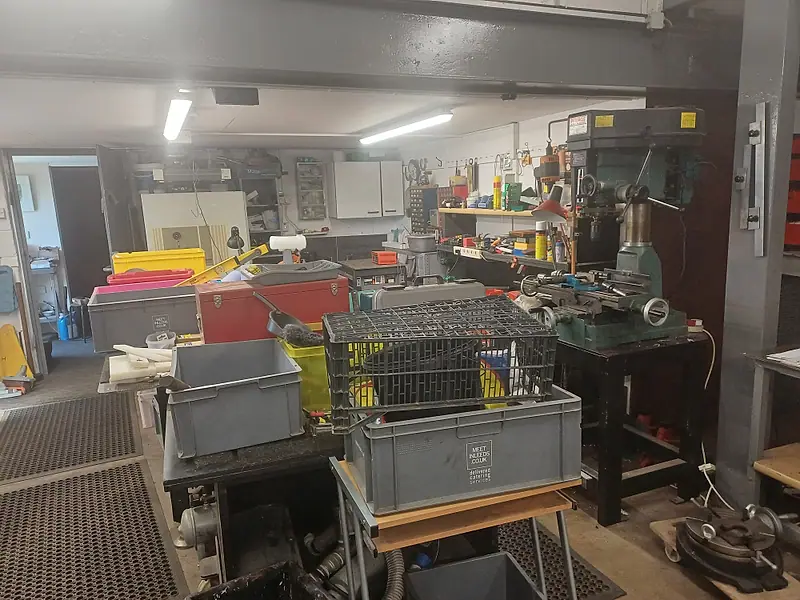
- Dismantling on site. Shelving, light racking, workbenches and office furniture taken apart and loaded neatly.
- Sorted waste. Metal, cardboard, timber pallets and electricals separated for recycling rather than mixed together.
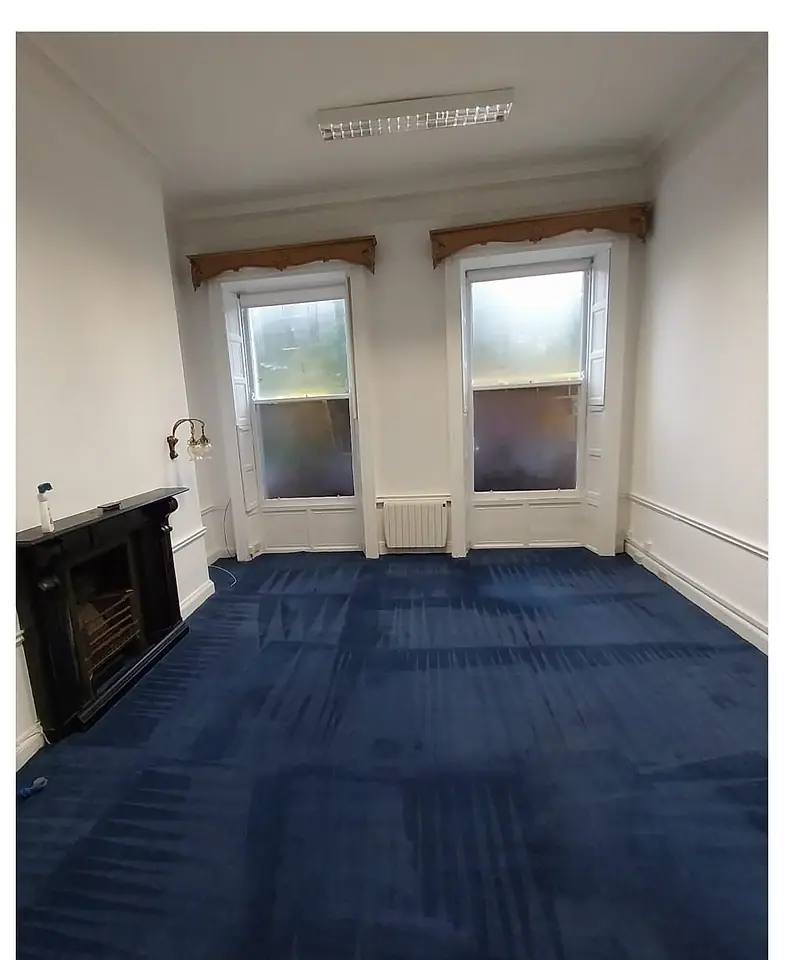
- A clear floor at the end. Swept and handed back in a state the landlord, the agent or your new layout can work with.
What we clear from factories, warehouses and units
| Area | What usually goes |
|---|---|
| Warehouse floor | Pallets, old and damaged stock, packaging, shrink wrap, cardboard, broken trolleys |
| Shelving and storage | Free-standing shelving, boltless racking, bins, cages, workbenches |
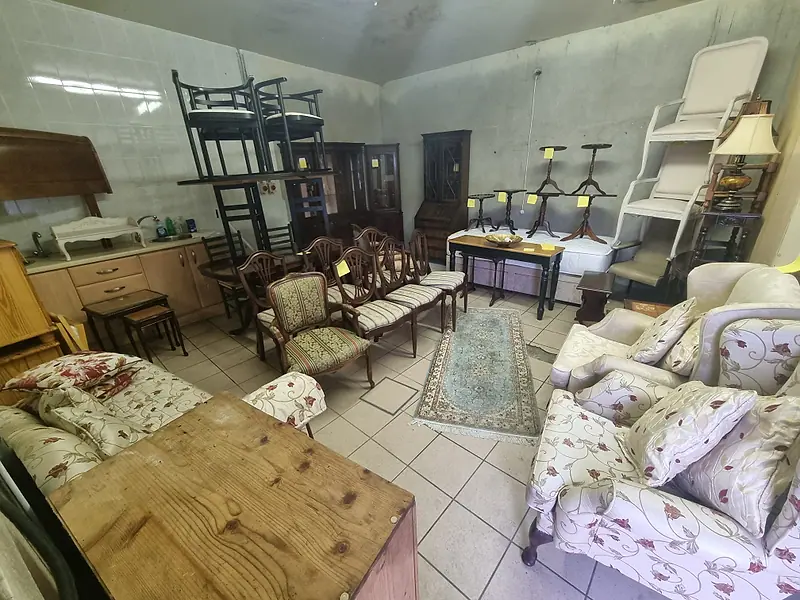
| Office areas inside the unit | Desks, chairs, filing cabinets, partitions, old IT and printers |
| Canteen and welfare areas | Tables, chairs, lockers, fridges, microwaves |
| Showroom and trade counter | Display stands, counters, signage, samples |
| The yard | Old pallets, scrap metal, timber, broken furniture, general rubbish |
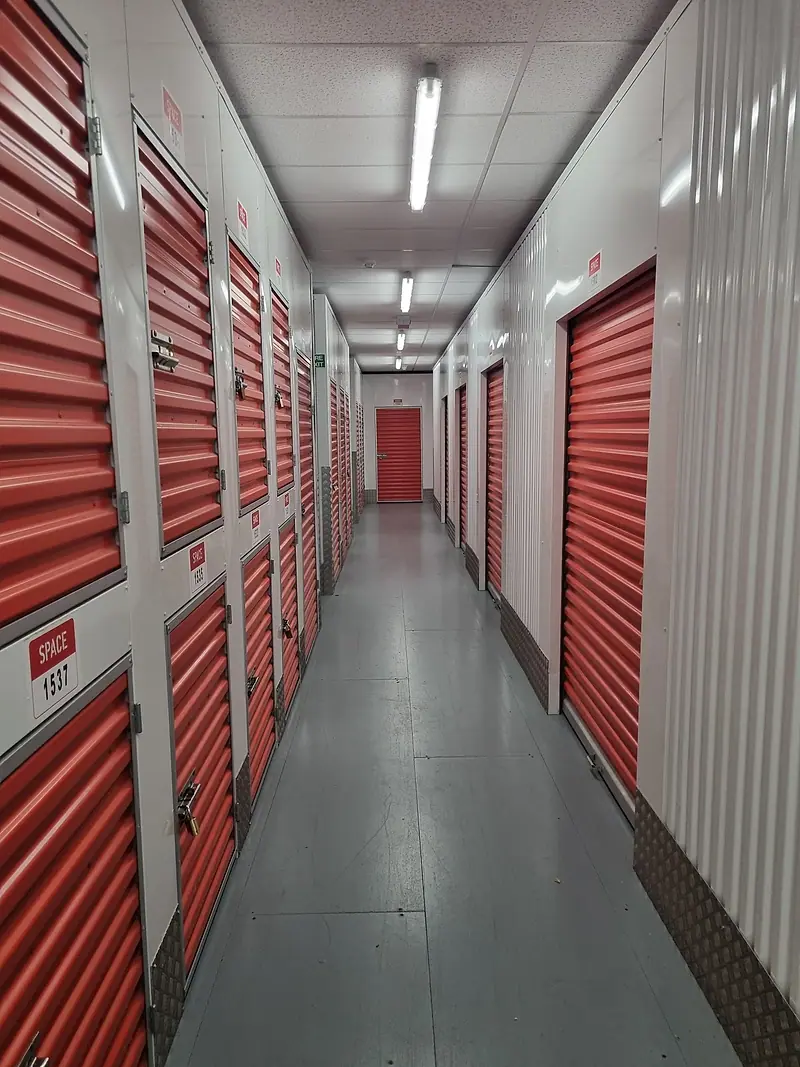
If there's a separate office to clear, our office clearance page explains how we handle IT and confidential paper (in short: we don't offer data destruction or shredding, so deal with drives and sensitive files first). If stock has spilled over into self-storage, we can clear that too: see storage unit clearance.
 spotless.ie
Why businesses call us
Commercial clearances tend to come up at the same few moments:
- The lease is ending. The landlord wants the unit back empty, and you'd rather your own staff spent the last weeks on the move, not on the skip. Our page on end-of-lease warehouse clearance covers what the lease usually asks for and which part is ours.
- You're consolidating. Two units are becoming one, or the operation is moving to a bigger site and the old stock and shelving aren't coming with it.
- A refit or new layout. A new production line or fresh racking is due in, and everything in the old layout must be cleared out before the installers turn up.
- Years of build-up. Damaged stock, obsolete packaging, broken pallets and a back corner nobody has dealt with since the last stocktake.
- The business is closing. The owner, a director or an agent acting for them needs the premises cleared and handed back.
Whatever the reason, the planning starts the same way: photos of every area, a clear idea of what stays, and the date you need the space.
Working around a live site
Most units we clear are still in use, at least in part. So before the first van load we agree:
- Where we work and where we don't. A marked-off zone, away from forklift routes and active loading doors.
- When we load. Loading doors and yard space shared with your deliveries and collections.
- Who signs off. One contact on site who can say yes or no to an item on the spot.
- Site rules. Sign-in, high-vis, any induction your insurer or landlord requires. Tell us in advance and we'll comply.
Starting early, or doing the noisy dismantling on a Saturday by arrangement, keeps the disruption down.
Access, yards and parking on an industrial estate
Industrial estates bring their own access questions, and they're worth sorting out before the day rather than at the gate:
- Gates and security. Many estates and business parks have a barrier, a gatehouse or set opening hours. Let security know we're coming and give them the van details.
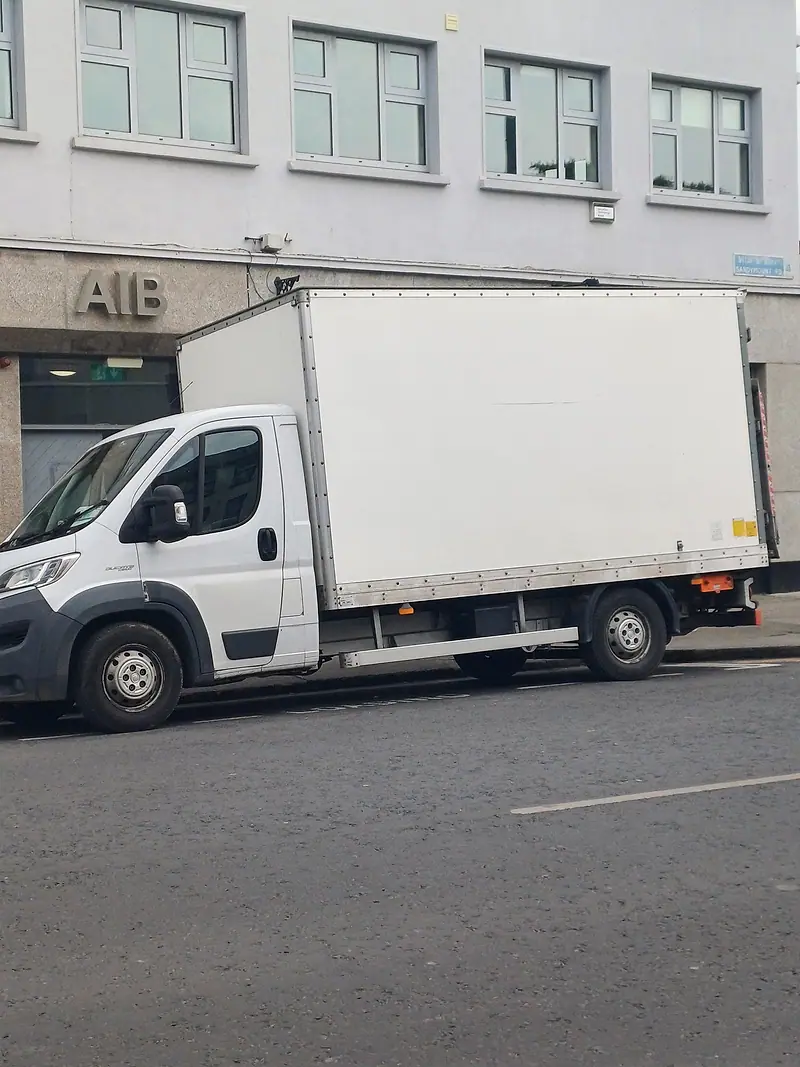
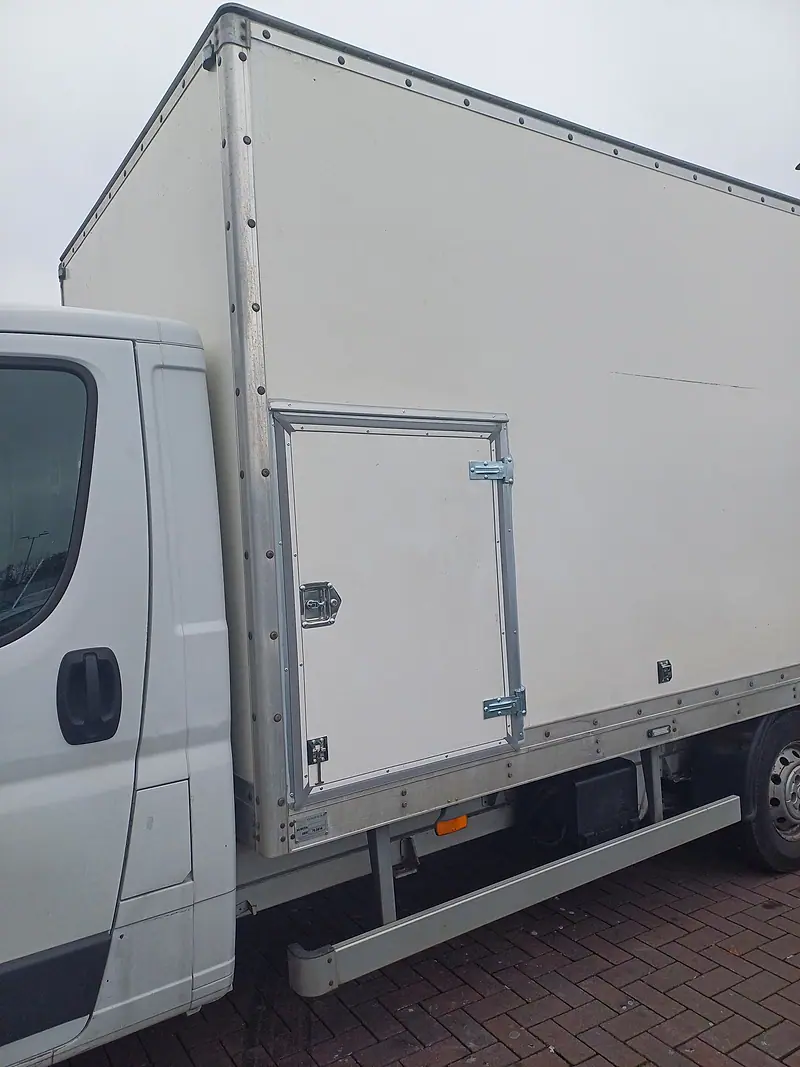
- Height and width. Our Luton and box vans need a clear run to the loading door. Low canopies, height barriers and tight yards are worth a mention when you send photos.
- Loading doors. A roller door at ground level is the quickest way out. If it's a dock leveller built for articulated trucks, we'll load from the yard instead.
- Shared yards. Where the yard is shared with neighbouring units, we keep our van and our pile tidy and out of other tenants' way.
Our page on warehouse clearance in Dublin has more on the business parks and estates around the city.
Multi-day and phased clearances
Larger clearances are planned like a small project rather than a one-day blitz. A typical plan looks like this:
- Walk-through. From photos, a video or a visit, we agree what goes, what stays and what's being sold or moved separately.
- Phase one: the easy volume. Packaging, pallets, broken stock and general waste, which frees up floor space fast.
- Phase two: dismantling. Shelving, light racking, workbenches and office furniture, area by area.
- Phase three: the yard and the last corners. Scrap, timber and anything that was waiting outside.
- Final sweep and check. We walk the unit with you before we hand back the keys.
If you're selling machinery or racking yourself, tell us the collection dates and we'll work around them.
Clearing a unit or a factory floor? Send photos or a short video of each area, plus the yard and any office, and tell us your deadline. We'll come back with a fixed price and a plan.
How long a commercial clearance takes
The volume of packaging and the amount of dismantling decide the schedule more than the floor area does. A rough guide:
| Type of unit | Typical schedule | What usually decides it |
|---|---|---|
| A small trade unit with an office | About a day | How much shelving there is to take down |
| A mid-sized warehouse with stock and shelving | Two or three days, often phased | Pallets, packaging and how many loads |
| A large unit with racking, a mezzanine and a yard | Several days, planned around your dates | Racking, scrap and working around a live site |
We'll put a realistic schedule in writing with the quote, so the landlord, the agent and your own team all know the dates.
What's included, and what we leave to specialists
| Included in our price | Needs a specialist contractor |
|---|---|
| Pallets, packaging, cardboard and general stock | Chemicals, solvents, oils and paint (we can't take these) |
| Free-standing shelving, light racking and workbenches | Heavy pallet racking anchored to the slab |
| Office, canteen and showroom furniture | Asbestos in any form |
| Fridges, microwaves and electricals | Gas cylinders and large battery stocks |
| Scrap metal, timber and yard rubbish | Heavy production machinery, which needs riggers |
| A final sweep of the cleared floor | Stock destruction with certificates for branded goods |
We'll clear everything in the left-hand column. We can't take anything in the right-hand column, so arrange for a specialist contractor or hazardous waste collection to deal with it before we start.
Where it all goes
Commercial clearances produce a lot of material that can be recycled, and we sort it as we load rather than at the end:
- Reuse: shelving, fittings and furniture that's still in good order is put to one side so it can be used again where possible.
- Recycling: steel, cardboard, timber pallets, electricals and appliances each go to the right recycling stream.
- Disposal: whatever can't be reused or recycled goes to licensed waste facilities.
Your commercial waste travels under our waste collection permit, NWCPO-25-13287-01, as an authorised waste carrier. That matters for a business: if waste from your unit turns up dumped somewhere, the responsibility can come back to you.
How commercial clearance is priced
Each unit is priced on its own contents. The main factors are volume (van loads), dismantling time, access (loading doors, yard space, upper floors), any items needing special disposal such as fridges and electricals, and whether the job runs over one day or several. Photos or a video walk-through are enough for most units; for a large site, we'll suggest a visit.
The most useful photos show each bay or aisle from the end, the mezzanine, the office, the canteen, the yard and the route out to the loading door. A rough count helps too: how many runs of shelving, how many pallets, how many desks. The more we can see, the tighter and fairer the price.
A skip, or a clearance crew?
A skip in the yard can work if your own staff have the time to fill it. Most businesses find they don't: shelving still has to be taken apart, most skip firms refuse fridges and electricals, and a full skip often means a second and a third. A crew that dismantles, sorts and loads in one go usually works out simpler. Our comparison of clearance versus skip hire sets out the trade-offs, and most of them apply to a unit as much as a house.
Preparing the unit before we arrive
- Tag what's staying. Stock being moved, machinery being sold and racking a buyer is collecting.
- Book the hazardous collection first, so chemicals, oils and cylinders are gone before we start.
- Have an electrician disconnect anything wired in, from extractor fans to workbench sockets.
- Clear a route to the loading door, and keep the yard free for the van on the day.
- Tell estate security and the landlord our dates, and check whether an induction is needed.
- Leave keys, fobs and alarm codes with the person who'll meet us on site.
Commercial clearance across Dublin and Leinster
We're based in Dublin and clear commercial units in Dublin and all of Leinster, from city business parks to factories on the edge of county towns. We're fully insured on every job, which landlords and estate managers usually ask about before they let a contractor on site. If the unit is being handed back, our property clearance page explains how we work to handover dates, and our power washing crew can clean concrete yards and paths once the clearance is done. For a single skip's worth of rubbish rather than a full unit, junk removal is the quicker option.