
Industrial units across Dublin's business parks
Most of Dublin's warehouses and industrial units sit in a ring around the city: the parks and estates of Dublin 12, 22 and 24, around Ballymount, Park West, Clondalkin, Tallaght and Citywest, and the business parks out in Blanchardstown. The units range from a small trade counter with a shutter door to a large shed with a yard, a mezzanine office and a canteen.
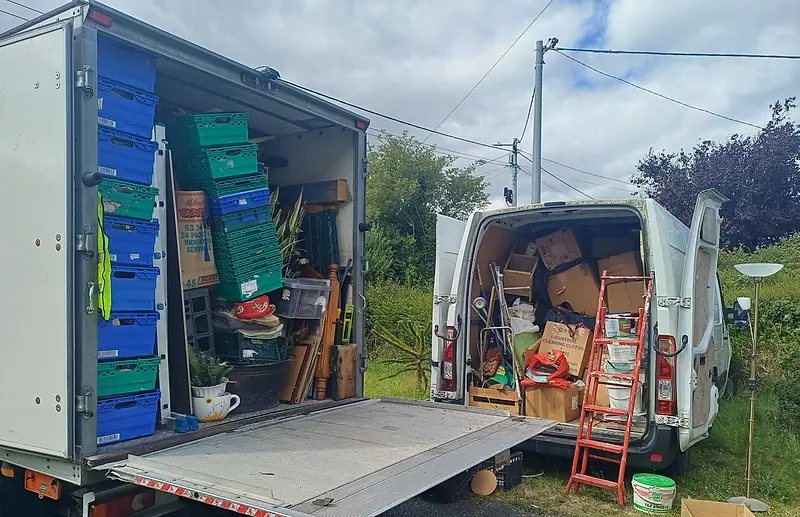
We clear all of them, from one corner of a unit to the whole thing, and the planning starts with the same questions every time: what's going, what's staying, how big is the door, and when can a van sit at it. The overall approach to commercial work is on our factory and warehouse clearance page. This page is about the Dublin units themselves and the parts of them we're asked to clear most.
- Shelving and light racking taken apart by hand and loaded neatly.
- Pallets, packaging and old stock cleared and sorted for recycling.
- Mezzanine offices and canteens emptied down to the floor.
- Fully insured, and an authorised waste carrier (permit NWCPO-25-13287-01).
- No forklifts, no demolition. Removal is the whole job, and we're honest about where it stops.
Racking and shelving: what we take down
Shelving is usually the biggest single job in a warehouse clearance, and it's where we're asked most often what we can and can't do.
| Type | What we do |
|---|---|
| Boltless and rivet shelving | Dismantle by hand, stack the frames and boards, load |
| Light longspan racking | Dismantle by hand where it can be done safely from the floor or a step |
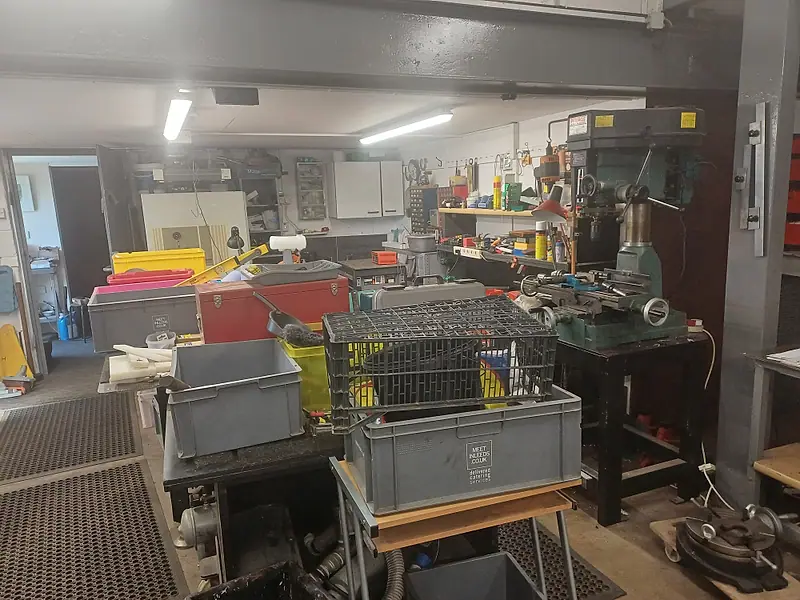
| Workbenches, cages and bins | Take apart where needed and load |
| Heavy pallet racking anchored to the floor | Usually a job for a racking specialist with lifting equipment |
| Anything fixed to the building or wired in | An electrician or strip-out contractor first |
If you're selling racking, agree the buyer's collection date before ours and we'll work around it. Steel that nobody wants goes for metal recycling rather than general waste.
 spotless.ie
Pallets, old stock and packaging
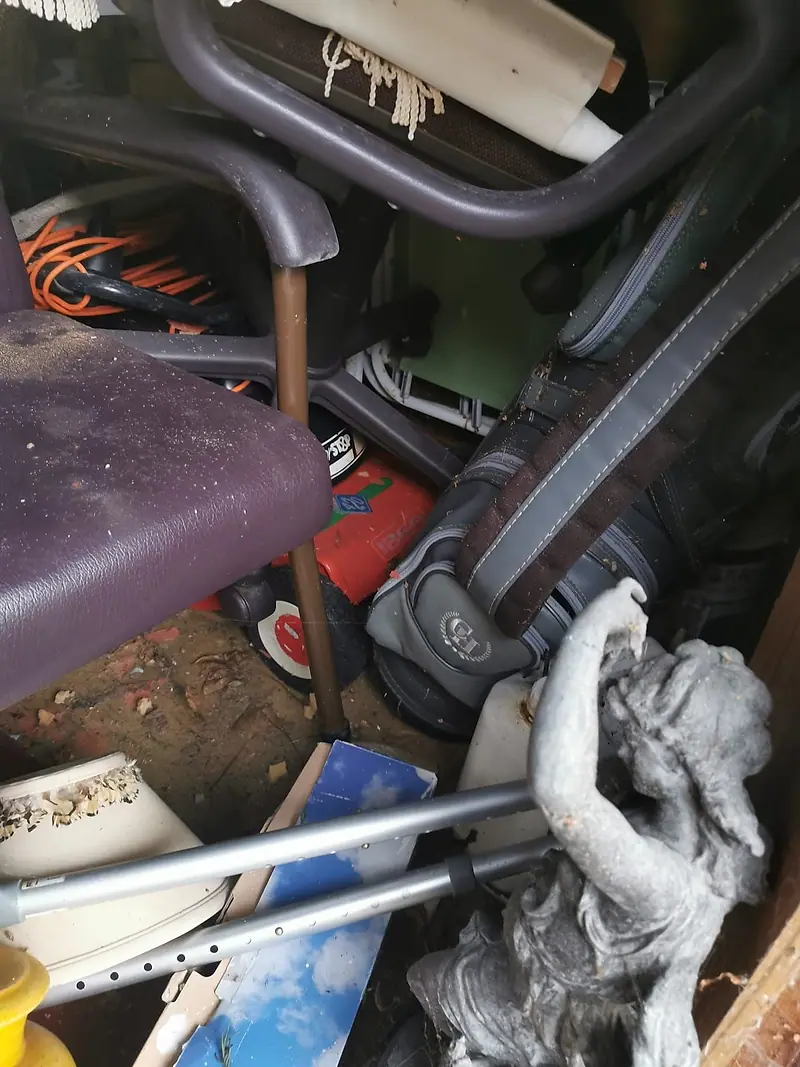
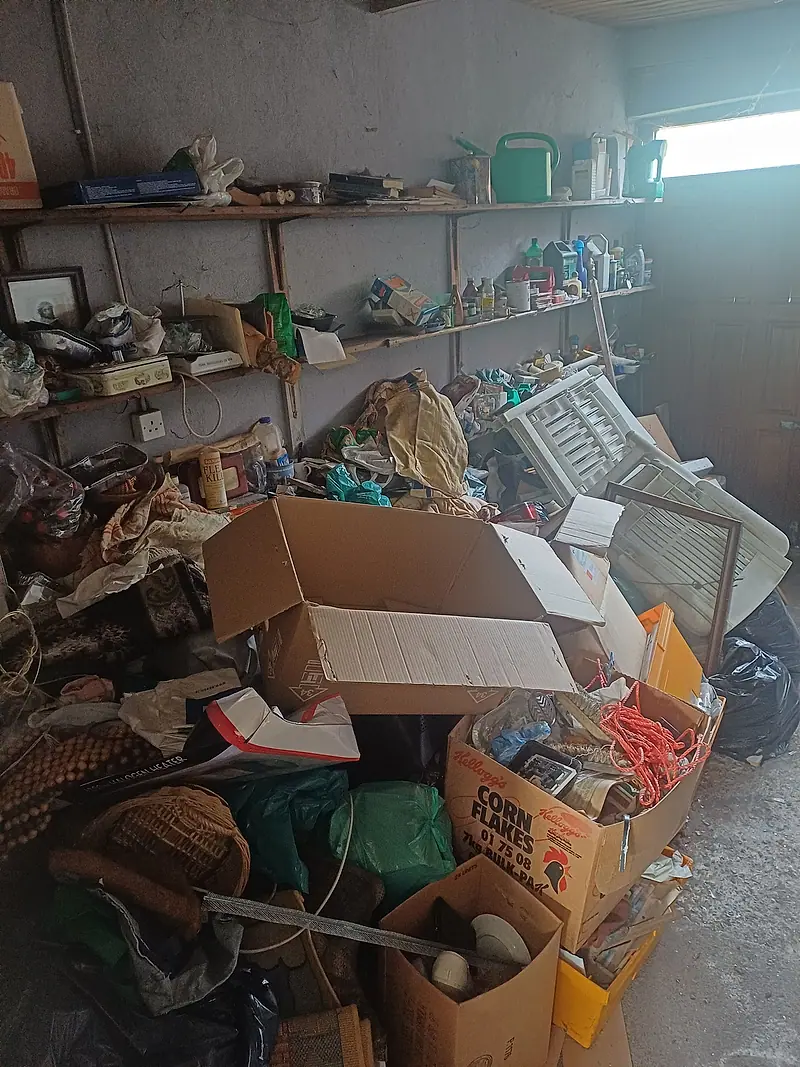
The floor of a working warehouse fills up slowly: damaged stock, discontinued lines, broken pallets, shrink wrap, cardboard and the odd display stand from a trade show years ago. We clear general goods of almost every kind, including furniture, homewares, fittings, packaging and display material.
Two things to sort out before we start. First, anything with a brand or a recall attached that you need proof of destruction for should go to a specialist, because we don't issue destruction paperwork. Second, we can't take chemicals, oils, solvents, paint or gas cylinders, so those need a hazardous-waste contractor before we arrive.
Mezzanine offices and canteens
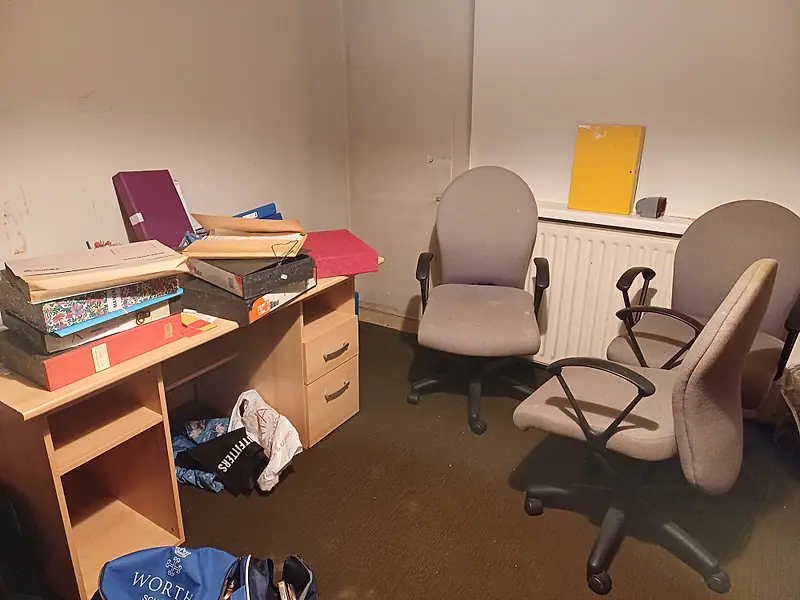
Nearly every Dublin unit has an office somewhere, often up a steel stair on a mezzanine, and a canteen or welfare room near the door. These are the parts of a warehouse clearance that look most like an office job:
- The mezzanine office: desks, chairs, filing cabinets, free-standing screens, old printers and PCs, all carried down the stairs by hand.
- The canteen: tables and chairs, lockers, fridges, microwaves and water boilers. Appliances go to electrical recycling.
- Storerooms and the trade counter: shelving, old stationery, samples, signage that's free-standing.
Data on old computers is your business's responsibility, so wipe or remove the drives before we arrive, or ask us to leave every drive we find on the desk for you. Our office clearance page explains the IT side in more detail.
Clearing a unit in a Dublin business park? Send photos or a short video of the floor, the shelving, the mezzanine and the canteen, with the estate name. We'll come back with a fixed price.
Working around the estate, the yard and the neighbours
Business parks have their own rhythm, and a clearance has to fit into it:
- Security and barriers. Some estates have a gatehouse or barrier, and some lock up outside office hours. Tell us who manages access.
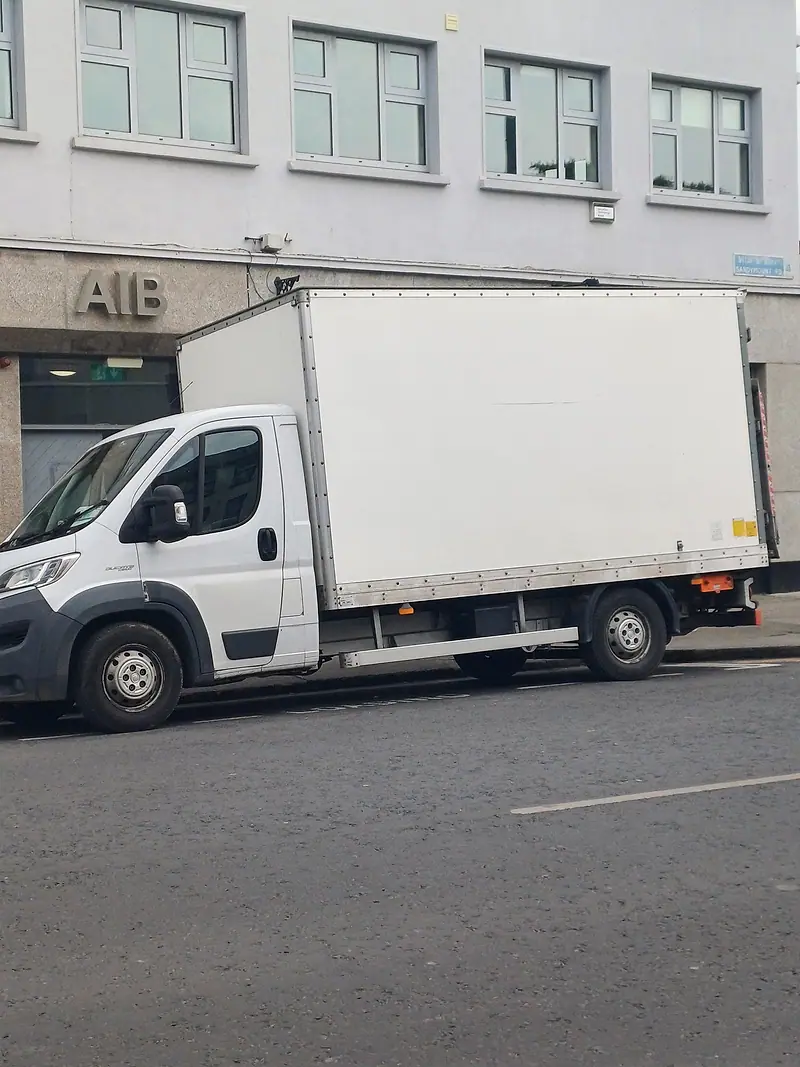
- Shared yards. Lorries reversing, neighbours' deliveries and parked cars all compete for the space outside your door. We agree where our van stands and keep it out of the turning area.
- Roller doors and loading. Tell us the size of the roller door and whether there's a ground-level entrance as well as a lorry dock, so we know exactly where the van backs up.
- Site rules. Sign-in, high-vis and any induction your landlord or insurer asks for are no trouble if we know in advance.
We work Monday to Saturday, 8am to 5pm. Many parks are quieter on a Saturday, which suits dismantling.
The limits, so nobody is surprised
We're a removal and disposal crew. That means we don't bring or operate forklifts, we don't move heavy production machinery, and we don't do demolition or strip-out: mezzanines, partitions, suspended ceilings, floor coverings and anything anchored or wired in stay where they are. If those need to go, a specialist contractor does that part, and we clear around them so they start with an empty unit.
Getting a price for your unit
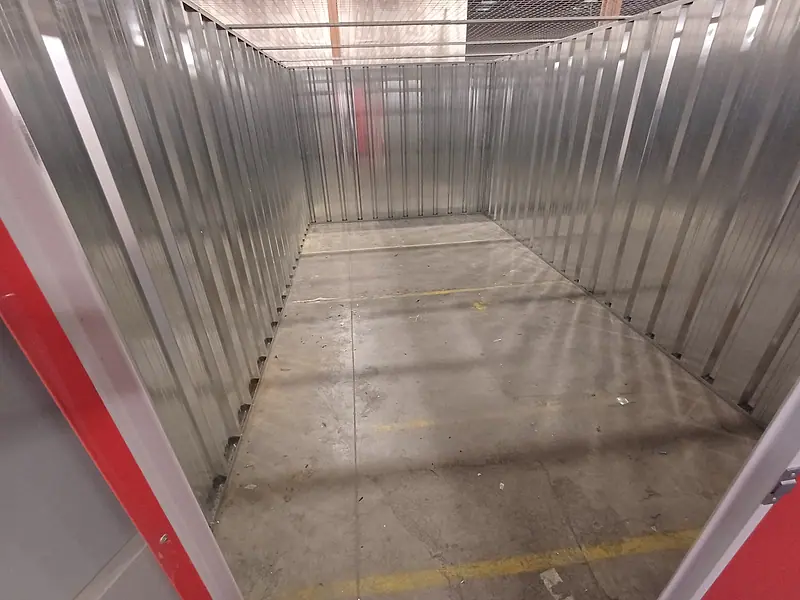
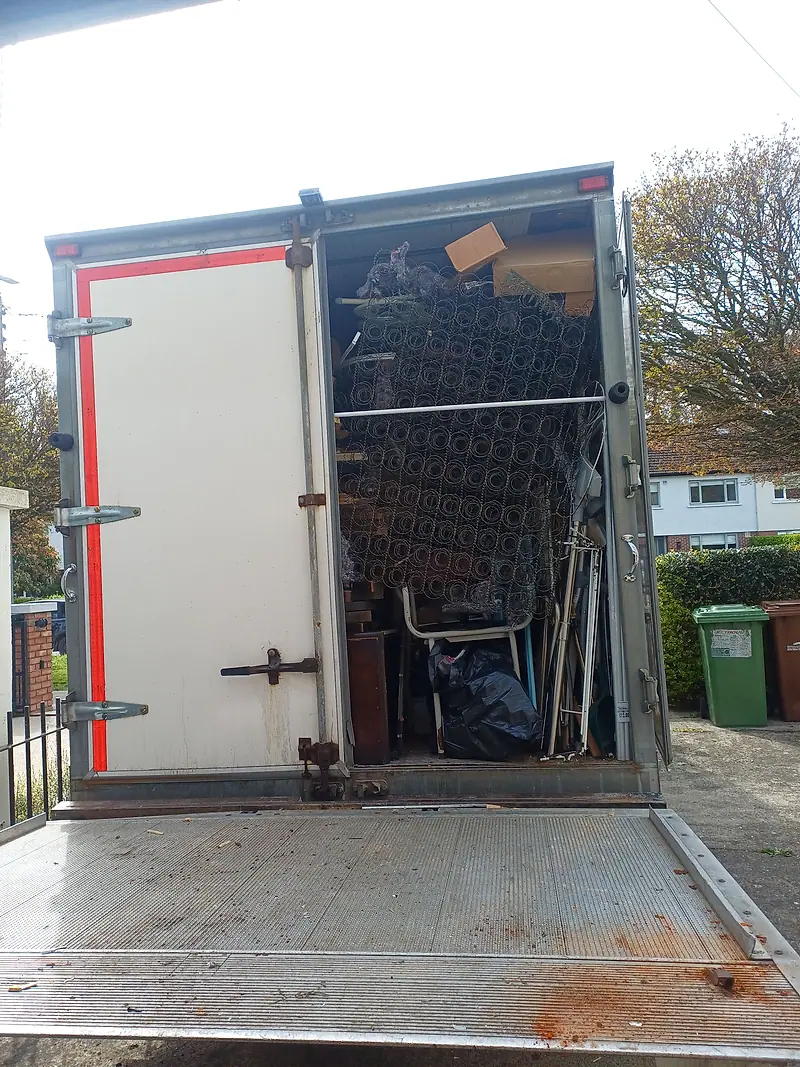
Photos of each area, or a short video walking from the roller door to the back wall, are enough for most units. Show the shelving, the floor, the mezzanine and the canteen, and tell us the estate and the date you need it clear. For a big unit we may suggest a visit first.
The fixed price depends on:
- Volume: how many van loads the unit adds up to.
- Dismantling: shelving and workbenches take time to take apart safely.
- Distance and stairs: how far it is from the back wall and the mezzanine to the door.
- Appliances and electricals: canteen fridges, water boilers and old IT need separate recycling.
- Phasing: one clear day, or several visits around a business that's still trading.
If the unit is being handed back at the end of a lease, read end-of-lease warehouse clearance. If there's a separate office in town to clear as well, see office clearance in Dublin, and once the unit is empty our power washing crew can clean a concrete yard or path. For a single load from the back of the unit, junk removal is quicker to book.