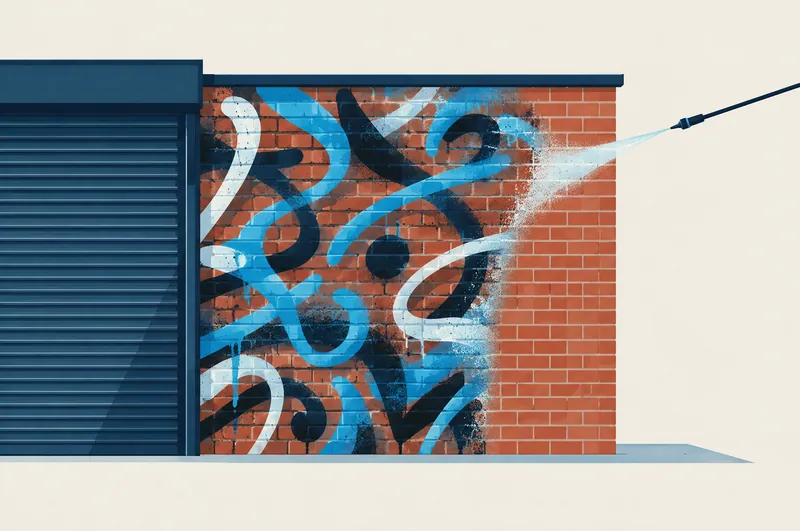
Get it off quickly
If you've just found graffiti on your wall, shutter or sign, the most useful thing you can do is act fast. Fresh paint sits closer to the surface and comes off more easily than paint that has had weeks to cure and soak in. A tag left up also tends to attract more.
Here's what to do now:
- Take photos before anything is cleaned, if you want to report it to the Gardaí or your insurer.
- Don't scrub it with thinners or a wire brush. On brick and stone, solvents can spread the paint and push it deeper, and wire brushes scar the surface.
- Send us photos: a close-up of the paint and a wider shot showing the wall, shutter or sign it's on.
We'll come back with an honest view of what's likely to come off, and a price, usually the same day.
What we remove graffiti from
We remove graffiti for homeowners, landlords, management companies and businesses. The surface makes a big difference to the result:
| Surface | Typical places | What to expect |
|---|---|---|
| Brick | Gable ends, garden and boundary walls, shopfronts | Porous, so paint gets into the face. Usually improves a lot, but may leave a shadow |
| Render and painted walls | House fronts, side walls, commercial units | Removing the graffiti can lift paint too. Sometimes repainting is the better answer |
| Natural stone | Granite, limestone and sandstone walls and steps | Hard granite usually cleans well. Soft, porous stone is the most likely to ghost |
| Concrete | Retaining walls, block walls, yards and steps | Usually takes hot water well. Unsealed concrete can hold a shadow |
| Metal shutters and doors | Shops, garages, industrial units | Paint often comes off, but the coating underneath can dull or mark |
| Signs | Shop signs, panels, noticeboards | Plastics and vinyl can be marked by heat and some removers, so we test first |
How graffiti removal works
There's no single product or setting that removes every kind of graffiti. The result depends on four things:
- The paint. Aerosol spray paint, marker pens and emulsion all behave differently.
- The surface. Smooth, sealed surfaces release paint far more easily than porous brick, stone and render.
- How long it's been there. Fresh is easier. Graffiti that has been rained on and baked by the sun for months has bonded.
- What's underneath. Painted walls and coated shutters can lose some of their own finish.
Good practice is to start with a small test area and use the gentlest method that works. For many paints that means a remover suited to the paint, followed by hot water at a pressure the surface can take. That's how we approach it: test first, then the gentlest method that does the job. Going straight in with high pressure on brick or soft stone can etch a ghost image of the tag into the surface, which is harder to live with than the paint was.
About ghosting
We'd rather tell you this now than after the job. On porous surfaces such as brick, sandstone, render and unsealed concrete, paint pigment can soak into the surface. Even when the graffiti itself is gone, a faint shadow of it can stay behind. This is called ghosting.
How much ghosting you get depends on the paint, the surface and how long it's been there. Sometimes it's barely visible; sometimes it's obvious on a clean, pale wall. It can soften over time as the wall weathers.
When we look at your photos, we'll say whether we expect a clean result or a likely shadow. If repainting a painted wall or shutter would give a better finish, we'll tell you that too, even though painting isn't something we do.
The clean patch problem
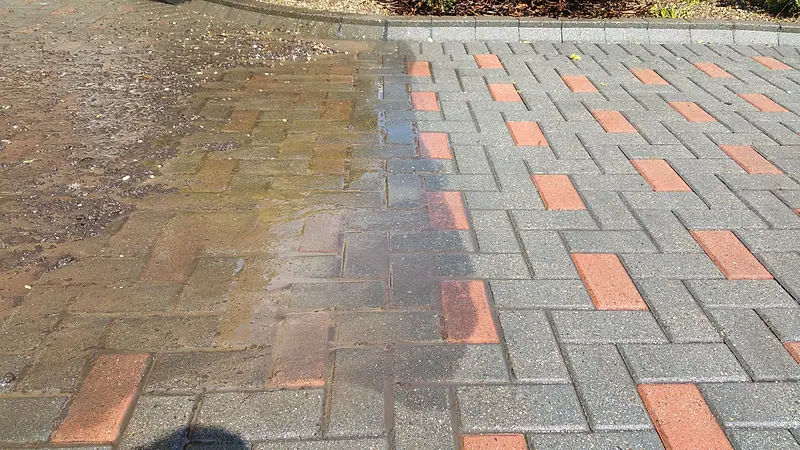
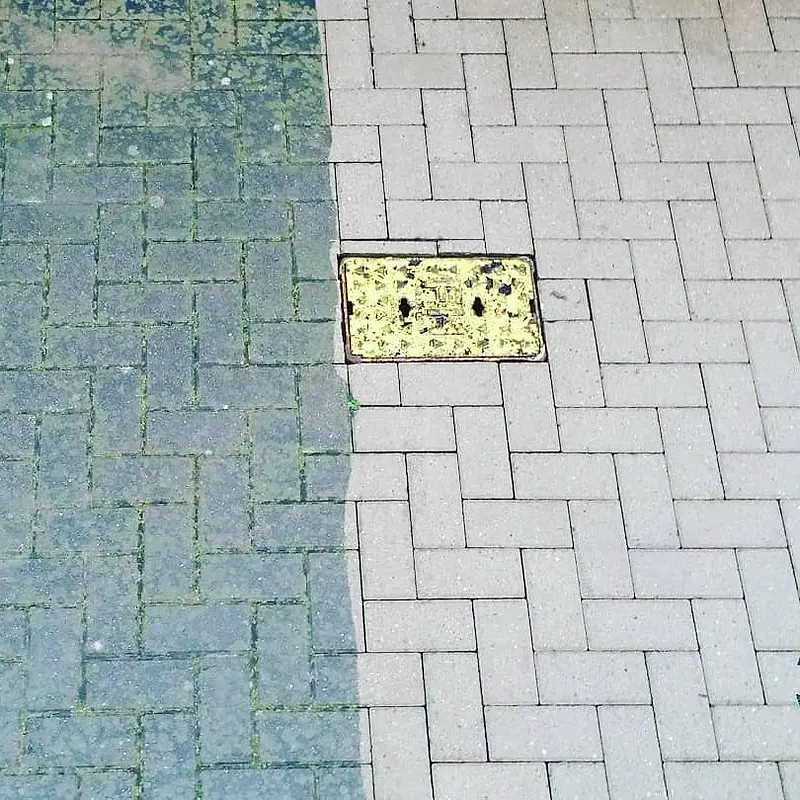
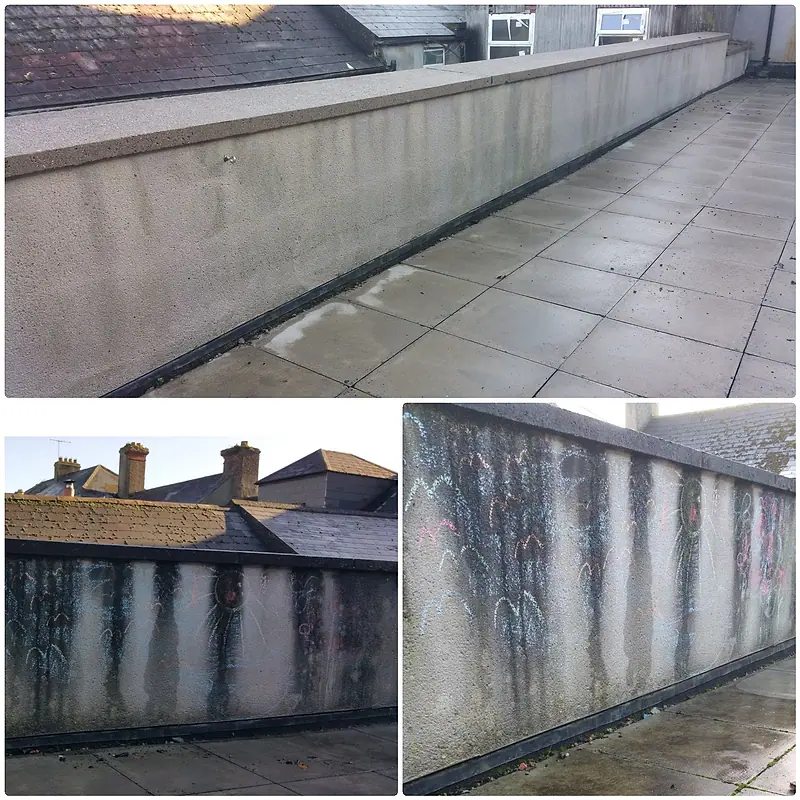
On a wall that hasn't been washed in years, removing a tag can leave a clean square that stands out almost as much as the graffiti did. Often the best-looking result comes from washing the whole wall or panel, not just the painted part. We'll price both options so you can choose.
 spotless.ie
For rendered and painted walls, the whole-wall wash is usually a low-pressure soft wash. For brick, stone and concrete, see stone, brick and concrete cleaning.
Homes and businesses
At home, graffiti often lands on gable-end walls, garden walls facing a lane, garage doors and side passages. It's upsetting to find, and it's worth getting off before it invites more.
For businesses, it's shutters, shopfronts, signs and the side walls of units, where it puts customers off the minute you open. Our hours are Monday to Saturday, 8am to 8pm, so we can often do shutters early in the morning or after you close. If the graffiti is offensive, tell us when you get in touch and we'll do what we can to get to it quickly. Shopfronts with gum trodden into the paving outside can have that done on the same visit: see chewing gum removal.
If the graffiti is on council property, such as a lamp post, utility box or a council-owned wall, report it to the local authority. On your own property, removal is usually down to you.
Need graffiti removed? Send a close-up and a wide photo on WhatsApp, with your area. We'll tell you what's realistic and send a price, usually the same day.
How graffiti removal is priced
Every job is priced on what's there: the size of the area, how many tags, the surface, the type of paint, height and access, and whether you want just the graffiti removed or the whole wall washed. For most jobs, photos are enough for a fixed price. For very large or unusual sites, a call or visit may be needed first. Our power washing cost guide explains more.
Once the wall is clean, the rest of the property can look tired beside it. For homes and businesses across Dublin, see power washing in Dublin, or browse everything we clean on our power washing page, from driveways and patios to roofs and gutters.