
Why the stairs wear out first
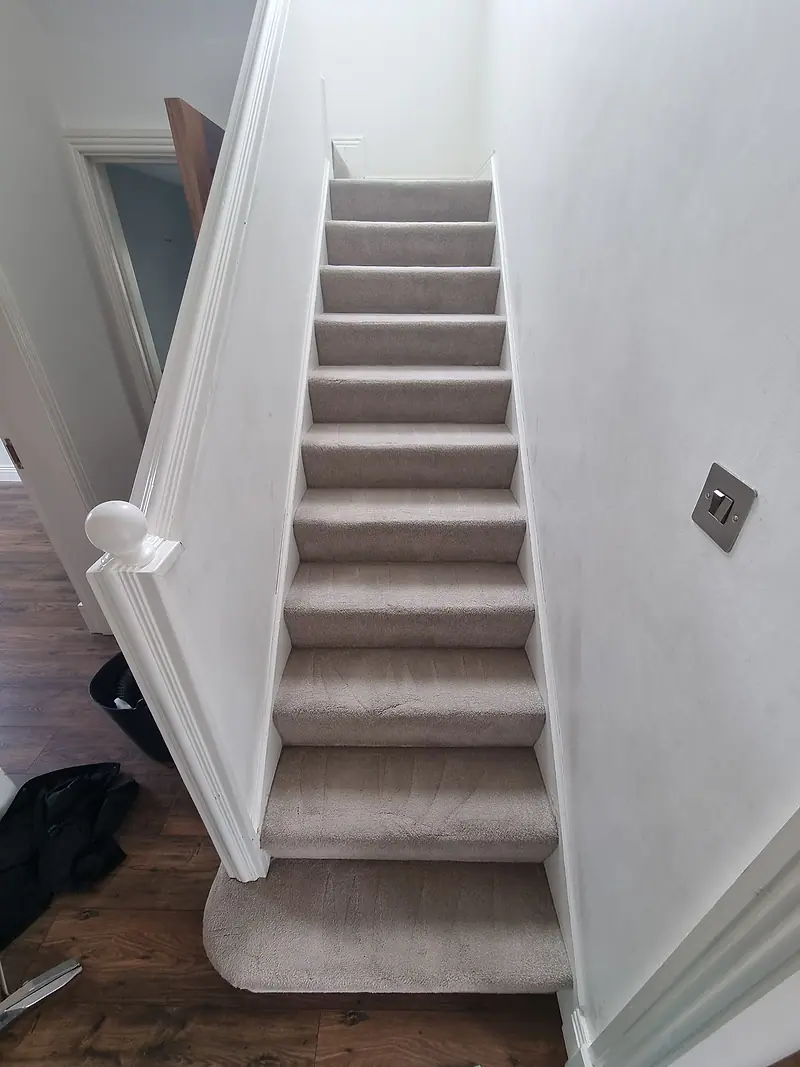
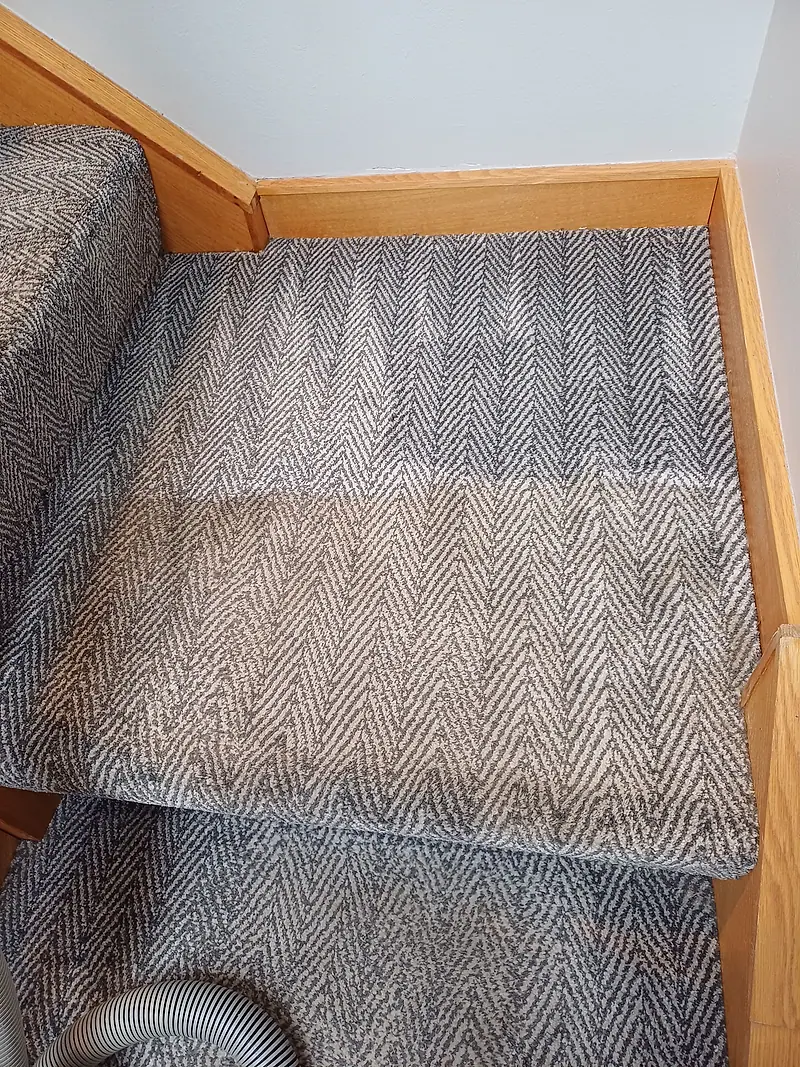
Think about how a staircase gets used. Every trip puts your weight on the same narrow strip of carpet, and on the way down your heel lands right on the front edge of each step. That edge, the nosing, is where the carpet bends over the timber, so grit is ground into the pile exactly where it's under most strain.
Open floor gets a vacuum that glides across it. Stairs get a quick go with the hose when there's time, and the back corner of each step, the strip beside the spindles and the edge along the wall are usually skipped. Over a year or two that adds up to a grey band on every nosing, fluff packed into the corners and a darker lane up the middle where everyone walks.
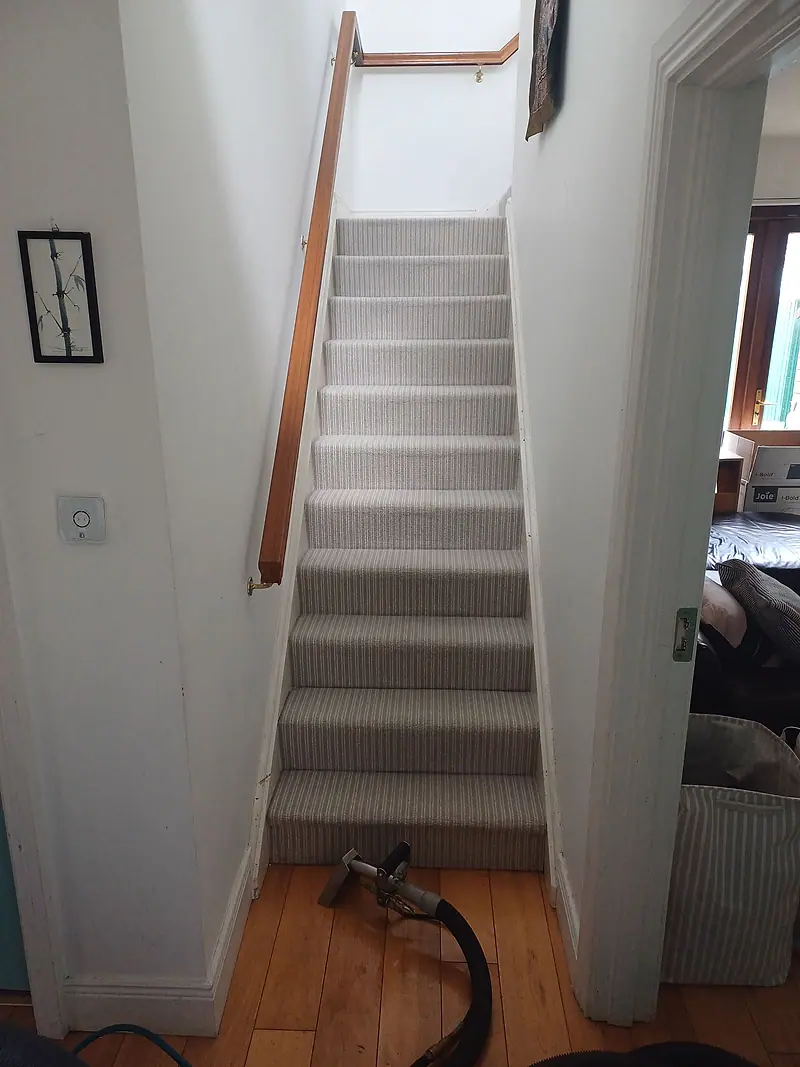
A floor tool can't sit flat on a step, so a proper stair clean is done by hand, one step at a time. It takes longer than a bedroom of the same area, and it's worth it: clean stairs change how the whole hall looks the moment the front door opens.
What we do on each step
We start at the top and work down, finishing at the bottom so nobody kneels on a step that has already been washed. On a typical staircase:
- Dry soil out first. Each tread, its back corner and both edges are vacuumed with a crevice tool before any water goes down.
- Nosings pre-treated. A pre-spray suited to the fibre goes onto the dark front edges and the walking lane, and is left a few minutes to loosen the soiling.
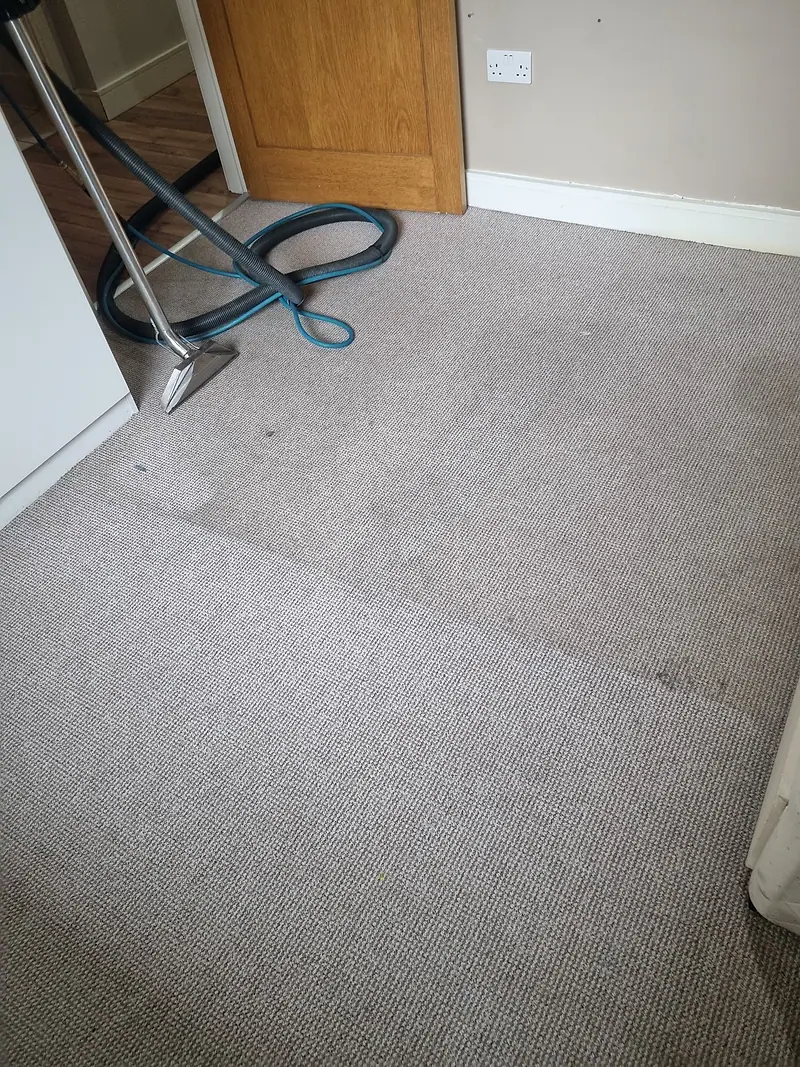
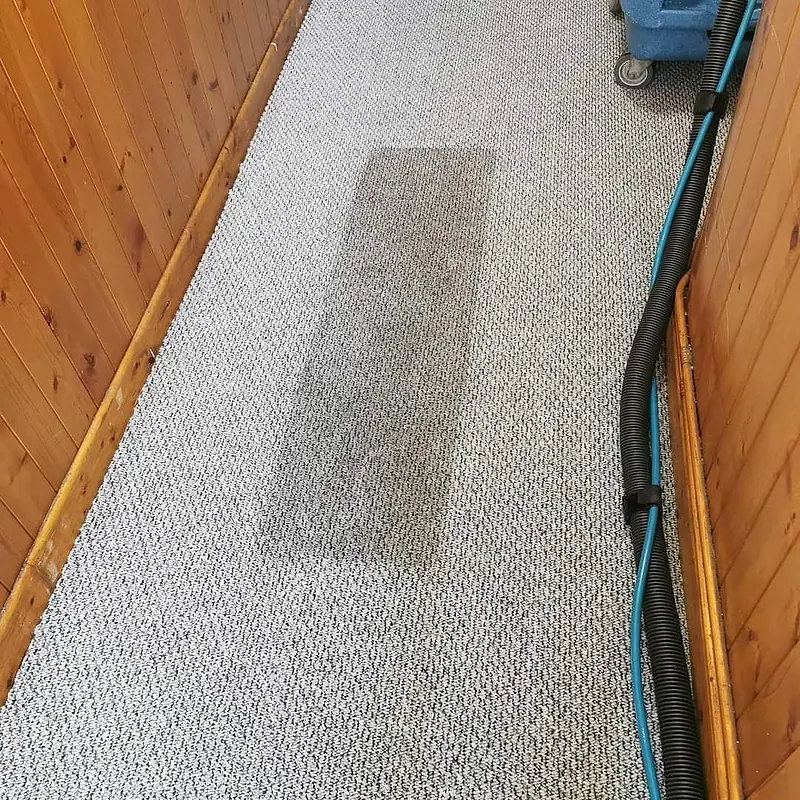
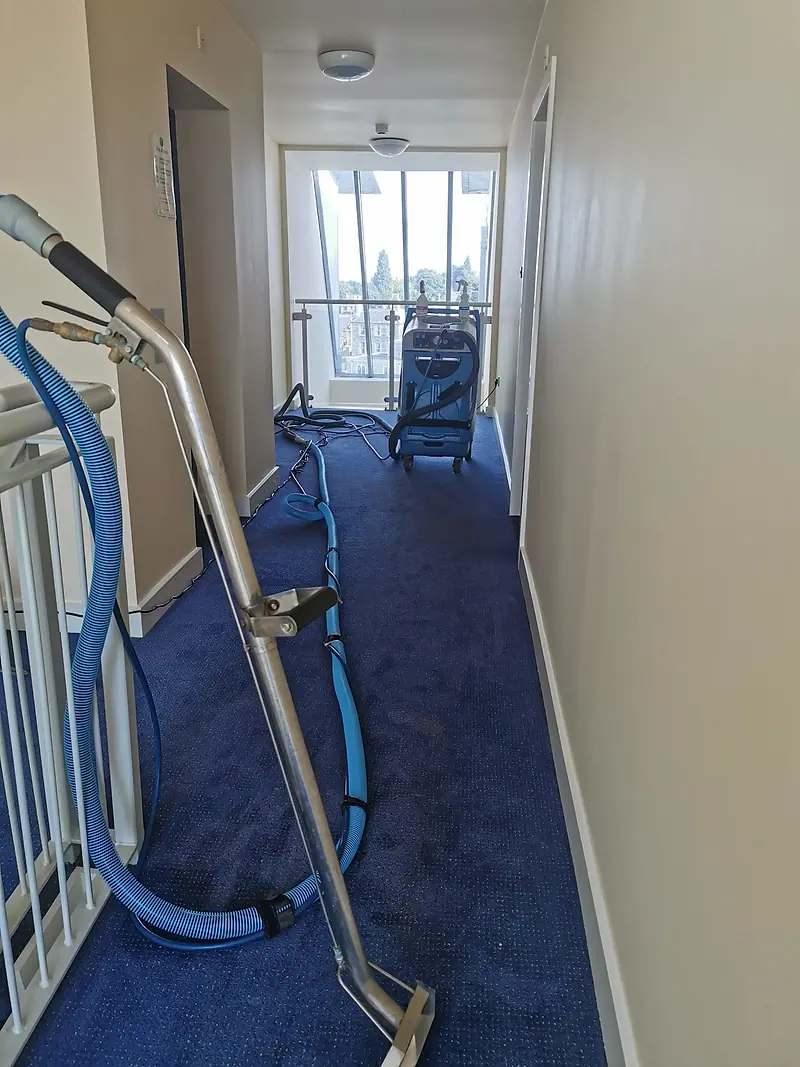
- Hand-tool extraction. A small extraction tool rinses each tread from back to front, over the nosing and down the riser, pulling the dirty water straight back into the machine.
- Edges done carefully. Painted spindles, skirting boards and varnished margins are kept dry, and splashes are wiped off as we go.
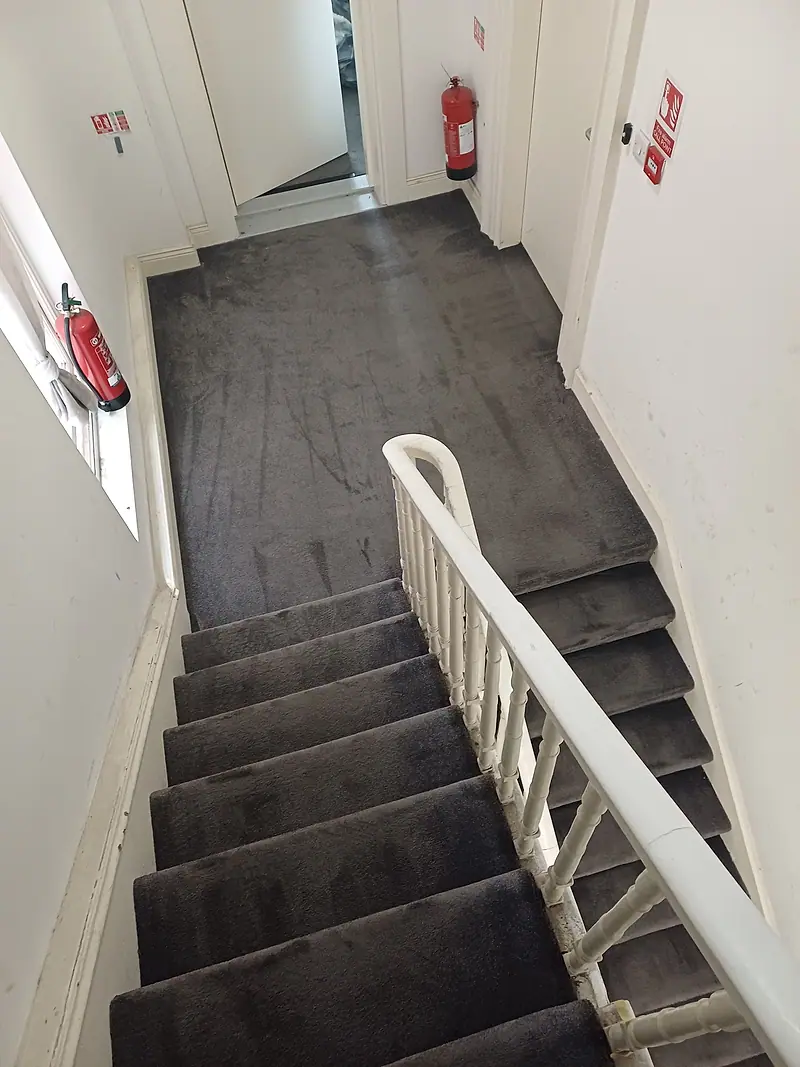
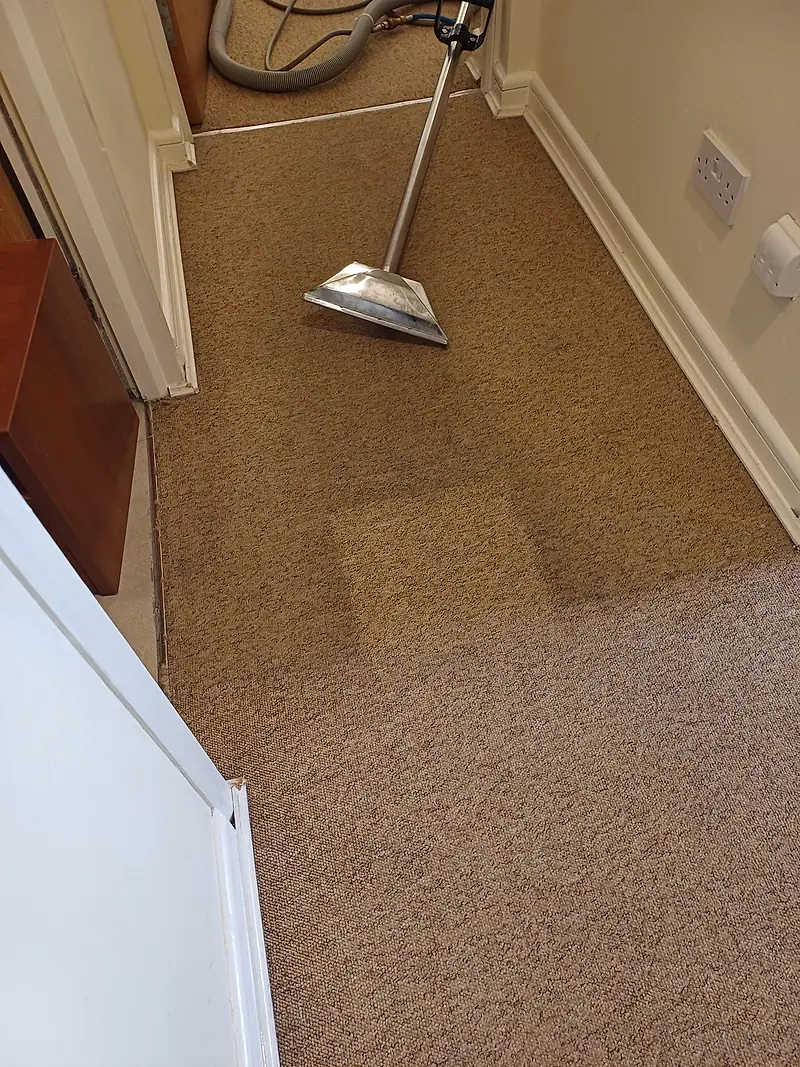
- Landing last. The landing gets the full wand, and an air mover goes on it to speed up drying.
Ciprian, who runs Spotless, did his Prochem carpet-cleaning course in 2018 (certificate no. 2018/020) and works on jobs himself with a small crew, so the person on your stairs is trained for it.
| Part of the stairs | What it usually looks like | How we treat it |
|---|---|---|
| Nosing (front edge) | A grey or flattened band | Pre-spray and several slow passes by hand |
| Middle of the tread | A walking lane, darker than the sides | Pre-spray, light agitation, extraction |
| Back corner | Packed fluff, hair and grit | Crevice tool before any water |
| Riser | Scuffs from toes | A lighter rinse |
| Landing | A lane from the top step to the bathroom | Full wand and an air mover |
One honest point about nosings. Where the pile on the front edge has worn down to the backing, cleaning will brighten it but can't put the fibre back. Stair carpet nearly always wears out on the nosings first, and a grey band that stays after a clean is usually wear rather than dirt. We'll point that out before we start, not after.
 spotless.ie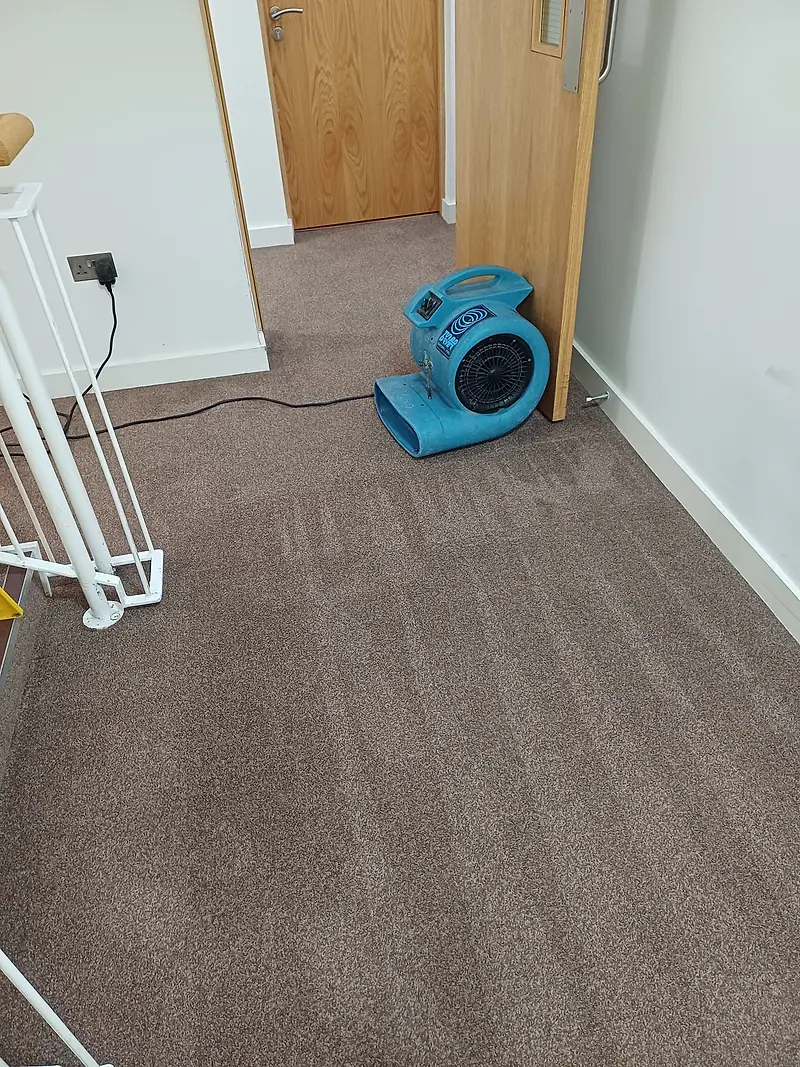
Runners, rods and painted edges
Many older Dublin houses have a runner instead of a fitted stair carpet: a strip down the middle, painted or varnished timber showing on each side, and brass or wooden rods across the back of each step. Runners are often wool, and they're often patterned with a darker border.
We clean runners where they are. The rods usually stay put and we work around them. Patterned borders get a colour test on a hidden spot first, because reds and navies in a border can bleed into a cream centre if they're over-wetted. Wool runners get the gentler approach set out on our wool carpet cleaning page.
What we don't do is lift and refit runners. If a rod is loose, a clip is missing or the runner has crept down and is bunching at the bottom, that's a job for a carpet fitter, and it's best sorted before or after the clean rather than during it.
Communal stairs in apartment blocks
The stairs in a block of flats take more traffic than any staircase in a house: residents, visitors, deliveries and bikes, all day long. There are complications a private stairs doesn't have, too, such as people coming and going while we work, and a tap and socket that might be in a store room two floors down.
We clean communal stairs in sections from the top floor down, so there's always a way through, and the timing is agreed with the management company so residents know in advance. Landlords, agents and management companies will find more on how we work with them under carpet cleaning for property managers, and larger common areas in offices or hotels are covered by commercial carpet cleaning.
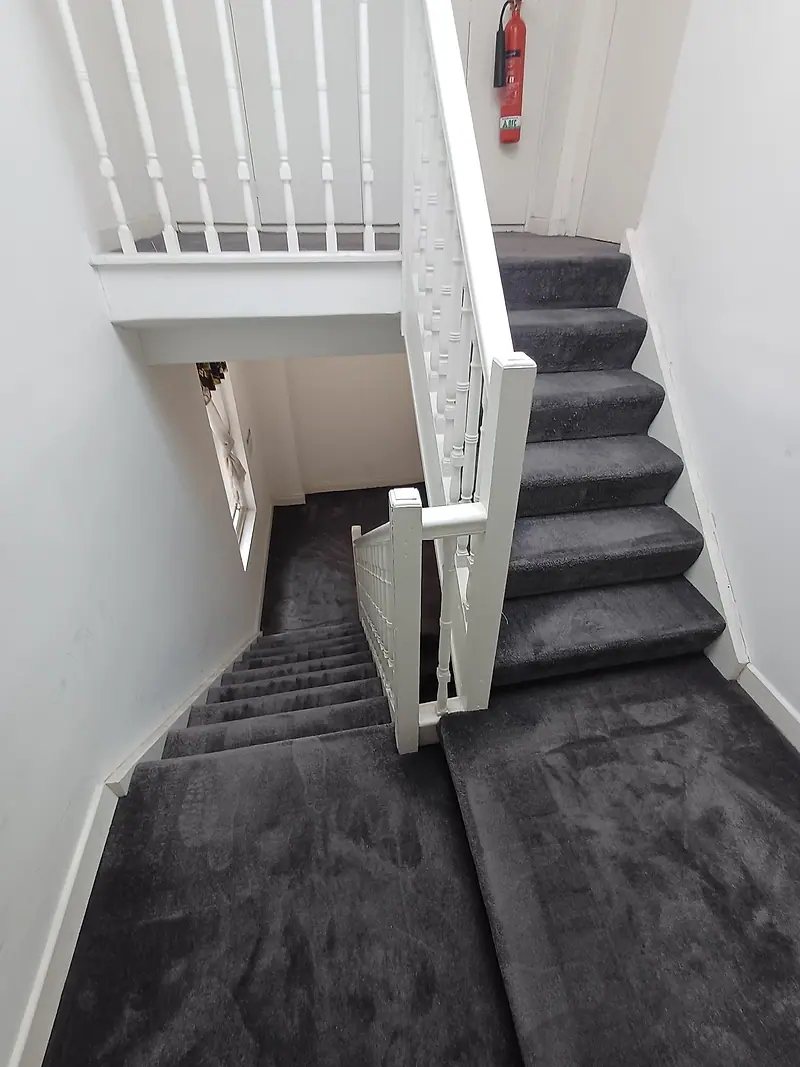
Want a price for your stairs? Stand at the bottom and take one photo looking up, one of the landing and a close-up of the worst step, then send them on WhatsApp. We'll reply with a clear price, usually the same day.
Using the stairs while they dry
You don't have to stay off the stairs all day. Straight after the clean the carpet is damp rather than wet, and you can go up and down carefully in clean socks or bare feet. A few things help:
- Hold the handrail. A damp tread feels different underfoot, especially in socks.
- No outdoor shoes until it's dry. Grit from the street sticks to damp pile far more readily than to dry.
- Keep pets downstairs or shut in a room, or you'll find paw prints on every step. There's more on this under pet carpet cleaning.
- Leave the landing doors open and the air mover running for as long as we suggest.
Drying usually takes a few hours. Stairs often dry a little faster than a closed bedroom, because air moves naturally up a stairwell, but a thick wool runner on a cold, damp day takes longer. Our guide to carpet drying times covers what speeds it up.
How a stair clean is priced
We price stairs by what's there: the number of flights and steps, the landings, whether the hall at the bottom is included and how heavily soiled the carpet is. A runner and a fitted carpet take roughly the same time per step. A staircase that turns, with wedge-shaped winder steps at the bend, takes a bit longer.
Most people book the stairs along with something else, such as the hall and a couple of bedrooms, or the whole house through our carpet cleaning service in Dublin. If there are particular marks on the steps, like a coffee drip down three treads or a dog's accident on the landing, our page on carpet stain removal explains what usually comes out. For keeping the stairs looking good between cleans, see our stair carpet care guide.