The honest case for and against DIY
DIY carpet cleaning isn't a con. A machine hired from the supermarket can lift surface grime from a synthetic carpet in a spare room, and for some people that's all they need. The trouble is that the same machine, used the way most people use it, can leave a carpet wetter, stickier and slower to dry than it was before.
When a DIY clean goes wrong, it's nearly always for one of three reasons: too much water, too much shampoo, and not enough rinsing. A trained cleaner's job is to avoid all three, and to know which carpets shouldn't be wet-cleaned at all.
This page explains what's going on under the surface, so you can decide for yourself. If you want the detail of how our own visit runs, see our carpet cleaning service, step by step, and if you're weighing up different firms, what to ask a carpet cleaning company.
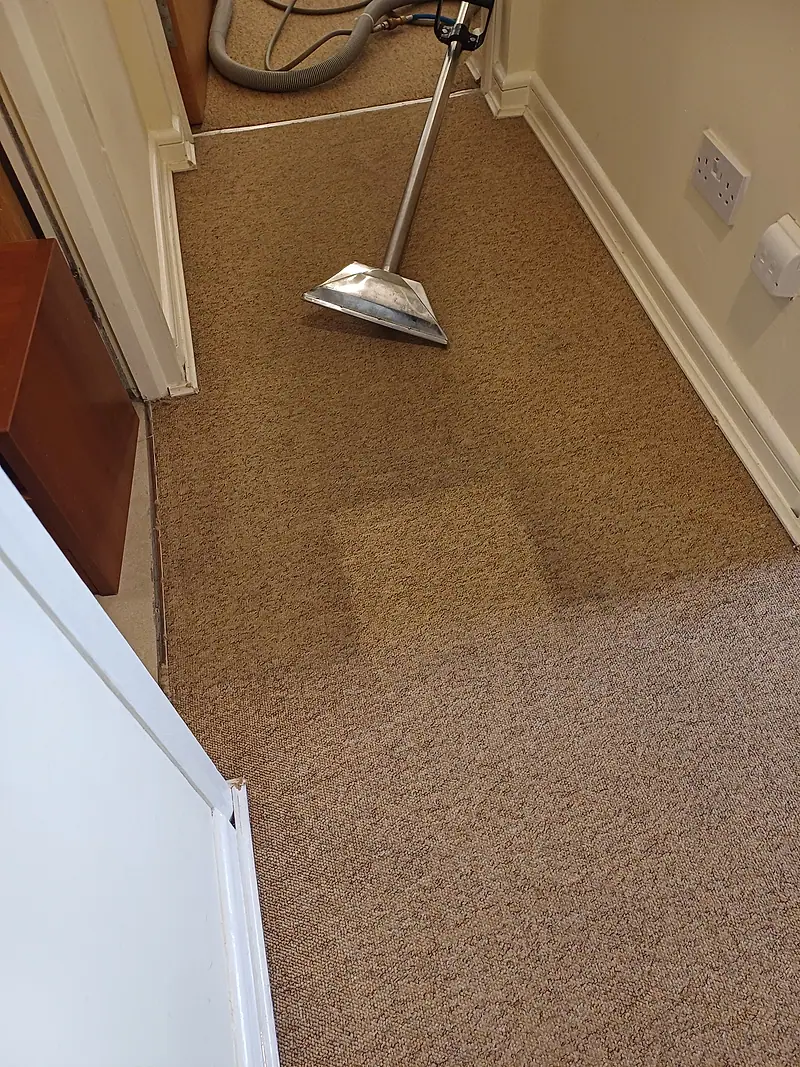
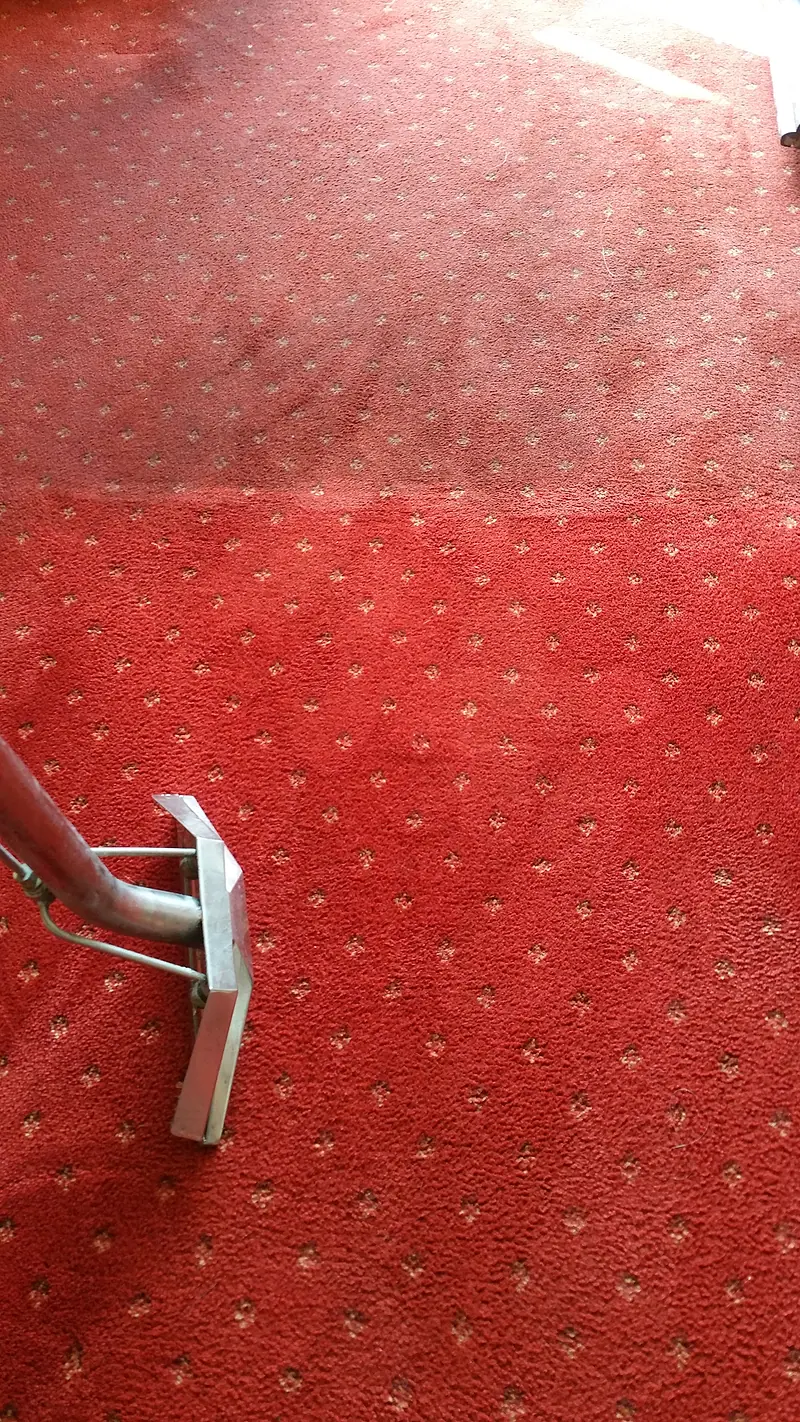
Hire machine versus professional extractor
| Typical hire machine | Our portable extractor | |
|---|---|---|
| Suction | Modest, so a lot of water stays in the carpet | A strong vacuum pulls the water back out on the same pass |
| Water | Whatever comes out of your hot tap, cooling in the tank | Hot water with a cleaning solution |
| Before the clean | Often nothing | Dry soil vacuumed out, spots and traffic lanes pre-sprayed |
| Cleaning product | One shampoo for every carpet, often overdosed | Matched to the fibre and the kind of soiling |
| Rinsing | Detergent is usually left in the pile | The carpet is rinsed so residue comes out |
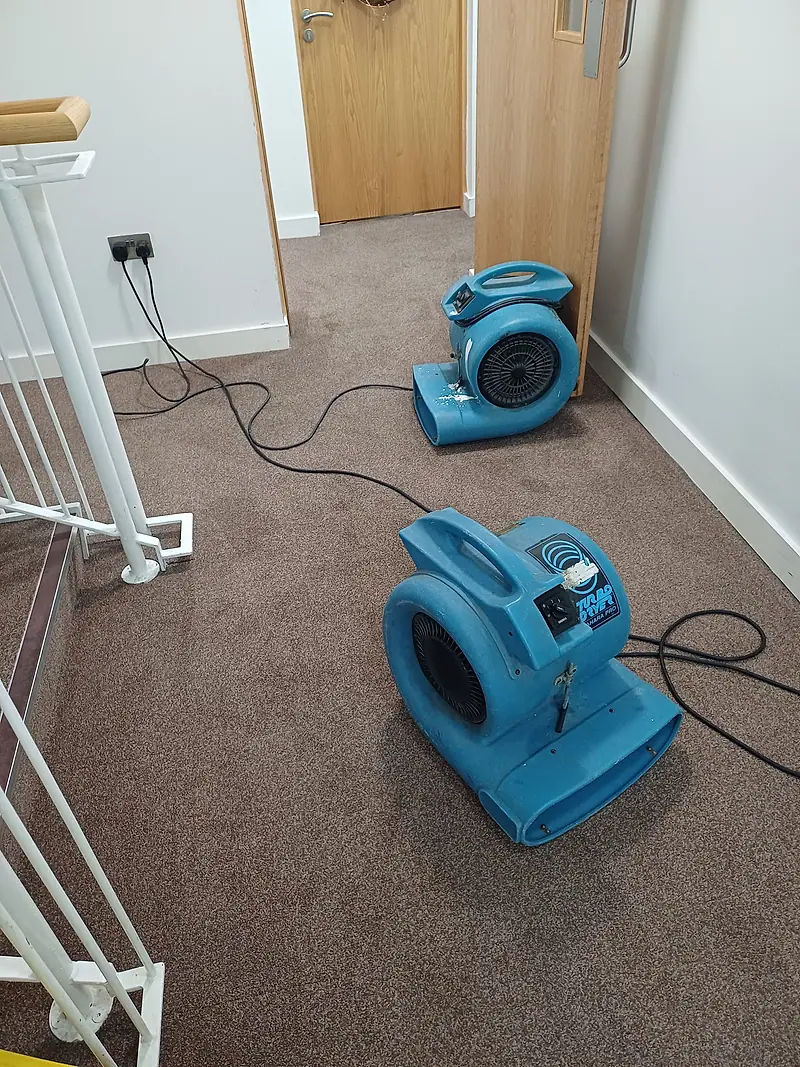
| Drying | A window, the heating, maybe a fan | Air movers, plus clear advice before we leave |
| Judgement | The instructions on the side of the box | A trained person who checks the carpet first |
Why DIY cleans over-wet carpets
Hire machines have less vacuum power than a professional extractor, so less of the water comes back out. People also tend to make several wet passes over a dirty patch, on the reasonable-sounding idea that more water means more cleaning. It doesn't. Past a certain point, the extra water simply goes through the carpet backing and into the underlay.
Underlay holds water like a sponge and has nowhere to dry except back up through the carpet. That causes a chain of problems:
- Slow drying. A carpet that should be dry in a few hours stays damp for a day or longer, especially in a cold room.
- Musty smells. Damp underlay in a closed room soon starts to smell.
- Stains that come back. As the carpet dries from the top, moisture wicks up from below and carries old soiling with it, so a stain you thought was gone reappears as a brown ring.
- Browning and shrinkage. Wool and carpets with natural backings can turn brown or shrink and pull away from the gripper rods when they're soaked.
Why shampoo residue makes carpets dirty again
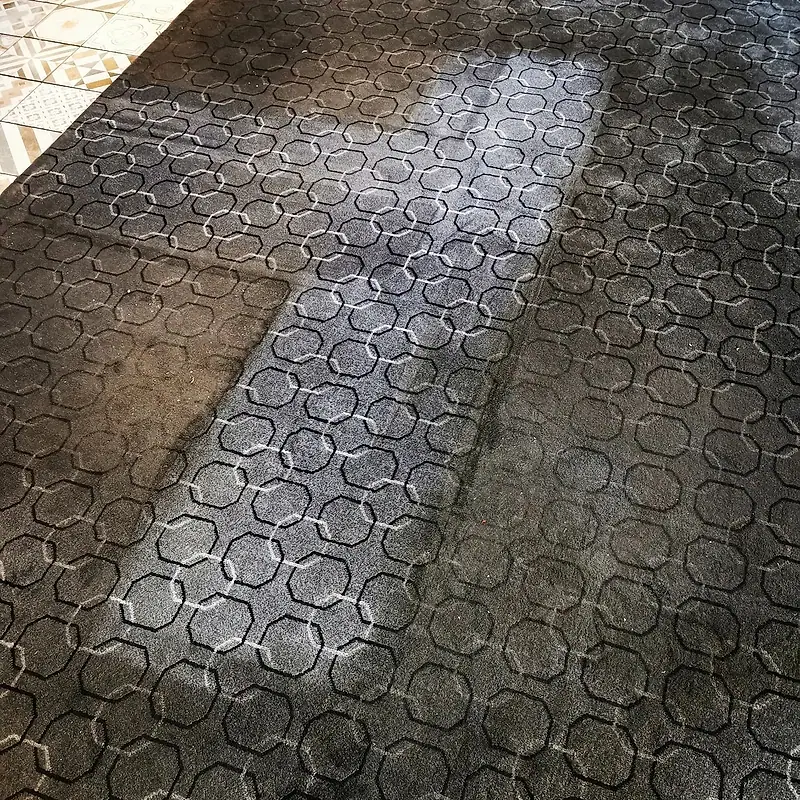
Carpet shampoo is detergent, and detergent that isn't rinsed out doesn't disappear. It dries in the pile as a thin, slightly sticky film. Every pair of shoes that crosses it leaves a little more dirt stuck to that film, so the patch you cleaned goes darker than the rest of the carpet, often within weeks.
It's easy to overdo. The foam in the machine's tank makes it look as though the shampoo isn't working, so people add more. Spot sprays from the shop work the same way, which is why a carpet often ends up with darker patches exactly where stains were treated. A simple test: if the cleaned area feels stiff or tacky once it's dry, there's residue in it.
 spotless.ie
What a trained cleaner does differently
The machine matters, but the bigger difference is knowing what to do with it. On every job we:
- Check the carpet first. Fibre, construction, condition and colour-fastness, and what's already been put on any stains. Viscose, jute and sisal behave very differently from nylon, and some shouldn't be wet-cleaned at all.
- Vacuum out the dry soil. Grit and sand come out far more easily dry than as mud.
- Pre-spray and let it work. A product suited to the fibre goes on the traffic lanes and spots, and is given a few minutes to loosen the soiling.
- Agitate. Working the pre-spray into the pile frees soiling stuck to the fibres.
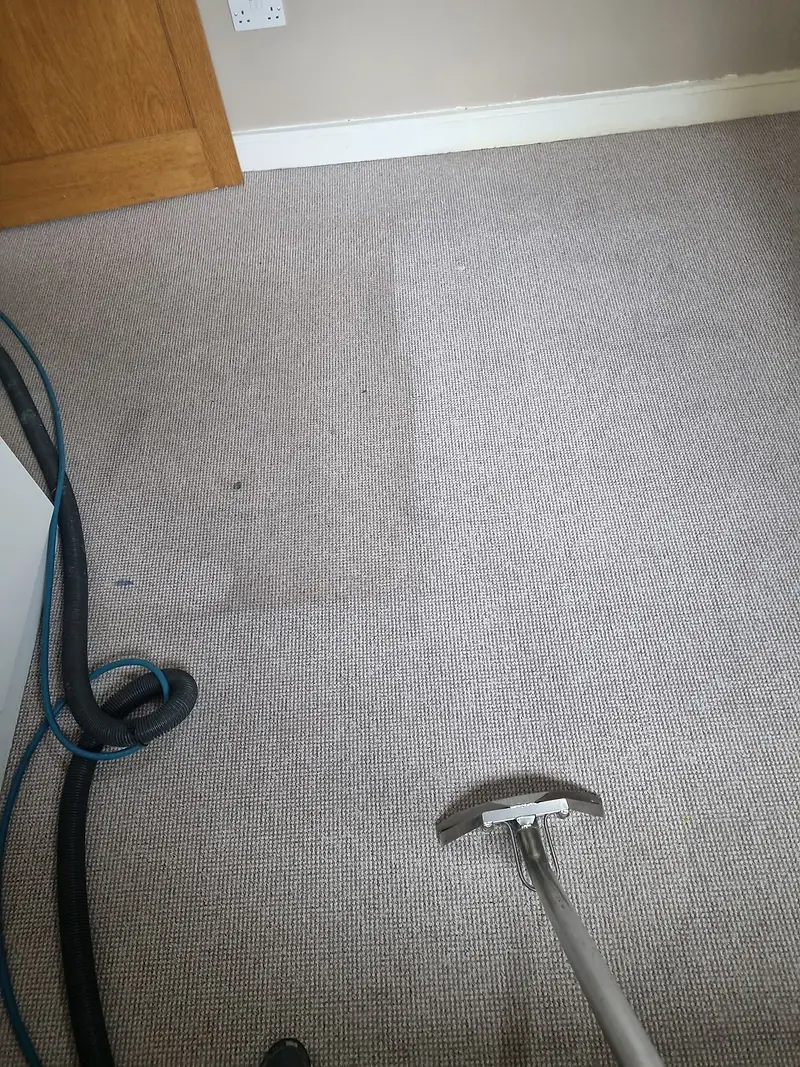
- Extract with control. Overlapping wet passes, then dry passes to recover as much water as possible.
- Groom and dry. The pile is brushed upright and air movers go on to speed up drying.
- Know when to stop. If a stain is permanent, more passes won't change that. They'll just soak the carpet, so we tell you instead.
Ciprian, who founded Spotless, works on jobs himself and is fully trained in carpet cleaning, having completed a Prochem carpet-cleaning course in 2018 (certificate no. 2018/020). We're fully insured on every job. Our guide to how carpet cleaning works compares the different professional methods.
Had a go yourself and it's not right? Send us photos of the carpet and tell us what was used on it. We'll tell you honestly what can be put right and give you a fixed price, usually the same day.
If you're going to DIY anyway
Fair enough. A few habits make a hire machine far less likely to cause trouble:
- vacuum thoroughly first, slowly, in two directions
- measure the shampoo and never add extra, even if the tank looks flat
- test a hidden corner before you start
- do at least two suction-only passes for every wet pass
- never go over one spot again and again with water
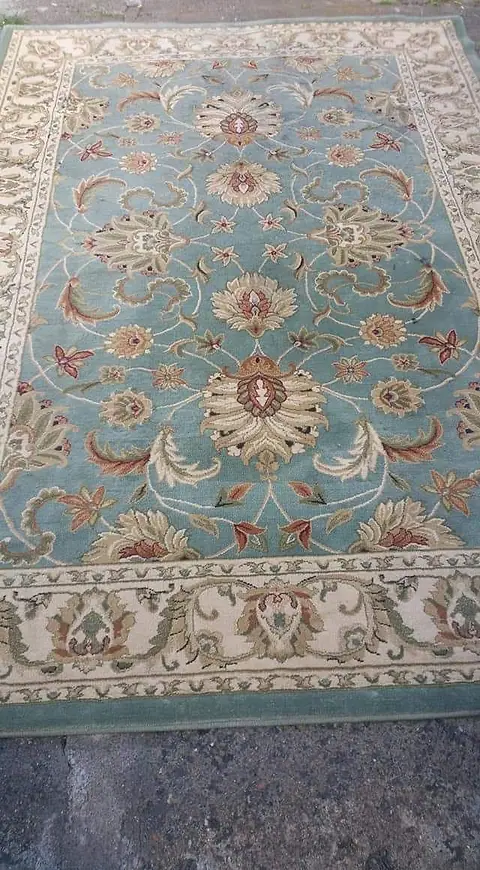
- leave wool, viscose, sisal and jute to someone who knows them, and see our rug cleaning page for rugs
- get air moving afterwards, and keep furniture off until the carpet is fully dry
The same rules apply to fabric sofas, which are even easier to over-wet; our sofa cleaning guide covers them.
Fixing a DIY clean that's gone wrong
Some DIY problems can be put right and some can't:
- Residue and fast re-soiling: usually fixed with a proper hot-water rinse.
- Water rings and stains that have wicked back up: often improve a lot with controlled extraction and good drying.
- A stain spread wider by scrubbing: depends on the stain, but often improves.
- Shrinkage, colour loss, bleach marks or fuzzed pile: permanent, and cleaning won't reverse them.
Send a photo of the problem and tell us what machine and products were used. We'll give you a straight answer before you book. For everything else we clean in Dublin and beyond, see our main carpet cleaning page, and for how long drying normally takes, our carpet drying guide.