What a professional clean does that a vacuum can't
A vacuum is brilliant at the dry stuff: dust, crumbs, hair and loose grit near the top of the pile. What it can't shift is the soiling that's stuck to the fibres. Cooking oils that drift through the house, the film that comes in on shoes, spills that were blotted but never rinsed, and the general grime that builds up in walkways.
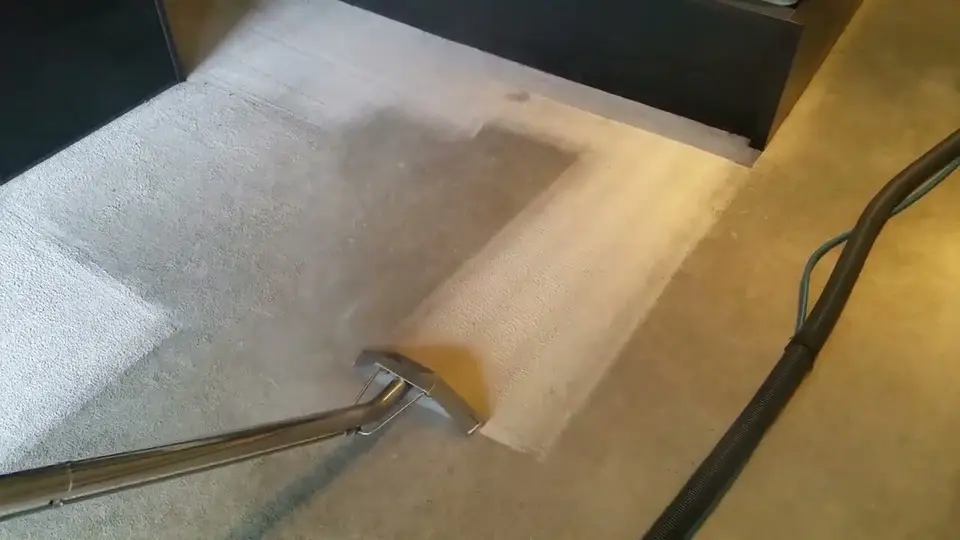
That sticky layer is what turns a carpet grey and makes traffic lanes stand out. It also holds onto grit, and grit grinding against the fibres every time someone walks across is what wears a carpet out. A professional clean loosens that soiling and removes it, so the colour comes back and the pile can stand up again.
It doesn't replace vacuuming. The two work together: regular vacuuming takes out the dry soil, and a periodic clean deals with what vacuuming leaves behind.
The main methods, compared
There are three broad ways carpets get cleaned professionally. Each has its place, and you'll hear all of them called "steam cleaning" at some point, which doesn't help.
| Method | How it works | Good at | Drawbacks |
|---|---|---|---|
| Hot-water extraction | Hot water and a cleaning solution are rinsed into the pile and vacuumed straight back out | Flushing soiling out of the whole pile, and rinsing out old residue | The carpet is damp afterwards and needs a few hours to dry |
| Shampooing | A foaming shampoo is worked in with a rotary brush, left to dry and vacuumed off | Agitating heavy surface soiling | If the shampoo isn't fully rinsed out, the residue attracts dirt and the carpet gets grubby again quickly |
| Dry and low-moisture methods | An absorbent compound, a cleaning pad or a solution that dries to a powder picks up soiling, then is vacuumed off | Quick drying, so they suit offices and shops between fuller cleans | They mostly clean the upper pile and don't flush out grit lower down |
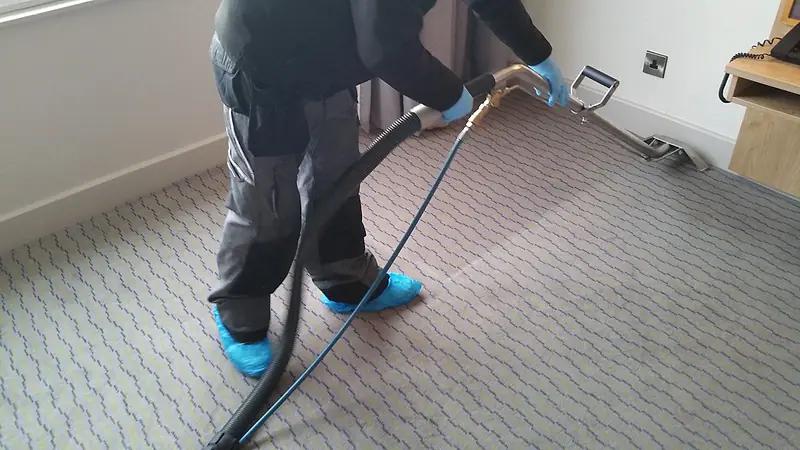
Hot-water extraction is what most people mean by steam cleaning, although there's no actual steam involved. It's the method we use, because it rinses the carpet rather than just treating the surface.
None of these methods is wrong in itself. A dry method makes sense for a commercial carpet that has to be back in use within the hour, and a shampoo followed by a proper rinse can work well. What matters is that the carpet ends up clean and free of residue, without being soaked. If your carpet is still under warranty, check the care guide that came with it, because some manufacturers say which cleaning method they expect.
What happens on the day, step by step
A good carpet clean follows roughly the same order, whoever does it:
- Inspection. The fibre, the condition, the stains and any wear. Some marks are permanent before anyone starts, and it's better to know that up front. Anything delicate or unusual gets a test patch first.
- Dry soil out. Loose grit comes out best with a vacuum, before any water goes down.
- Pre-treatment. A pre-spray matched to the fibre and the type of soiling goes onto traffic lanes and spots, and is left to work for a few minutes. Much of the real cleaning happens here.
- Extraction and rinsing. The wand passes over the carpet in overlapping strokes, rinsing and vacuuming in one movement, with extra passes on heavy soiling. The aim is that nothing stays behind: not the dirt, and not the cleaning products either.
- Drying. Air movers push air across the surface to speed drying up, and you get advice on how to help it along. Our guide to carpet drying times explains what affects it.
Ciprian, who founded Spotless, completed Prochem carpet-cleaning training in 2018 (certificate no. 2018/020), and he works on jobs himself with a small crew.
 spotless.ie
Pre-treatment and stains
Stains are where carpet cleaning goes right or wrong. A few things worth knowing:
- Match the product to the fibre. Wool and other natural fibres need gentler products than nylon or polyester. That's why the fibre gets checked before anything is sprayed.
- Give it time. Pre-treatment needs a few minutes to loosen soiling. Spraying and extracting straight away wastes most of its effect.
- Old DIY treatments matter. Supermarket sprays, washing-up liquid and hard scrubbing can leave residue, spread a stain or set it. Tell your carpet cleaner what's been used on a mark, because it changes the approach.
- Some stains are permanent. Bleach removes colour rather than adding anything, so there's nothing to clean out. Burns, dye stains and stains set with heat are usually there to stay.
With a fresh spill before the cleaner arrives, the best thing you can do is blot it with a clean white cloth and a little cold water, and leave it at that. The same rule applies to fabric furniture, which our sofa cleaning guide covers in more detail.
Not sure what your carpet needs? Send a few photos of the rooms and any stains on WhatsApp. We'll tell you honestly what to expect and give you a clear price, usually the same day.
What affects the result
Two carpets cleaned the same way on the same day can come up very differently. The main reasons:
- Wear versus dirt. Traffic lanes are usually a mix of soiling and worn, flattened pile. Cleaning removes the soiling, but it can't replace fibre that's worn away. A thin hallway carpet will look much better, and still be thin.
- Fibre. Nylon and polyester are forgiving. Wool cleans beautifully but needs gentler products and careful drying. Polypropylene resists most stains but tends to hold onto oily soiling.
- Sun fading. Colour lost to sunlight near a window won't come back with cleaning.
- What's underneath. Pet urine that has soaked into the underlay can be treated in the carpet, but the underlay itself may still hold some odour.
- Time. The longer a carpet goes between cleans, the more firmly soiling bonds to the fibres, and the more grit wears them down.
How often should carpets be cleaned?
Once a year keeps carpets in good shape in most homes. Some rooms and households need more attention than others:
| Home or room | How often |
|---|---|
| Bedrooms in an adult household | Every year or so, sometimes longer |
| Living room, hall, stairs and landing | Once a year, more often if they're busy |
| Homes with pets or young children | The busiest rooms more than once a year |
| Rented properties | Between tenants, while the rooms are empty |
| Offices, shops and restaurants | Depends on footfall, often on a regular schedule |
Between cleans, vacuum the busy areas a couple of times a week, put doormats at every outside door and deal with spills straight away. Regular vacuuming does more to make a carpet last than anything else.
Hiring a machine or hiring someone
Hire machines from the supermarket or DIY shop have their place for a quick refresh. The usual problems are weaker suction, which leaves the carpet wetter and slower to dry, and too much shampoo, which leaves residue that makes it re-soil quickly. Over-wetting is the bigger risk. Water that reaches the underlay takes a long time to dry and can bring stains back up to the surface.
If you do hire one, go easy on the shampoo, make extra suction-only passes to pull out as much water as you can, and get air moving through the room afterwards.
When you're choosing a carpet cleaner, a few questions sort things out quickly:
- What method do you use, and why for my carpet?
- Do you check the fibre and test delicate carpets first?
- Will you tell me beforehand if a stain isn't going to come out?
- How long will it take to dry, and what can I do to help?
- Is the price fixed before you arrive?
Getting it done
Spotless carpet cleaning covers Dublin and all of Leinster, with local pages for County Kildare and Carlow. As well as fitted carpets, stairs and landings, we clean rugs, sofas and armchairs and mattresses, so a whole house can be done in one visit. If you're moving out of a rental, our guide to end-of-tenancy carpet cleaning covers timing and receipts.
Quotes are from photos. Send a picture of each room, the stairs and any stains, and you'll have a clear price before anything is booked.