
Apartment clearance is mostly about logistics
Clearing an apartment involves the same lifting as clearing a house. What's different is everything between the front door and the van: a lift that has to be booked, a stairwell shared with neighbours, a loading bay with a time limit, and a management company with rules of its own. Get those right and an apartment clearance is quick and calm. Get them wrong and the van sits on a clearway while the crew waits for the lift.
So we plan apartments in more detail than houses. Before the day we'll ask about the floor, the lift, parking and any building rules, and we'll fit the job around them. We clear studios, one- and two-beds, duplexes and penthouses across Dublin and all of Leinster, for owners, tenants, landlords, letting agents and families settling an estate. It's the same crew that does our house clearances, working to the building's rules.
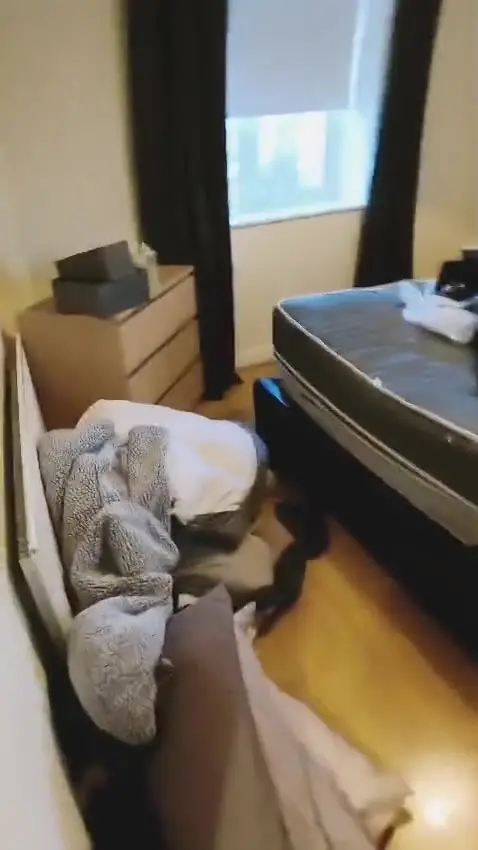
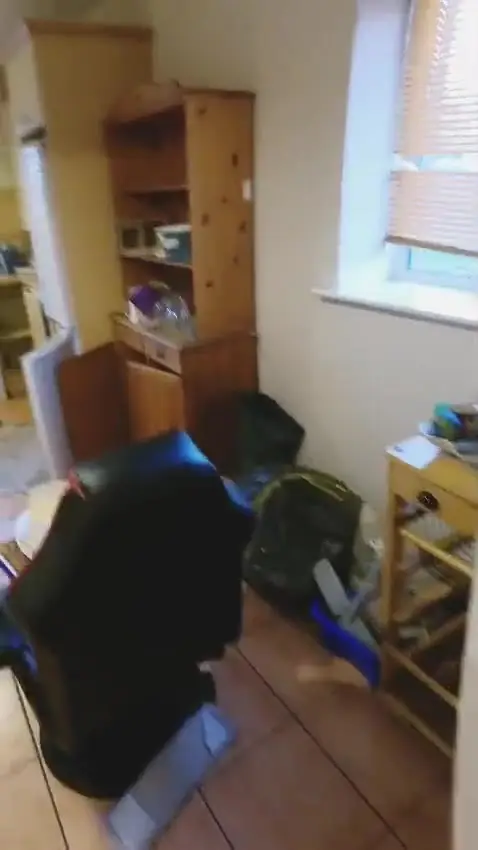
That walk-through is from an apartment we cleared in Raheny, filmed during and after the clear-out.
Start with the management company
Your apartment is yours, but the lobby, lifts, corridors and car park usually aren't. In most developments they're owned and run by the owners' management company, and the people you actually deal with are its managing agent, a caretaker or a concierge. Their house rules often say when furniture can be moved and how.
Get in touch with them before you book a date. These are the things we'll need to know:
- Permitted times. Which days and hours removals are allowed, and whether weekends are excluded.
- The lift. Whether it has to be reserved, and whether there are padded covers that can be hung inside it.
- Loading. Whether there's a loading bay or a set-down area out front, or whether the van will be on the street.
- Car park height. Our Luton van is tall, so most underground car parks are off limits and we load at ground level.
- Access. Who holds the fobs and codes, and the caretaker's number for the morning of the job.
Pass on whatever they tell you and we'll work within it. Our day runs from 8am to 8pm, Monday to Saturday, which makes most building time slots easy to fit.
Lifts, stairwells and shared spaces
The common areas of an apartment block belong to everyone, so we treat them with more care than the apartment itself.
- Lifts. We load efficiently so we're not holding the lift for long, and we use lift covers where the building provides them. Wardrobes, bed frames and big tables are taken apart in the apartment so they fit in the lift and don't scrape the walls.
- Stairwells. In walk-up blocks and flats over shops, everything goes down by hand. That takes more time and more hands, and we price for it honestly at the start rather than surprising you on the day.
- Corridors and carpets. Covers go down on carpeted corridors and stairs before anything heavy moves.
- Fire doors. We don't wedge fire doors open to make carrying easier. It's a small thing, but it matters to the building and to your neighbours.
- Bin stores. Nothing from the clearance goes into the building's bins or bin store. It all leaves on our van.
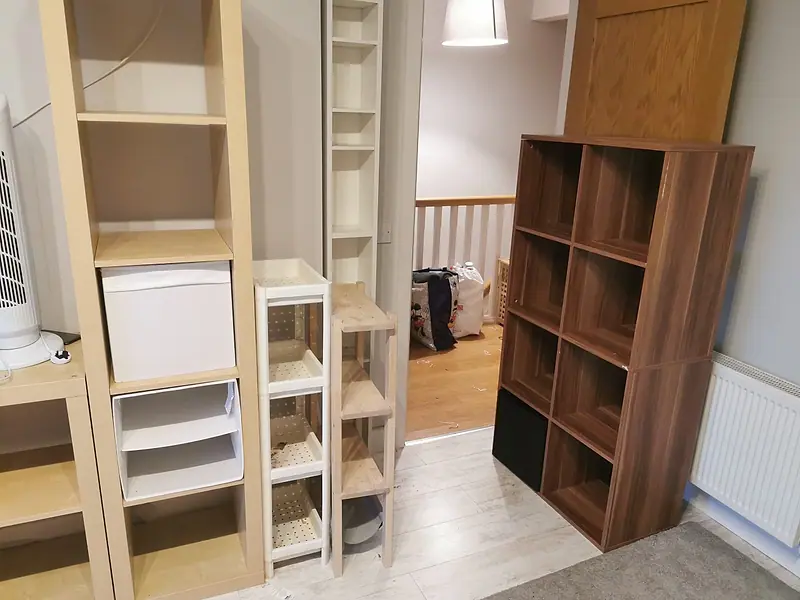
 spotless.ie
How the day runs in an apartment block
Most apartment clearances follow the same pattern, whichever building they're in:
- Meeting the building. The caretaker or concierge lets us in, or we use the fob you've arranged, and we check where the van can stay while we load.
- Protecting the route. Lift covers go up where the building has them, and covers go down on carpeted corridors and stairs.
- Taking big pieces apart. Wardrobes, bed frames and dining tables are dismantled inside the apartment, never in the corridor.
- Gathering by the door. Bags and smaller items are grouped near the front door, so each lift trip is full and the lift is tied up for as little time as possible.
- Loading in batches. Lift down, out to the van and back up again, in as few trips as the lift allows.
- The finish. Rooms swept and hoovered, the corridor and lift checked so they're left as we found them, and photos sent to you if you're not there.
Parking and loading
Parking is the part of an apartment clearance most likely to go wrong, so we ask about it first. Tell us if the building has a loading bay, a set-down area or visitor spaces, or whether it's pay-and-display or permit parking on the street. In Dublin city centre, clearways and bus lanes limit where a van can stop, so the loading is organised to get the van in and away again quickly.
If you can reserve a visitor space, a parking permit or a slot in the loading bay, do. If you can't, we'll work out the best option with you before the day.
Want a price for your apartment? Send photos of each room on WhatsApp, with the floor number and a line about the lift and parking. We'll reply with a fixed price, usually the same day.
Landlords, tenants and handovers
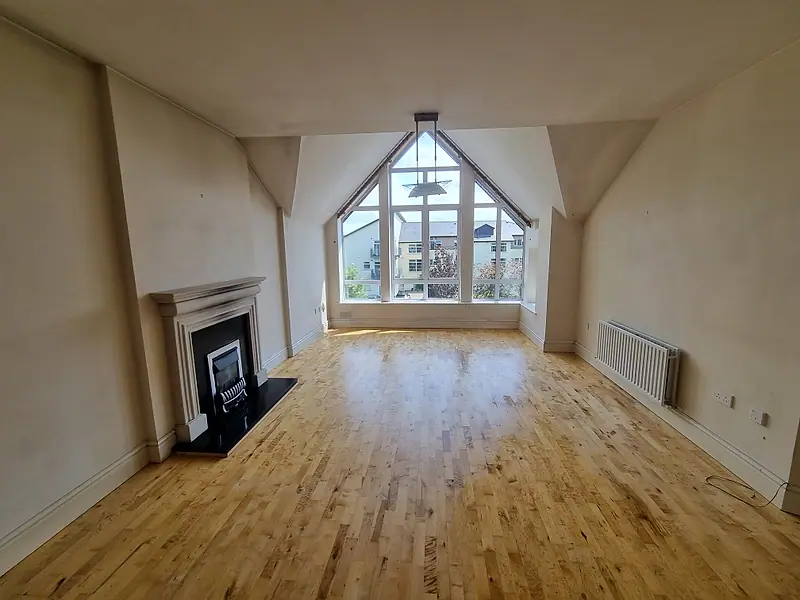
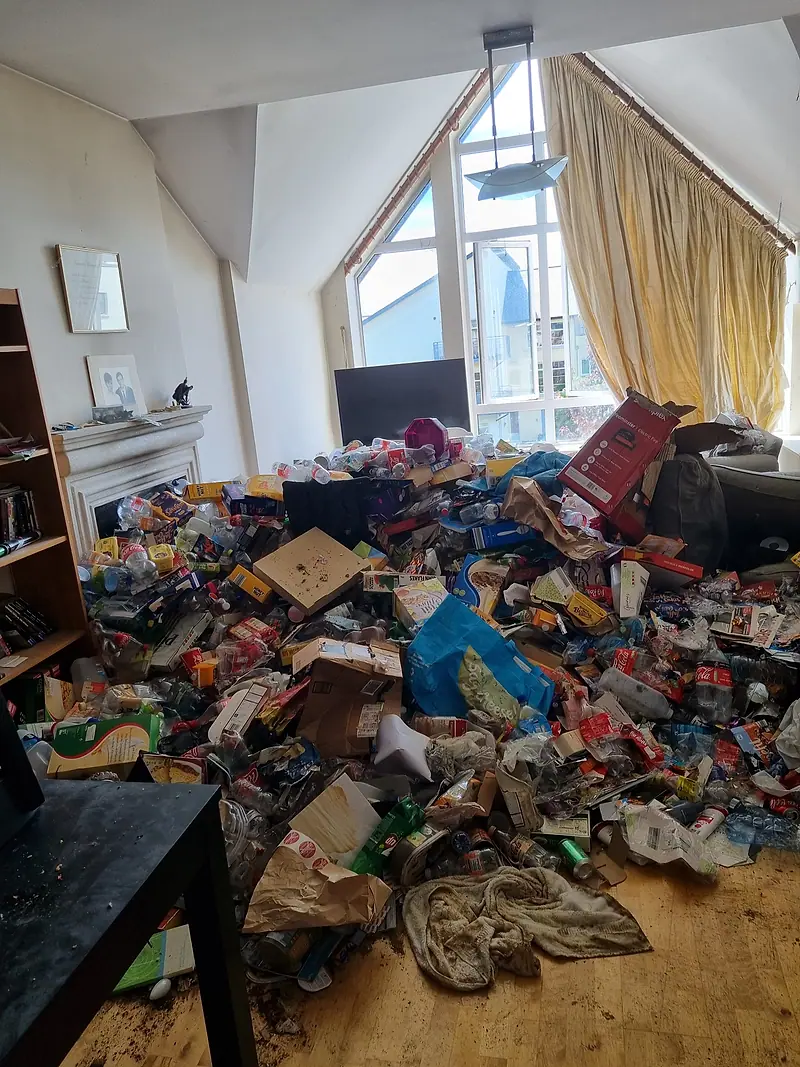
Many apartment clearances happen at the end of a tenancy. Landlords and letting agents call us when a tenant has moved out and left furniture behind, or when a furnished flat is being let unfurnished. Tenants call us when they're moving out and need to hand the place back clear.
A few things help:
- Agree what's staying. If the landlord's furniture stays and the tenant's goes, a short list or a few photos avoids mistakes.
- Check before clearing someone else's belongings. When a former tenant has left possessions behind, be sure you have the right to get rid of them before anything is removed. The Residential Tenancies Board publishes guidance for landlords on exactly this.
- Leave time for cleaning. We leave rooms clear, swept and hoovered. An end-of-tenancy clean is best booked for after we've gone, and if the carpets need attention, we also do carpet cleaning.
For whole properties between lets, our property clearance service and the guide to clearing a rental between tenants go into more detail.
From studio to penthouse
| Apartment | What usually shapes the job |
|---|---|
| Studio or one-bed | Not much volume, but often packed tight. The lift and the parking matter more than the size. |
| Two- or three-bed | Close to a small house in volume. Bedroom furniture comes apart for the lift, and there are several lift trips. |
| Walk-up or flat over a shop | No lift and often narrow stairs, sometimes in a converted period house. Everything is carried down by hand. |
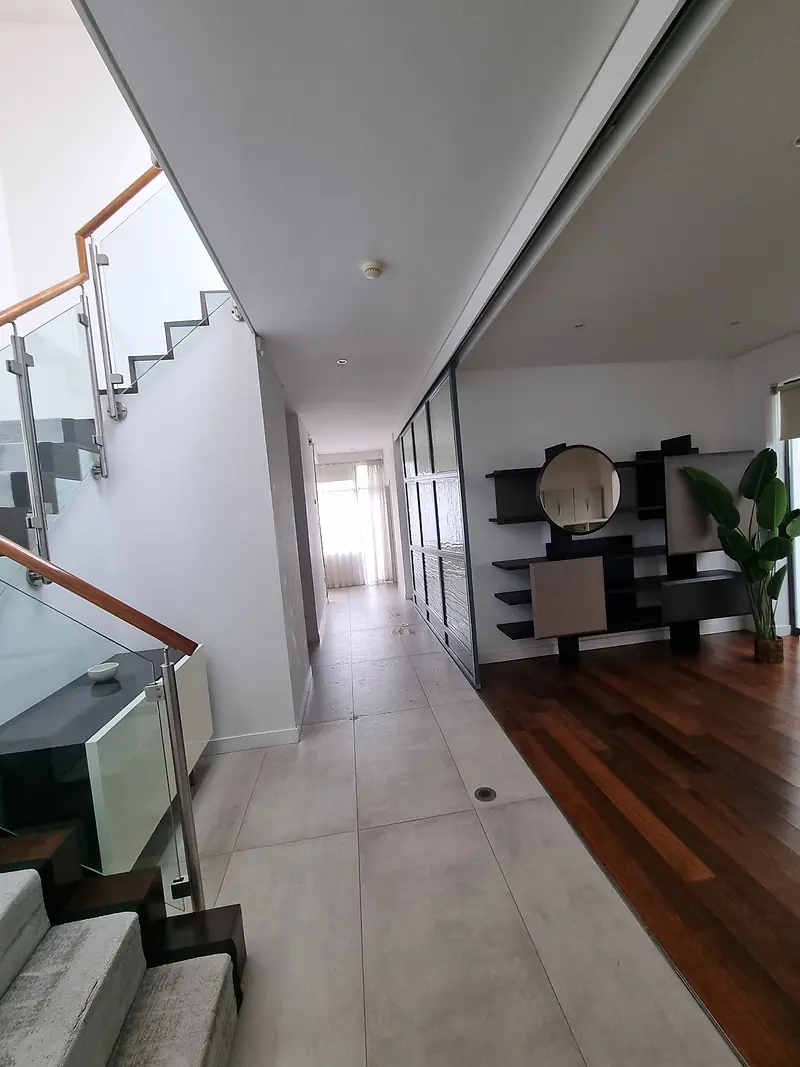
| Duplex or penthouse | An internal staircase as well as the lift, and often bigger furniture such as corner sofas and long dining tables. |
| Basement storage room or cage | Easily forgotten. Bikes, boxes and suitcases left in a storage room or cage in the car park. Tell us if you have one. |
As for time, a studio or one-bed is often cleared in a morning or an afternoon, and a two- or three-bed usually within the day. A slow lift shared with a busy building, a long walk from the lift to the loading bay, or a walk-up on the fourth floor will stretch that, and the quote will tell you what to expect so you can book the right lift slot.
Flats in converted houses and over shops
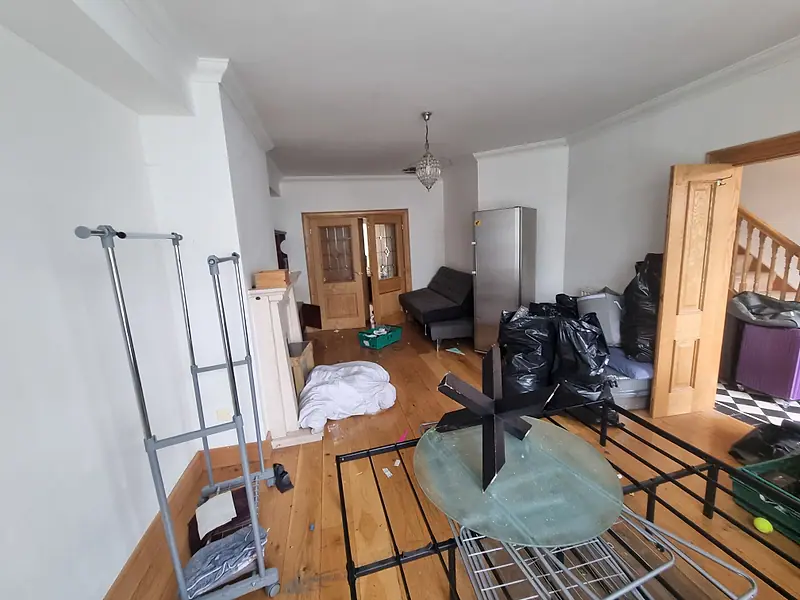
Not every flat is in a purpose-built block. Across Dublin's older suburbs, plenty are in Victorian and Edwardian houses divided into flats, with a shared hall and a narrow stairs that was never designed for furniture. In towns, many are over shops, reached by a side door or a back lane. These jobs have no lift and no loading bay, so the planning is all about the stairs, the shared spaces and where the van can stop. Our page on flats in converted houses covers those in more detail.
Apartment clearance across Dublin
Apartment buildings differ a lot from one part of the city to another, so we have separate pages for the main areas:
- The northside. From the Docklands and the north inner city out to Drumcondra, Santry, Swords and Dublin 15.
- The southside. Grand Canal Dock, Rathmines, Ranelagh and Milltown, down to Dún Laoghaire and the coast.
- Sandyford. Large managed blocks with car parks, set-down areas and strict building timetables.
- Leaving Ireland. When you're emigrating with a full apartment and a flight to catch.
What we take, and where it goes
We take everything you don't want to keep: sofas and beds, mattresses, wardrobes, flat-pack, dining sets, white goods, TVs, kitchenware, clothes, books and bags of general rubbish. If you only need a few big pieces gone, see furniture removal. If it's mostly loose rubbish rather than furniture, junk removal may suit better. And if the clearance follows a death in the family, our bereavement clearance service goes at whatever pace you need.
Everything is sorted as it's loaded. Furniture and household goods that someone else could use are kept apart for reuse where possible. Appliances, electricals, metal and cardboard are recycled, and the remainder is taken to licensed waste facilities.
We hold waste collection permit NWCPO-25-13287-01 as an authorised waste carrier, and every job is fully insured, including the work we do in lifts, corridors and other shared parts of the building.
Before the day
- book the lift and the loading slot, and tell us the times
- sort out a fob, key or code for the front door and car park
- set aside or label anything you're keeping
- let the caretaker or concierge know we're coming
- mention anything very heavy, such as a safe or a solid wood wardrobe
Our apartment clearance guide has more on lifts, parking and management companies.