
The building has rules, and they come first
A modern apartment block is a small community run by an owners' management company, usually through a managing agent. Before a clear-out, the building wants to know who's coming, when, and how they'll protect the shared parts. In some blocks that's a quick email. In others it's a move-out form, a lift booking and a sign-in at the concierge desk.
We clear apartments in managed blocks across the city and county, from schemes on the quays to the newer developments in Dublin 15, Sandyford and Cherrywood. The lifting is the same as anywhere else. The difference is that the building's rules decide the day, so we work them out with you before a date is fixed. Our main apartment clearance page covers walk-ups and flats over shops as well; this page is about blocks with a lift, a concierge or a managing agent.
Who deals with the building depends on who you are. An owner selling up or clearing a relative's apartment can usually talk to the managing agent directly. A tenant normally goes through the landlord or letting agent, who may already have a contact at the management company and know the house rules by heart. Either way, the sooner that conversation happens, the more choice of dates you'll have.
What the managing agent usually asks for
Every building is different, but the same requests come up again and again:
- Notice. Often a week, sometimes more. Larger blocks with one goods lift get booked up, especially around the end of the month.
- The contractor's details. A company name, a contact number, and the date and times you want.
- Insurance and a waste permit. Some agents want to see that the company is insured and permitted before they'll confirm. We're fully insured on every job and our permit number is NWCPO-25-13287-01, so pass on whatever they need.
- A move-out form. Some buildings use one for every move, in or out, so the caretaker knows the lift will be busy.
- Set hours. Weekday working hours are common, and a few blocks don't allow moves at weekends at all.
Get the answers in writing and forward them to us. If the agent sets a slot, we plan the job to finish inside it.
The lift, the concierge and the loading bay
Booking the lift. In larger blocks the lift is booked like a meeting room, in time slots. Book longer than you think you need, and ask whether there's a goods or service lift. Many bigger schemes have one, with a back corridor to the bin store and loading area, and the managing agent will usually prefer that route to the front lobby.
Holding the lift. Plenty of lifts can be switched into a service mode with a key, so they wait on your floor instead of answering every call. Only the caretaker can do it, so ask when you book.
Signing in. Where there's a concierge desk, the crew signs in on arrival, is shown the route, and signs out on the way out. Concierge hours don't always cover Saturdays, so check who will let us in and hand over the fobs if the desk is closed.
The loading bay. Some blocks have a bay at the back or a set-down area at the front with a time limit. Others have nothing, and we load from the street. Tell us what's there and we'll plan the trips to keep within any limit.
 spotless.ie
Under the barrier: car parks and height limits
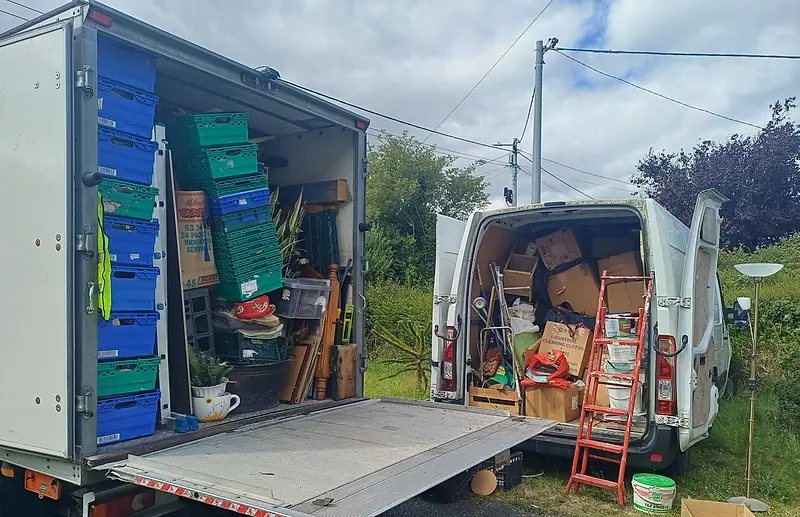
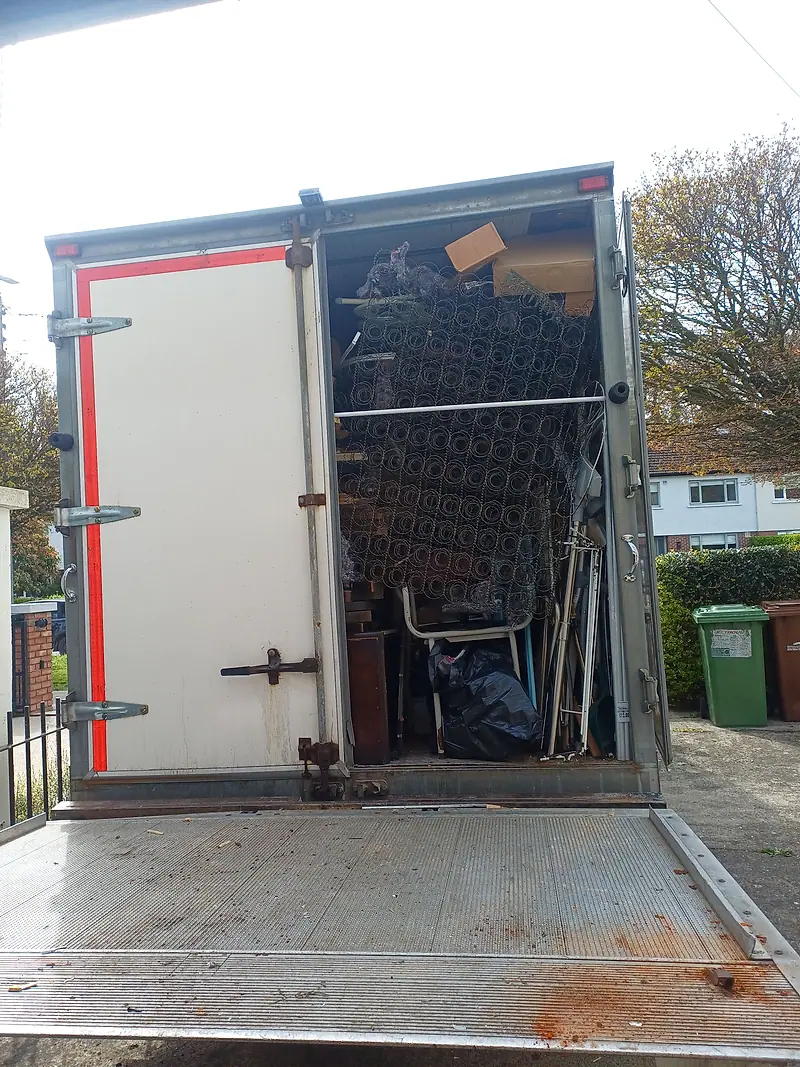
Underground car parks are the most common snag. The height barrier at the top of the ramp is set for cars and small vans, and our Luton van is far taller. So we don't plan to drive in. We load from a surface bay, the set-down area or the street instead, and stage everything near the lift on the ground floor so the van is outside for as short a time as possible.
Basement storage is easy to forget. If the apartment comes with a storage cage, a bike in the bike store or boxes in a basement storeroom, mention it when you send photos, and sort out a key or fob for that part of the building too.
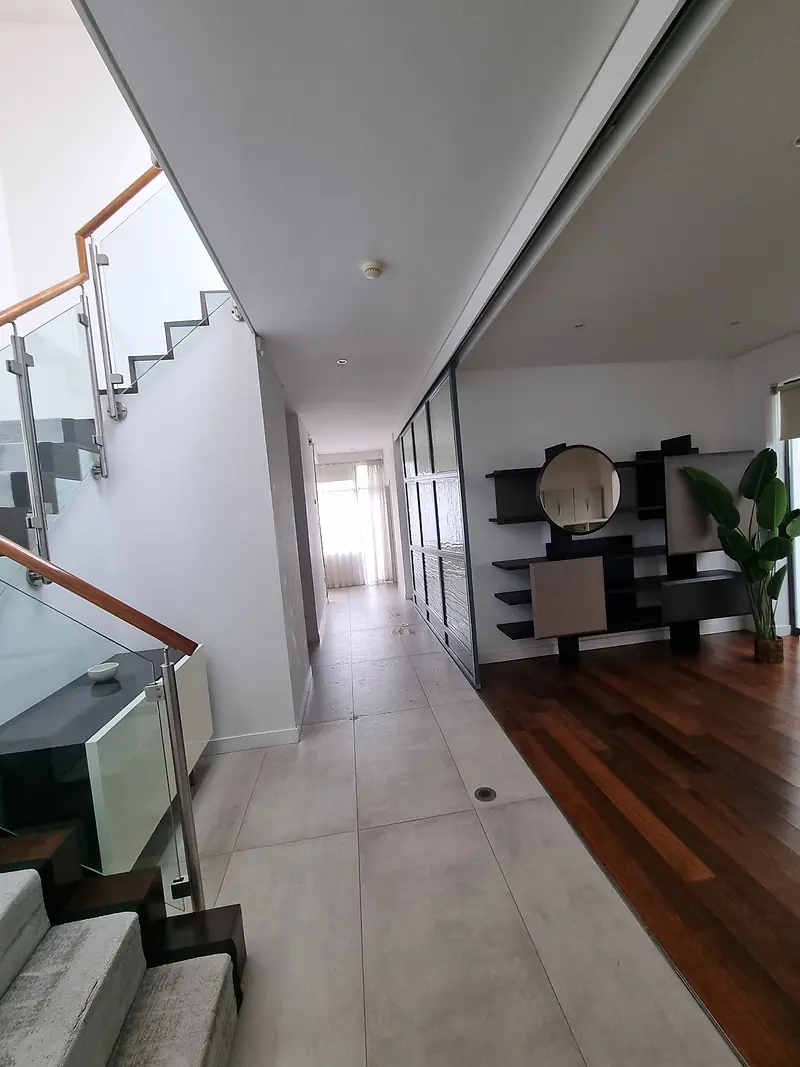
Protecting the lift and the common areas
Damage to the shared parts of a building is usually raised with the apartment owner by the management company, so this is where care matters most.
| Area | What we do |
|---|---|
| Lift car | Padded covers hung where the building provides them; heavy items wrapped and kept off the walls |
| Corridors | Covers on the carpet from the apartment door to the lift; long items carried, never dragged |
| Door frames | Furniture taken apart inside the apartment so nothing is forced through |
| Fire doors | Never wedged open. Many close on magnetic holders linked to the alarm, and they're left that way |
| Lobby | Nothing left standing; items go straight from the lift to the van |
| Bin store | Nothing from the clear-out goes in it |
It helps to take a few photos of the lift and corridor before we start, with the concierge or caretaker if possible, and again when we finish. That simple record settles most questions afterwards.
Moving out of a managed block? Send photos of the apartment and forward what the managing agent has told you about times, the lift and loading. We'll come back with a fixed price that works inside their rules.
Before you book
- ask the managing agent for the house rules, any forms and the notice period
- book the lift, and the goods lift if there is one
- check the concierge's hours and arrange fobs for the front door, car park and storage
- set aside anything you're keeping, and tag the landlord's furniture if it's a furnished let
- tell us about very heavy pieces, such as an American fridge-freezer or a solid oak table
For the practical side of planning a clear-out yourself, our guide to clearing an apartment has a one-week plan. If you're in Dublin 18, see apartment clearance in Sandyford, and for a district-by-district view of the city read apartment clearance across Dublin. Landlords turning a unit around between tenants may want property clearance in Dublin, and if only a sofa and a bed need to go, furniture removal is priced for smaller loads. Flats in older converted houses are a different job altogether; see flat clear-outs in Dublin.