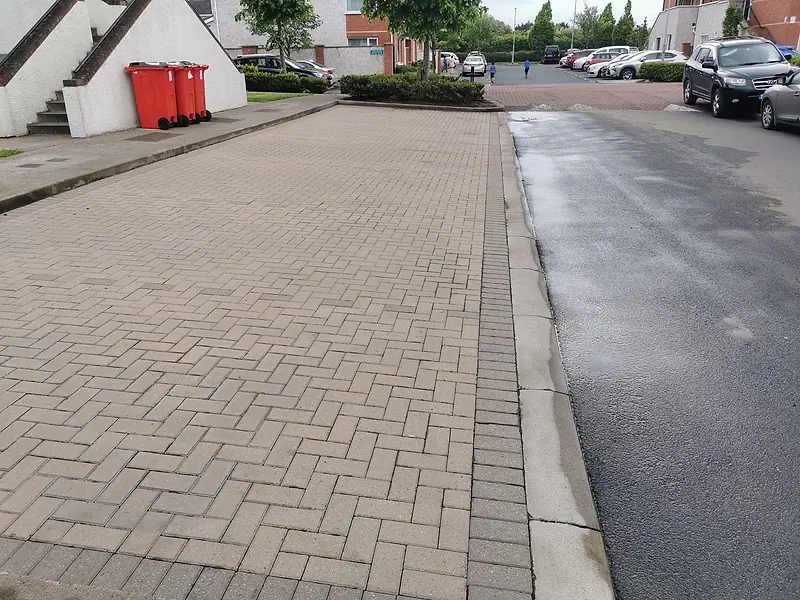

Why patios go green and slippery
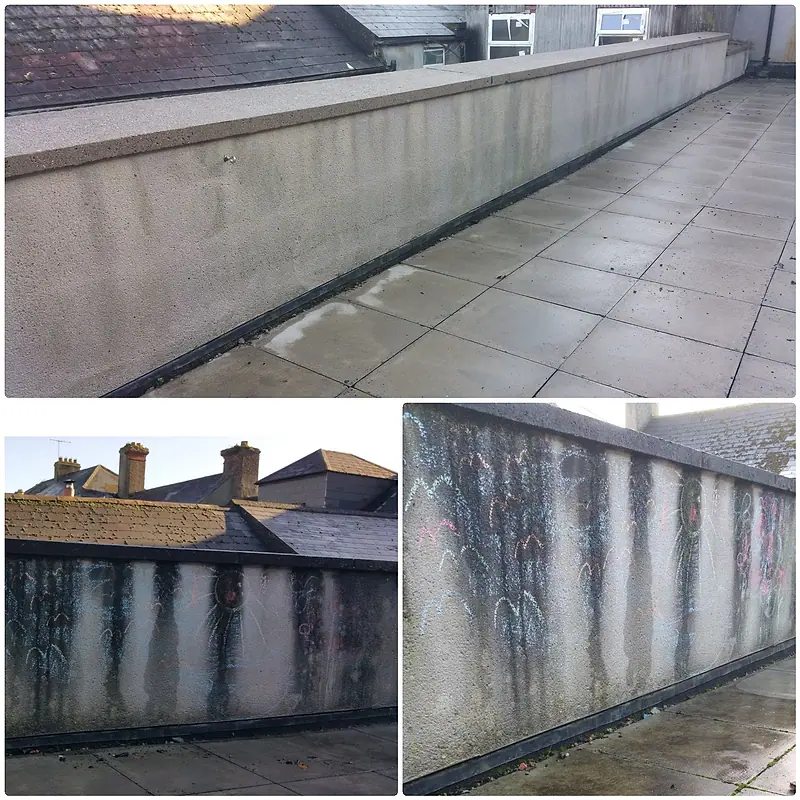
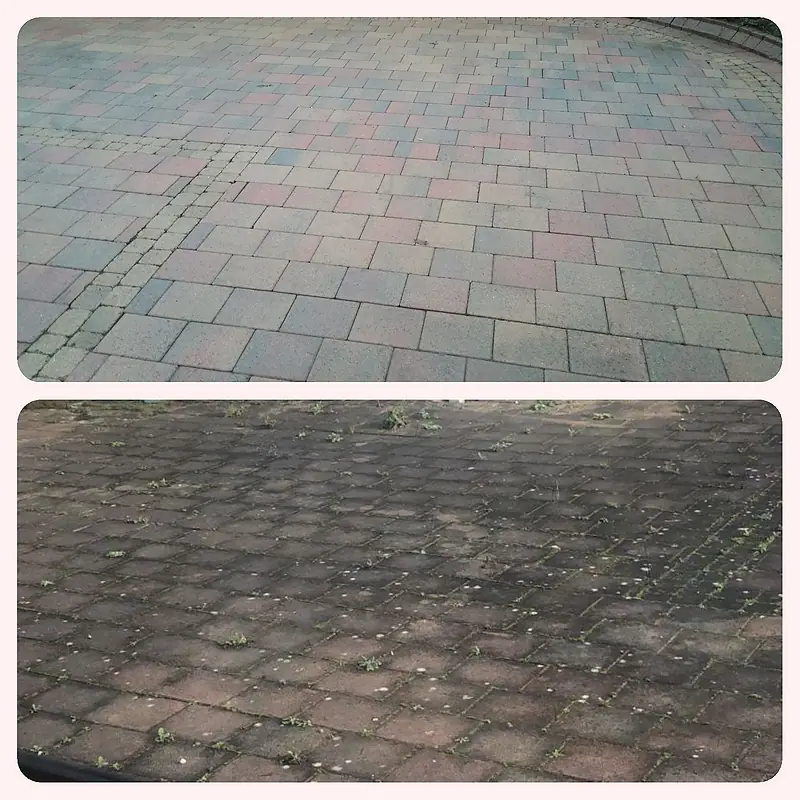
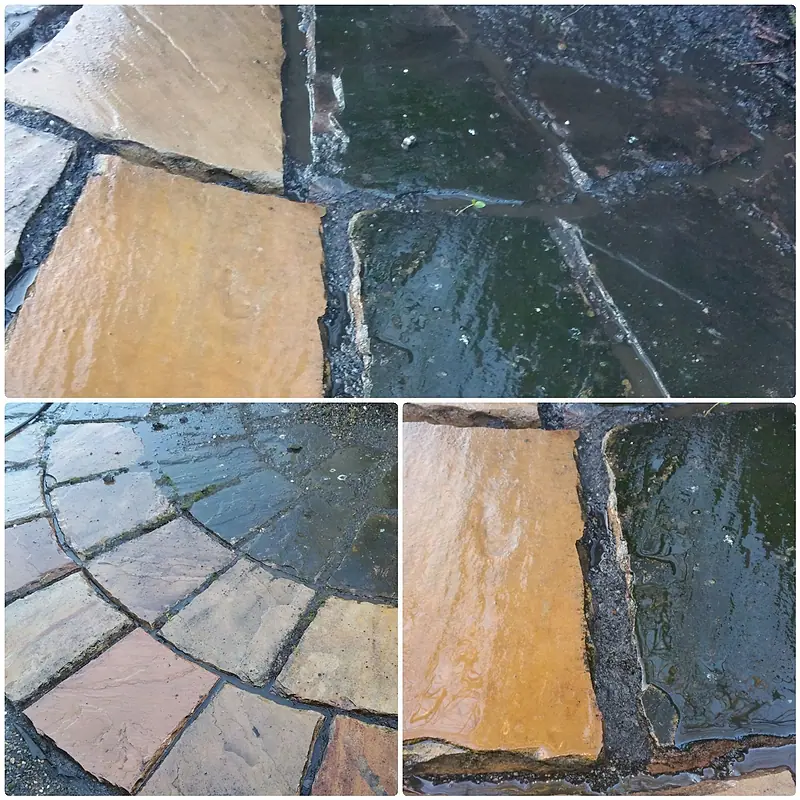
A patio spends most of the Irish year damp. Back gardens are often shaded by the house, a wall or a hedge, and slabs that don't dry out between showers soon grow a film of green algae. That film is what makes a patio slippery, and on a shaded patio it can come back within a single winter.
Underneath the green there's usually more: moss in the joints, dark staining from leaves and barbecues, and on some stone, the black spots of lichen. A proper clean deals with each of these in the right way, rather than blasting the whole lot at full pressure.
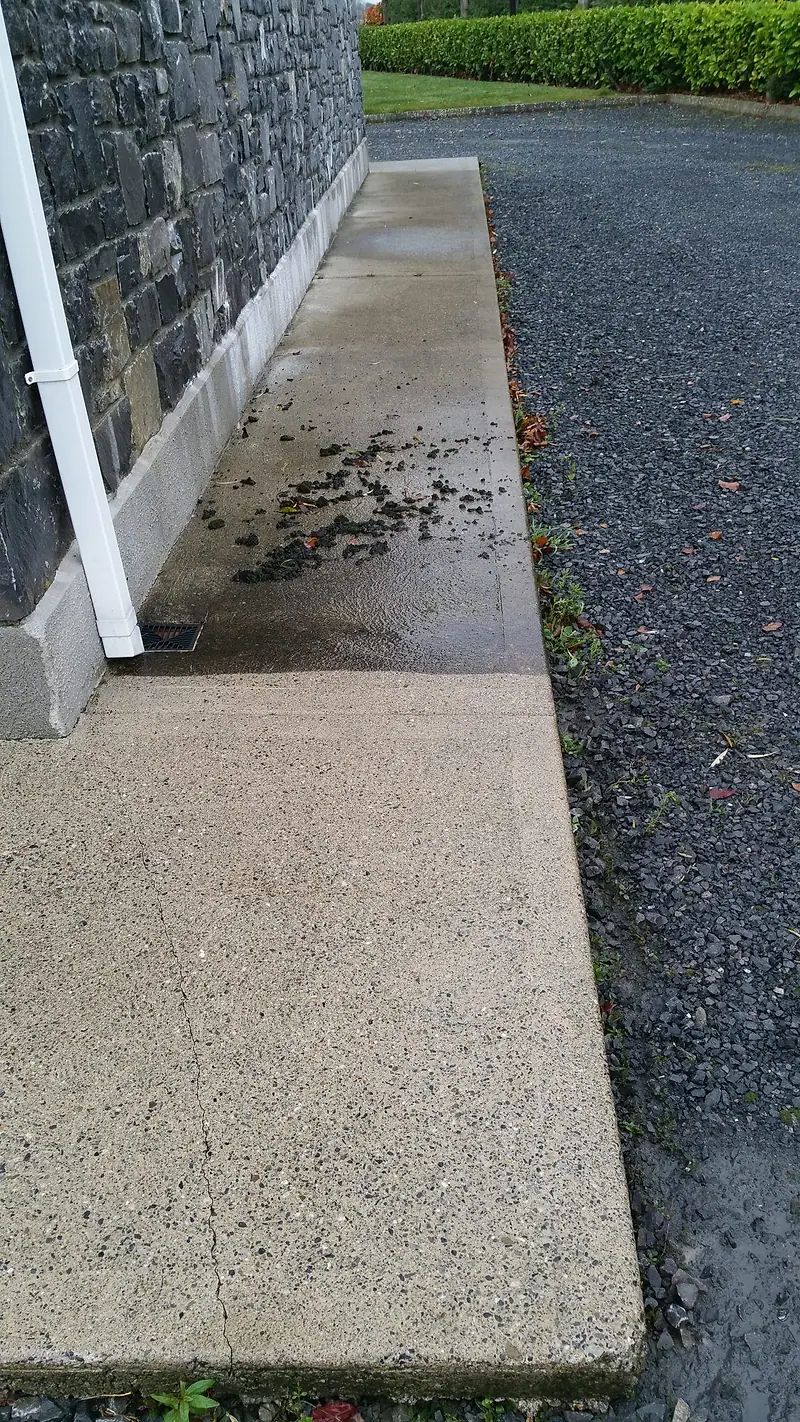
Too much pressure is the most common way patios get damaged: sandstone left rough and striped, pointing washed out of the joints, and a finish that looks worse within a year than it did before. Our approach is slower and more careful, and the result lasts better.
Each stone needs a different approach
| Stone | What it's like | How we clean it |
|---|---|---|
| Indian sandstone | Soft and porous, very common in Irish gardens. Black spot lichen loves it. | Lower pressure, hot water, the jet kept moving. Never blasted. |
| Limestone (including the dark blue Kilkenny limestone) | Dense, but damaged by acidic cleaners. Shows marks on a smooth finish. | Hot water, moderate pressure, no acid products. |
| Granite | Hard and tough, takes pressure well. Rough finishes hold dirt. | Hot-water pressure wash, which suits it. |
| Porcelain | Non-porous, so dirt sits on top and in the joints. | Hot water lifts it easily. Most of the work is in the joints. |
| Concrete slabs | Tough but porous, so stains soak in. Older slabs can be pitted. | Hot-water pressure wash. Old stains may lighten rather than vanish. |
Not sure what your patio is made of? That's normal. A close-up photo is usually enough for us to tell, and our patio cleaning guide explains each stone in more detail. Granite steps, walls and older stonework are covered on our stone cleaning page.
What clean sandstone looks like
The colour of sandstone after a clean can be a surprise. Years of algae and dirt hide the natural variation in the stone, so a freshly washed patio can show more difference between slabs than you remember, along with the odd old mark the green was covering. Wet stone also looks darker and patchier than dry stone, so judge the result once it has dried, usually later the same day. If a slab is marked by rust, paint or an old barbecue, we'll point it out rather than blast it.
 spotless.ie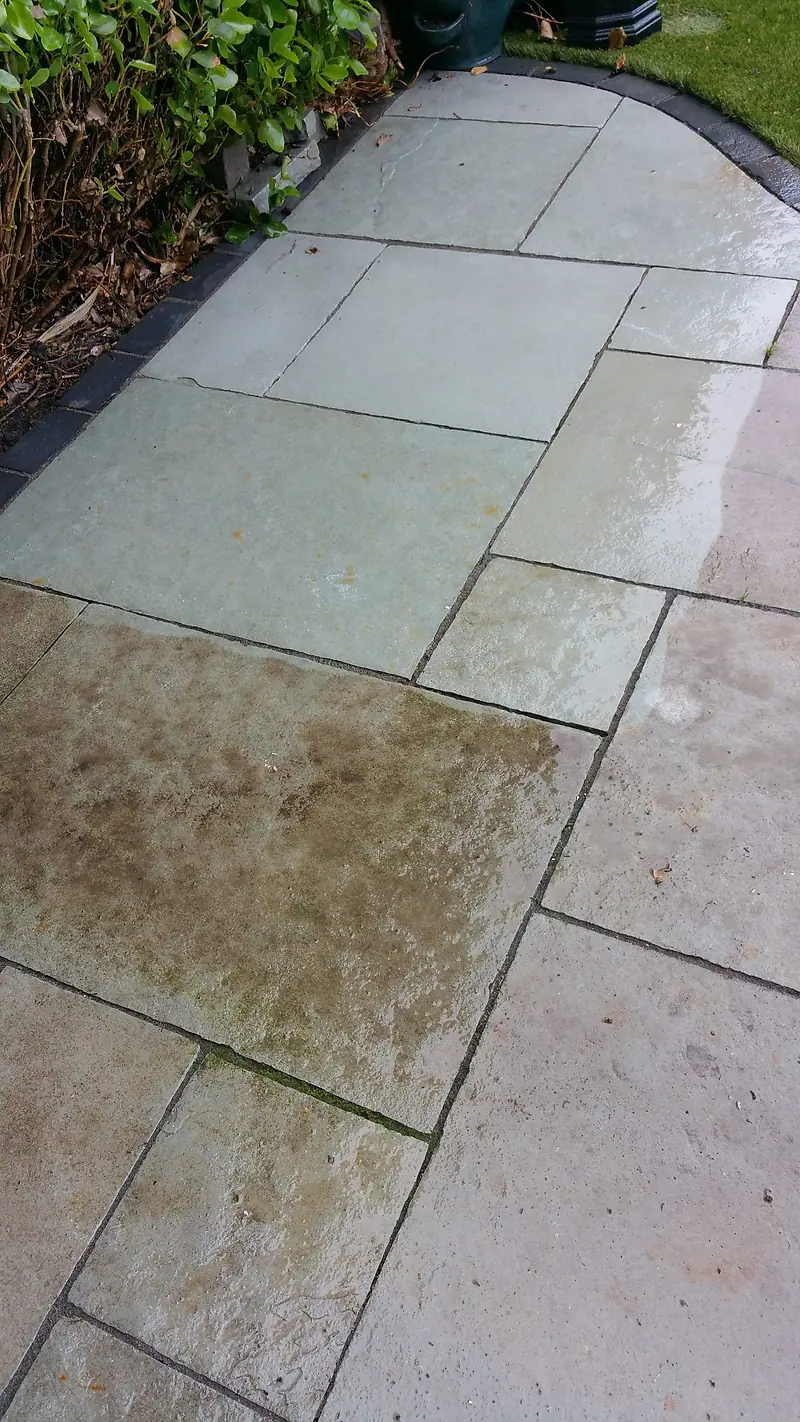
Hot water, and often nothing else
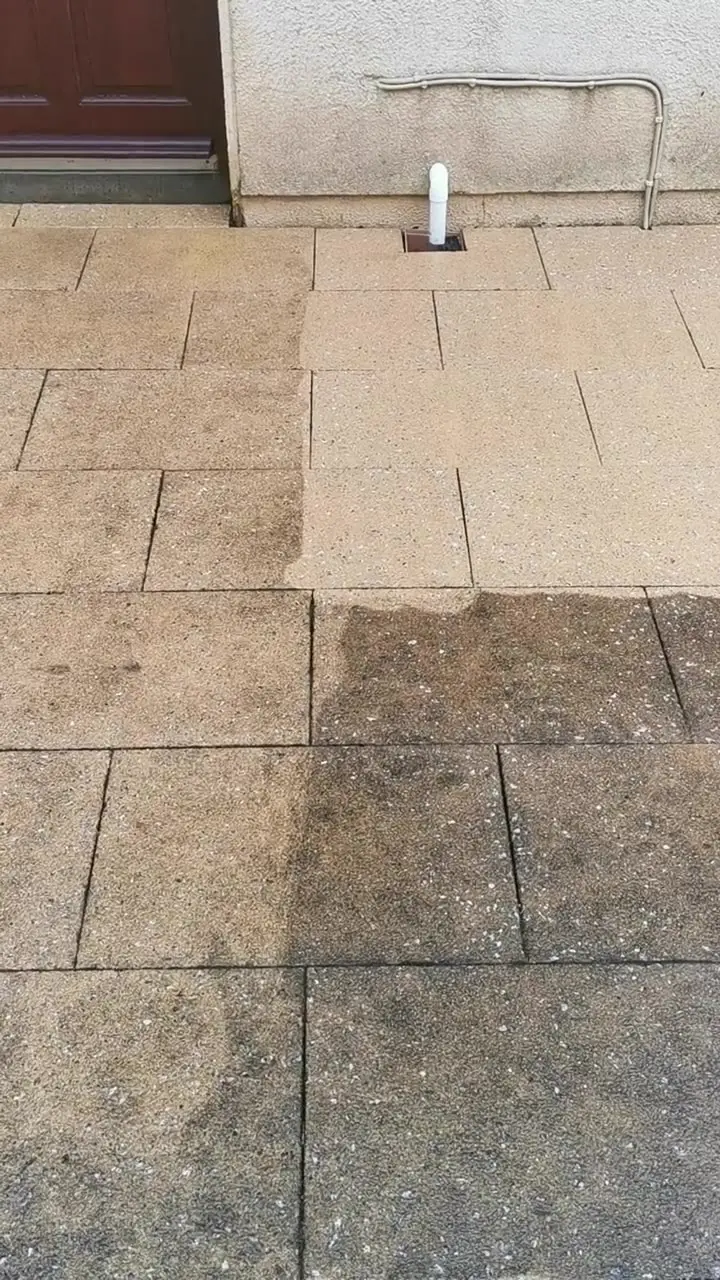
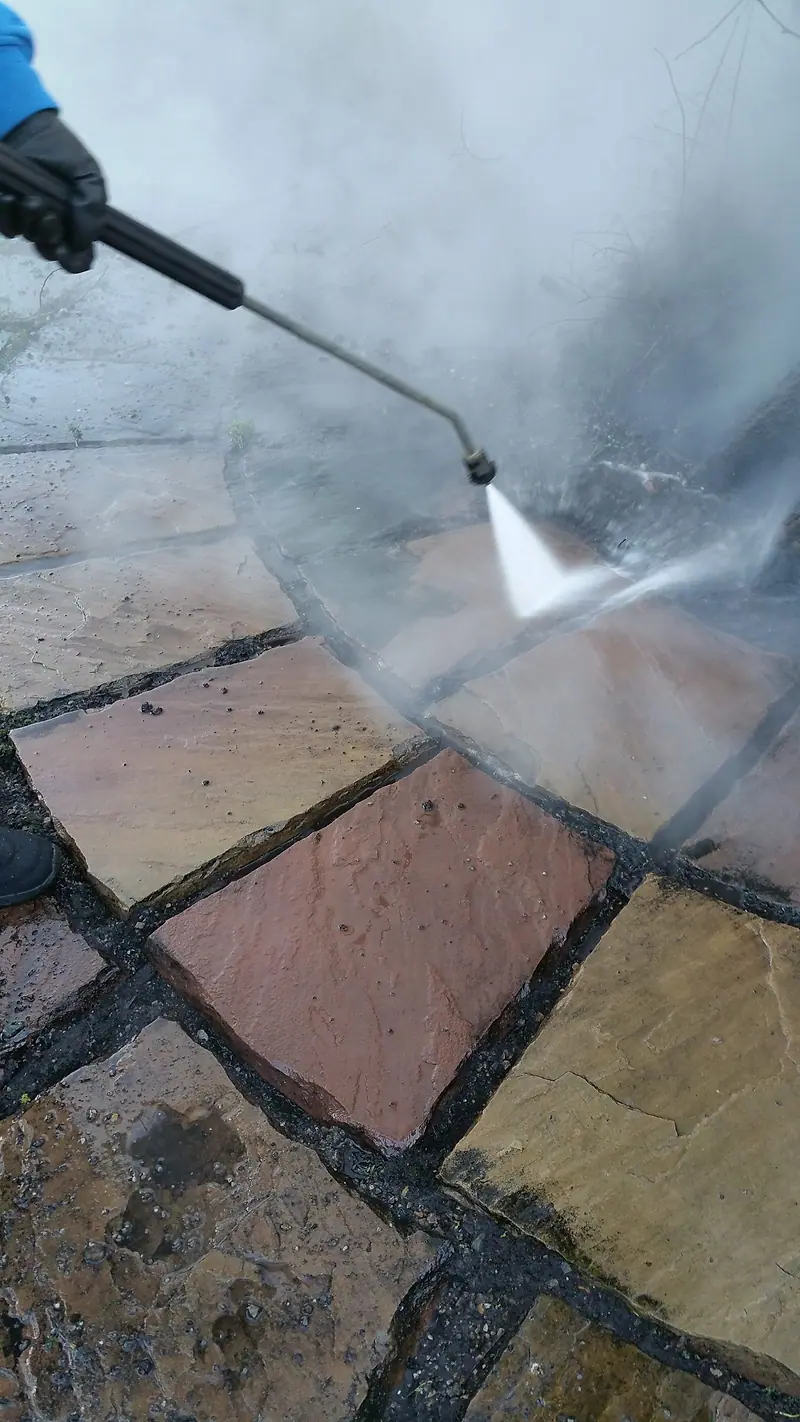
On most patios, hot water does the work without any chemicals. Heat breaks down the algae film and greasy marks, so we can use less pressure on the stone. The video on this page shows exactly that: a patio being cleaned with hot water alone, the clean line moving across the slabs.
That matters in a back garden. Patios sit beside lawns, flower beds, vegetable patches and the places children and pets play. Where a treatment is needed for something rooted into the stone, we'll tell you what we plan to use and why before we start.
Black spot lichen: an honest answer
If your patio has small black dots that stay put no matter how hard you scrub, that's almost certainly lichen. It's especially common on sandstone, and it's one of the most common patio questions.
Here's the honest picture:
- pressure washing alone rarely removes black spot fully
- blasting harder damages the stone long before it shifts the lichen
- it needs specific treatment, usually working over weeks rather than on the day
- even treated, the spots may fade rather than disappear, and they can come back
We'd rather tell you that now than have you disappointed after the clean. If you have black spot, send a close-up with your photos and we'll tell you what we think is realistic for your patio.
Furniture, pots and plants
You don't need to clear the patio before we arrive. We move the garden furniture, pots and barbecue out of the way, clean underneath, and put everything back. Garden furniture can be washed while we're there too, if you'd like. Very heavy items like large planters or a hot tub, we'll plan around.
We rinse down plants and the edges of the lawn, take care with drains, and wash off any spray that lands on the walls, windows or back door.
Want a patio price? Send a wide photo of the patio and a close-up of the slabs on WhatsApp. Mention any black spots. We'll come back with a fixed price, usually the same day.
Slippery patios and safety
A green patio isn't just a cosmetic problem. Algae is extremely slippery when wet, and it builds up exactly where people walk: by the back door, on steps and around the table. If there's an older person in the house, or small children running in and out, a clean is as much about safety as looks.
After cleaning, a few habits keep the slip risk down. Sweep off leaves before they rot, keep water from pooling in low spots, and cut back anything that shades the slabs all day.
How patio cleaning is priced
Every patio is priced on what's actually there:
- Size and layout: one area by the back door or several levels with steps
- Stone type: sandstone and limestone take more care and time than concrete or granite
- Condition: algae and moss, black spot, crumbling joints
- Access: a side gate, or a patio that can only be reached through the house
- What else is on the visit: the driveway, paths, walls or decking
It often makes sense to do the patio on the same visit as the driveway or a deck clean. If you're getting the back of the house done, it's also worth asking about roof cleaning and gutter cleaning, since an overflowing gutter dripping onto the slabs keeps them permanently damp. See the power washing overview for everything else we clean.