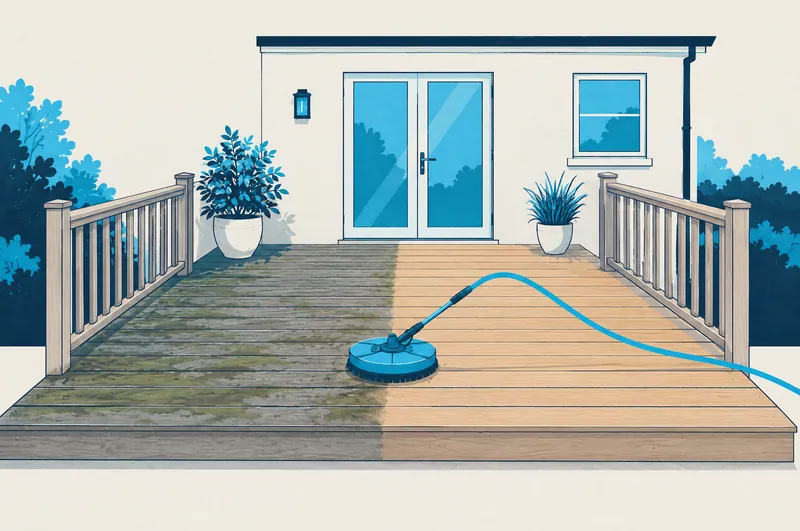
Why Irish decking goes green and slippery
Decking in Ireland rarely gets the chance to dry out. Rain, mild winters and shade from walls, fences and trees keep the boards damp for months, and that's exactly what algae and moss need. The green film that builds up isn't just untidy. Wet algae on timber is properly slippery, and a deck that's dangerous to walk on in October is a deck nobody uses in May.
The usual causes:
- Shade. North-facing gardens and decks under trees or beside high walls stay wet longest.
- Grooved boards. The ridges on most softwood decking hold water, soil and leaf litter, and the green starts in the grooves.
- Blocked gaps. When the gaps between boards fill with debris, water sits on the deck instead of draining through, and the timber underneath stays damp as well.
- Leaves and pots. Wet leaves left over winter and planters that never move leave dark stains and patches of growth.
What a decking clean involves
We clear the deck, or work around anything too heavy to move, protect doors and nearby plants, and wash the boards along their length so the finish is even rather than striped. The aim is to lift the algae, moss and ground-in dirt out of the grooves and flush out the gaps between boards wherever we can reach. Then we rinse the deck, steps and edges and walk over it with you.
- Green slime and moss lifted from the boards and grooves
- Gaps flushed so rainwater can drain through again
- Steps, edges and handrails washed along with the deck
- Pressure kept to what the timber can take, so the boards aren't furred or marked
- Straight advice on soft boards, aftercare and when it'll be ready to oil
Timber decking: why too much pressure does damage
This is the part that goes wrong most often, usually with a hired machine on a Saturday afternoon. Softwood decking, which is what most Irish gardens have, is softer than it looks. A narrow jet held close to the board tears into the surface and raises the fibres, leaving the timber fuzzy and rough. People call it "furring".
Once the fibres are up, the deck feels rough underfoot, holds dirt faster and gives algae even more surface to grip. Too much pressure also cuts lines into the soft grain, and those marks show up badly as soon as the deck dries or gets oiled.
Good practice is simple, but it takes patience:
- Keep the pressure low and the spray wide.
- Work with the grain, along the full length of each board.
- Let hot water do more of the work, rather than more force.
- Keep moving at a steady distance, so there are no stripes.
Hardwood decking is denser and copes better, but the same rules apply. If your boards are already furred from an earlier wash, we'll tell you before we start. Washing won't undo that damage, but done properly it won't add to it.
Composite decking
Composite boards don't rot or splinter, but they aren't maintenance-free. Algae, pollen and dirt still build up on the surface, especially on grooved or textured boards and in shaded corners, and grease from the barbecue leaves marks.
Composite needs a gentler wash than timber, and some manufacturers set out what they do and don't allow in their care guides. If you know the brand or still have the paperwork, send it with your photos and we'll work to it. Some marks on composite, such as old grease or tannin stains from leaves, may fade rather than vanish. We'll be honest about that when we quote.
 spotless.ie
After the wash: drying, oiling and staining
A freshly washed deck looks far brighter, but the timber is full of water afterwards. If you plan to oil, stain or treat it, wait until it's completely dry. Oil put on damp timber won't soak in evenly, and it can leave a patchy finish that peels or goes cloudy.
How long that takes depends on the weather, how much sun the deck gets and the timber itself, and in Irish weather it can mean several dry days. Always check the instructions on the product you're using. A clean, dry deck takes oil far better than a dirty one, so washing first is the right order.
Oiling and staining aren't part of our decking clean, but we're glad to advise on timing and what to look for before you start.
Keeping decking clean for longer
Algae will come back in time, because the spores are in the air and the shade and damp aren't going anywhere. What you can do is make the deck a worse place for it to grow:
- sweep leaves off before they sit for weeks, especially in autumn
- move pots and furniture now and then so the patches underneath can dry
- keep the gaps between boards clear so water drains away
- cut back plants and branches that keep the deck in shade
- book a wash when you see green coming back in the grooves, before it spreads
If moss keeps dropping onto the deck from above, the roof may need attention too, and overflowing gutters that drip onto the boards will keep them wet. Our guide to moss and algae removal explains why growth returns and how to slow it down.
Want a price for your deck? Send two or three photos, a rough size and your area on WhatsApp. We'll reply with a fixed price, usually the same day.
How decking cleaning is priced
Every deck is priced on what's actually there. The main things we look at are:
- the size of the deck, plus any steps, raised levels or railings
- how heavy the growth is, and whether the boards are stained
- timber or composite, and the condition the boards are in
- access to the garden: a side gate, a passage, or through the house
Photos from a couple of angles and a rough measurement are usually all we need. We'll confirm a fixed price before booking, and our guide to power washing costs explains what moves the price up or down.
Most gardens with a deck have something else that could do with a wash. If the patio or driveway has gone green as well, or a rendered garden wall needs a gentle soft wash, we can quote it all in one go. You'll find the full list on our power washing page.