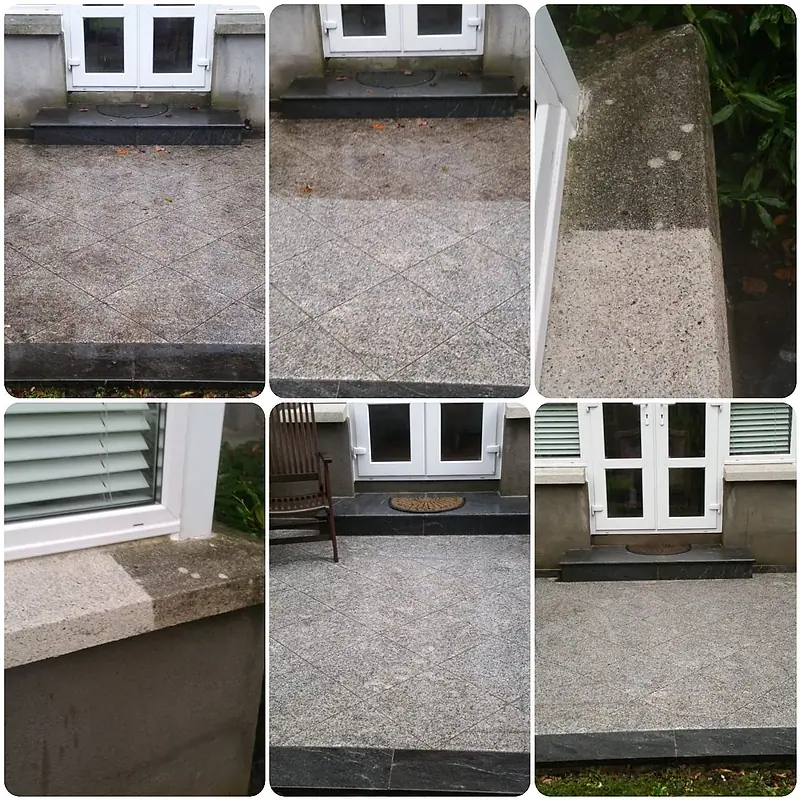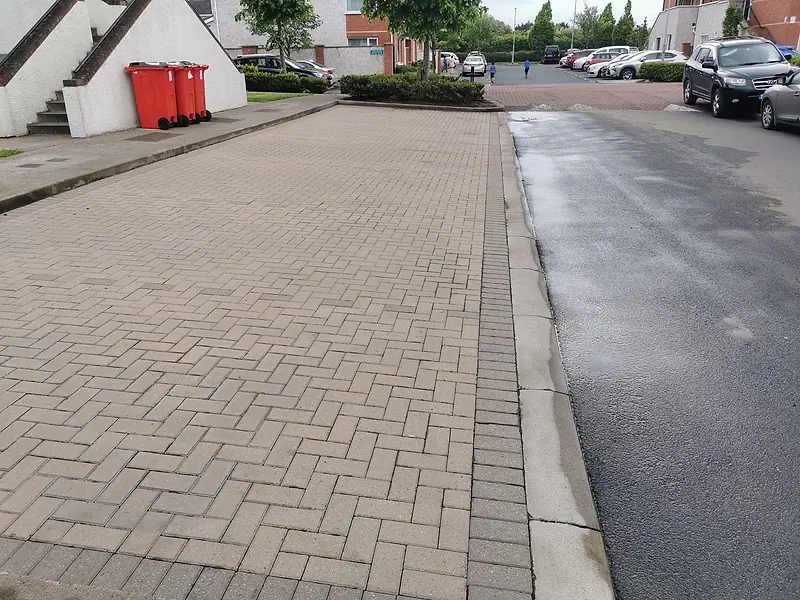
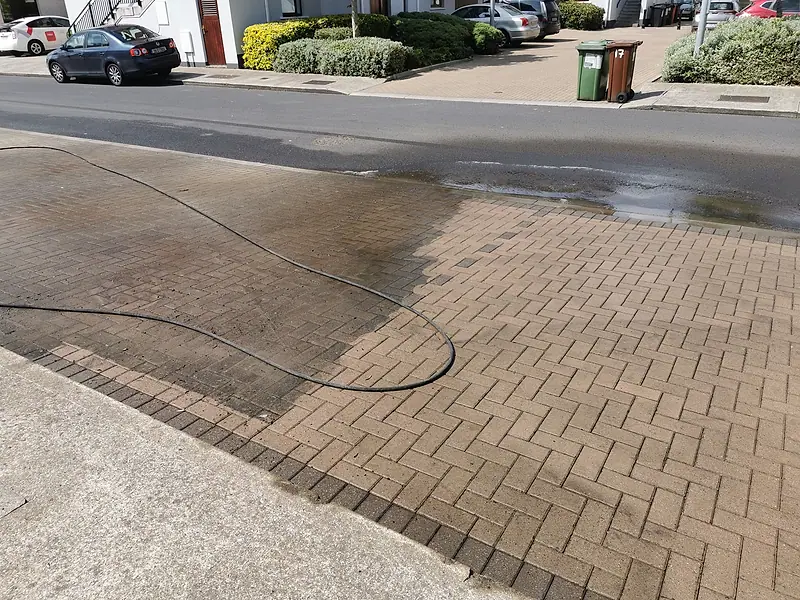
What a driveway clean involves
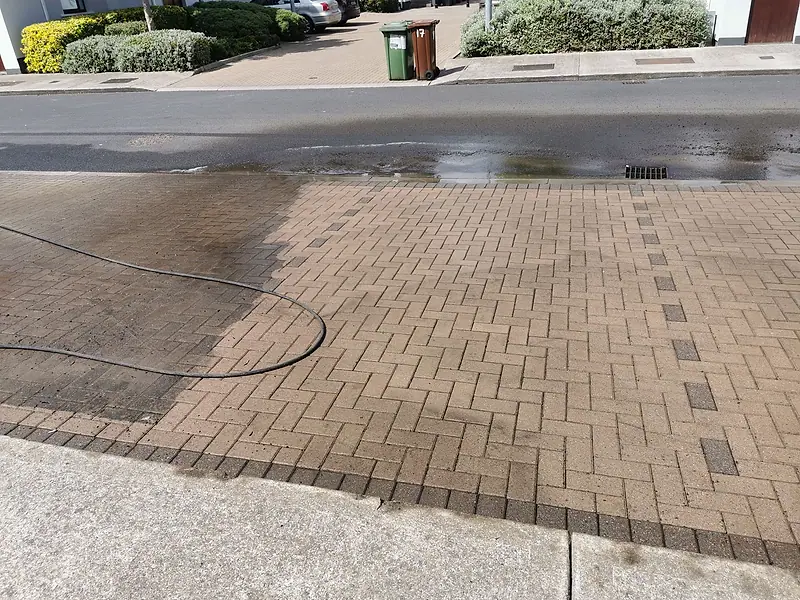
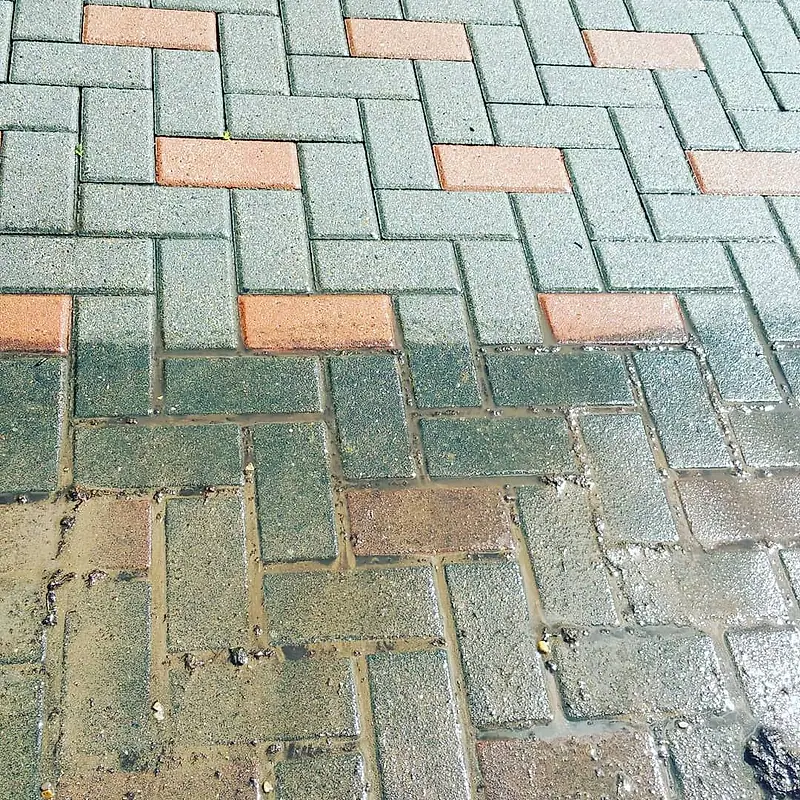
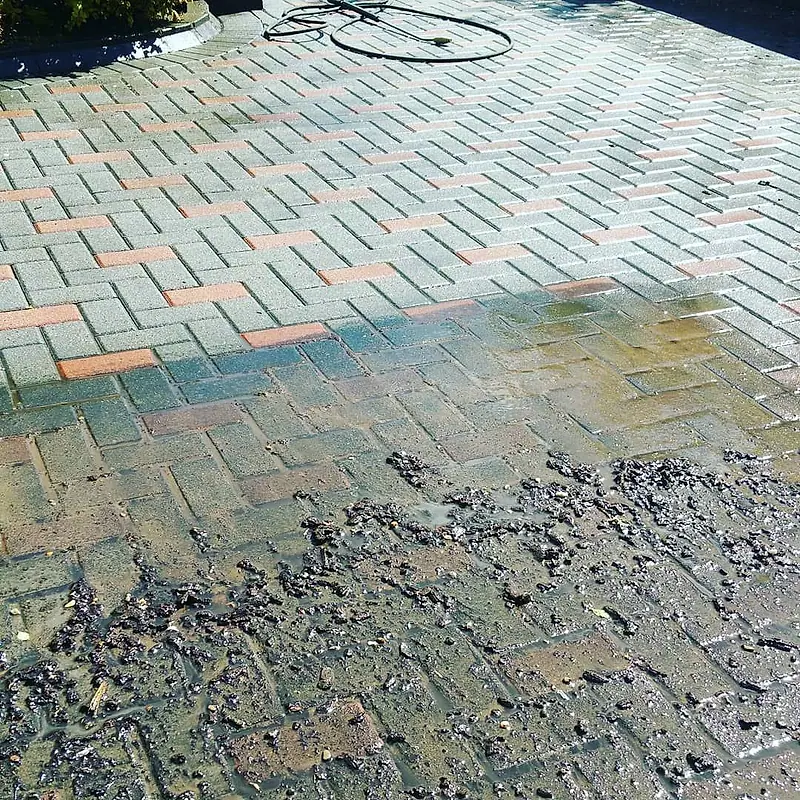
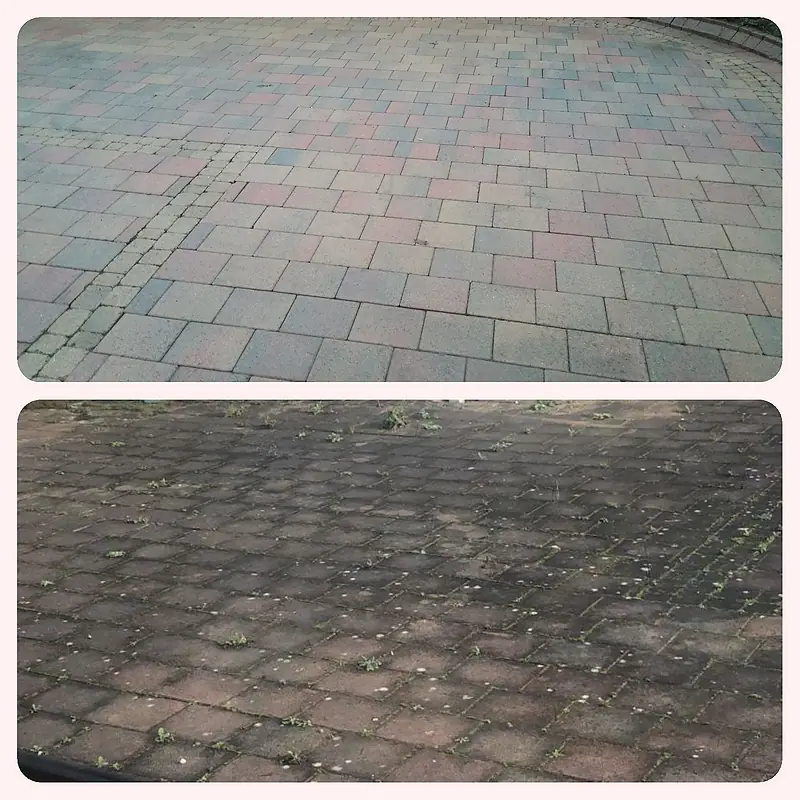
A good driveway clean is more than running a lance up and down the paving. The aim is a drive that's evenly clean edge to edge, with the joints cleared, no stripes or patches, and no mud sprayed up your walls or across the car next door.
Here's how we do it:
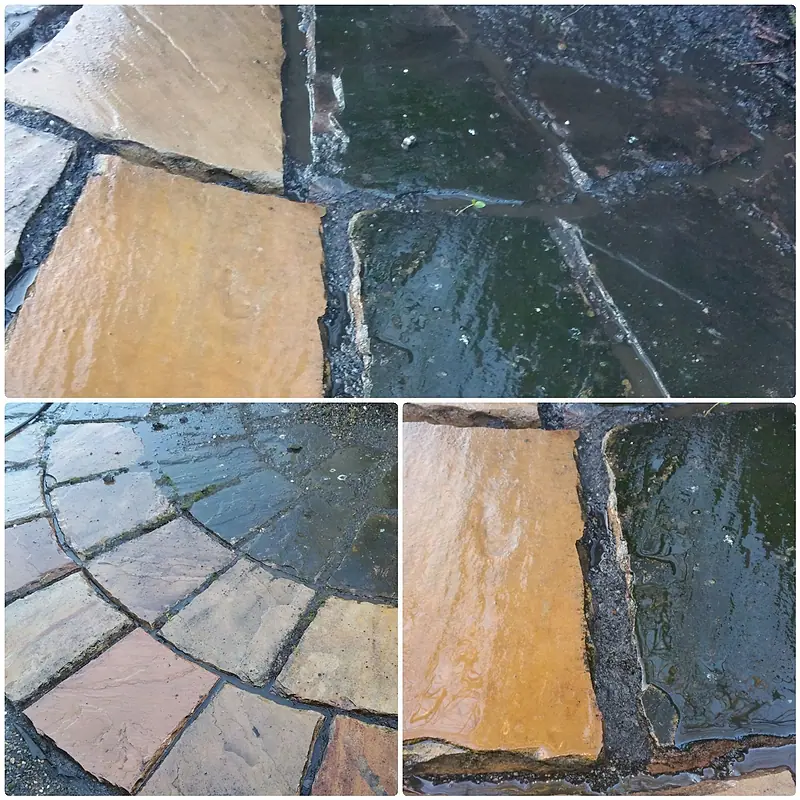
- We look at the surface first. Block paving, concrete, imprinted concrete and tarmac all need different treatment, and so do loose joints and worn edges.
- Doors, drains and the house are protected. We take care around thresholds, gullies and anything that shouldn't get soaked.
- Hot-water wash across the whole area. Heat lifts algae film, grime and oil far better than cold water, at a pressure that suits the paving.
- Edges, steps and the strip by the house finished. These are the bits that get missed and make a clean look unfinished.
- Rinse down. Spray and dirty water rinsed off the walls, the garage door and the paving so nothing dries back on.
- Walk round with you. We check the joints together and tell you if they'd benefit from re-sanding.
Most domestic driveways are done in a single visit. We'll tell you how long yours will take when we quote.
Every driveway surface is different
| Surface | What it needs | Watch out for |
|---|---|---|
| Block paving and cobble-lock | Hot-water wash, with care in the joints | Sand washing out, moss in the gaps, chipped edges from a jet held too close |
| Plain concrete | Hot-water wash, which suits it well | Old oil stains soaked into the surface, tyre marks |
| Imprinted concrete | A gentler wash | Too much pressure can strip the coloured finish and sealer in patches |
| Tarmac | Low pressure and heat | Loosening the stone chips and opening up worn areas (see tarmac cleaning) |
| Gravel edges and borders | Worked around, not through | Loose stones blown across the drive or into the drain |
Cobble-lock is simply the name most people in Ireland use for block paving, so the same approach applies. If your drive has a mix of surfaces, which is common with a block-paved border around concrete or a gravel strip by the wall, we handle each part on its own terms. Our driveway cleaning guide covers each surface in more depth.
 spotless.ie
Moss and weeds in the joints
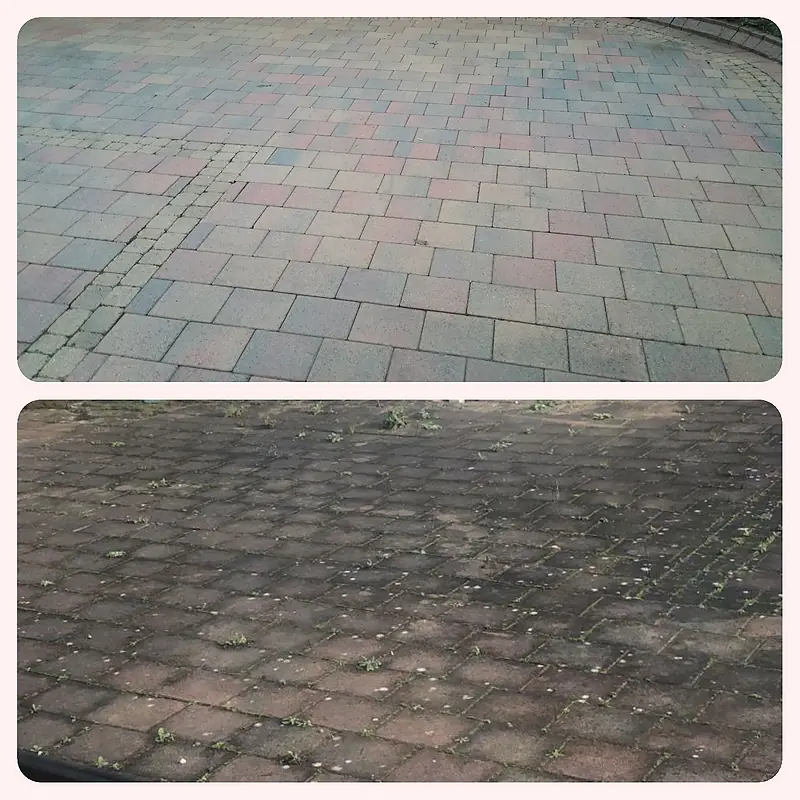
On a block-paved drive, the joints are where the trouble starts. Sand gets washed or swept out over time, dirt settles into the gaps, and moss and weeds follow. Within a few years the drive turns green-grey, and blocks along the edges can start to loosen.
Washing clears the moss and surface growth from the joints and lifts the green from the face of the blocks. It also takes out some of the loose sand, which is normal. Once the drive has been cleaned, we'll show you where the joints have dropped and advise whether re-sanding is worth doing to firm up the blocks and make it harder for weeds to get going again.
If moss is a problem across the whole property, our moss and algae removal page explains how we deal with it on paths, walls and steps too.
Oil, rust and tyre marks
Driveways collect stains that ordinary washing won't shift:
- Oil and diesel drips. Hot water breaks oil down far better than cold. Fresh drips often come out completely; stains that have soaked in for years usually lighten a lot but can leave a shadow.
- Rust marks. Left by metal furniture, bins or fertiliser granules. Some fade with washing, some need specific treatment, and some are there to stay. We'll tell you honestly from the photos.
- Tyre marks. Common on paler paving where cars turn. They often lift with hot water, though marks on newer paving can be stubborn.
We'll never promise a stain will vanish if we don't think it will.
Want to know what's possible? Send a wide photo of the drive and a close-up of the worst stains on WhatsApp. We'll give you a fixed price and an honest view of what will come out.
After the clean: drying, sand and keeping it clean
You can walk on the drive straight away, carefully, and in dry weather most are fine to park on within a few hours. If the joints need re-sanding, that's best done once the surface is properly dry.
To keep it looking good for longer:
- sweep it every few weeks, and clear leaves in autumn before they rot on the paving
- deal with oil drips quickly: cover a fresh drip with something absorbent, then rinse
- trim back trees and hedges that overhang and keep the drive damp
- keep the joints topped up, because moss and weeds love a gap
North-facing and shaded drives go green fastest. A clean every year or two is typical for those, while a sunny, open drive can go much longer.
The rest of the outside
Since the equipment is already set up, it often makes sense to add a second area: the patio out the back, the front path and steps, or the garden walls. If moss from the roof keeps washing down onto the drive, it may be worth looking at roof cleaning and gutter cleaning as well, since a blocked gutter that overflows onto the paving keeps it permanently damp.
How driveway cleaning is priced
There's no flat rate, because a small concrete drive and a large block-paved one with oil stains and a side passage are very different jobs. We price on:
- Size: a rough idea of the area, or a photo from the footpath that shows it all
- Surface: block paving, concrete, imprinted concrete or tarmac
- Condition: light grime, heavy moss, oil stains, weeds in the joints
- Access and extras: steps, side passages, paths and patios done on the same visit
Send us a few photos and you'll get a fixed price before anything is booked. The power washing overview covers every other surface we clean, and Dublin customers can find local detail on our power washing Dublin page.