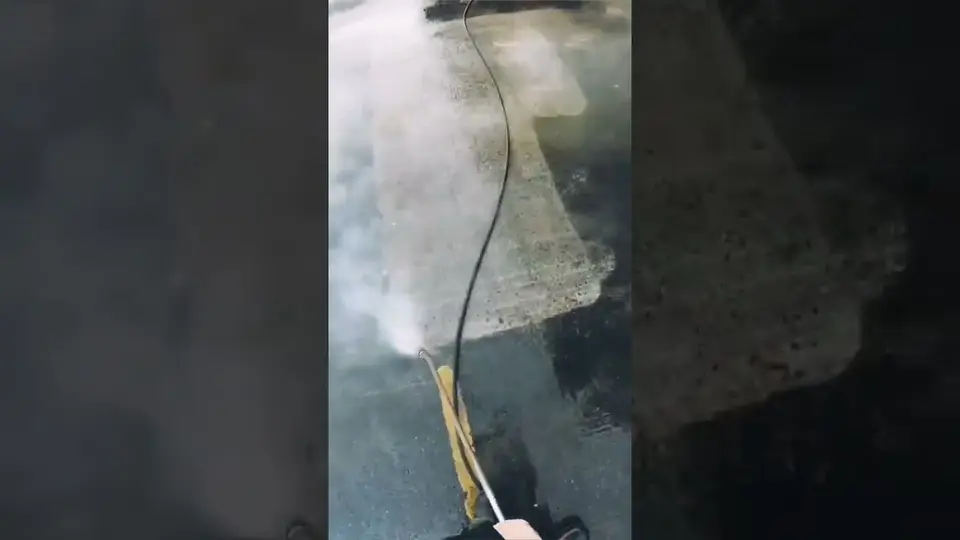
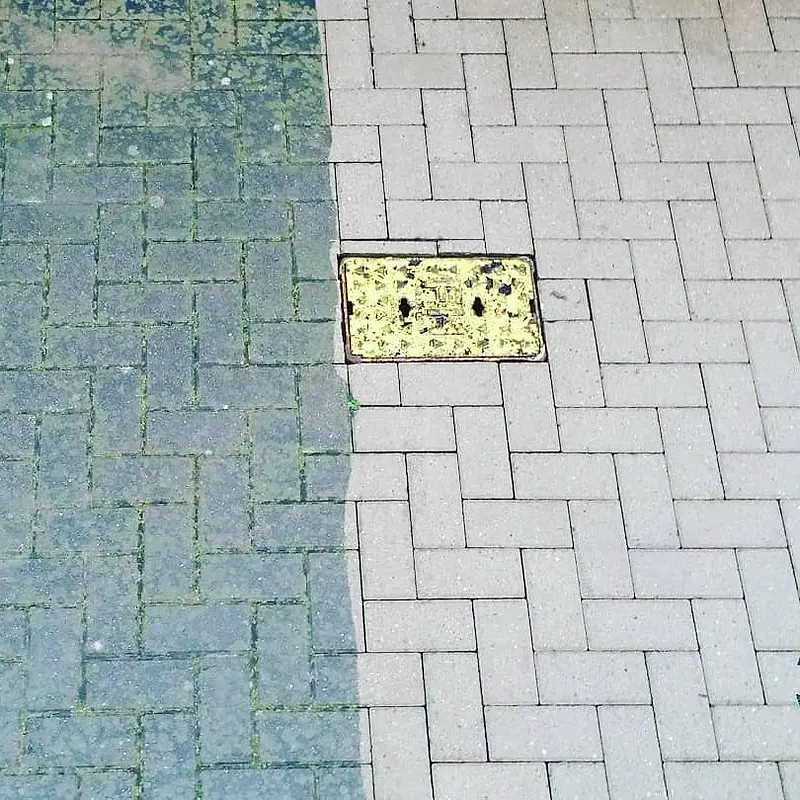
Know your surface first
Before anything else, work out what you're dealing with. Each surface reacts differently to water, heat and pressure, and what's ideal for one can damage another.
| Surface | How to recognise it | How it should be cleaned |
|---|---|---|
| Block paving or cobble-lock | Small rectangular blocks laid in a pattern, with sand in the joints | Hot water, jet angled low so the jointing sand stays put |
| Plain concrete | One continuous grey surface, often with straight joints cut across it | Hot-water pressure wash |
| Imprinted concrete | Concrete stamped to look like stone or cobbles, usually coloured and sealed | A gentler wash that protects the finish |
| Tarmac | Black or dark grey, with small stones bound into the surface | Low pressure, with heat doing the work |
| Gravel | Loose stones, often used for borders and edging | Worked around, not washed |
Cobble-lock is what most people in Ireland call block paving, so if that's what you have, the block paving advice applies. Plenty of drives combine two or three of these: concrete edged with a row of blocks, say, or tarmac with gravel beds either side. Treat each section according to what it is, even if that means changing approach every few metres.
Surface by surface
Block paving and cobble-lock
Block paving is tough and takes a hot-water wash well. The weak point is the joints. The sand between the blocks locks them together, and it's also where moss, weeds and dirt settle. The aim is to clean the top surface of each block and pull the growth out of the gaps while leaving most of the jointing sand where it is. That means keeping the jet at a shallow angle, never pointed straight down into the gaps. Expect some sand to come out with the moss. That's normal, and it's why re-sanding often follows.
Plain concrete
Concrete is the most forgiving drive to clean, and hot water suits it well. The usual problems are oil stains that have soaked into the surface, and a jet held too close, which can etch lines or leave a striped finish. Keep the distance steady and overlap each pass. Don't aim into cracks, which only opens them up.
Imprinted concrete
Pattern-stamped concrete gets its look from two thin layers: a colour hardener pressed into the surface when it was laid, and a clear protective coat over the top. Both are only a fraction of a millimetre thick, so a strong jet can wear through them in patches and leave the drive blotchy. Wash it gently and from a distance. Where the protective coat has already worn away, the drive can look patchier once clean, simply because the grime that disguised the wear is gone. Recoating is a separate job for a specialist.
Tarmac
Tarmac is softer than it looks. High pressure can loosen the stone chips on the surface and open up worn patches, so it needs low pressure, with heat doing the work on grime and moss. Oil and diesel soften tarmac over time, so deal with drips quickly. Our tarmac cleaning page explains what's involved, and what cleaning won't fix.
Gravel edges and borders
Gravel and pressure washers don't mix. The stones fly everywhere, including into drains and across the clean paving. Work around gravel, not through it, and rake it back into place afterwards. Weeds in gravel are better dealt with by hand.
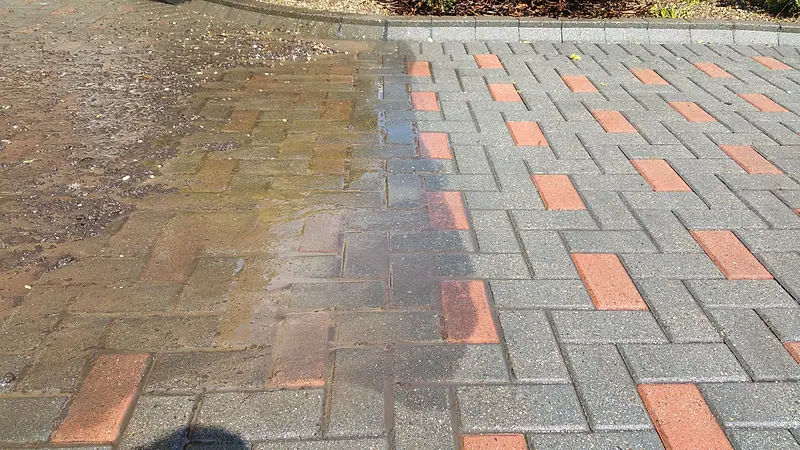
 spotless.ie
Why the joints go green, and how to clear them
The gaps between blocks are where a drive starts to decline. Rain and sweeping slowly carry the jointing sand away, grit and leaf litter settle in the space left behind, and that damp, gritty mix is ideal ground for moss and weed seeds. Give it a few seasons and the whole surface takes on a dull green cast, while the outer rows, with less sand holding them, begin to shift.
To deal with it:
- Scrape or brush out the worst of the moss before washing, so you're not relying on the jet to blast it out.
- Pull deep-rooted weeds by hand. Washing clears shallow roots, but dandelions and the like regrow from the root.
- Wash with the jet at a shallow angle across the joints.
- Let the drive dry completely, then judge whether the joints need topping up.
North-facing and shaded drives, and drives under trees, go green fastest. Our moss and algae removal page covers moss on paths, walls and steps as well.
Stains that need more than a wash
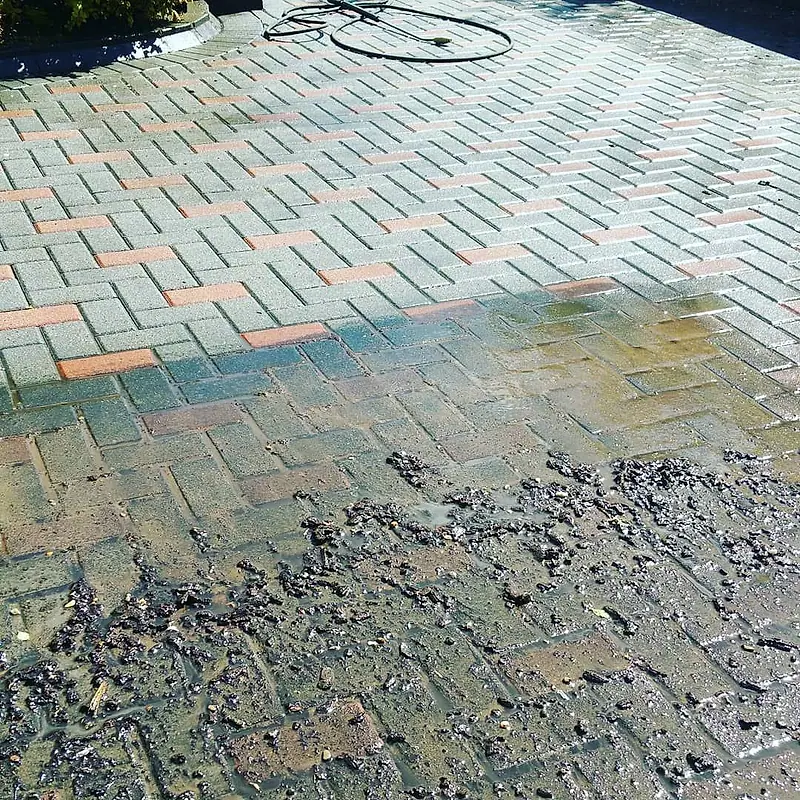
Cars, bins and garden furniture leave marks that sit in or on the surface, and each kind behaves differently:
- Oil and diesel. For a fresh drip, cover it with something absorbent such as cat litter or sawdust, leave it to soak up what it can, sweep it up, then rinse. Old stains soaked into concrete or porous blocks usually lighten a lot with hot water but can leave a shadow.
- Rust. From metal furniture, bins or fertiliser granules spilled on the drive. Some fades with washing, some needs specific treatment, and some is there to stay.
- Tyre marks. Black scuffs show up wherever wheels turn on light-coloured paving, especially if you swing the car in and out the same way every day. Heat usually loosens the rubber, though scuffs on recently laid blocks can take a few goes to fade.
Avoid scrubbing an oil stain with washing-up liquid and a stiff brush. More often than not you end up with a larger, paler stain rather than no stain.
Want the driveway done properly? Send a wide photo of the drive and close-ups of the joints and any stains on WhatsApp. We'll come back with a fixed price, usually the same day.
Re-sanding block paving after a clean
A thorough clean usually takes some jointing sand out of block paving. Topping it up firms up the blocks and makes it harder for weeds to settle again. We'll tell you after the clean whether yours needs it, but it isn't part of the wash itself, because it has to wait until the paving is dry.
If you're doing it yourself:
- Wait for a dry spell. The blocks and the joints must be completely dry, or the sand clumps and won't fill the gaps.
- Use dry jointing sand, usually sold as kiln-dried sand, not building sand.
- Spread it and brush it in diagonally across the joints, working it down until they're full.
- Sweep off the excess so it isn't tracked into the house or washed into the drains.
- Top up again after a few weeks if the sand has settled.
If blocks have sunk or come loose, re-sanding won't fix that. It's a job for a paving contractor.
Aftercare: keeping it clean for longer
- Sweep regularly, and clear autumn leaves before they rot on the paving.
- Keep the joints topped up. Moss and weeds need a gap to get going.
- Trim back trees and hedges that keep the drive shaded and damp.
- Deal with oil drips straight away. A drip tray under a car that leaks saves a lot of trouble.
- Sort out overflowing gutters. Water spilling onto the paving keeps it permanently damp; see gutter cleaning.
- Look up. If moss keeps landing on the drive, it's coming from the roof, and roof cleaning deals with the source.
A sunny, open drive can go years between cleans. A shaded one may need it every year or two.
When to get it done
Spring is popular, to clear the green that builds up over winter. Early autumn gets the drive clean before the leaves and the wet months. Avoid frosty days, since a freshly washed surface can freeze, and if the roof or gutters need attention, do them first. A clean drive also makes a real difference to the first photo of a house for sale, which is covered in the guide to getting a property ready to sell.
If you'd rather not spend a weekend behind a lance, our driveway cleaning service covers block paving, concrete, imprinted concrete and tarmac in Dublin and all of Leinster. For what drives the price of a drive clean up or down, read how power washing is priced. For the back of the house, see patio cleaning, and the power washing guide explains the different methods in more depth. Everything else we clean is on the power washing page.