Power washing, pressure washing and soft washing: what the words mean
You'll hear all three used loosely, and there's no official definition. In practice:
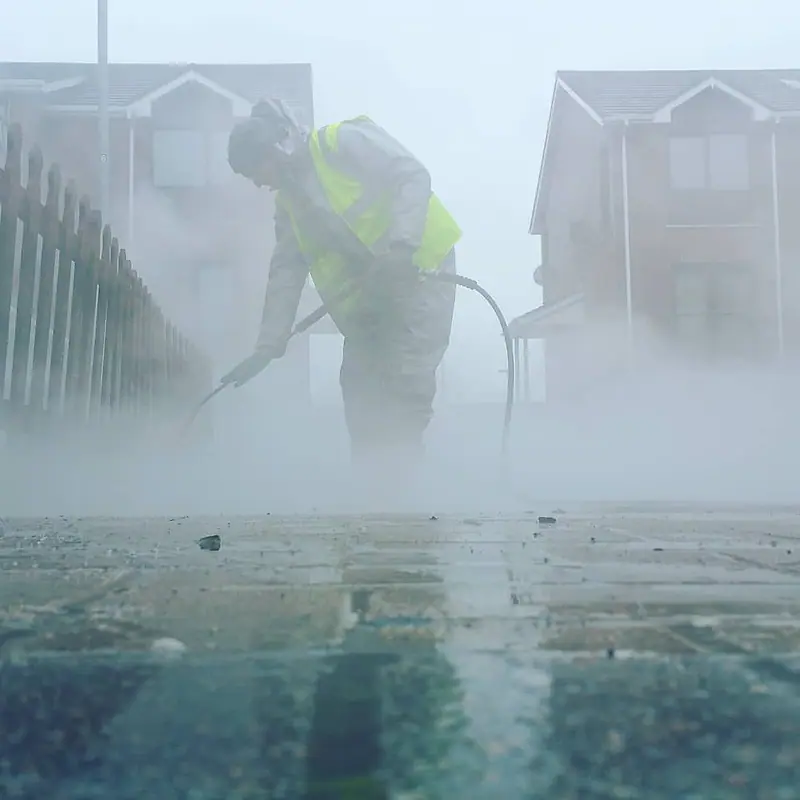
- Pressure washing means cleaning with a concentrated jet of water at high pressure. The force of the water lifts dirt, moss and grime off the surface.
- Power washing is usually used to mean the same thing. Some people in the trade keep it for pressure washing with heated water.
- Soft washing keeps the pressure low. A cleaning solution is applied gently and given time to kill and loosen growth, then rinsed off. It's for surfaces that high pressure would damage.
What matters isn't the name, it's whether the method suits the surface. The rest of this guide is about matching the two.
Hot water or cold?
Most pressure washers you can buy or hire for home use are cold-water machines. Cold water at high pressure is fine for loose dirt and light grime on tough surfaces. It struggles with anything that's bonded on by grease or stickiness, because cold water can't dissolve it, only batter it. Engine oil under a parked car, trodden-in gum on a front step and the greasy green coating that forms on paving in the shade are the classic examples.
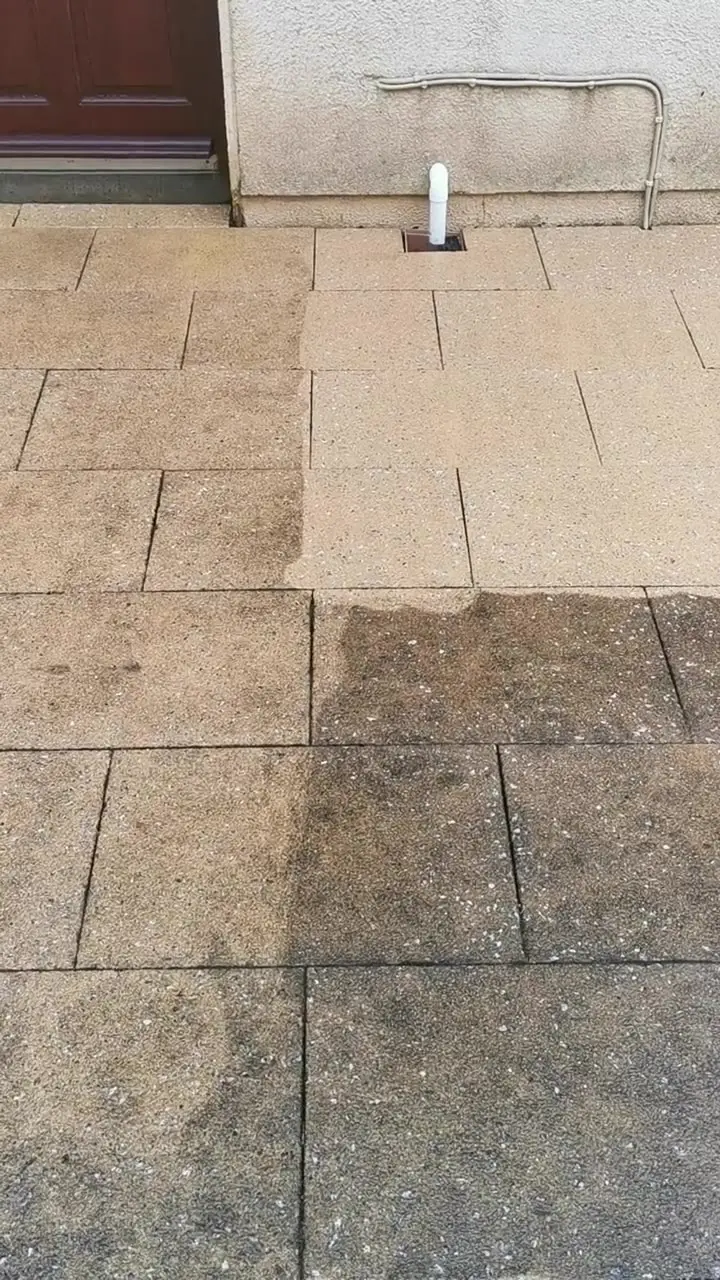
Heat changes that. Warm water melts fats and softens the organic glue that algae uses to cling on, which is the same reason washing-up is easier in hot water. Once the bond is broken, the dirt rinses away without needing the jet so close or so strong. That gentler approach wears the paving less and leaves more of the jointing sand in place. On many driveways, patios and paths, hot water alone does the job, with no chemicals at all. The short video below shows a patio being cleaned exactly that way.
Hot or cold, some growth is rooted into the surface itself: algae in render, moss on roof tiles, lichen on sandstone. Force alone doesn't remove it properly, and that's where soft washing comes in.
Which method suits which surface
| Surface | Usual approach | What goes wrong with too much pressure |
|---|---|---|
| Block paving and cobble-lock | Hot-water pressure wash | Joint sand blasted out, edges chipped, blocks loosened |
| Plain concrete | Hot-water pressure wash | Lines etched into the surface by a jet held too close |
| Indian sandstone and limestone | Lower pressure, hot water | Soft stone roughened, striped and left more porous |
| Granite and porcelain | Hot-water pressure wash | Joints and pointing washed out |
| Tarmac | Gentle hot-water wash | Stone chips loosened, worn patches opened up |
| Imprinted concrete | Gentle wash | Coloured finish and sealer stripped in patches |
| Timber decking | Low pressure | Wood fibres raised, leaving the boards furry and splintery |
| Render, pebble-dash, painted walls | Soft wash | Render cracked, dashing knocked off, paint lifted |
| Roof tiles and slates | Thick moss cleared first, low-pressure wash after | Tile surface stripped, water driven up under the tiles |
| uPVC fascias and soffits | Low-pressure wash | Plastic scratched, water forced into vents |
Each of these has its own page: driveway cleaning, patio cleaning, roof cleaning, gutter cleaning, soft washing for walls, decking cleaning and tarmac cleaning.
The risks of doing it yourself
A pressure washer is easy to use and just as easy to misuse. These are the problems that come up again and again:
- Washed-out joints. Aiming the jet into the gaps between blocks or slabs strips out the sand or pointing that holds them in place, and weeds then move in faster than before.
- Etched and striped paving. Holding the lance too close, or using a narrow jet, cuts lines into concrete and soft stone that never wash out.
- Water where it shouldn't go. Spraying up at windows, door thresholds, air vents, soffits or roof tiles drives water into seals, walls and roof spaces. Spraying a crack in render pushes water in behind it.
- Damaged brickwork and render. Soft mortar can be blasted out of brick joints, and render and pebble-dash can crack or come away.
- Injury. A high-pressure jet can cut skin and cause serious injuries. Never point it at anyone, including yourself, and never use one from a ladder, because the kick from the lance is enough to throw you off balance.
- Mess. Mud and moss sprayed up the walls, across the windows, onto the car and over the neighbour's fence.
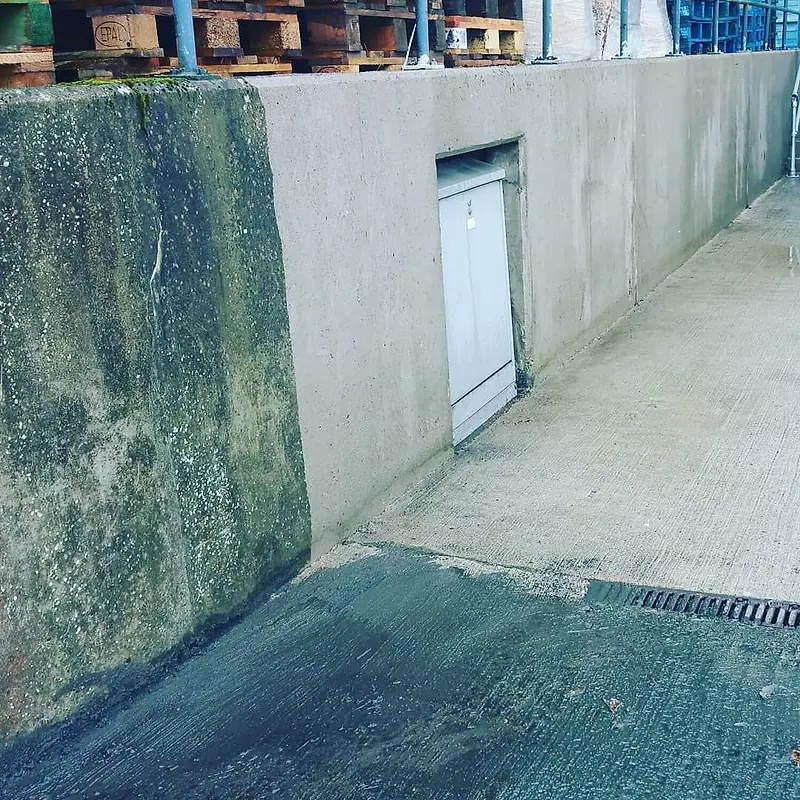
- Run-off. Road gullies and surface water drains often lead to streams and rivers rather than to a treatment plant, so be careful what goes down them, especially cleaning products.
 spotless.ie
If you're doing it yourself
For a concrete path or a granite patio, a domestic pressure washer can do a decent job. A few habits keep it safe:
- Sweep first and pull out the worst of the weeds, so you're washing the surface rather than chasing debris around.
- Start with the widest, gentlest nozzle and test it on a corner nobody will see.
- Keep the lance moving and at a steady distance. Pausing in one spot is how marks happen.
- Spray across the joints at a shallow angle, not straight down into them.
- Work downhill and towards a drain, so dirty water isn't running back over the clean area.
- Rinse down walls, windows and doors before the spray dries on them.
- Leave anything at height alone. Roofs, gutters and upper walls are not ladder jobs with a pressure washer.
- Re-sand block paving once it's fully dry, if the joints have dropped.
Our driveway cleaning guide goes into more detail on each type of paving.
Rather leave it to us? Send a wide photo and a close-up of each area on WhatsApp, with your area or Eircode. We'll come back with a fixed price, usually the same day.
When it's worth hiring someone
DIY makes sense for a small area of tough paving and a free afternoon. It's worth getting someone in when:
- the job involves height: roofs, gutters, fascias or upper walls
- the surface is soft or delicate: sandstone, limestone, render, imprinted concrete or tarmac
- there's moss or algae rooted into the surface, or black spot lichen on a patio
- you want an even finish across a large area, without stripes
- there are oil stains you'd like lifted, not just spread around
- the house is going on the market or a new tenant is moving in, and the front needs to look right first time
What to ask before you book
Whoever you get, a few questions show quickly whether they know what they're doing:
- Which method suits my surface, and why that one?
- Do you use hot water, and when would you use a cleaning treatment?
- How will you protect doors, windows, plants and drains?
- What will you do about the joints afterwards?
- Will you tell me in advance if a stain or black spot isn't going to come out?
- Is the price fixed before you start?
For the factors that shape a quote, read how power washing is priced.
How we do it
At Spotless, paving, concrete and other hard ground get heated water under pressure. Roofs, rendered walls and painted finishes get the gentle soft-wash treatment instead. And wherever plain hot water can do the job without any product, that's what we use. Every job starts with the surface, not the machine.
Our power washing service covers driveways, patios, roofs, gutters, walls and more in Dublin and all of Leinster, and there's local detail on our power washing Dublin page. If moss is the main problem, see moss and algae removal, and for granite steps, brick and older stonework, stone cleaning.