Tarmac needs a different approach
Tarmac looks tough, but it's one of the softer surfaces we wash. It's made of small stones held together by bitumen, a tar-like binder that softens when it's warm and wears away over the years. Blast it with a narrow jet held close and you can loosen the stones on the surface, open up existing cracks and leave the drive rougher than it was.
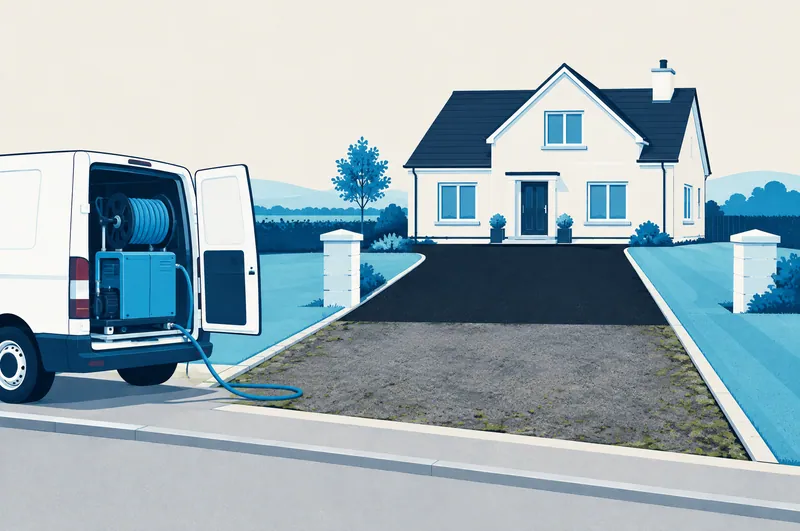
So tarmac gets a gentler wash than concrete or block paving. We match the pressure and the heat to the surface, use a wider spray and keep it moving. The goal is to lift the dirt, moss and algae sitting on top without stripping the surface itself.
What builds up on a tarmac drive
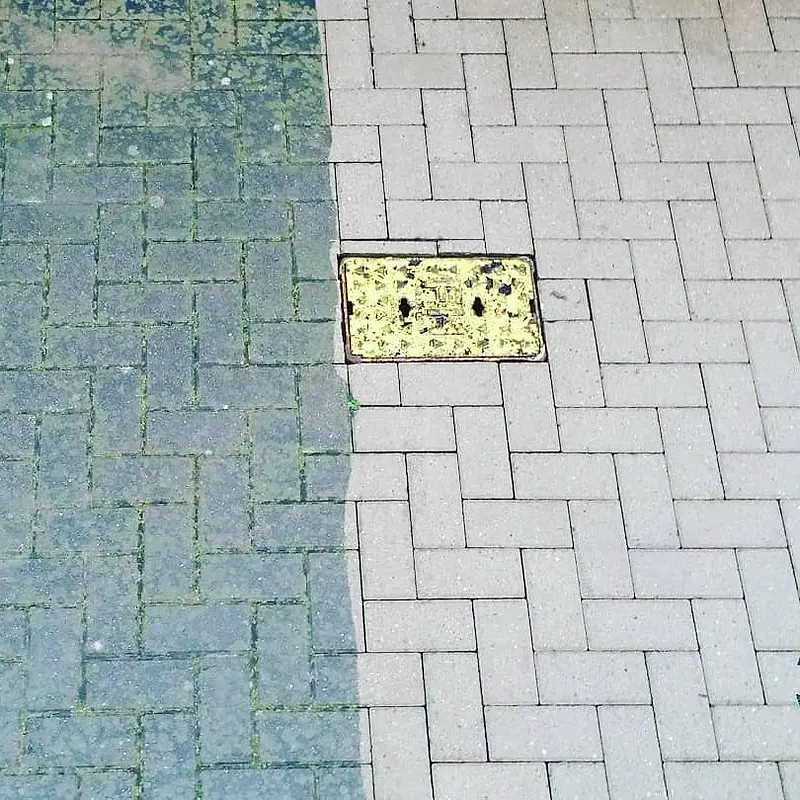
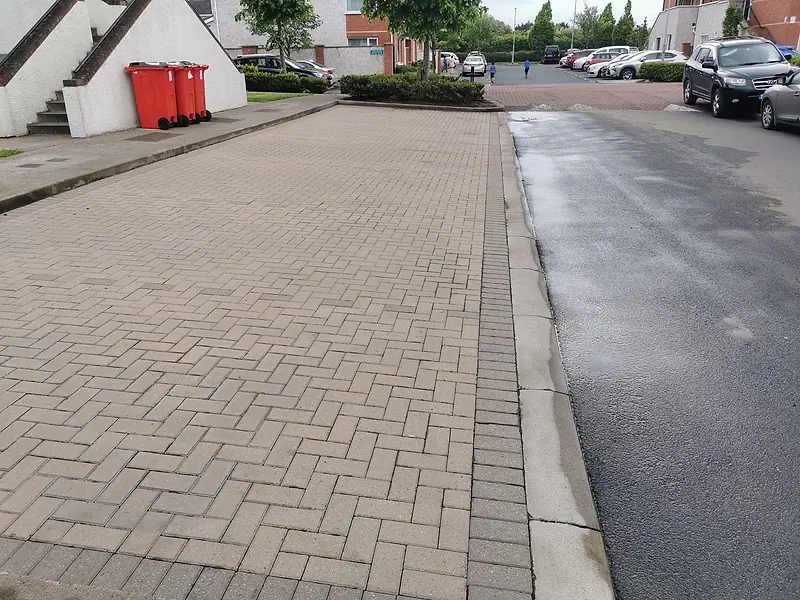
- Moss and grass along the edges. Where the tarmac meets kerbs, walls, gates and the house, soil and leaves gather and moss takes hold. On most Irish tarmac drives, this is the worst of it.
- A green or black film. In shaded spots and under trees, algae forms a slippery layer that turns the surface dull green or grey.
- Weeds in cracks. Older tarmac develops hairline cracks, and anything that roots in them pushes them wider.
- Oil and fuel drips. Where a car parks every day, drips leave dark patches.
- General grime. Tyre marks, soil from the garden and grit from the road.
Moss at the edges
Edges are where most of the work happens on a tarmac clean. Moss and grass creep in from the sides, and the debris that collects there holds water and keeps it all growing. We work the edges and margins carefully, lifting the moss and the soil it's rooted in, then wash the open surface and rinse down so you're not left with sludge in the corners.
Washing removes what's growing on the surface and along the edges, but it can't reach roots deep in a crack. Moss and weeds will come back over time, faster in a shaded drive or where soil spills off flower beds. Keeping the edges swept and leaves cleared slows it right down. Our page on moss and algae removal explains why it returns.
Oil stains: what to expect
Oil is the hardest thing to shift from tarmac, and it's worth being straight about why. Bitumen is a petroleum product, so oil, diesel and petrol act on it like a solvent. A spill doesn't just sit on top: it soaks in and softens the tarmac underneath. A fresh drip on a sound surface often lifts well with hot water. A patch that has been soaking in for years has become part of the surface.
So with oil, our aim is stain reduction. We'll lighten it as far as the surface allows, and you'll know before we start if a mark is unlikely to go completely. If the tarmac has gone soft or crumbly where the car drips, washing won't repair that.
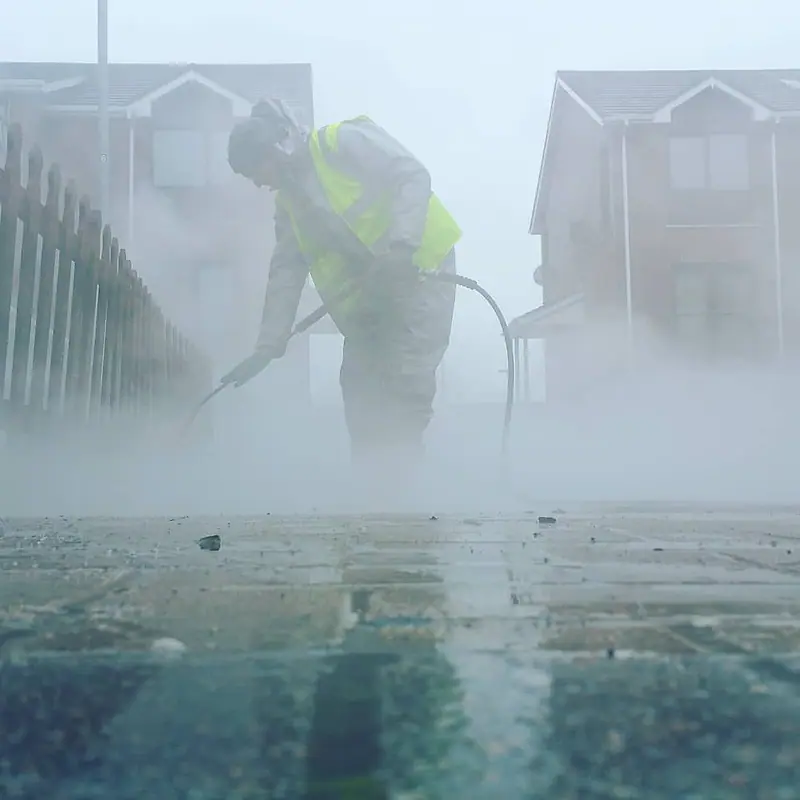
 spotless.ie
Bringing back the colour
Most people want their tarmac to look black again, so here's what's realistic. A lot of the grey and green on an older drive is dirt, algae and moss, and washing it off makes a real difference. The surface usually comes up darker, cleaner and more even.
What washing can't do is reverse years of sun and weather. Tarmac fades as the bitumen on the surface ages, and a drive that has faded to pale grey will look cleaner after a wash, not brand new. Red tarmac is the same: washing brings back the colour that's under the dirt, but it can't put back colour that has worn away.
Some people decide to have a faded drive re-dressed or sealed afterwards. That isn't part of our tarmac clean, but we'll give you an honest view on whether it's worth looking into, and it needs a clean, dry surface to start from anyway.
Driveways, yards and car parks
We clean tarmac at homes and businesses:
| Where | What usually needs doing |
|---|---|
| Home driveways | Mossy edges, algae in shaded corners, oil where the car parks |
| Shared drives and laneways | Moss down the centre and along the kerbs, where wheels don't run |
| Yards and farmyards | Mud, moss and heavy grime, often over a large area |
| Business car parks and forecourts | Oil, tyre marks, dropped chewing gum and general traffic grime |
For businesses, we can plan the work early in the morning or into the evening, within our hours of Monday to Saturday, 8am to 8pm, so the car park isn't out of action when you need it.
Before we arrive
You don't need to do much, but it helps if you:
- move cars off the drive, and bins if you can
- tell us about any loose or crumbling areas you've noticed
- let us know where the outside tap is, if you have one
- mention any drains or gullies that block easily
Want a price for your tarmac? Send photos from both ends of the drive, plus close-ups of the edges and any oil marks. We'll reply with a fixed price, usually the same day.
How tarmac cleaning is priced
We price each job on what's there: the size of the area, how heavy the moss and grime are, how much edge work it needs, any oil marks, and access. A wide photo from each end and a few close-ups are usually enough. We confirm a fixed price before booking, and our power washing cost guide explains what affects it.
If your drive is block paving, cobble-lock or concrete rather than tarmac, see driveway cleaning. If the patio needs doing too, we can quote both together. And if moss keeps washing down from the roof, or overflowing gutters keep one side of the drive permanently wet, it's worth sorting the cause as well as the symptom. Everything we wash is on our power washing page.