Step 1: the photo quote
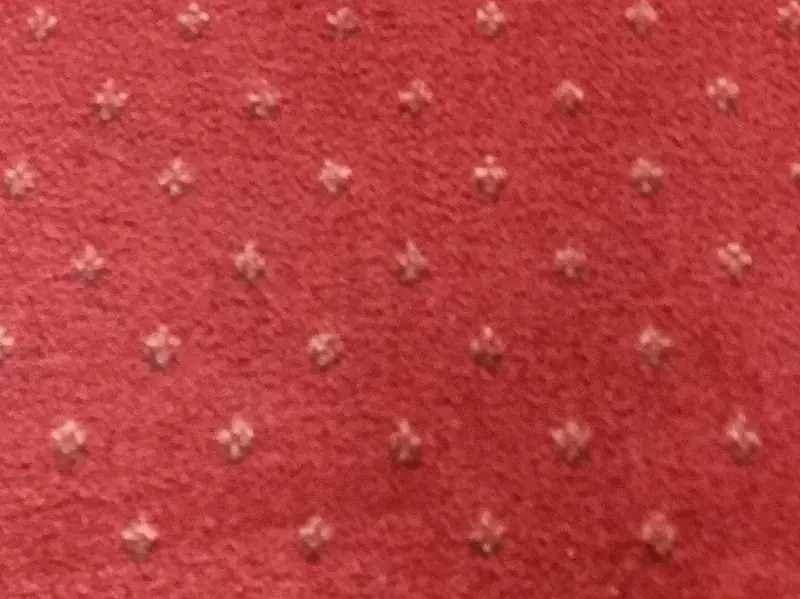
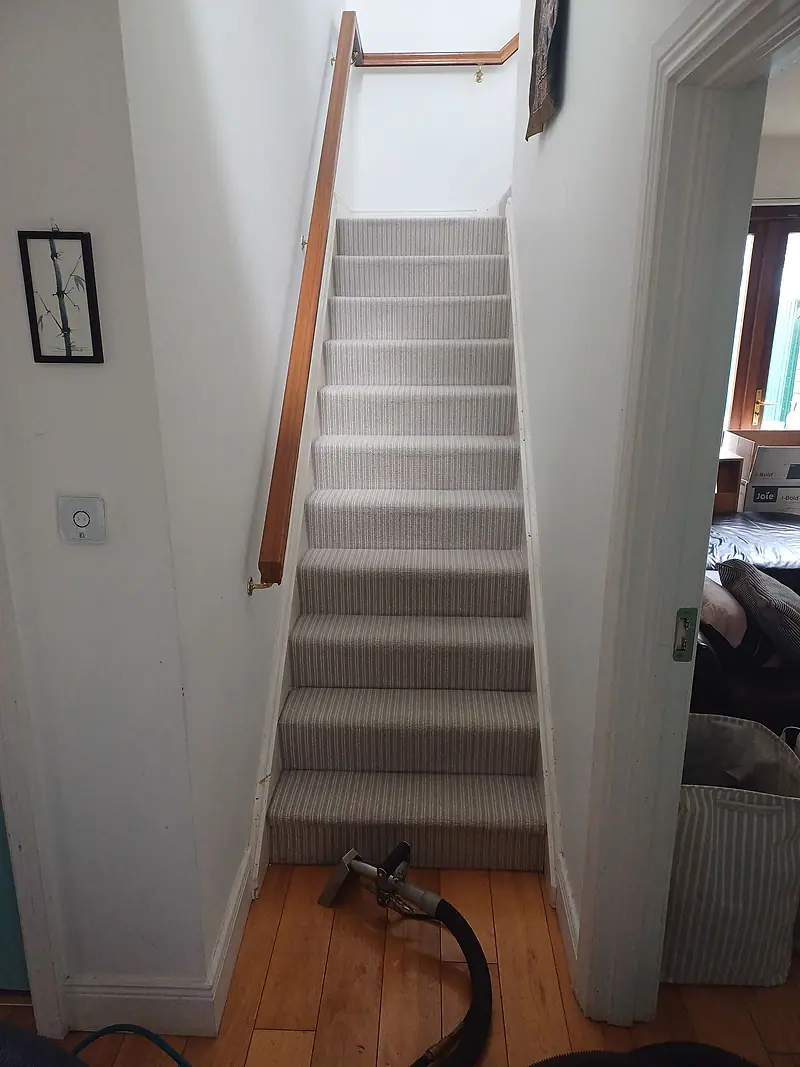
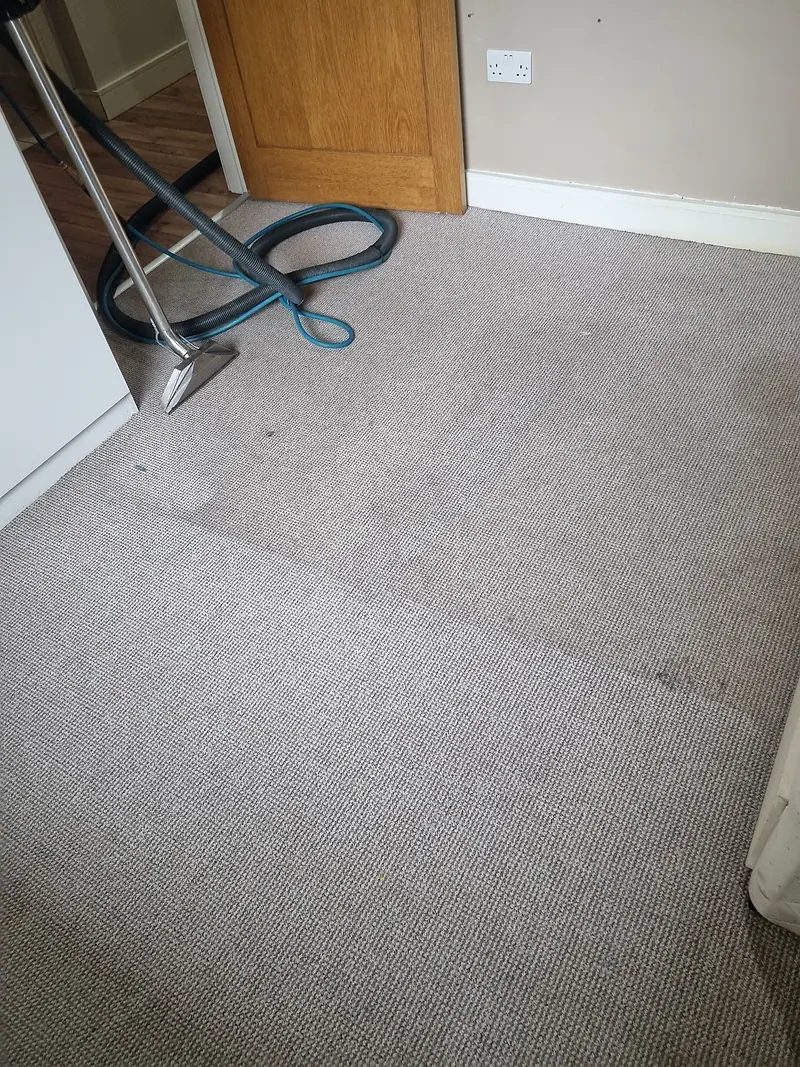
Every carpet clean starts on your phone. Send photos of each room from the doorway, the stairs from the bottom step, and close-ups of any stains, on WhatsApp or through the contact page. A short note helps: what caused the stains, whether anything has been put on them, and where we can park.
From the photos we can see the size of each room, the type of carpet, how heavily it's soiled and whether a stain is likely to come out. You'll get a fixed price back, usually the same day, and it won't change on the day. If anything in the photos looks unlikely to improve, such as a bleach mark or a burn, we'll tell you then, before you book. If you're working to a deadline, see short-notice carpet cleaning.
Once you're happy with the price, we agree a day. We work Monday to Saturday, 8am to 5pm, and a morning slot gives the carpet the rest of the day to dry. Before we arrive, clear toys, shoes and small items off the floor and move ornaments off low tables. We'll look after the rest.
Step 2: arriving and checking the carpet
On the day, we put on shoe covers before we step inside, carry in the portable extractor and set up near a tap and a socket. Hoses are laid along the edges of rooms and stairs, so there's nothing across the middle of the floor to trip on.
Then we walk through the job with you:
- The fibre. Wool, nylon, polypropylene, a blend or something delicate like viscose. It decides which products we use and how much moisture goes in.
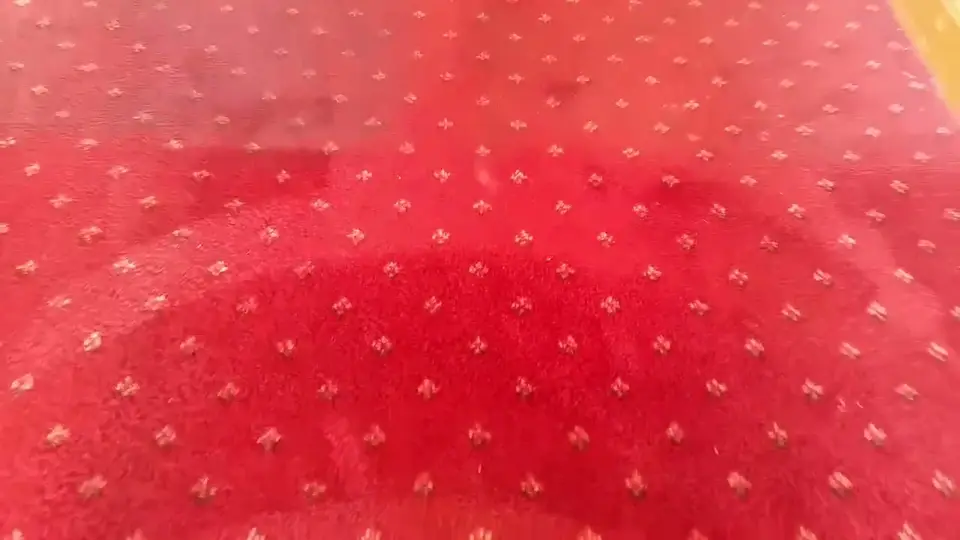
- The stains. What they are, how old they are and what's been tried. Supermarket sprays and scrubbing both change the approach.
- A test patch. On anything delicate or unusual, we clean a small hidden area first to check the colours stay put.
- Furniture. Light pieces are moved and put back afterwards. Heavy wardrobes, beds and full bookcases are cleaned around.
- What to expect. If something won't come out, you'll hear it now, not at the end.
Step 3: the pre-vacuum
Before any water goes down, the carpet is vacuumed slowly and thoroughly, edges included. Most of the dirt in a carpet is dry: sand, grit, hair and dust. It's easy to lift while it's dry and much harder once it's wet, when it turns to mud at the base of the pile. Skipping this step is one of the reasons a quick clean can leave a carpet looking muddy.
The edges along the skirting boards get extra attention, because fine dust settles there and an ordinary vacuum head often misses it. Pet hair worked deep into the pile gets a few more passes too, since hair traps soiling and holds on to moisture.
Step 4: pre-spray and agitation
Next, a pre-spray suited to the fibre and the type of soiling goes onto the traffic lanes, the edges and every spot. It's left to work for a few minutes, because loosening the oily, sticky soiling bonded to the fibres takes time.
The pre-spray is then worked into the pile with a brush, so it reaches all sides of the fibres and opens up flattened traffic lanes. Stubborn spots get their own treatment at this point, matched to the stain. Much of the real cleaning happens here; the extraction that follows rinses away what the pre-spray has loosened.
 spotless.ie
Ready for step one? Send photos of the rooms, the stairs and any stains on WhatsApp. We'll come back with a fixed price and a date, usually the same day.
Step 5: hot-water extraction
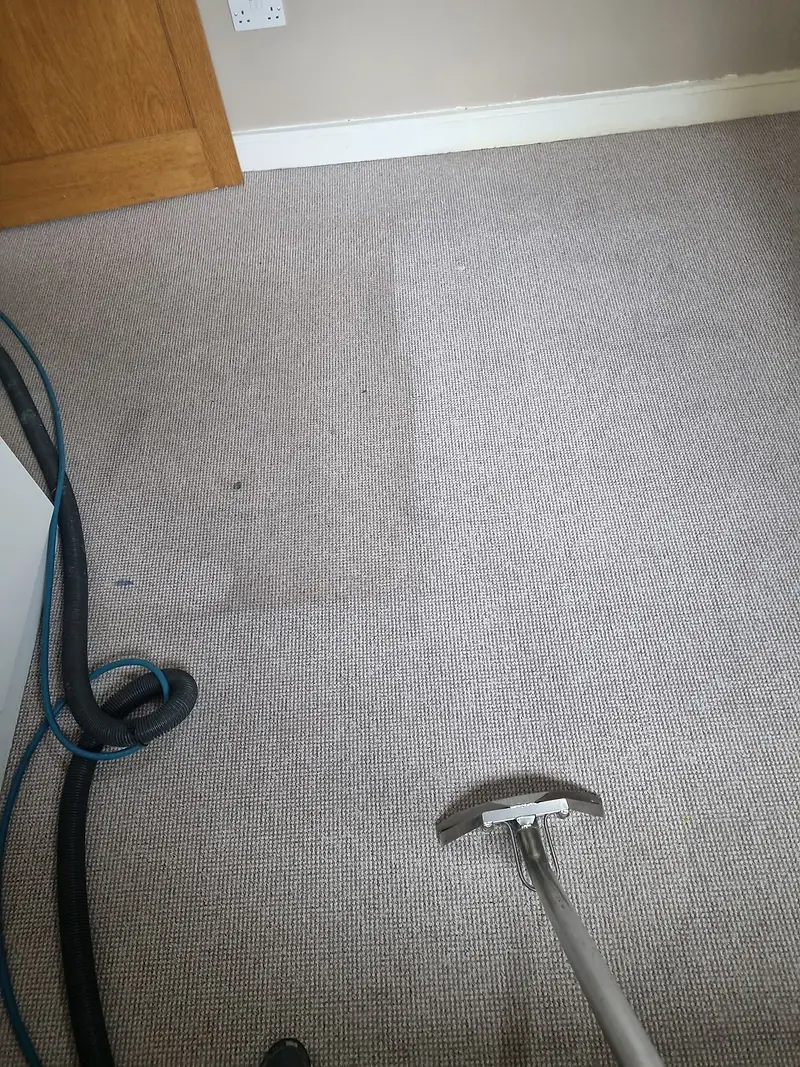
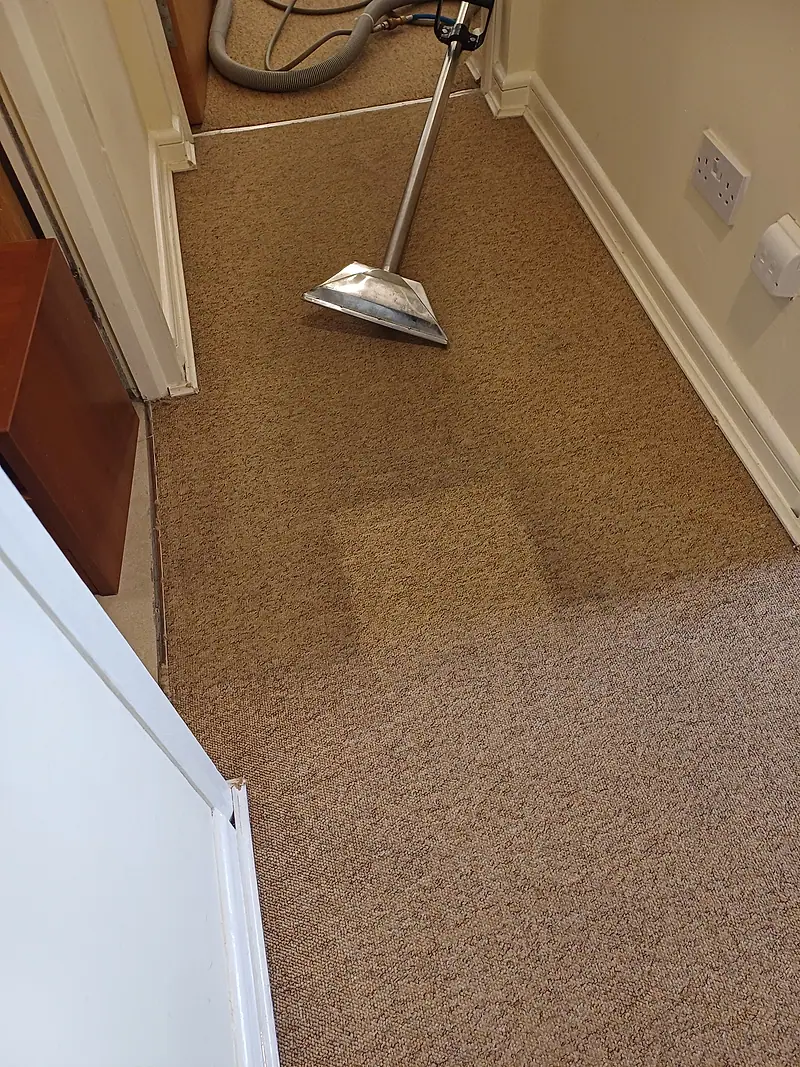
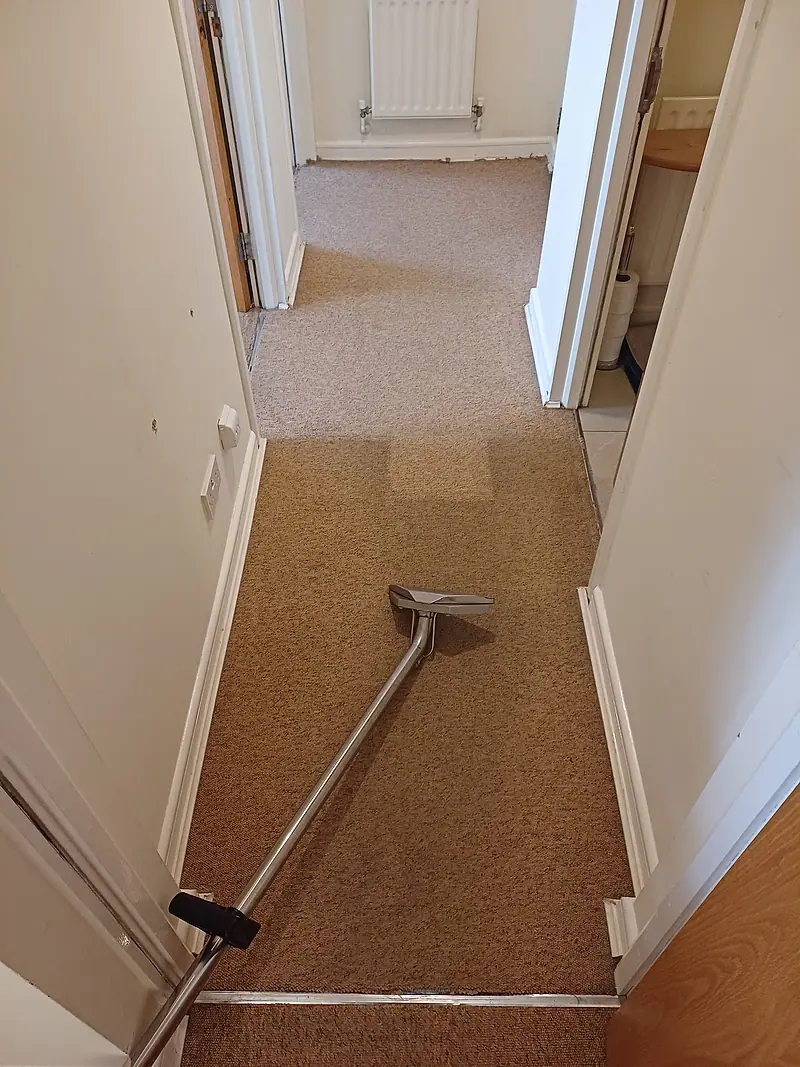
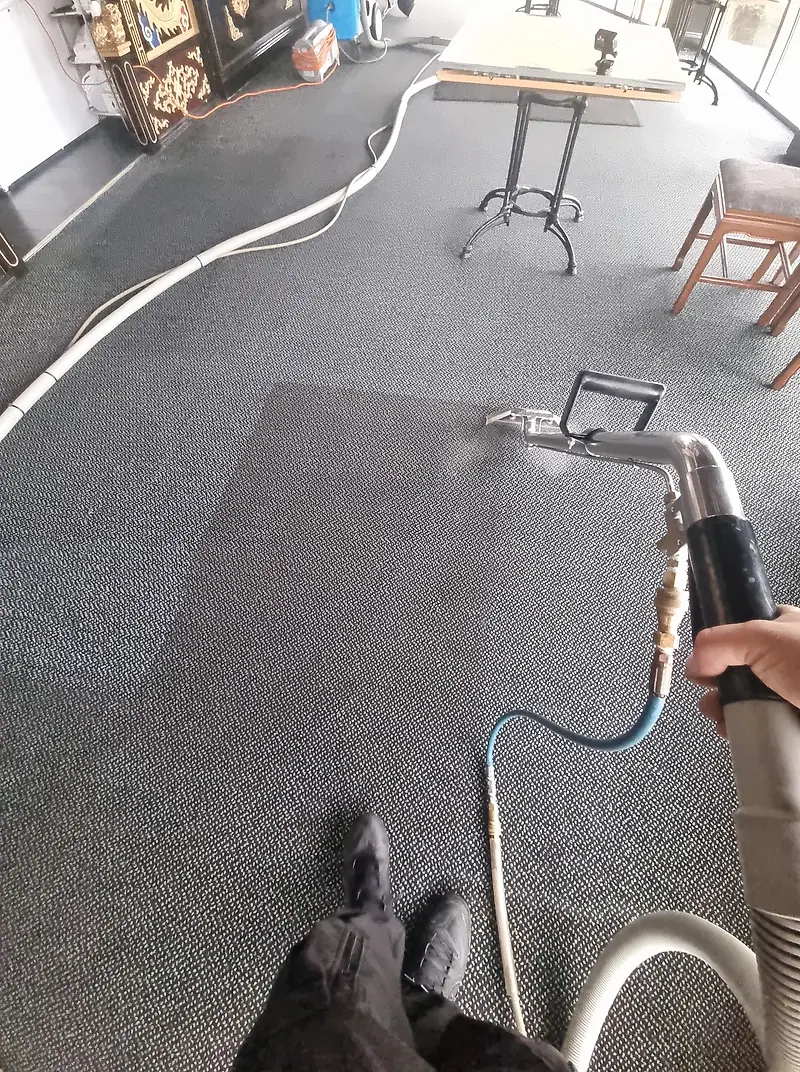
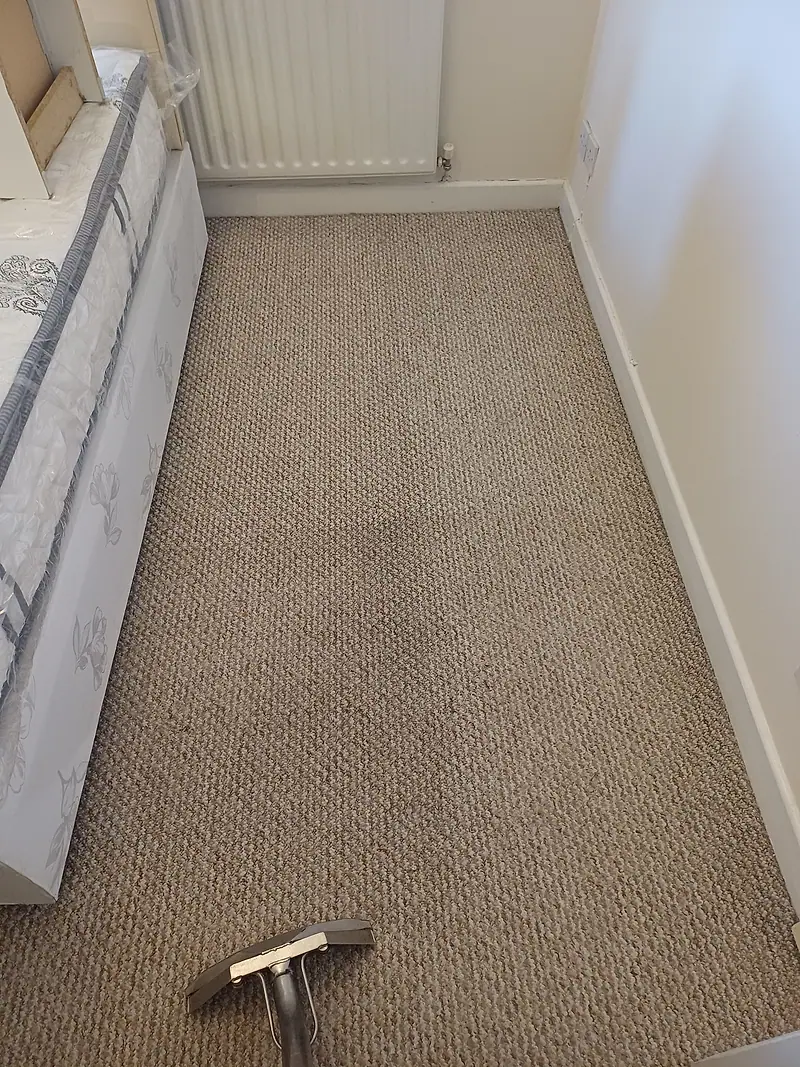
Now the main clean. The wand passes over the carpet in overlapping strokes, spraying hot water and a cleaning solution into the pile and vacuuming it straight back out in the same movement. Heavily soiled areas get extra passes. Each wet pass is followed by dry passes, which pull out as much water as possible, so the carpet is left damp rather than wet.
Why hot water? Warmth helps the cleaning solution work and loosens greasy soiling that cold water leaves behind. The amount of solution and moisture is adjusted to the fibre, with a lighter touch on wool and anything delicate.
Stairs are done with a small hand tool, one tread at a time, front edge and riser included, working from the landing downwards. Everything that comes out goes into the extractor's recovery tank, and it's usually far darker than people expect.
The work is done by Ciprian, who founded Spotless, and his small crew. Ciprian is fully trained in carpet cleaning, having completed a Prochem course in 2018 (certificate no. 2018/020), and we're fully insured on every job.
Step 6: grooming and drying
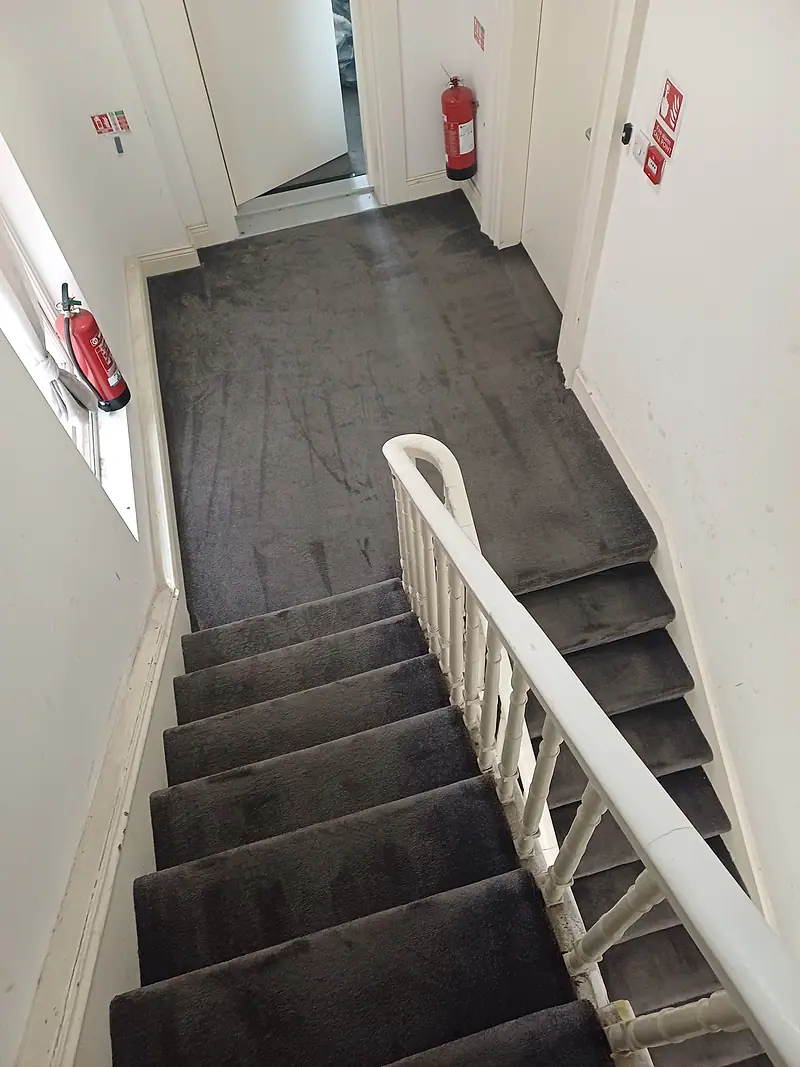
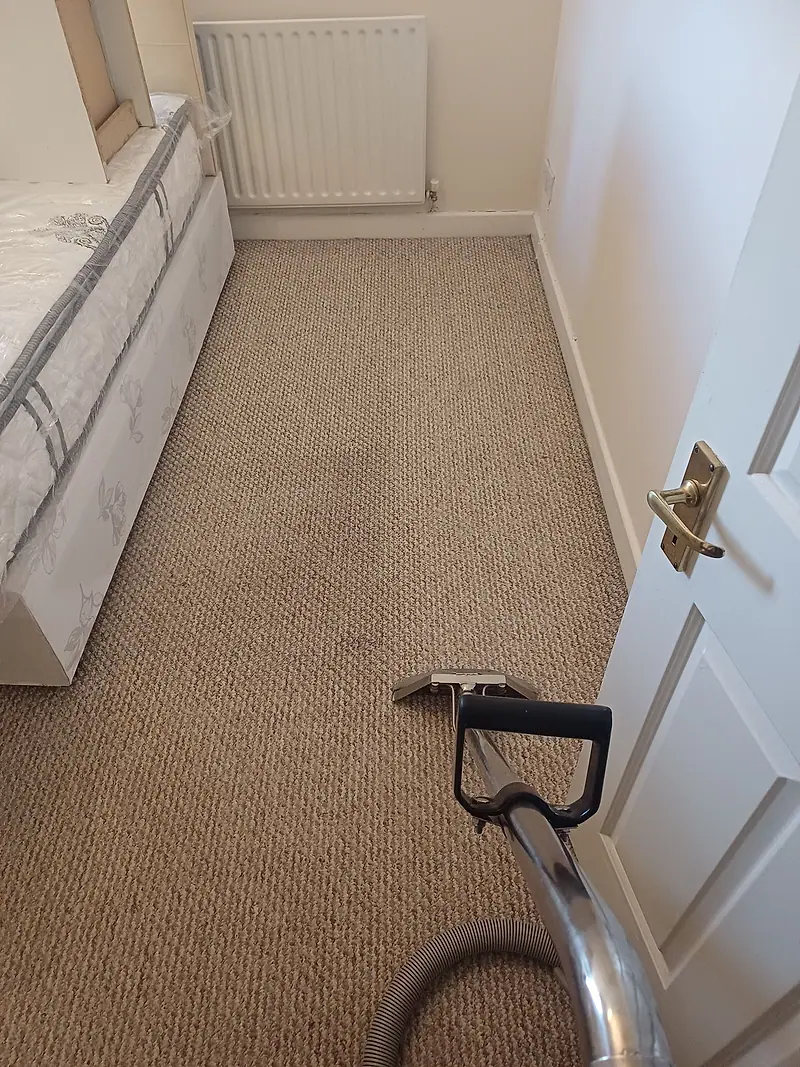
Once the carpet is clean, the pile is groomed: brushed upright and laid in one direction. That helps it dry evenly and stops it drying flat and matted, and it's what leaves the neat stripes you'll see in our photos.
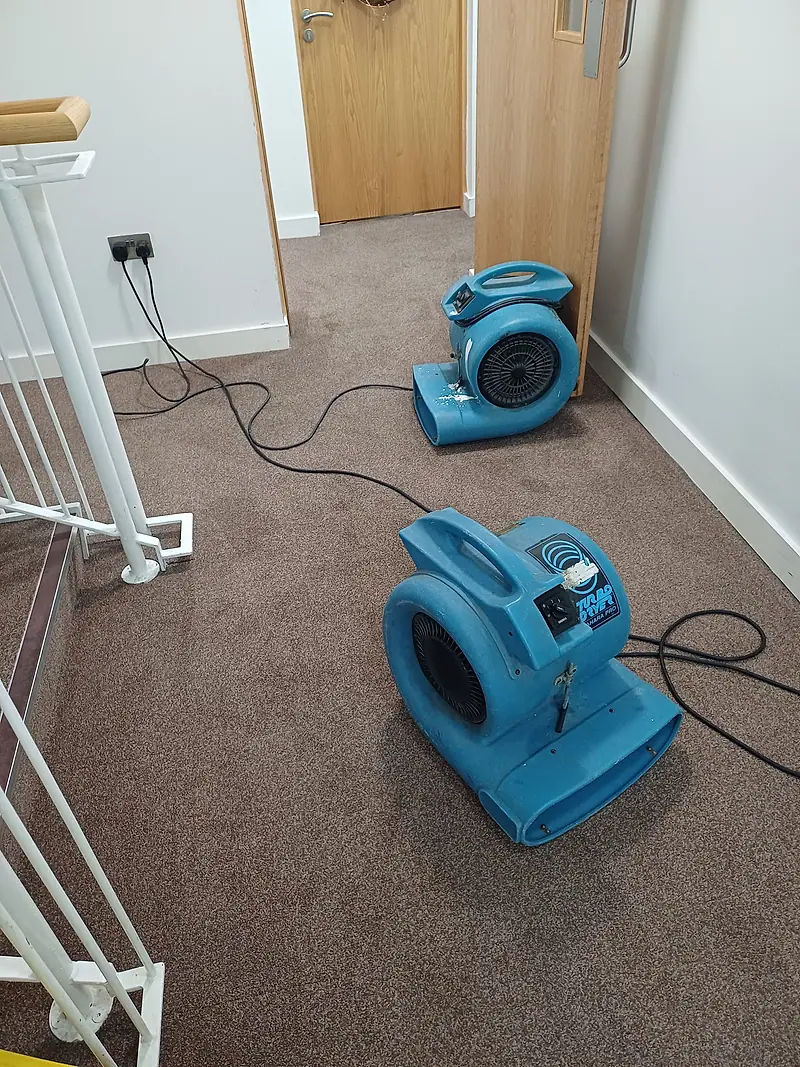
Then the air movers go on. They push a steady stream of air across the surface, which speeds up drying considerably. Drying usually takes a few hours, depending on the airflow in the room, the weather and how thick the carpet is. Wool takes longer than short-pile synthetics. Our guide to carpet drying times explains what affects it.
After we leave
Before we pack up, we walk through every room with you and look at the result together. If anything needs another pass, it's done then.
For the next few hours:
- walk on the carpet in clean socks or slippers, not outdoor shoes
- keep the heating on or a window open to keep the air moving
- keep pets and small children off until it's dry
- don't put furniture back until the carpet is dry; if you must, put foil or plastic under the legs
That's the whole service. It works the same way on rugs, with a colour-run test first, and on sofas and armchairs, with a small upholstery tool. To see how it compares with hiring a machine, read professional cleaning versus DIY, and for what else we clean, our main carpet cleaning page.