
Urine: get it up before it goes down
Urine is the accident that causes the most trouble later, because it's liquid, it travels down through the carpet and it keeps changing as it dries. Speed matters more than anything:
- Blot straight away. Lay a thick pad of kitchen paper or an old towel over the wet patch and press down hard. Standing on it works well. Swap for dry paper and keep going until it comes up almost dry.
- Rinse with a little cold water. Pour a small amount over the spot, just enough to dilute what's left, then blot again.
- Repeat once or twice. Each round of cold water and blotting lifts more out of the pile.
- Weigh it down to finish. A dry towel, folded thick, with something heavy on top for twenty minutes or so pulls the last moisture up.
- Let air get to it. Open a window or run a fan. Keep the pet off the spot while it dries.
Fresh urine on a carpet that's dealt with like this usually leaves little or nothing behind. The problems start when it's found hours or days later, or when it happens in the same place again and again.
Sick and mess
The approach is a little different for solids:
- Lift first. Use a piece of card, a spatula or a spoon to scoop up as much as you can, lifting rather than pushing so nothing is driven into the pile.
- Then blot. Once the solids are up, blot what's left with kitchen paper.
- Cold water only. Dab with cold water and blot again. Warm water can set the protein in sick and mess.
- Act quickly with sick. Stomach acid can lighten some carpet dyes if it's left, which leaves a pale mark even after the stain has gone.
If an accident is loose or has spread, don't try to wipe it up in one go. Lift and blot in small sections, working from the edges in.
Hairballs from cats are a mix of hair, stomach fluid and sometimes food. Let them firm up for a few minutes if they're very wet, lift them with kitchen paper, then treat what's left like any other sick. Grass that a dog has brought back up can leave a green tint, which often fades with a cold-water rinse if it's caught the same day.
What not to use
Plenty of the stubborn stains we see started as fresh accidents that were made worse. Avoid:
- Ammonia-based cleaners. Ammonia is one of the things a pet smells in urine, so it can encourage a return visit to the same spot.
- Bleach. It can strip colour from the carpet and won't deal with the source of the smell.
- Strong perfumed sprays. They cover the smell for a few hours without removing anything, and the fragrance mixes with the urine smell as it fades.
- Steam, hot water or a hot iron. Heat can fix both the stain and the smell into the fibres.
- Scrubbing brushes. They spread the accident and fray the pile.
If you want to try a shop-bought pet stain product, choose one that says it's for carpets, check whether it's suitable for wool if your carpet is wool, test it on a hidden spot, and use one product only.
 spotless.ie
Why old urine can come back
People are often surprised when a urine smell returns weeks after a spot seemed fine. There are two reasons:
- It's gone deeper than you can reach. A puddle on carpet soaks through the backing into the underlay, and sometimes into the floorboards. Blotting from the top only gets what's in the pile.
- The salts stay behind. As urine dries, it leaves salts that pull moisture from the air. When the weather turns damp, or the carpet gets wet again, those salts release the smell all over again.
Old urine can also permanently change the colour of some carpet dyes, leaving a pale or yellowish patch even when the stain itself is gone.
Finding the spots you can't see
Before any clean, it helps to know where every spot is. A small ultraviolet torch, used in a darkened room, makes many old urine stains glow. Go round the edges of the room, behind doors and under furniture, where pets often go. Mark each spot with a sticky note so it's not missed when the carpet is cleaned.
Accidents you can't shift? Send photos of the marks on WhatsApp, with a note of how old they are and what's been used on them. We'll tell you honestly what to expect and give you a price, usually the same day.
Where professional cleaning helps, and its limits
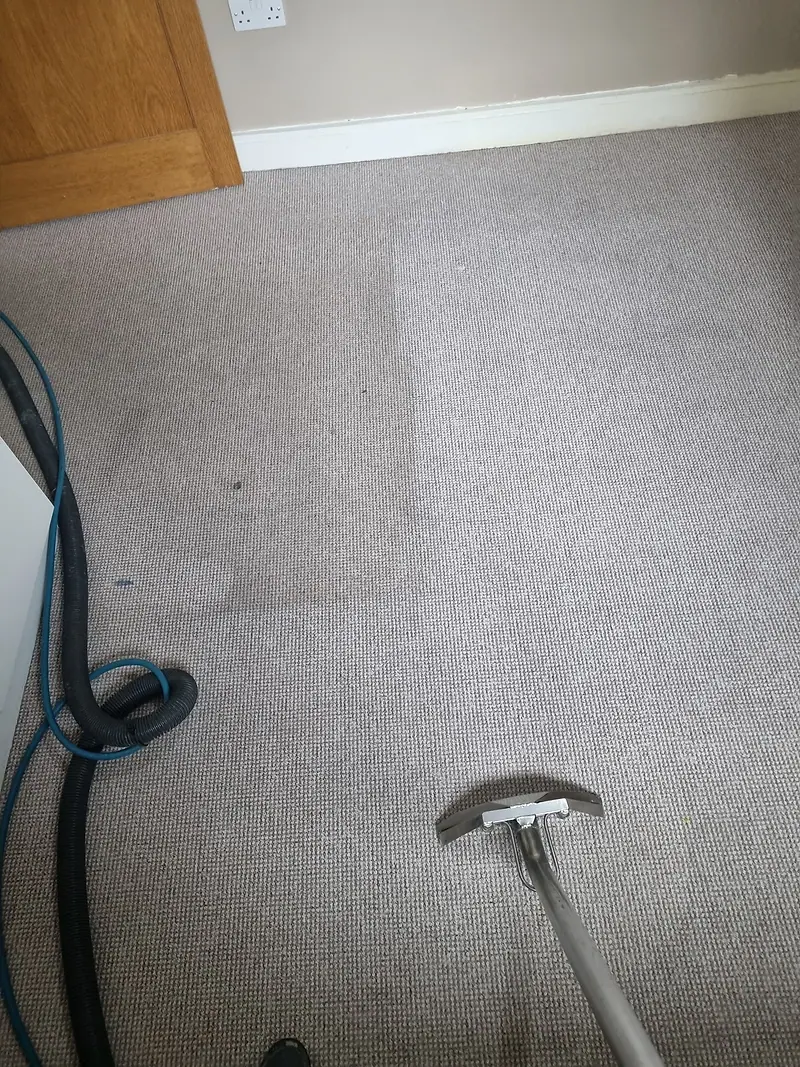
A hot-water extraction clean flushes the carpet with a urine treatment and pulls it back out, along with what it has loosened. That's very different from blotting the surface. Here's what usually happens:
| Situation | What a professional clean usually achieves |
|---|---|
| A fresh accident, blotted at the time | Clears, including the smell |
| A single older spot | Comes out or lightens a lot; odour usually much better |
| Repeated accidents in one area over months | Stain may only lighten; odour may return in damp weather |
| Soaked through to the floor | Improved on the surface, but the source is still underneath |
| Colour changed by urine or sick | The stain lifts, but the dye change stays |
Our page on pet carpet cleaning explains how we handle pet homes, from hair to accidents. Other marks are covered under carpet stain removal, and the first steps for drink spills are in our guide to red wine, coffee and tea on carpet.
Stopping repeat accidents
Accidents tend to happen where they've happened before, because the pet can still smell the spot. A thorough clean of every marked area is part of breaking the habit. A few other things help:
- Clean every spot, not just the obvious one. Pets notice the ones we miss.
- Make the area less inviting, by moving a piece of furniture over it for a few weeks, once the carpet is dry.
- Stick to a routine for puppies and new rescue dogs, with plenty of chances to go outside.
- Talk to your vet if an older or previously reliable pet starts having accidents. A change in toilet habits can have a health cause.
Pets don't only have accidents on carpets. Sofas, rugs and mattresses take their share, and we clean those too: see upholstery cleaning, rug cleaning and mattress cleaning. For the whole house, see our carpet cleaning service in Dublin.
