
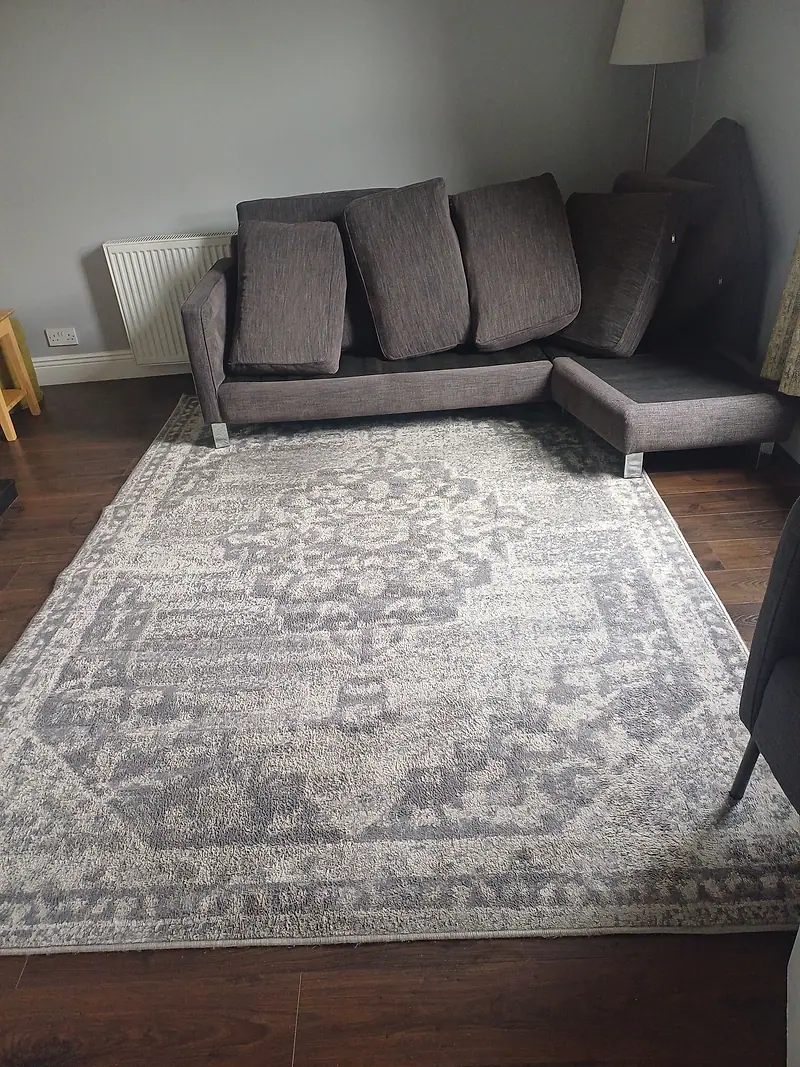
Know what you've got
How you look after a rug depends on what it's made of and how it was made. The label on the back usually tells you, and it's worth photographing it in case it wears off. As a quick guide to everyday care:
- Wool is hard-wearing and lets go of dry dirt easily, so regular vacuuming does a lot. New wool rugs shed loose fibres for a while, which is normal.
- Synthetics, such as polypropylene, nylon and polyester, are the easiest to live with. Polypropylene can hold onto greasy marks.
- Viscose, often sold as art silk or bamboo silk, looks soft and shiny but marks easily, especially with water. Blot spills dry and don't rub.
- Jute, sisal and other plant fibres dislike water and can brown or shrink. Keep them dry and vacuum regularly.
- Cotton flatweaves are light and practical. Some small ones are machine washable, but only if the label says so.
Shaggy and long-pile rugs need their own routine. The long strands trap crumbs, hair and grit deep down, where a quick vacuum doesn't reach. Shake small ones outside, vacuum larger ones on suction only, and work your fingers through the pile now and then to loosen what's settled. Sheepskin and hide rugs are a different thing altogether, and they need specialist care rather than water.
The back tells you something too. A hand-knotted rug shows its pattern clearly on the reverse. A hand-tufted rug often has a fabric or canvas backing glued on, which doesn't like getting wet. Machine-made rugs have an even, regular back. Our rug cleaning page goes into fibres and construction in more depth.
Vacuuming a rug
Vacuuming keeps grit from grinding at the fibres, and grit is what wears a rug out. A few rug-specific points:
- Set the brush roll right. On shaggy, hand-knotted or delicate rugs, raise the brush or switch it off and use suction only. A fast brush can fuzz the pile and pull at loose threads.
- Go with the pile. Run your hand across the rug. One way feels smooth, the other rough. Vacuuming in the smooth direction is gentler and leaves a tidier finish.
- Turn it over now and then. Vacuuming the back of a rug shakes loose grit that has worked its way down. Then vacuum the floor underneath.
- Small rugs can be shaken. Take them outside and give them a good shake every few weeks.
Busy rugs, like the one in front of the sofa or inside the front door, need vacuuming as often as the floor around them, a couple of times a week.
Fringes and edges
Fringes are usually the end of the threads that run the length of the rug. They're often cotton, and they're the first part to look grubby or worn.
- Don't vacuum fringes. Stop short of them, or lift the vacuum over. Suction tangles them and pulls threads loose.
- Comb them straight with your fingers or a wide-toothed comb when they get messy.
- Don't trim a fringe that's fraying. A rug repairer can secure it properly.
- Watch the edges. A curled or frayed edge is a trip hazard and wears quickly. Rug repairers can rebind edges, too.
Rotate it, and mind the sun
Most rugs get walked on along the same lines, and the sunny side gets faded. Turning the rug end to end every few months spreads both. If the rug sits under furniture, moving the furniture slightly now and then stops deep dents and uneven wear.
Strong sunlight fades rugs, natural dyes especially. Draw blinds in the brightest part of the day, or position the rug out of direct sun if you can.
Rug pads and underlays
What goes underneath matters as much as what's on top:
- On hard floors, a rug pad stops slipping, cushions footsteps and protects the floor from grit. Check that the pad suits your floor, because some rubber pads can mark certain finishes, and pick one suitable for underfloor heating if you have it.
- On carpet, a pad designed for carpet stops the rug creeping and rucking. A hard-floor pad won't grip carpet properly.
- Colour transfer. If a rug on carpet gets wet, lift it until both are fully dry. Some rug dyes bleed into the carpet below, and that mark can be hard to shift.
Rug looking tired? Send photos of the front, the back and the label of your rug on WhatsApp. We'll tell you whether it's one we can clean on site and give you a price, usually the same day.
Spills on rugs
The basics are the same as for carpet, with extra care for colours:
- Blot straight away with a white cloth, pressing firmly. Don't rub, especially on viscose or wool.
- Test before you add water. Dampen a white cloth and press it onto a hidden corner of the rug. If any colour comes off, stop and blot dry only.
- Cold water, sparingly. If the dye is stable, dab a little cold water onto the spill and blot again.
- Prop it up to dry. Lift the damp area off the floor so air can get underneath. Never leave a damp rug flat on a wooden floor.
Watch the borders. Dark reds and blues are the most likely to run into a lighter centre. Our guide to red wine, coffee and tea on carpet covers drink spills in more detail, and pet accidents on carpet deals with urine and sick, which often soak right through a rug to the foundation.
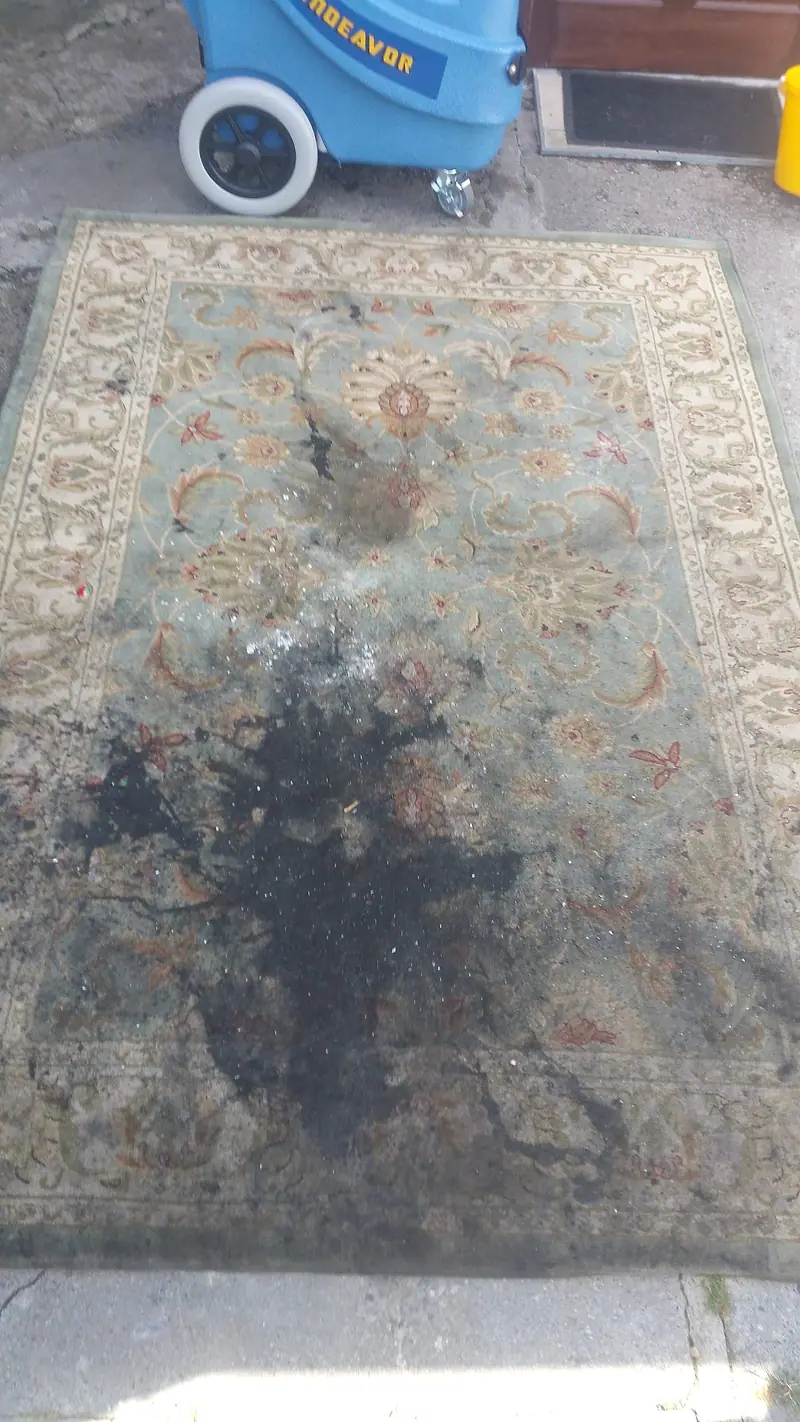
 spotless.ie
When it's due a clean
Signs a rug needs more than vacuuming:
- it looks dull or grey, especially along the walking line
- the fringe is noticeably darker than when it was new
- there's a stain that hasn't come out with blotting
- it has a smell, particularly after a pet accident or in damp weather
- it's been a year or two since it was last cleaned
Most household rugs can be cleaned on site. We look at the fibre and the back, test the dyes and clean it to suit, as our rug cleaning page explains. Valuable, antique and silk rugs are usually better off with a specialist rug washer, and we'll tell you if yours is one of them. Marks we can't shift with a general clean are covered under carpet stain removal, and if you have a wool carpet as well as a wool rug, our wool carpet care guide has more tips. For carpets and sofas on the same visit, see carpet cleaning in Dublin and upholstery cleaning.
