
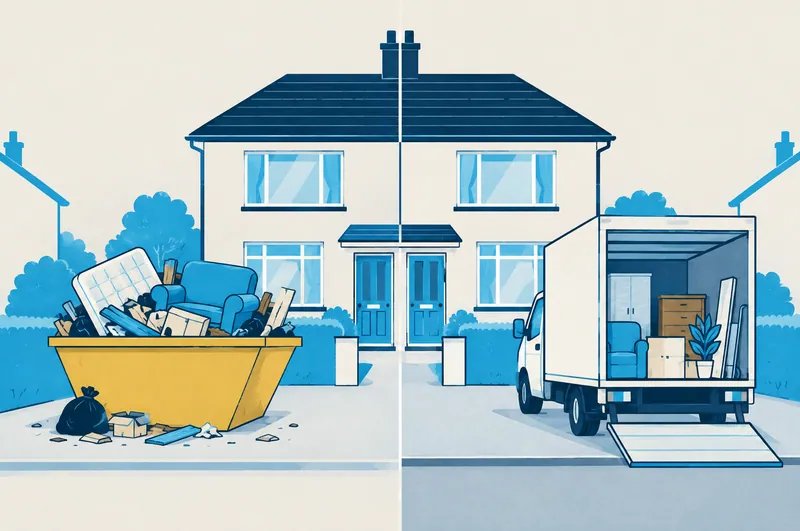
The quick answer
If you've got time, a few strong helpers and mostly heavy, loose waste such as rubble, soil or old timber from a renovation, a skip can be the right tool. If you're clearing the contents of a house, with furniture, mattresses, appliances and attic boxes, a clearance company usually works out simpler: someone else does the lifting, the awkward items are dealt with properly, and nothing sits outside your house for a week.
Neither is always better. The honest comparison below should help you decide.
Skip vs clearance, side by side
| Skip hire | House clearance | |
|---|---|---|
| Who does the lifting | You, and whoever you can persuade to help | The clearance crew |
| Getting it out of the house | You carry everything down the stairs and out to the skip | The crew carries from any room, the attic, the garage or the shed |
| Sorting | Usually none, but restricted items have to be kept out | Sorted as it's loaded: reuse, recycling, licensed disposal |
| Fridges, mattresses, electricals | Often restricted, or charged as extras | Taken as part of the job |
| Bulky furniture | Has to be broken up, or it wastes space | Taken apart where needed and loaded |
| Space needed | Room on the driveway or the road | Space for a van while it's loading |
| Permits | A skip on a public road or footpath may need a permit from the council | No skip permit, because nothing is left on the road |
| Timing | Delivered, filled over days, collected | Usually one visit; a full house in one to two days |
| Security | Open skips attract other people's rubbish overnight | Nothing left outside |
| Best for | Renovation rubble, soil, heavy DIY waste | House contents, furniture and appliances |
What a skip won't take
Every skip company sets its own rules, so check before you book, but these are commonly restricted or charged separately:
- fridges and freezers
- TVs, monitors and other electricals
- mattresses
- tyres
- paint, solvents, oils and chemicals
- gas cylinders and batteries
- plasterboard, which often has to be kept separate
- asbestos, which no skip will take
In a house clearance, several items on that list are exactly what you're trying to get rid of: an old fridge-freezer, a couple of mattresses, the TV in the back bedroom. With a skip, you'd still need another way to deal with them. A clearance company with a waste collection permit takes them as part of the job, hazardous materials such as asbestos, chemicals and gas cylinders aside.
Permits, space and your driveway
On the road. If the skip has to go on a public road or footpath, it may need a permit from the council, and there are usually conditions about lighting and placement. Ask the skip company who arranges it. On Dublin's narrow terraces and in permit-parking streets, finding a legal spot for a skip can be the hardest part.
On the driveway. A skip on your own driveway generally doesn't need a council permit, but it's heavy. Block paving, cobble-lock and tarmac can be marked or cracked by a loaded skip, so ask for boards underneath. If the driveway looks tired afterwards, driveway cleaning deals with dirt and staining, though it can't mend a cracked block.
Apartments. Many apartment developments have nowhere a skip can go, and management companies often set rules about loading times. See apartment clearance.
The part nobody mentions: filling it
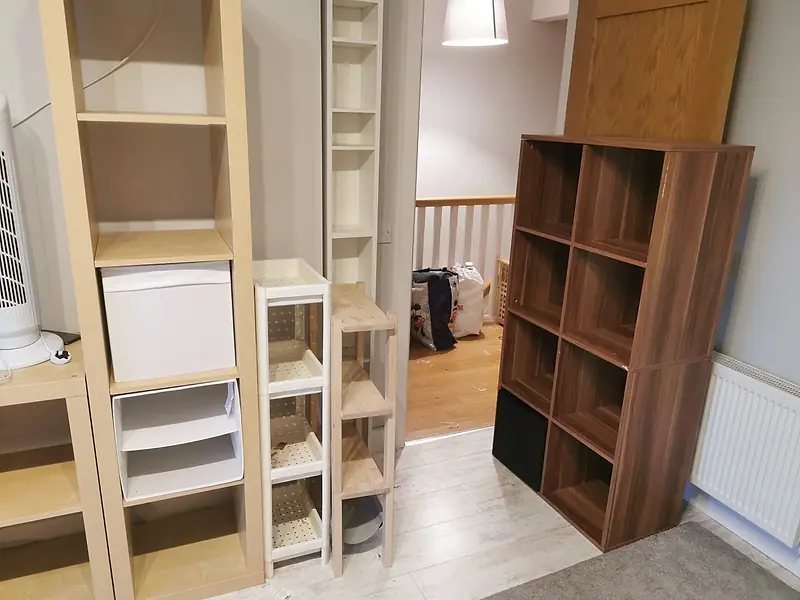
Hiring a skip is the easy bit. Filling it means carrying every item down the stairs and out the door yourself, and a full house is a lot of trips. Sofas, wardrobes and bed frames have to be broken down or they'll take up half the skip. Attic boxes come down a ladder one at a time.
Skips generally can't be loaded above the top edge, so you have to pack carefully, and you'll still need to check every drawer and box for papers, photos and valuables before it goes in. Once something is at the bottom of a skip, it's very hard to get back.
 spotless.ie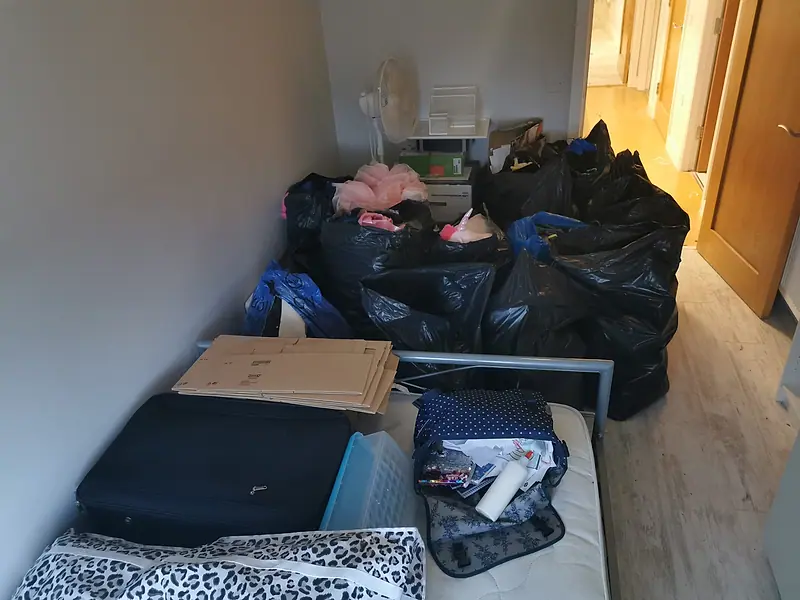
Questions to ask before you hire a skip
If a skip still sounds right, a few questions up front avoid surprises later:
- What size do I need? Bulky furniture fills a skip far faster than you'd expect, because it doesn't pack down.
- How long can I keep it? Hire periods vary, and keeping it longer can cost more.
- What's restricted, and what does it cost to include? Get the list in writing before the skip arrives.
- Is there a weight limit? Heavy materials like soil, rubble and wet garden waste can push a skip over it.
- Who arranges the permit if it has to go on the road, and how long does that take?
Then put the answers next to a fixed clearance price for the same job, and you'll be comparing like with like.
When a skip is the better choice
We'd genuinely recommend a skip when:
- you're renovating and producing rubble, old tiles, plaster and timber over several days or weeks
- you're digging out a garden and have soil, stones or broken concrete
- you have plenty of helpers and time, and the waste is mostly heavy and loose
- the job is ongoing and you'd rather fill it bit by bit
For heavy builders' rubble and soil in quantity, a skip or a grab lorry is usually the right answer, and we'll say so if you ask us about it. For lighter garden waste, such as cuttings and old garden furniture, garden clearance may suit better.
When a clearance makes more sense
A clearance usually wins when:
- you're emptying a house of furniture, contents and appliances
- there are mattresses, fridges and electricals in the mix
- the attic, garage or shed is packed
- you don't have the time, the help or the back for it
- the house belonged to someone who has died and you want things checked as they go (bereavement clearance)
- the home has become very cluttered and needs a calm, careful approach (hoarder clearance)
- there's nowhere to put a skip, or there's a deadline such as a closing date or a new tenant
Not sure which you need? Send photos of what's going on WhatsApp. If a skip would suit you better, we'll say so. If not, you'll get a fixed price for the clearance, usually the same day.
Using both
Some people use a skip for renovation rubble and a clearance company for the contents. Others fill a skip themselves and then book junk removal for what the skip firm wouldn't take: the fridge, the mattresses, the old TV. That works well too.
On cost, compare like with like. A skip price covers the skip and its disposal; the labour is yours, and restricted items cost extra or need another solution. A clearance price covers the lifting, sorting, special items and disposal in one figure. Our guide to what house clearance costs in Dublin explains how that figure is worked out, and our house clearance page explains how the job runs.
