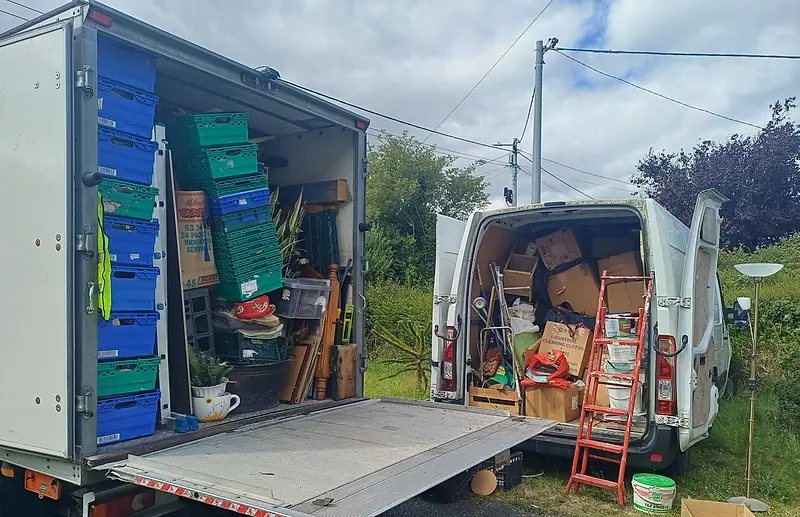
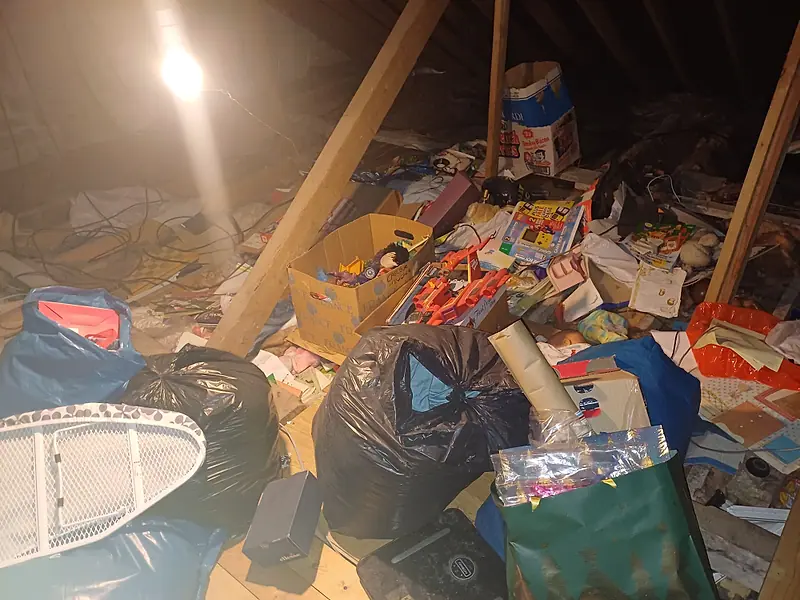

The D18 estate attic
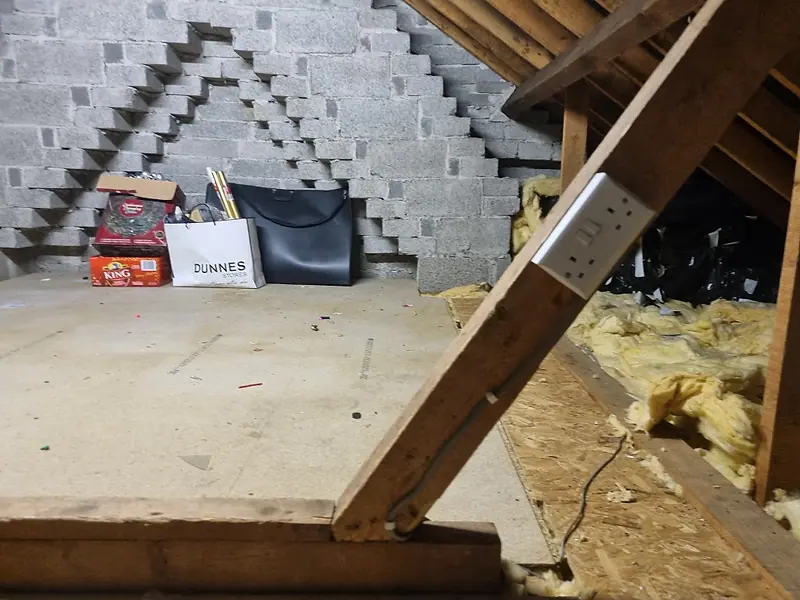
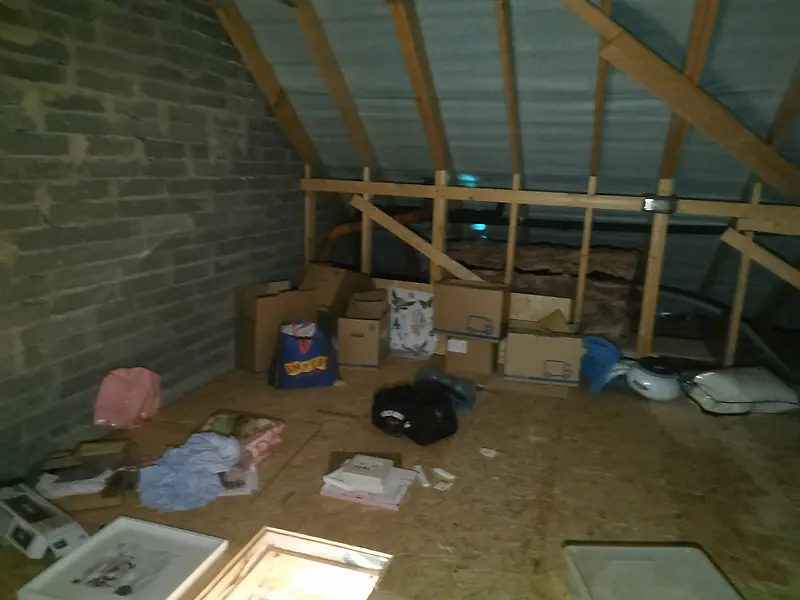
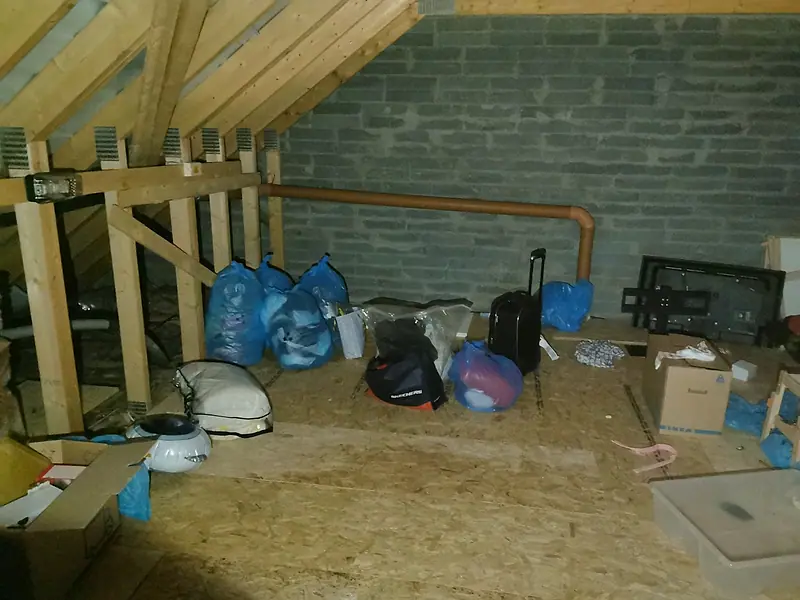
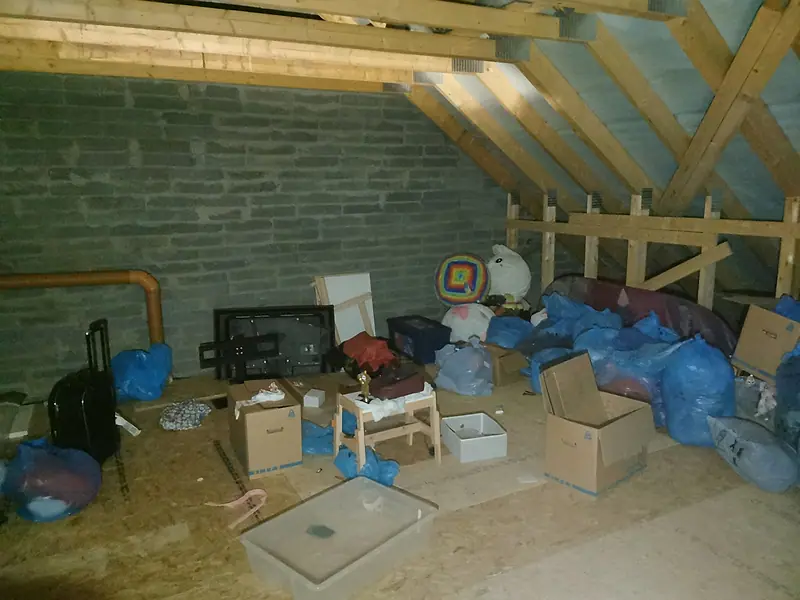
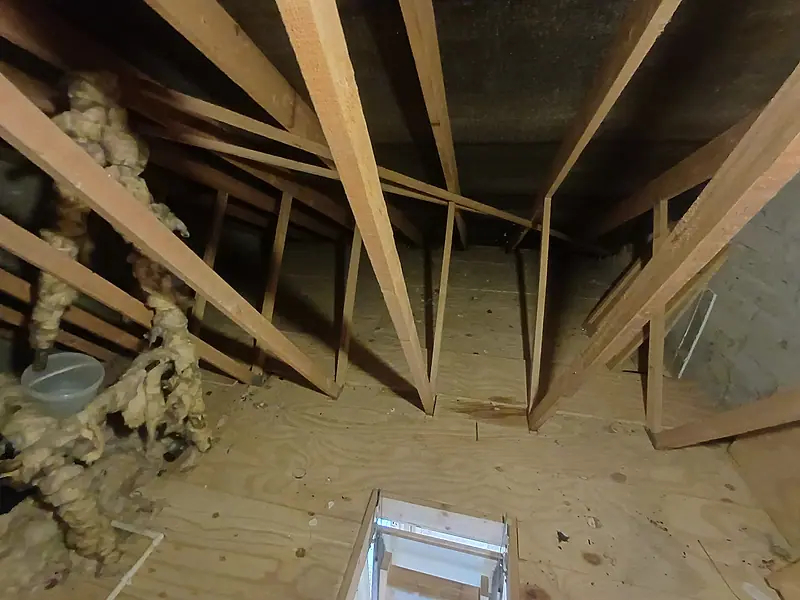
Open the hatch in most Sandyford semis and townhouses and you'll find the same picture: a boarded square in the middle, a folding ladder, and every bit of that boarded floor covered. The eaves on either side are usually bare joists and insulation, with a few bags pushed out onto them because the middle filled up years ago.
The estates around Sandyford, Leopardstown, Kilmacud and up the hill towards Stepaside were mostly built between the 1970s and the 2000s, so their attics share a lot. Hatches are a decent size, most have a ladder, and the stairs below are straightforward. That makes these attics quicker to clear than the tight lofts of an older terrace. The bigger question is volume, and what you want to happen to it all.
Two things are worth checking before we come. First, the bags pushed out over the eaves: they're often the oldest things up there, and they sit on insulation, so we lift them back to the boards carefully instead of crawling out over the joists. Second, any boxes marked with a child's name. Parents often want a last look at school projects, first shoes and drawings before deciding, so we keep those together for you.
What usually comes down
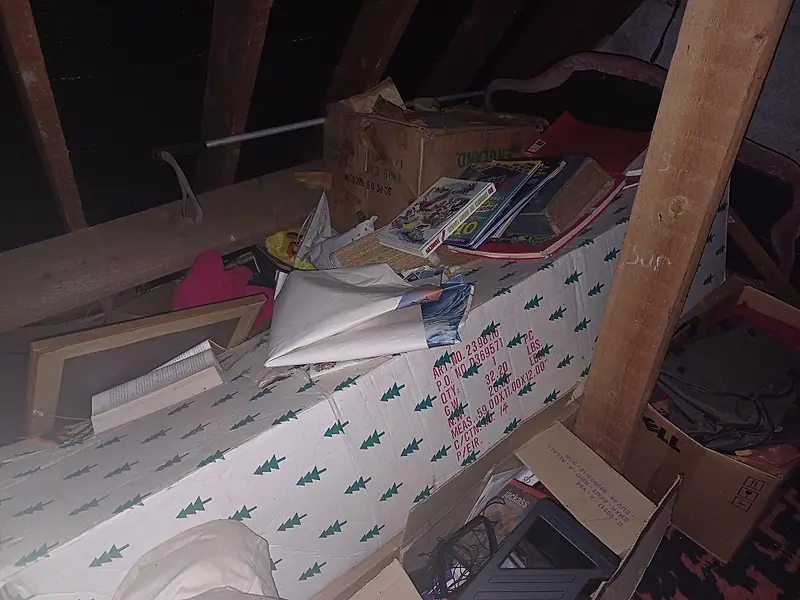
These attics fill up during the years when children are small, and then nobody goes up again. Here's what we tend to find, and where it goes:
| What we find | Where it usually goes |
|---|---|
| Cots, high chairs, buggies and baby baths | Set aside for reuse where they're in good condition |
| Car seats | Recycling or disposal, never reuse, as their history is unknown |
| Suitcases, empty and full | Opened and checked with you, then reuse or disposal |
| Artificial trees and boxes of decorations | You choose what stays; good pieces set aside for reuse |
| Bags of baby clothes and toys | Sorted with you first, then reuse, recycling or disposal |
| Appliance boxes and packaging kept "just in case" | Cardboard recycling |
| Old lamps, monitors and small electricals | Electrical recycling |
 spotless.ie
Clearing the attic before you move
In Sandyford, an attic clearance often comes with a moving date attached. Getting the attic done early makes everything after it easier, so here's the order that works best:
- As soon as you have a date, go up with your phone and photograph every part of the attic, including the eaves.
- Send us the photos and get a fixed price before the removal company visits. A lighter house means a smaller move.
- Decide what's coming with you. Bring those boxes down yourself or mark them, and we'll leave them on the landing.
- Book the clearance a week or two ahead of moving day, so the attic is empty before the packing starts.
- Leave the attic swept. A buyer's surveyor will often put their head through the hatch, and an empty, swept attic shows the roof timbers and insulation clearly.
If more of the house needs thinning out before the move, our page on partial clear-outs and moving house in Sandyford covers that side of things, and furniture removal suits a few large pieces that won't fit in the new place.
Moving out of a Dublin 18 home? Photograph the attic and the hatch, add your moving date, and send them on WhatsApp. We'll reply with a fixed price, usually the same day.
Folding ladders, top landings and the stairs
Most of the work is in the carrying. We check the folding ladder before trusting it with any weight, and if it's loose or bowed we use our own. Covers go down on the landing and stairs before the first bag moves.
Townhouses need a little more planning. With three storeys, the hatch is two flights above the hall, so there's more carrying and more care on the turns. Nothing is thrown down the stairs or dragged across a landing. Bags go into the van as they come down, so the hall stays clear and you can still get in and out of the house while we work.
How the price is worked out
Each attic gets a fixed price from your photos, confirmed before you book. What shapes it is mostly volume: how much of the van the attic will fill. After that come the flights of stairs, the state of the ladder, and anything heavy or awkward, like a cot that has to be taken apart up there.
You can look up our permit, NWCPO-25-13287-01, on the NWCPO register, and we're fully insured while we work in your home. Reusable things are kept back for a second life where possible, metals, electricals and cardboard go for recycling, and whatever is left goes to licensed facilities.
Garage, shed and the rest of the house
Estate houses in Dublin 18 rarely stop at the attic. If the integral garage has turned into a storeroom, see garage clear-outs in Sandyford. For the shed in the back garden, see shed clearance in Sandyford. Clearing the whole house is covered on our Sandyford house clearance page.
Our main attic clearance page explains how we work in any attic, and the attic clearance guide is worth a read before you go up there yourself.