
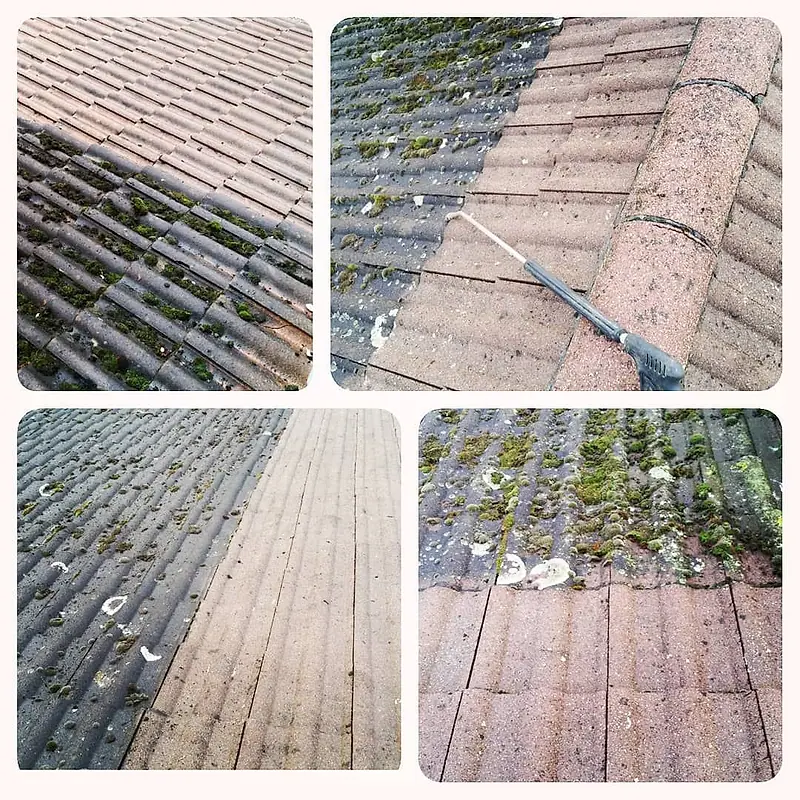
Why moss loves Irish roofs
Moss needs moisture, shade and something to hold onto, and most Irish roofs offer all three. The mild, damp climate means roofs rarely dry out for long, and moss spores are in the air all year round.
Some roofs suffer more than others:
- North-facing slopes get little direct sun and stay damp longest.
- Roofs near trees are shaded, catch falling leaves and stay wet after rain.
- Concrete tiles have a slightly rough texture that gives moss a foothold, and older tiles become more porous with age and hold more water.
- Slate is smoother, so moss tends to gather at the edges, in the joints and along the ridge rather than across the face.
Moss also feeds itself. Each cushion acts like a sponge, catching dust, grit and rainwater, and that damp debris is the perfect bed for the next lot of spores. So growth speeds up as it goes: a scattering of green dots one year becomes a roof that looks upholstered a few winters later.
Is roof moss actually a problem?
A light green tinge is mostly cosmetic, and there's no need to panic about it. Moss becomes a problem as it thickens:
- It stays wet. A thick mat soaks up rain and releases it slowly, so tiles under the moss sit damp for days while the rest of the roof has dried.
- It creeps into the laps. Roots push into the gaps where one tile overlaps the next and along the ridge line, nudging edges up and letting water linger where the roof was designed to shed it.
- It sheds into the gutters. Clumps wash down in rain and wind and build up until the gutters and downpipes block.
- It leads to overflow. Blocked gutters spill water down the walls, staining render and soaking brickwork.
Most people notice the knock-on effects before they notice the roof: water pouring over the front of a gutter in heavy rain, or green clumps scattered across the drive after a windy night.
Signs it's time to act
You can check from the ground. Use your phone's zoom from across the road or the end of the garden, or look out an upstairs window at a lower roof or an extension. Look for:
- moss thick enough to see as raised cushions, not just a green tint
- moss building up along the ridge and around chimneys, roof windows and valleys
- tile edges that look lifted, or rows of tiles that no longer sit in neat lines
- clumps of moss on the paving below after wind or rain
- gutters overflowing or sprouting weeds, or green streaks on the walls beneath
If you can see several of these, it's worth dealing with the roof before the gutters become the bigger problem.
Why pressure washing tiles does more harm than good
High-pressure roof washing is quick and looks dramatic. It's also the wrong tool for the job:
- It wears the tiles out early. A concrete tile is made with a thin, dense skin over a coarser body, and that skin is what makes rain run off. A powerful jet erodes it, exposing the rougher, thirstier material beneath, which holds water and gives new moss an even better grip.
- It breaks things. Brittle old tiles, thin slates and the mortar bedding the ridge can split, shift or wash out when a concentrated stream hits them.
- It forces water under the tiles. Roofs are designed to shed rain running down them, not water fired upwards under the overlaps. That water can reach the felt, the insulation and the attic.
- It makes a mess. Moss and slurry get sprayed across walls, windows, cars and the neighbours' property.
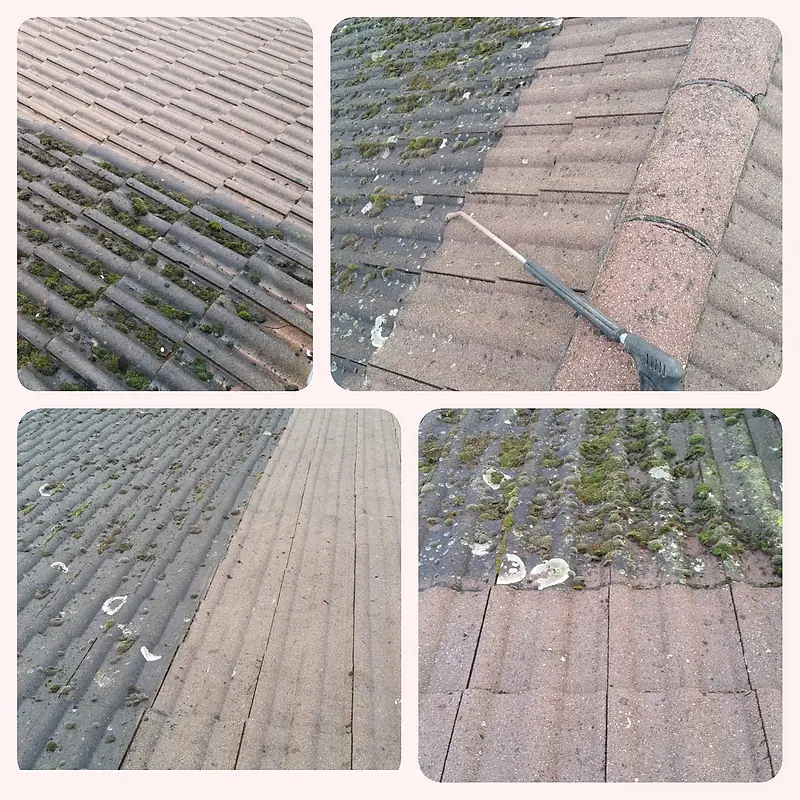
 spotless.ie
How soft washing works on a roof
The gentler approach takes a little longer and treats the roof as something to look after rather than attack:
- Thick growth is cleared before any washing, always moving from the ridge towards the gutter, the same direction rain flows, so nothing is forced up between the tiles.
- A low-pressure rinse and wash follows, using volume and contact time rather than force to loosen the finer growth and the green-black staining left behind.
- Gutters and downpipes are emptied, since a roof clean always sends debris into them.
- Everything at ground level is rinsed off, from the drive and paths to window sills and the patio.
Don't expect a perfectly uniform colour straight away. Faint staining can hang on in streaks after the wash, and rain finishes the job over the following weeks, so the roof tends to look more even a month later than on the day. Our soft washing page explains the method, and roof cleaning covers how we handle concrete tiles, clay tiles and slate.
Is your roof due a clean? Send photos of the roof from the front and back, plus one of the side of the house, on WhatsApp. We'll come back with a fixed price, usually the same day.
What happens to the gutters
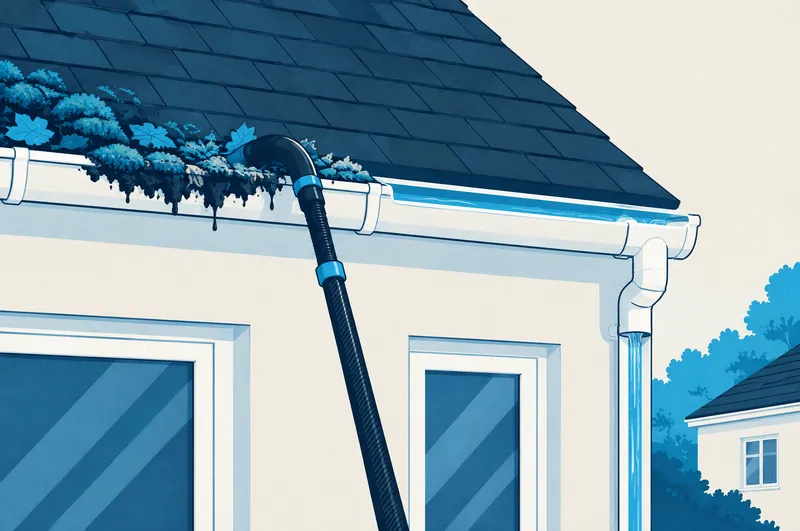
Moss on the roof and blocked gutters are really one problem. Clearing the gutters while leaving a mossy roof means they'll fill up again. Cleaning the roof without clearing the gutters afterwards means the moss you've just removed ends up blocking them.
So work from the top down: roof, then gutters, then the white boards along the eaves if they need it, and the paving below last. If you only have the gutters done this year, expect them to need doing again sooner. Our gutter cleaning guide explains the signs of a blocked gutter, and fascia and soffit cleaning covers the rest of the roofline.
Safety: please don't climb up there
Falls from roofs and ladders cause serious injuries, and roof moss removal puts you in exactly the wrong place for one. A few reasons to leave it to someone with the right access equipment:
- Moss is slippery. A wet, mossy roof is about as treacherous as a surface gets.
- Tiles crack underfoot. Concrete and clay tiles aren't designed to be walked on, and slates break easily.
- Ladders and scrapers don't mix. Reaching and pulling at moss from a ladder is an easy way to lose your balance.
- Some roofs are fragile. Conservatory roofs, rooflights and older roof sheets won't take a person's weight.
- Older fibre-cement slates may contain asbestos. Many made before 2000 do, and they shouldn't be scraped or pressure washed.
If you want to check your roof, do it from the ground. A photo from the street is usually all we need to price it.
Keeping moss away afterwards
- Cut back overhanging branches, so the roof gets more light and fewer leaves.
- Keep the gutters clear, so water drains away rather than sitting at the eaves.
- Check the shady slope each spring, because the side that gets least sun will show new growth years before the rest.
- Don't let it get thick again. A roof cleaned while the moss is light is a smaller job than one left for years.
How long a roof stays clean depends on the roof and its surroundings. A sunny, open roof can stay clear for years, while a shaded slope under trees will green up sooner.
Our roof cleaning service removes moss and soft washes tiles at low pressure in Dublin and all of Leinster, with the gutters cleared afterwards. For moss on paths and walls too, see moss and algae removal, and once the roof is done, driveway cleaning and patio cleaning take care of what's below. The power washing guide explains why different surfaces need different methods, and how power washing is priced covers quotes.
