"Professional" should be something you can check
Plenty of people will clear a house in Dublin. The word "professional" on a van or a website doesn't tell you much. What does tell you something is a handful of things you can check before you hand over the keys:
- A waste collection permit with a number you can look up yourself.
- Insurance that covers the job in your home.
- A fixed price in writing, agreed before the day.
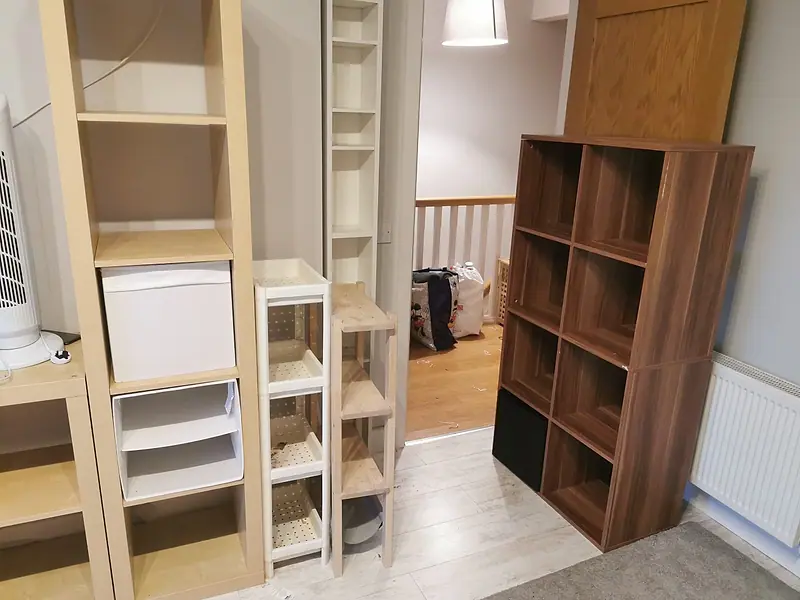
- A crew that looks after the house: covers down, furniture taken apart, rooms swept at the end.
- A clear answer about where things go, and the facilities to back it up.
Here's how each of those works in practice, and how Spotless does it. If you just want a price, skip to the end and send us photos.
A permit you can look up in two minutes
Anyone collecting waste for payment in Ireland needs a waste collection permit, issued through the National Waste Collection Permit Office (NWCPO). The register is public. Type in a permit number or a company name and you'll see who holds it.
Ours is NWCPO-25-13287-01. It's held by Krystal Klean Express Limited, trading as Krystal Klean, which operates Spotless and is an authorised waste carrier. When you check any company, make sure the name on the register matches the name on the quote. A permit number belonging to someone else isn't worth much.
Why bother? Because once your belongings leave the house, you want them going somewhere legal. Waste that's dumped in a laneway or a ditch can be traced back to where it came from. Our guide on using a permitted clearance company explains the householder's side of that in plain terms.
Insured, so an accident isn't your problem
A clearance means heavy, awkward things moving through someone's home: a mahogany wardrobe down a narrow Victorian staircase, a chest freezer out through a utility room, a piano across a hall floor. Most of the time nothing goes wrong. When it does, you want to be dealing with an insured business.
Spotless is fully insured on every job. Ask the same question of anyone else you're considering. A straight, immediate answer is a good sign; a vague one tells you what you need to know.
A price in writing that doesn't move on the day
A professional quote is fixed, written down and agreed before anyone arrives. Ours is built from your photos, room by room, and covers four things:
- Volume: roughly how many van loads.
- Access: stairs, the distance to the van, parking, any lift.
- Special items: fridges and freezers, mattresses, electricals, a piano or a safe.
- Crew and time: how many of us, and for how long.
The figure comes back on WhatsApp or by email, usually the same day, and that's what you pay. Customers mention in their reviews that we kept to the quote when the job turned out bigger than they'd thought. Our house clearance cost guide explains the factors in more depth.
A crew that treats the house properly
How a crew works inside the house matters as much as what happens afterwards, especially if the house is being sold or is still a family home:
- Covers go down first on carpets, stairs and landings, before anything heavy moves.
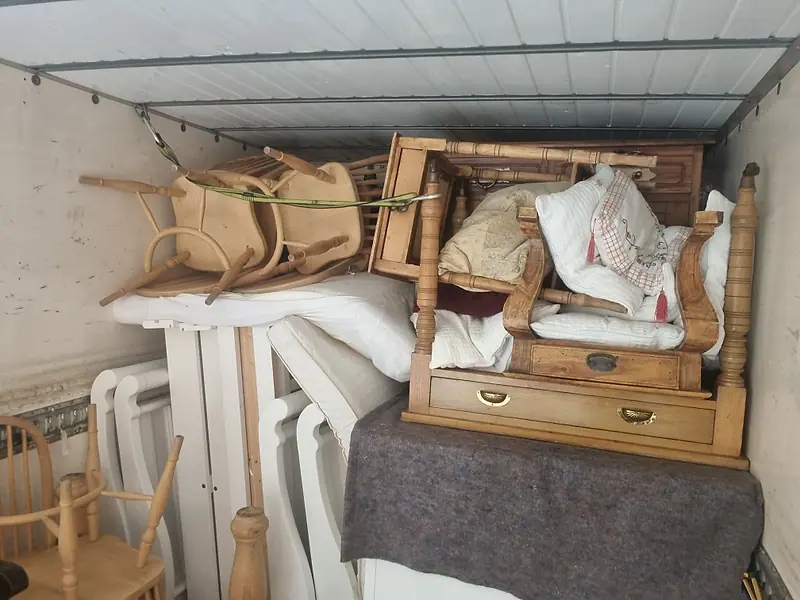
- Furniture is dismantled in the room where that's safer for walls, door frames and banisters, rather than forced round tight bends.
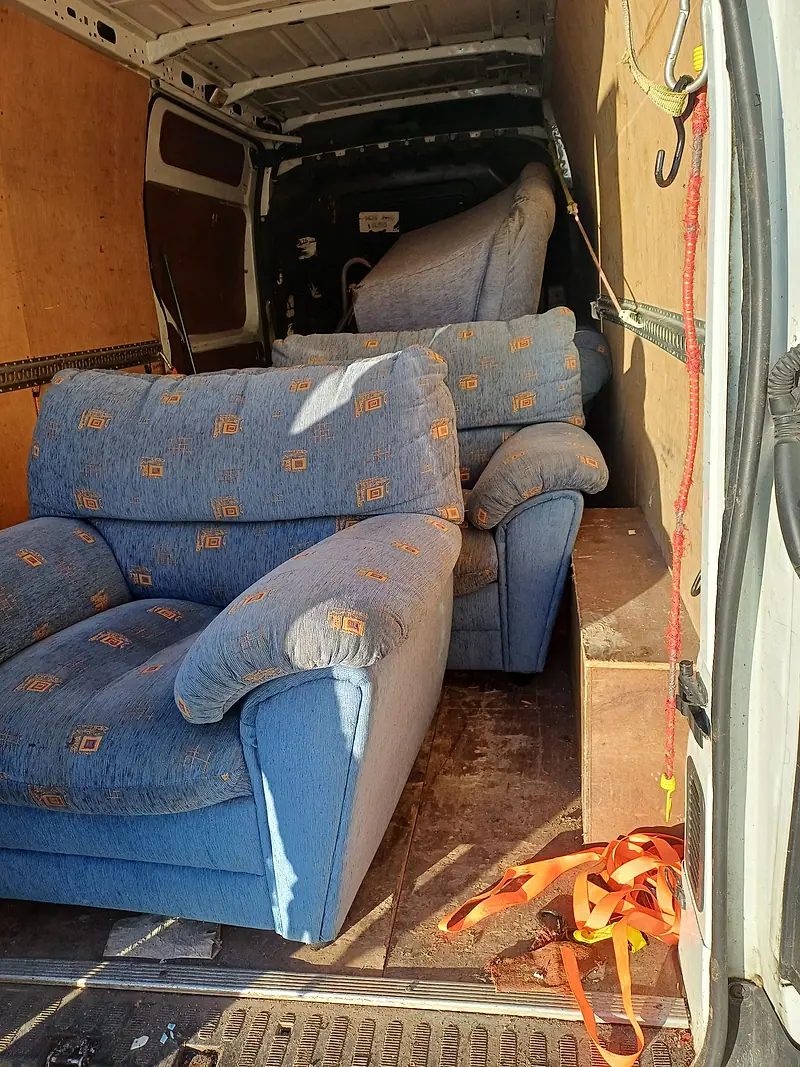
- Heavy pieces are carried by two or more people, never dragged.
- Drawers, pockets, boxes and books are checked, and papers, photos, cash, keys and jewellery are handed to you.
- Rooms are swept or vacuumed before we leave.
 spotless.ie
Want a written price for your house? Photograph each room, the attic and any shed, add your area, and send them on WhatsApp. You'll get a fixed price in writing, usually the same day.
Professional crew or a man with a van?
We're not naming anyone, and there are honest one-person operators out there. But it's worth knowing what you're comparing:
| A permitted, insured clearance company | An unpermitted man with a van | |
|---|---|---|
| Waste permit | Number given up front and listed on the NWCPO register | No number, or a vague answer |
| Insurance | In place for the job | Usually unclear |
| Price | Fixed and in writing before the day | A cash figure that can grow once the attic is opened |
| Where it goes | Sorted for reuse, recycling and licensed disposal | Unknown, and dumped waste can come back to you |
| The house | Covers down, furniture dismantled, rooms swept | Whatever is quickest |
| Afterwards | A business you can contact | A mobile number that may stop answering |
A bargain on the day can turn out expensive if a council letter arrives months later about bags found in a lane.
Where your belongings end up, and what we leave alone
Sorting happens as we load, not at the bottom of a skip. Furniture and household items in good condition are set aside so they can be used again where possible. Metals, electricals and appliances, and cardboard are separated for recycling. What's left goes to licensed waste facilities. Our article on what happens to furniture after a house clearance follows it further.
Being professional also means saying no when a job isn't ours to do. We'll tell you plainly, at the quote stage, about anything we won't take or touch:
- Hazardous materials such as asbestos, gas cylinders, fuel, and paint, solvents, oils or chemicals aren't something we take. Bring paint and chemicals to a civic amenity site or a hazardous waste collection, and we'll clear the rest.
- Fixtures like a fitted kitchen, bathroom suite or built-in wardrobes stay unless we've agreed otherwise in advance.
- Cleaning isn't part of a clearance. Rooms are left empty and swept, ready for a cleaner, a painter or an estate agent's photographer.
It's better you hear about the limits from the quote than discover them on the day.
For the most delicate jobs, such as clearing a parent's home, the same standards apply with more time built in. See bereavement house clearance. If you only have a few big pieces, furniture removal is the simpler booking, and our main house clearance page covers full and partial clearances across Dublin and Leinster.