
A clear-out, not a move
Most offices don't need a full clearance. They need the stuff that's quietly built up around a working team taken away: the chairs nobody sits in, the monitors from two upgrades ago, the archive room that's now mostly boxes of boxes, and the kitchen appliance that's been "temporarily" in the corner since last year.
An office clear-out is that job, done without stopping the business. You stay in the building, your team keeps working, and the clutter leaves in a planned way, often before anyone has their first coffee. For full exits, moves and handovers, see our main office clearance page.
- Planned around your hours, with early starts from 8am and Saturdays when you want them.
- One zone at a time, so desks, phones and meeting rooms stay usable.
- Electricals sent to recycling, kept apart from general waste.
- A fixed price up front, from photos of each area.
- Fully insured, and an authorised waste carrier (permit NWCPO-25-13287-01).
Teams tend to book a clear-out at a natural break: after an IT upgrade leaves a pile of old kit behind, when a storeroom has crept into a fire route, before new starters arrive and need desks, after a hybrid-working change leaves half the floor unused, or at the end of the financial year when someone finally has time to face the archive.
What usually needs to go
Every office is different, but the same things turn up again and again when a team decides to have a clear-out:
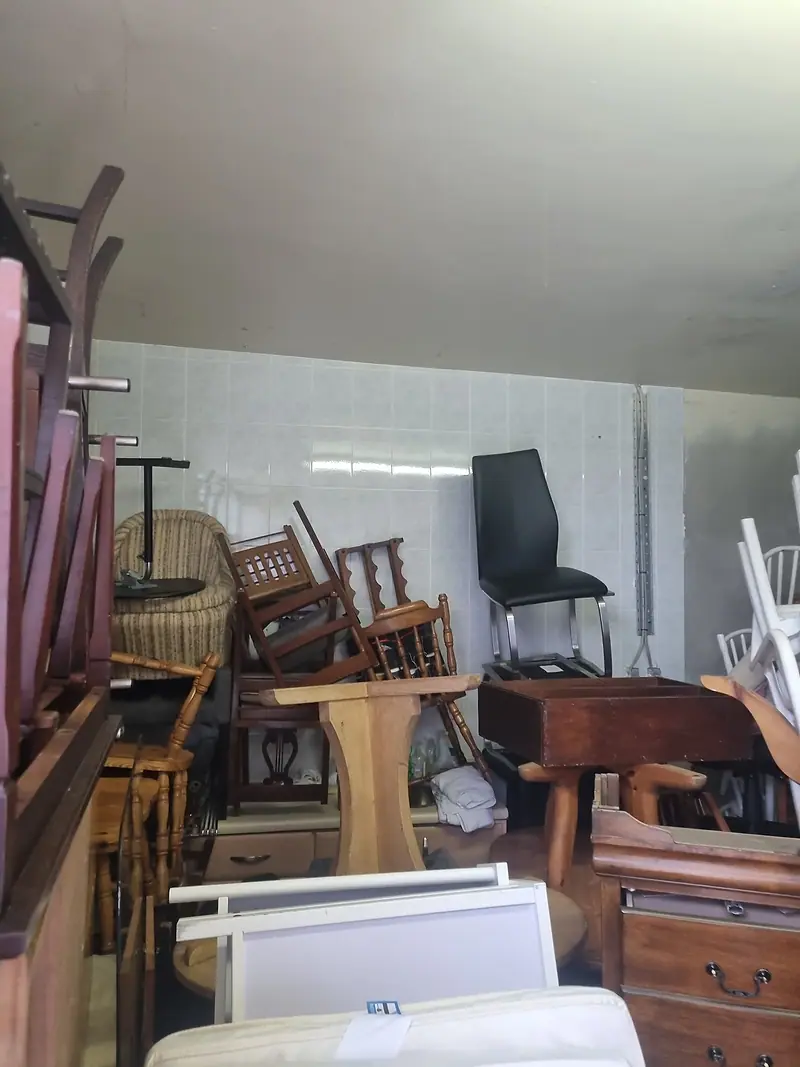
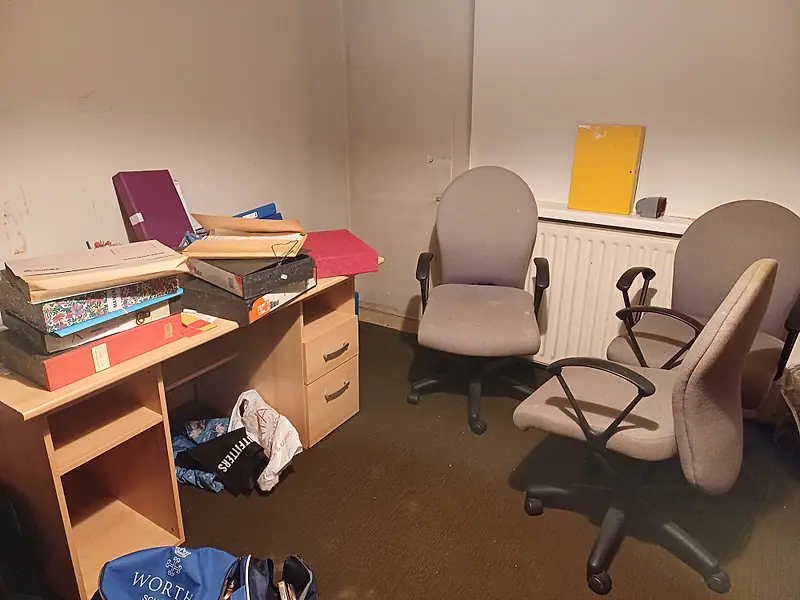
- Broken and surplus chairs: gas lifts gone, arms missing, or simply more chairs than people.
- Spare desks and pedestals: from staff who left, a team that shrank, or a hot-desking change.
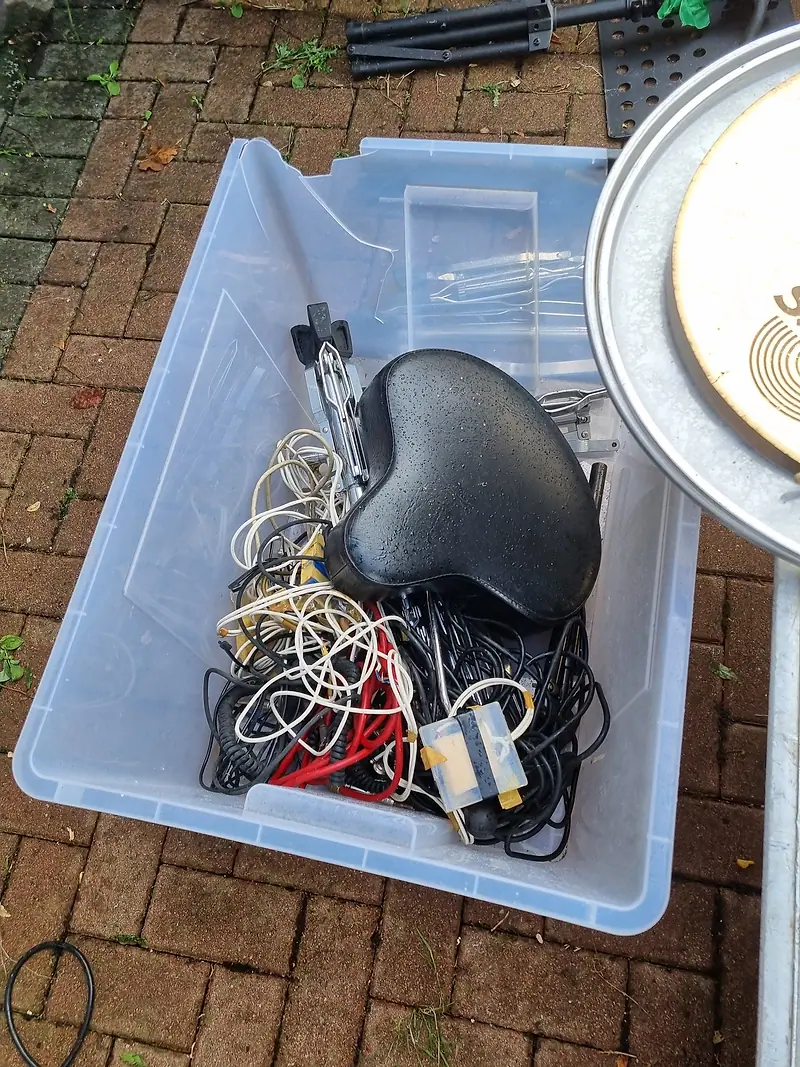
- Dead IT and electricals: old monitors, base units, keyboards, desk phones, docking stations, tangled boxes of cables and chargers.
- The archive room: lever-arch files, box files, old catalogues and the shelving holding them up.
- The kitchen: a tired fridge, a microwave, a kettle collection, mismatched chairs.
- The cupboard under the stairs: old signage, trade show stands, a broken shredder, flat-pack that was never assembled.
For the full list of what we clear and how each part is handled, see office clear-out services.
 spotless.ie
Clearing around a working team
The difference between a clear-out that annoys everyone and one nobody notices is in the planning. Before the day, we agree four things with you:
- The order. Which zone first, and which areas must stay untouched. Usually the storeroom or archive room goes first, because it creates space to stage everything else.
- The route. The path from each zone to the door or lift, kept clear of people working and never through a fire exit we'd block.
- The timing. Noisy dismantling before 9am or on a Saturday; quieter carrying during the day if it suits.
- One decision-maker. A named person who can say "yes, that goes" or "no, that one stays" on the spot.
If you share a lift with other tenants, we keep our trips short and stay out of it during the morning and lunchtime rush. Then label what's going. Coloured dots or tape work well: one colour for anything leaving, nothing on anything staying. If in doubt, it stays until someone confirms.
Old computers: wipe first, then we lift
This is the part to get right before we arrive. Under GDPR, the personal data on an old laptop, desktop, phone or printer is the responsibility of your business, and it stays that way after the device leaves the building. A clearance company that doesn't destroy data shouldn't be treated as if it does.
So before an office clear-out:
- back up anything you still need
- wipe the drives, or remove them and keep them
- remember the hidden ones, like the drive inside many multifunction printers
- reset desk phones and old mobiles to factory settings
We take the hardware to electrical recycling. If you want, we'll put every drive we find on one desk for you rather than loading it. Our guide to planning an office clearance has a fuller IT checklist.
Want the clutter gone without closing the office? Photograph each area that needs clearing, add the floor, the lift and the hours that suit, and send it on WhatsApp. We'll reply with a fixed price, usually the same day.
The archive room and the office kitchen
These two rooms make up a big share of most clear-outs, and both have a step for you first.
The archive room. Some records have to be kept for set periods, so ask your accountant or solicitor what can go before anything is loaded. Confidential files, such as client records, payroll and HR, belong with a shredding company; we don't shred. Once that's done, we take the rest: empty files, general paper, old catalogues, archive boxes and the shelving itself.
The kitchen. Fridges, microwaves, toasters and water boilers go to electrical recycling. Clear out food and switch the fridge off the day before. Tables and chairs go with the rest of the furniture. Fitted units, the sink and anything plumbed in stay where they are; we're a removal crew, not a fit-out company.
Pricing, booking and what's left behind
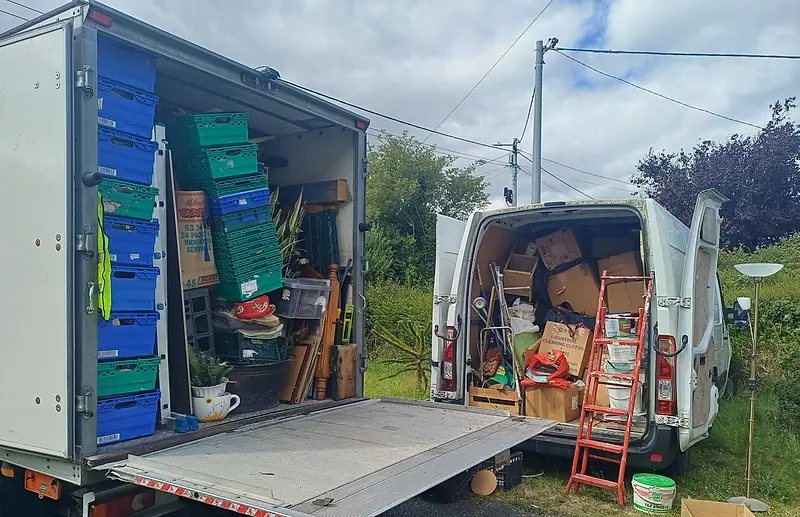
We price on what's actually there: how many van loads, how far it is from each zone to the van, any dismantling, and how many electricals need separate recycling. Early starts and Saturdays are fine; mention them with your photos so the price reflects the plan. A short video walk-through of the office works as well as photos. If you'd rather spread it out, say the archive room this month and the old IT next, we can price each visit separately so the budget is clear before either one starts.
Afterwards, the cleared areas are left empty and swept. If an old carpet is now on show where the filing cabinets stood, we also do commercial carpet cleaning. Still deciding who to use? Our page on choosing an office clear-out company sets out the questions worth asking, and for city-centre buildings and business parks, see office clearance in Dublin.