Older homes hold more than furniture
In the village, Dalkey houses tend to be compact terraces and cottages where every room is used and every shelf is full. Up the hill, the villas are bigger and older, with attics, outbuildings and gardens that may not have been emptied for decades. In both, a long-lived family tends to hold more history than space.
That makes a clearance after a death different from one in a house that is simply being sold. Things that look like clutter to a stranger may matter a great deal, and a few may have real worth. This guide is about telling those apart, calmly and without rushing. For the wider picture, see our guide to clearing a house after someone dies, and for the local detail, house clear-outs in Dalkey.
Three kinds of things
It helps to put what you find into three groups before the clearance team arrives.
| Group | Examples | What to do |
|---|---|---|
| Precious to the family | Photographs, letters, medals, a coat, a set of keys | Keep, share or copy |
| Possibly valuable | Silver, jewellery, antiques, pictures, collections, coins, stamps | Ask a valuer, then decide |
| Everyday | Ordinary furniture, crockery, bedding, clothes | Sort, donate or clear |
The first group is for the family. The second is about information, and the third is where a clearance comes in.
Spotting the possibly valuable
You do not have to be an expert. Look for items that stand out:
- Silver and metalware: teapots, cutlery sets in boxes, trophies, candlesticks. Hallmarks are small stamps, often on the underside.
- Jewellery and watches: anything in a case, a drawer or a tin. Old jewellery is often hidden in odd places.
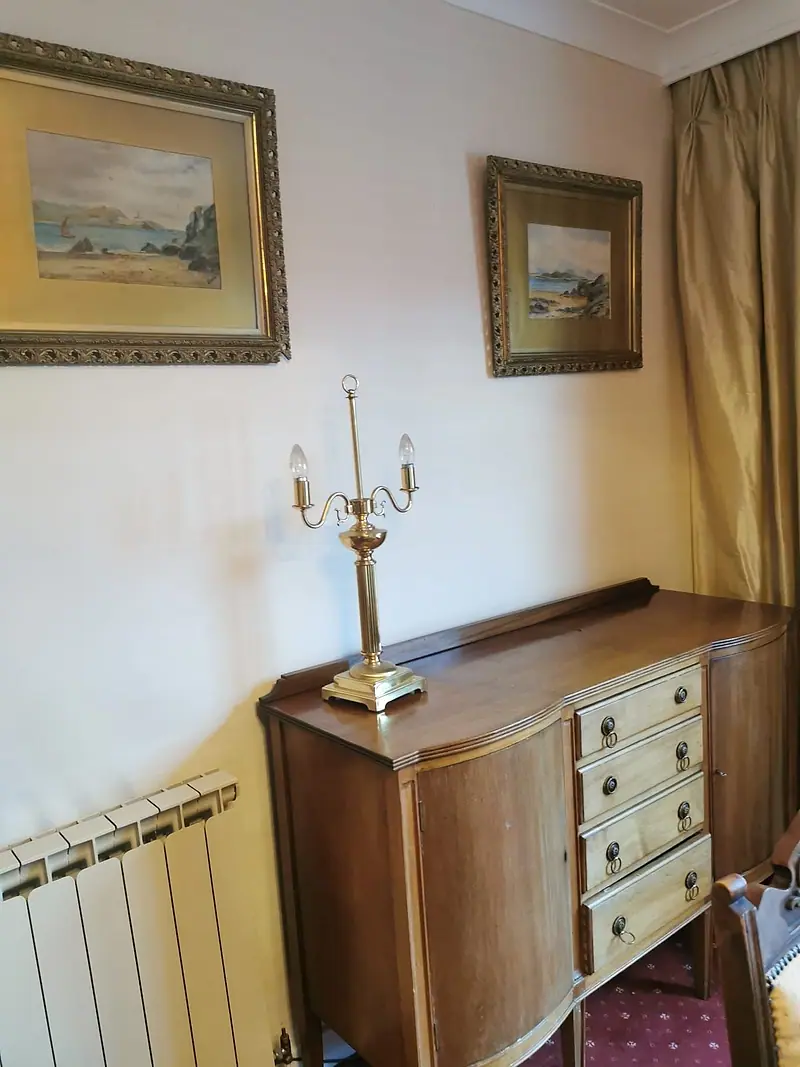
- Pictures: framed paintings and prints, particularly those with signatures or labels on the back.
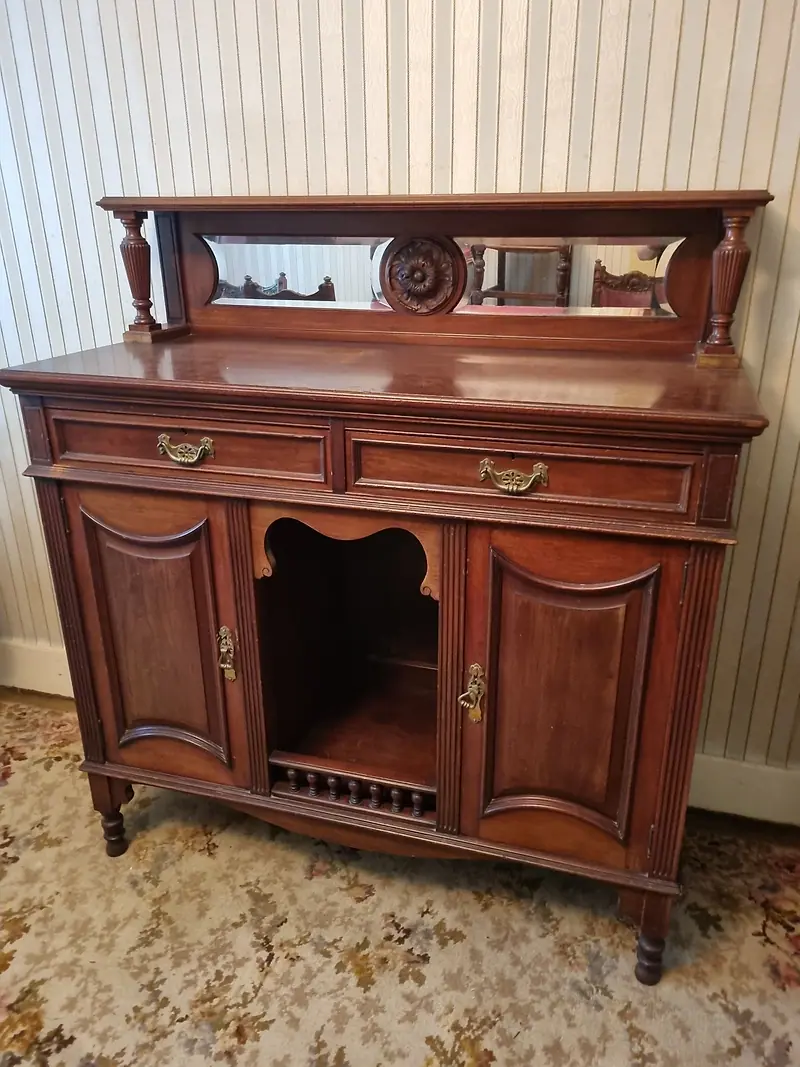
- Furniture with age: solid wood dressers, sideboards, desks and chairs that are carved or inlaid, or have maker's labels.
- Collections: coins, stamps, medals, books, records, china.
- Papers: letters, certificates, deeds, bonds and old banknotes.
Many such items turn out to be worth little, and a few are worth more than expected. You cannot tell by looking, so if you are unsure, photograph and ask. Your solicitor can recommend a valuer or auction house, and for the estate paperwork, significant items may need to be listed. Ask your solicitor how that applies to you.
Leave these items where they are and tell us about them before the clearance. We will not remove them without the family's agreement.
Protecting the keepsakes
Most families have a few things they would hate to lose. A simple system keeps them safe.
- Walk through first and mark what is wanted with tape or a note.
- Move the very small things such as jewellery, photographs and papers into one box or one room that is closed off.
- Photograph the things you cannot keep.
- Tell the crew at the walk-through, in person or by phone, what is marked and where it is.
On the day, we check drawers, pockets, books and boxes before anything is carried out. Papers, photographs, jewellery and cash that we find are put to one side for the family, and we do not throw out anything that looks personal.
Religious items such as statues, rosaries and Mass cards are always set aside for the family to decide on.
Books, pictures and the things nobody wants but nobody can bin
An older Dalkey house often has walls of books and rooms of pictures. A few suggestions:
- Let each family member choose books first.
- Check inside books for letters, cash and photographs before donating them.
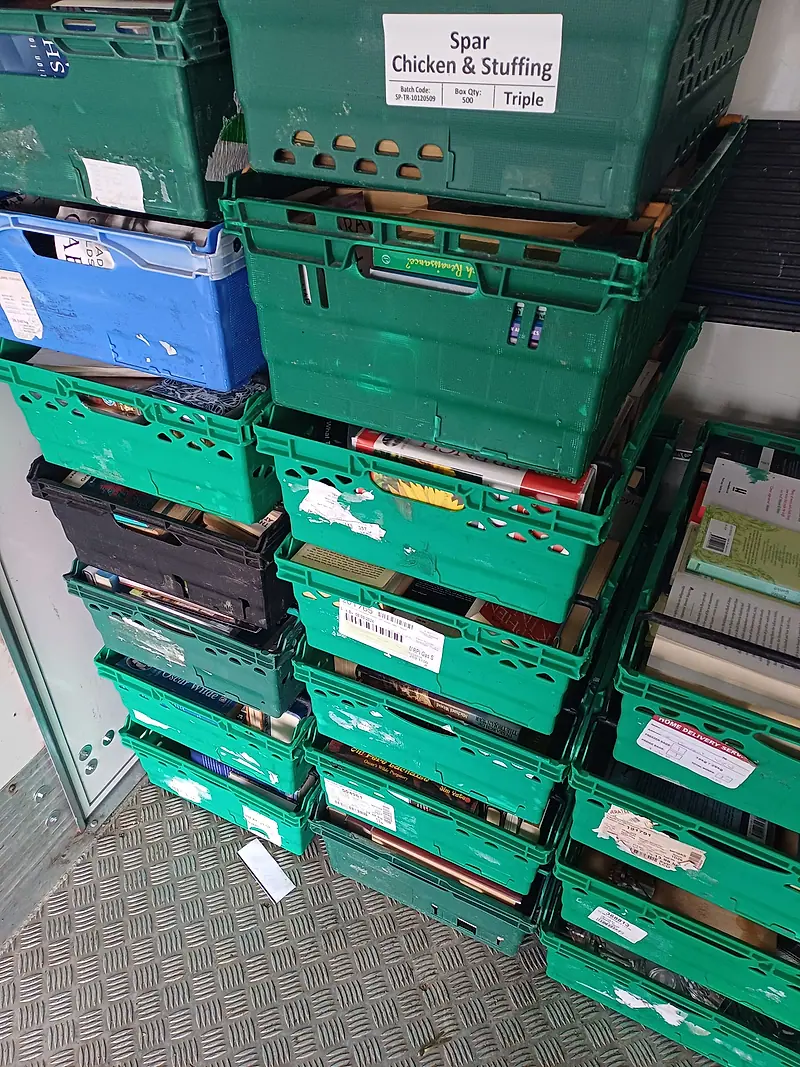
- Good books can be boxed for reuse where possible rather than discarded.
- Framed pictures of the family are worth offering to relatives, even if you do not want them.
Our guide on what happens to furniture after a clearance explains where reusable items go.
 spotless.ie
Access in Dalkey, in brief
Parking in and around Castle Street is limited, and some of the hill roads are steep, narrow or gated. We stage everything inside and load in short stops. Where the van cannot get close, we carry to it, and that is allowed for in the price. A photo of the approach from the road helps. If the house has a garden flat or an outbuilding, mention it. Our page on flat clear-outs in Dalkey covers flats in period houses.
Going at the family's pace
There is no rule that an older house must be cleared in a day. Some families clear the outbuildings and attic first, then return for the rooms. Some take a month to decide. Because we price from photos and fix a date to suit, you can plan around whoever needs to be there. We can come in stages if that helps.
The finish and what comes after
When the work is done, the rooms are empty and the floors are swept or vacuumed where needed. We send photos of every room. It is a clearance, not a house clean. If the house is being sold, carpets can be cleaned by hot-water extraction once the rooms are bare; see carpet cleaning in Dalkey. We are an authorised waste carrier, permit NWCPO-25-13287-01, and fully insured.
Before you start: who decides, and in what order
A death leaves several people with opinions about a house and only one or two with authority. Before anything is sorted, be clear about who decides.
The executor or administrator is responsible for the estate. If there is a will, it names an executor. If there is none, an administrator is appointed. Decisions about the contents of the house should be agreed with them.
The solicitor handling the estate can tell you what has to happen first. In some estates the contents must be listed or valued before they are dispersed. In others the family can start soon. Ask before you throw out, sell or give away anything of significance.
The family will have views about particular objects. A sensible approach is to hold one conversation, with everyone who wants to take part, before sorting begins, and to agree how disagreements are settled.
We take instructions from the executor or the person they name, and we confirm the price in writing, on WhatsApp or by email. Our general guide to clearing a house after someone dies covers this in more detail, and the first-weeks guide on what to do first covers securing the house, the fridge, the post and the insurer.
Starting with the safest rooms
In a large older home it helps to begin where the decisions are easy.
- Outbuildings and sheds. A garden shed, a coal store or a garage is mostly tools, pots and broken furniture. It is a way to start without emotion.
- The attic or loft. Boxes and suitcases are slower, because they can hold surprises. Go through them in daylight with a torch, and be careful of boards and insulation. See our attic clearance guide.
- Spare rooms and box rooms. These often hold the overflow of the whole house.
- The kitchen and dining room. Crockery, glassware, linen and cutlery.
- The living room and study. Books, pictures, ornaments, papers.
- The main bedroom and the personal rooms. Last, and slowly.
You do not need to follow this order exactly. The point is to build confidence before the hardest rooms.
Silver, jewellery and metalware, in more detail
Silver is often kept in sideboards, in drawers wrapped in cloth, or in cutlery canteens. Hallmarks are small stamps, usually on the back or underside. Do not polish before a valuation, since cleaning can affect an item's value. A tarnished set may be worth more as it is. Costume jewellery looks the same as real jewellery to most people, so treat everything as possibly valuable until a jeweller or valuer has looked. Watches, medals, cufflinks and tie pins are easy to miss in drawers and in pockets. Gather them in a single box and keep the box with a family member.
Pictures, prints and mirrors
Check the back of each picture. Labels, inscriptions and dates can tell a valuer where and when it was made or sold. Do not remove old frames. Family portraits and photographs are better handled by the family. If a picture is clearly a decorative print of little value, it can go, but if you are not sure, ask. Large mirrors in gilt frames can be valuable, and are also heavy and fragile. Tell us about them so they are wrapped and carried properly.
Furniture with age
Look for hand-cut dovetails in drawers, maker's labels, inlay and solid timbers. A heavy mahogany wardrobe or sideboard may be old and well made but not especially valuable on today's market, since large brown furniture is hard to sell. Smaller items such as writing desks, tables, chairs, clocks and chests can attract more interest. If you are unsure, photograph the piece from several angles, including labels and drawers, and ask an auctioneer. Many will give a view from photographs.
Books and collections
A shelf of old books may include first editions, signed copies or sets that are worth something, but most are worth little. Coins, stamps, medals and records are worth a look by a specialist. Do not sell an entire collection to the first person who offers a price. Get more than one opinion. If nobody wants a collection, it can be boxed and given to a school, a club or a charity that accepts it.
Letters, documents and what they tell you
Older households often kept letters, certificates and receipts for decades. Some will matter for the estate: deeds, insurance, savings books, share certificates, old bonds and pension papers. Others matter to the family: letters from children, cards, school reports, wartime papers, emigration documents. Put everything into boxes unsorted and go through them at home. If a whole drawer is papers, it goes into a box untouched. Nothing is thrown out without agreement.
Religious and memorial items
Statues, rosary beads, holy water fonts, Mass cards, prayer books and memorial cards are items families usually want to handle personally. We set them aside for the family to decide on. If you would like to give items to a parish or a religious charity, contact them first, since not all accept every item.
Clothes, coats and personal things
Clothes are among the hardest things to part with, because they hold shape and scent. A common approach is to choose one or two garments to keep, such as a coat, a scarf or a jumper, and to donate the rest. Some families use fabric from clothing to make something, such as a cushion. Whatever you decide, check every pocket first for notes, money and keys.
Garden buildings and the garden
Larger Dalkey houses often have mature gardens with a shed, a greenhouse or a garden room. These tend to hold tools, pots, old paint, ladders and unwanted furniture. Check any structure that could contain asbestos, such as old roof sheets, and tell us before we begin. Hazardous items such as oil, solvents and chemicals have special routes, and we will tell you plainly what we can and cannot take. Plants of sentimental value, such as a rose from a wedding, can be dug up and potted by the family before the clearance. See our pages on shed clearance and garden clearance.
Steps, slopes and the van
Many Dalkey homes sit above the road behind steps, or at the end of a steep or narrow drive. The way things travel from room to van affects the time and the price. Photographs of the approach from the road, the steps, the gate and the drive let us plan. Where the van cannot get close, we carry to it. Heavy items such as a piano, a safe or a marble fireplace surround need special mention at the quote stage. A piano may need extra people and equipment, and we will say so. Please do not move such items yourself.
What happens to what is not kept
We sort as we load. Furniture worth reusing is set aside where possible. Books in good condition are boxed for reuse. Metals and electrical items are separated for recycling. The remainder goes to licensed facilities under our permit, NWCPO-25-13287-01. We do not give recycling percentages, and we do not offer shredding or data destruction. Our guide on what happens to furniture after a clearance explains the routes in more detail.
A practical timeline
| When | What |
|---|---|
| First days | Secure the house, speak to the solicitor, redirect post, tell the insurer the house is empty |
| First weeks | Gather papers and valuables into boxes; take photographs of the main rooms |
| Within a month or two | Family walk-through; mark keepsakes; ask a valuer about anything uncertain |
| Before booking | Settle who will give instructions; agree what stays for the sale |
| Booking | Send photos; receive a fixed price; agree a date |
| Clearance | Outbuildings and attic first if staging; rooms next; final walk-through |
| Afterwards | Carpets, outside, agent's photographs, handover of keys |
Timelines depend on the estate, so use this only as a guide.
When the house is going on the market
Older houses can sell well when they are clear and light. Once the contents are gone, the order is usually repairs and painting, carpets if you are keeping them, the outside, and then photographs. Wool carpets in older houses are cleaned with controlled moisture and tested in a hidden spot first. If a stair carpet is worn, a buyer may replace it anyway. For the outside, we clean driveways, steps, paths, walls, roof moss and gutters, and we need an outside tap and a power socket. Our guide to preparing a property for sale has the general checklist.
Dealing with a house that has more than one generation in it
Some Dalkey houses have been in a family for several generations, and the contents reflect it. A cupboard may hold a grandparent's papers beside a parent's school books and a child's toys. Treat these as layers.
- Oldest layer. Letters, photographs, certificates, tools, furniture and items from earlier decades. Handle these slowly, and offer them to wider family, local historical societies or archives if no relative wants them. Contact an archive before you donate, since each has its own rules about what it accepts.
- Middle layer. The belongings of the person who has died. These are the main subject of the clearance.
- Newest layer. Things brought in recently by children or grandchildren: toys, books, a child's bed. Offer these back to the people they belong to.
Working through them in this order stops important older items being buried under a pile of more recent things.
Photographing before and during
Photographs help in three ways. They record the house as it was, they let relatives who live elsewhere take part in decisions, and they help the executor list what is in the house. A phone camera is enough. Photograph each wall of each room, then open the drawers and cupboards and photograph the contents. Send a link to relatives and set a date for replies. If someone wants something, they can say so, and the rest can be cleared. We also send photographs of the empty rooms at the end.
What not to do
- Do not clean or polish silver, repair furniture or restore pictures before a valuation.
- Do not accept the first offer from a visiting buyer. Be wary of anyone who knocks at the door offering to buy gold or silver.
- Do not leave a house with valuables unattended and unlocked while it is being sorted. Tell the insurer it is empty, and ask what cover applies.
- Do not throw out papers before the executor has seen them.
- Do not feel you have to hurry because a clearance team is booked. Dates can be moved.
Looking after yourself
Sorting a home can bring up grief that you did not expect. Take breaks. Eat. Do not feel you must finish a room in a day. If a particular object stops you, put it in the keep box and move on. Come back later. Some families find it easier to work together, and others prefer to work alone while a sibling handles the paperwork. There is no correct way. If it would help to have a stranger do the heavy and repetitive parts, that is what we are for.
Questions families ask us
Do I have to be there? No. Many families come for the walk-through and leave the rest to us. We send photographs when each stage is finished.
Can you clear it in a day? A cottage or small terrace in the village is usually a day's work. A larger villa on the hill can take two days or more. We tell you when we send the price.
What if there are things we cannot decide on? Leave them. We can clear everything else and leave those items where they are, or set them aside in one room.
Can you take furniture to an auction house? We are a clearance company and do not deliver to auction. If you plan to sell, arrange that yourself before the clearance, or ask the auctioneer to collect.
Is travel from Dublin included? Dalkey is within our usual Dublin area, and the fixed price covers the job.
Reviews from families we have helped
"Just cleared out my family home, very professional, and even left out any photos they had found which was so kind of them. Cleared house, attic and three sheds, arrived on time, and very compassionate as it's upsetting clearing your house you grew up in. Would highly recommend this clearance company & also great value, thanks lads 👍"
Dara McGarry, Google review
"A difficult time and emotional experience clearing out my old family home. The team came in and did all they promised with compasion and more without any issues or complaints. Thanks you guys. Must recommend them."
Brian Darcy, Google review
Getting a price
Send photos of each room, the attic, the garden buildings and the approach from the road. Tell us what is to be kept, and what may need a valuer first. We will reply with a fixed price, usually the same day, and we are happy to go at the pace that suits the family.