Why timing matters more than people expect
A house clearance is a short job with a long lead-in. The crew may be in the house for a day or two, but the weeks before it are when the deadline is set, the decisions are made and the access is arranged. Book too late and you pay for stress. Book too early and the house can sit empty and cold for weeks, waiting for a sale that has not moved. The right moment is usually somewhere in between, and it is set by a handful of dates.
This guide goes through those dates one by one for a house or flat in Dún Laoghaire and the streets around it, and finishes with a checklist you can adapt. It is about planning. For what happens on the day, see our page on house clearance in Dún Laoghaire, and for all three of our services in the town, the Dún Laoghaire overview.
The seven dates that decide when you book
Almost every clearance is driven by one of these. Find yours first.
- A sale closing. The buyer expects vacant possession, which means the house is empty when the keys change hands.
- An estate agent's photographs. The agent wants the rooms clear, or close to it, before the photographer arrives.
- The end of a lease. The landlord expects the flat or house handed back on a set day.
- A probate or solicitor timetable. The house cannot be dealt with until the solicitor says so.
- A move. You are going somewhere smaller, or somewhere else, and the old house has to be emptied afterwards.
- Building work. Builders start on a date, and the house must be empty before they do.
- A family date. A relative flying home, a funeral anniversary, the end of a school year. These are softer but real.
If you have more than one, the earliest hard date wins. Write it down, and count backwards from it using the rules in the next sections.
Working backwards from a sale
Selling a house is the commonest reason for a clearance, and it has the most fixed points.
Closing day. Vacant possession means the property is empty. We recommend finishing a few days before closing, not on the morning of it. That leaves time for a last look, any snagging, and a cleaner if one is needed. Cutting it to the final hour leaves no room for a delay.
Sale agreed. Once a sale is agreed, closing often follows within a matter of weeks, though it varies. If you are waiting for the sale to be agreed before you clear, you may find yourself with a short window. If you can, clear before the house goes on the market, or at least do the attic, the garage and the sheds.
Photographs. Agents prefer to photograph an empty or near-empty house. Rooms look bigger, and buyers can imagine their own furniture. Work out the photograph date, and book the clearance about a week before it. That gives time for repairs, painting, a carpet clean and some outside washing.
Viewings. If the house is occupied during viewings, keep it as clear as you can. If it is empty, check the heating and lighting. An empty house in winter can feel cold and dark.
Our guide to preparing a property for sale sets out the full sequence: clear, repair and paint, carpets, outside, photographs. Timing is the reason for that order. Carpets cleaned before the painters arrive have to be cleaned again, and a driveway washed before the vans have finished is washed twice.
Working backwards from the end of a lease
Leases have the least flexibility. The day the lease ends is the day it ends, and a landlord may deduct from a deposit for items left behind.
- Four weeks before: check the lease and the inventory, and decide what is coming with you.
- Two weeks before: sell or donate what is worth selling or donating. Send us photographs of what is left.
- One week before: confirm the date with us and tell the landlord or agent when a van will be at the building.
- The day: hand over keys as agreed. We can collect keys from an agent or neighbour and send photographs when the rooms are empty.
- The day after: any cleaning the landlord expects, and a carpet clean if needed.
Dún Laoghaire has a lot of flats in converted period houses and in blocks near the seafront and the town. For those, the building matters as much as the date. Ask the managing agent or landlord about lift bookings, shared halls and parking before you fix the day.
Working around probate
When someone has died, the timing is not yours to set. Your solicitor knows what has to happen before the house can be cleared.
- In some estates, contents must be listed before they leave the house.
- In others, the family can take what they want, and the rest can go once the solicitor agrees.
- The grant of representation may be needed before a sale can close, but not necessarily before a clearance.
Because you cannot know the exact date, a practical approach is to prepare early and book late. Gather papers, mark keepsakes, photograph rooms and get a fixed price, all of which you can do while waiting. Then, when the solicitor says go, you can move quickly. For the human side, see our guide to clearing a house after someone dies.
We take instructions from the executor or the person they name, and we can clear in stages if the family needs time.
Working around a move
When you are moving to a smaller place, the old house is emptied twice: once by you, in sorting, and once by us, after the movers have gone.
Book the movers first, since removal firms often fill early, especially at the end of a month. Then book the clearance for the day after the move, or a few days after, so that you can decide on the last pieces. If you book the clearance before the move, you risk clearing something you needed or, worse, not clearing something you later realise you do not want.
Stage the work. The attic, the garage and the shed can be done weeks before, and we can do that while you still live in the house, working around you and leaving the rest as it is.
Working around builders
If a renovation is planned, ask the builder when they start and what state they expect the house to be in. Some want it completely empty; others will work around furniture in some rooms. Book the clearance far enough ahead that there is a margin. Builders' dates tend to move later, not earlier, but a delay on your side can cost you your place in their diary.
If you are keeping some carpets, clean them after the clearance and before the building work only if the building work will not damage them. In most cases it is better to protect them and clean them afterwards.
The calendar: months, terms and weeks
Beyond the hard dates, ordinary life has a calendar too.
Spring
Many people sell houses in spring, and agents are busy with photographs and viewings. Clearances before sales are common, so if you need a particular week, book earlier. Spring is also a popular time for outside washing, since moss and algae are visible after winter. If you are doing both, book the clearance first and the washing a few days before photographs.
Summer
Longer days are useful for outside work and for carrying, and dry weather helps carpets dry faster. Holidays can complicate things, though, since family members who should be at the walk-through may be away. In a town by the sea, summer weekends are busier, so weekday bookings are easier for parking and access. Traffic and parking along the seafront are heavier, and loading is harder.
Autumn
Autumn brings a second burst of selling and, for landlords, the turnover of student lets and annual tenancies. Leases ending in late summer and early autumn lead to a rush of clearances. If your lease ends around then, book as soon as you know the date.
Winter
Daylight is short, and wet weather makes carrying slower. Carpets take longer to dry in cold, damp rooms, so keep the heating on and a window slightly open. Frosty mornings are not good for outside washing, since a freshly washed surface can freeze. Winter is a good time for indoor jobs: attics, garages and clearing a house before spring listings.
Around Christmas
Family comes home, and houses are full. Some families use this time to go through a parent's home together, and then book the clearance for January. If you are planning that, send photographs in December so the price and the date are ready.
Term time
Student lets turn over at the end of the academic year. Landlords with several properties tend to book at the same time. If you manage student houses, book early and ask for a combined price.
Day of the week and time of day
We work Monday to Saturday, 8am to 5pm, and not Sundays.
Weekdays are usually easier for parking and for access to buildings. Management companies often prefer removals on weekdays, and neighbours are more likely to be out.
Saturdays suit families who are working during the week, and they are often busy. If you need a Saturday, book earlier.
Morning starts give the longest working day, which matters for a big house. An early start also gets the van into the street before it fills.
Late afternoon work is possible for smaller jobs, since we run until 5pm.
If the house is on a busy road or near the seafront, ask about parking restrictions. Pay-and-display bays can have time limits, and permit areas may need a visitor permit. We stage everything inside and load in short runs, but a permit or a reserved space makes a big difference.
How long a clearance takes, and what that means for the booking
Time on site depends on the size of the property, the amount in it and the access.
- A one-bedroom flat can be a few hours.
- A two-bed flat or small house is often a day.
- A full three- or four-bedroom house with an attic, garage and shed is usually one to two days.
- A large house with many outbuildings can take longer, and we plan accordingly.
If the house is large, ask for two consecutive days rather than two separate days. It keeps the crew in the rhythm of the job, and it keeps your access arrangements simple. Reviews on this site mention jobs such as a full house plus a shed in a day and a half. We tell you how long we expect when we send the price.
How far ahead to book
There is no fixed rule, but these guides hold up.
| Situation | Suggested lead time |
|---|---|
| Small job, flexible date | A few days to a week |
| Full house, flexible date | One to two weeks |
| Full house, fixed closing or lease end | Three to four weeks, or as soon as you know the date |
| Probate or estate | As soon as the solicitor allows; get the price early |
| Several properties at the end of term | A month or more |
| Staged clearance with carpets and washing | Two to four weeks, so each job can follow the last |
If you cannot book that far ahead, send photographs anyway. There is often a free day within the week after we quote, and being flexible on the day can get you in sooner.
Preparing early: what to do while you wait
Whatever the date, these steps cost nothing and save time.
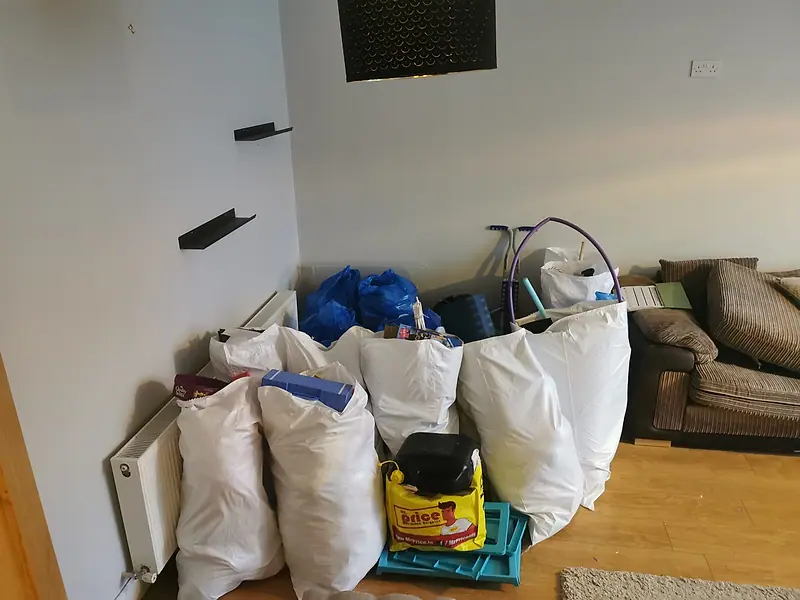
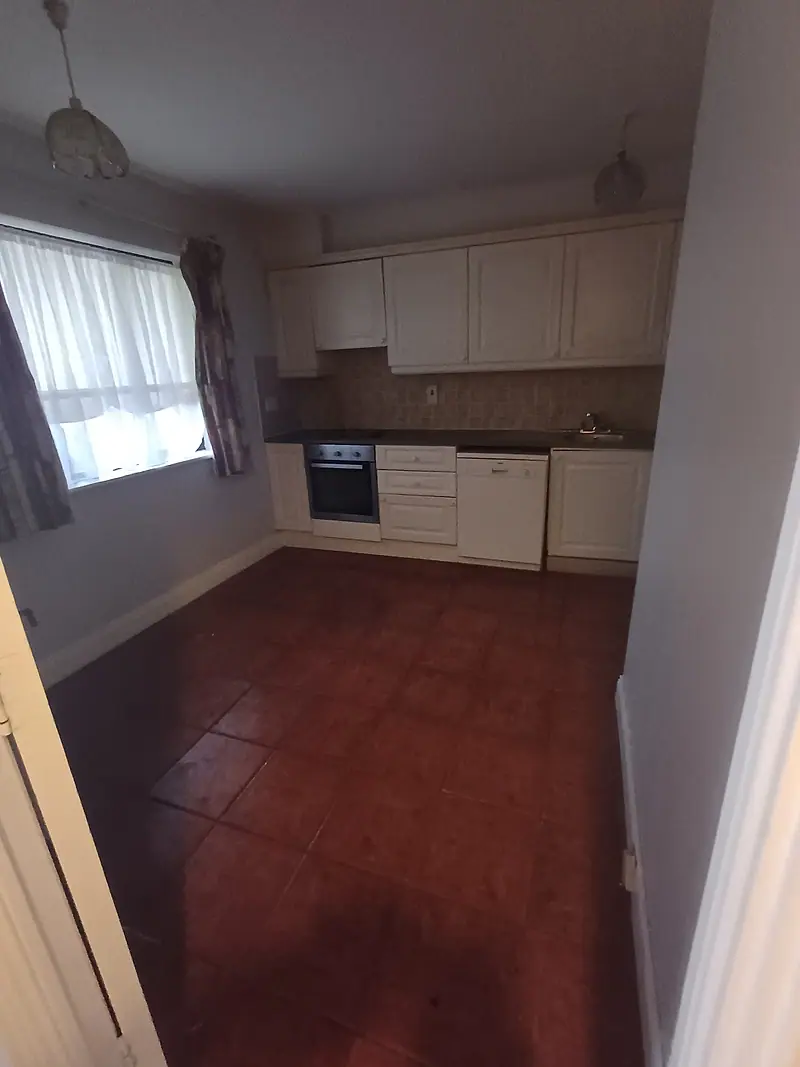
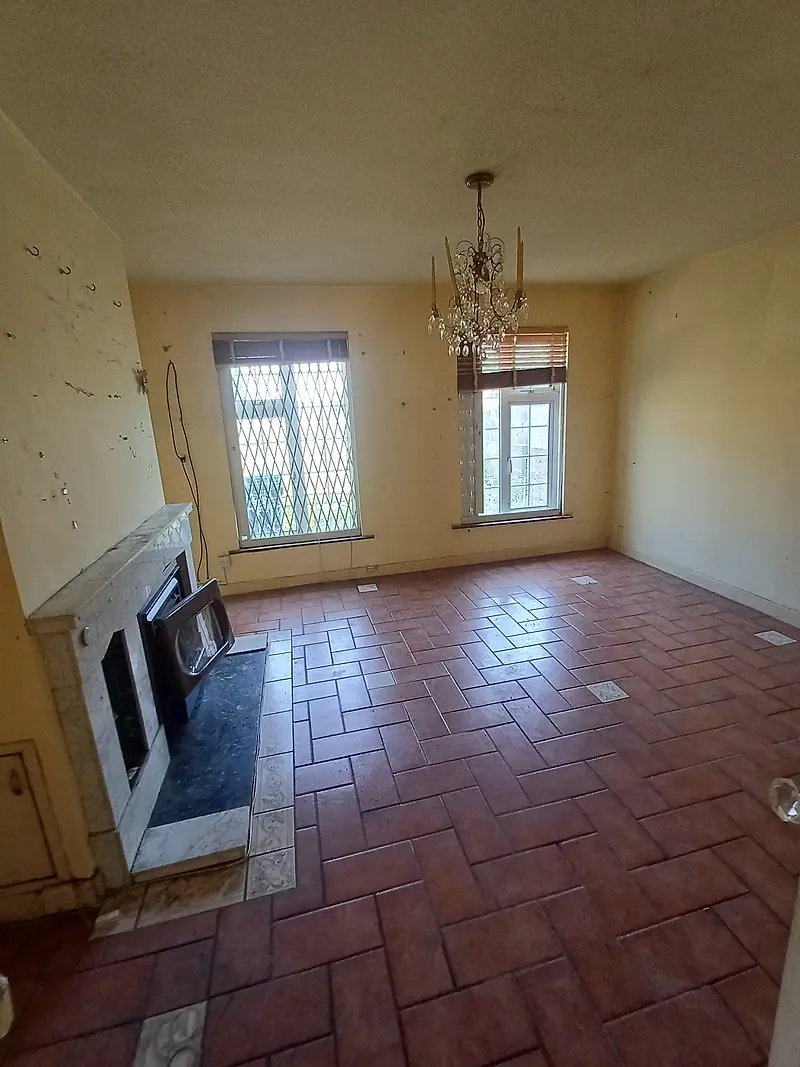
- Take photographs of every room, the attic, any garage or shed, the outside and the access. These are what we use for the price.
- Decide what is staying. Mark keepsakes and anything that goes with the property.
- Gather paperwork into a single box.
- Sort the offers. Ask family if they want anything, and set a deadline.
- Arrange access. Keys, alarm codes, parking permits and building rules.
- Check the utilities. Keep the electricity on until you have finished, since light and power are useful on the day and essential for carpet cleaning and washing.
- Tell the people who need to know. The landlord, the managing agent, the neighbours and the insurer.
Our guide on how to prepare for a house clearance goes through these in more detail.
Putting carpets and the outside into the schedule
An empty house is the easiest to improve, and the sequence matters.
- Clearance.
- Repairs and painting.
- Carpet cleaning, once nothing heavy is coming back in. It usually takes a few hours to dry, and air movers help.
- Power washing, close to the photographs or the handover.
- Final check.
In a seaside town, outside surfaces pick up salt, sand and green growth faster than you might expect, which is a good reason to wash close to the date. Hot water does the work on paving and steps, and a low-pressure soft wash is used on rendered walls. We need an outside tap and a power socket. Our page on carpet cleaning in Dún Laoghaire covers sand and salt in carpets.
What can go wrong, and how timing helps
The closing date moves. If the solicitor tells you the closing is later, tell us. We can move the date, though it depends on the diary. Give us as much notice as you can.
A relative cannot attend. If a sibling is flying home on a particular day, book the clearance for after they arrive, and give them a walk-through first.
Access fails. A missing key, a lift that is out of order or a building that has not been told. Check the day before.
The weather turns. A wet day is slower but workable for an indoor job. Outside work is moved to a drier day.
You change your mind about something. Tell us before it is loaded. Once it has gone to a licensed facility, it cannot be retrieved.
More turns up. A shed behind a hedge, a loft that is deeper than it looked. Send photographs of everything when you request the price, and tell us on the day if something has been missed. Extra work asked for on the day is priced and agreed before it is loaded.
A sample timeline for a sale
Here is an example for a house sale in Dún Laoghaire, counted back from the photographer's visit.
| When | What |
|---|---|
| 6 weeks before | Talk to the agent and solicitor; photograph the house; send photos for a price |
| 4 weeks before | Family walk-through; mark keepsakes; offer furniture to relatives |
| 3 weeks before | Book the clearance, carpets and washing; arrange keys |
| 2 weeks before | Clearance (attic, garage and shed first if staging) |
| 10 days before | Repairs and painting |
| 5 days before | Carpet cleaning |
| 2 days before | Power washing |
| Photograph day | Everything ready |
Adjust it to your own dates. If the photographer is booked sooner, compress the middle: clearance, a day for repairs, carpets, washing.
Timing for flats above shops and in converted houses
Dún Laoghaire has many flats above shops and in period houses that were divided long ago. These add a layer to the timing, because other people share the building.
- Shared halls and stairs. A van load carried down a communal staircase is noisy and takes time. Pick a time when most neighbours are out, which usually means a weekday morning, and let them know the day before.
- Street doors onto busy roads. With a door straight onto the footpath, the van cannot wait outside for long. We stage everything inside and load in short runs, but the time of day still matters. Early morning is usually quieter than lunchtime.
- Landlords and agents. If the flat is rented, the landlord or agent may need to be there for the handover, or to let us in. Agree who holds the keys, and the time, before you book.
- Lifts. Some seafront and town-centre blocks have lifts that need to be booked. Ask the managing agent for the next available slot, and book the clearance around it rather than the other way round.
- Parking. Town-centre and seafront parking is pay-and-display, with time limits in many places. A visitor permit or a reserved space helps. If neither is possible, tell us and we will plan the stops accordingly.
Our page on house clearance in Dún Laoghaire goes into the neighbourhoods, the flats and the parking in more detail.
When two or three jobs share a deadline
Sometimes the clearance, the carpets and the outside all need to be finished by the same day. That can be done, but it needs a little more care about order.
- The clearance goes first, and it should finish at least two days before the deadline.
- Carpets go second, once nothing heavy is coming back in, and with a day to dry.
- The outside goes last, because dirt falls downwards and vans churn up paths and drives. It is also the job most affected by weather, so leave a spare day.
If everything is booked with us, we can quote it together from the same photographs and fit the visits around each other. One booking means one set of access arrangements and one point of contact. If the deadline is very tight, tell us in your first message so we can see whether it is possible before you commit to the date.
Questions about timing that people ask us
Can I book a clearance for a date months away? Yes. Many people who know their dates, such as a lease end or a planned move, send photographs early and fix the day well ahead. We confirm the price and hold the date. Send updated photographs closer to the day if anything has changed.
What if I need it done in a hurry? Send photographs and say so. There is often a free day within the week after we quote, and being flexible on the day can get you in sooner. We will not promise what the diary cannot deliver.
What if the date changes? Tell us as early as you can. We will do our best to move the booking. A change at short notice is harder than a change with a week's warning.
Should I wait for the sale to be agreed? It depends on the risk. Clearing before the house goes on the market gives the best photographs, but it means paying before a sale. Clearing after the sale is agreed may leave a short window. A middle path is to clear the attic, garage and sheds first, and the rest when the sale is agreed.
Is there a bad day to clear? Not really, but heavy rain slows the carrying and affects any outside work, and the day before a bank holiday can be busier for parking and traffic. We will tell you if a day looks poor for what is planned.
Reviews from people who have used us
"Excellent experience from initial review and quote to final clear out. A very efficient and well run business. Would recommend to anyone!"
Conor Donnellan, Google review
"Ciprian and the team did a fantastic job clearing our full house plus our shed in a day and a half. They were very professional, clean and so quick. I highly recommend these guys.⭐⭐⭐⭐⭐"
Sinead James, Google review
Getting a price and a date
Send photographs of each room, the attic, any garage or shed, the outside and the street, with your Eircode. Tell us the date that matters, whether it is a closing, a lease end, a solicitor's go-ahead or a builder's start. We will reply with a fixed price, usually the same day, and offer the earliest free slot with it. We work Monday to Saturday, 8am to 5pm.
 spotless.ie