
Two problems, in order
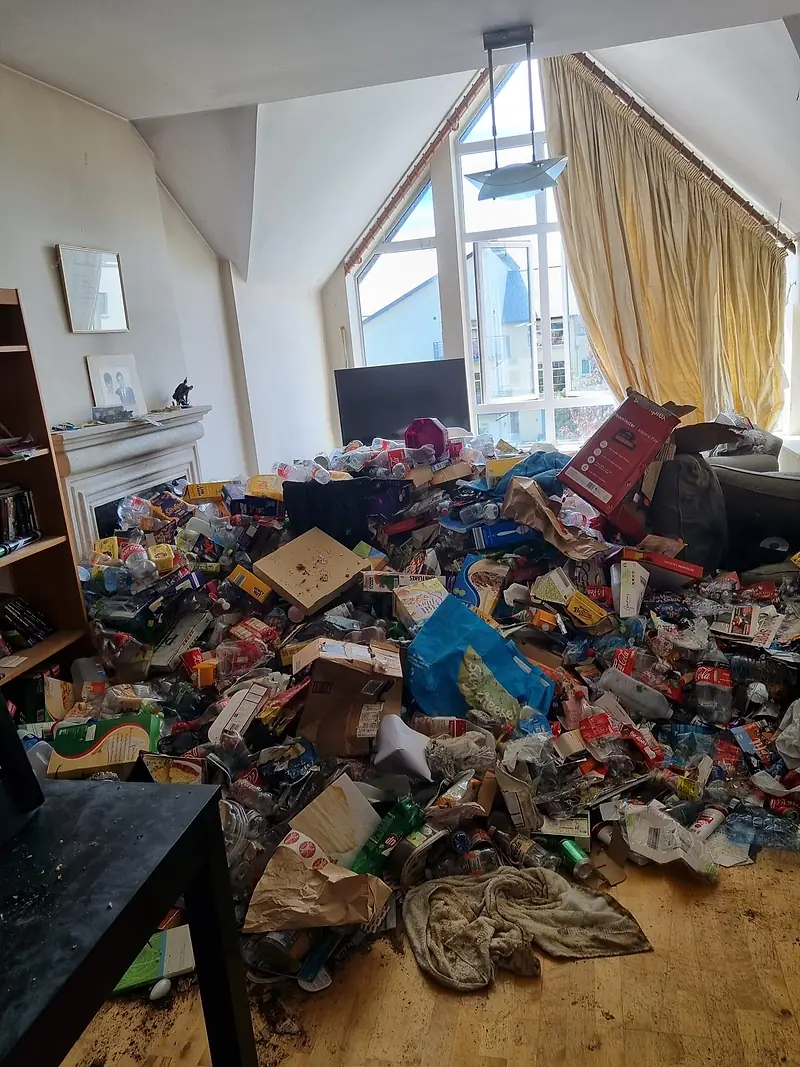
A hoarded rental usually comes to light at a routine inspection, through a complaint from a neighbour or the management company, when a contractor cannot reach the boiler, or on the day the keys come back and the door only opens halfway. However it happens, the landlord or letting agent is left with two problems at once: a tenant whose home has filled up, who has rights under the tenancy and whose belongings are theirs, and a property that will sooner or later need to be cleared, cleaned and let again.
While the tenancy runs, almost everything a landlord can do is about recording, talking and keeping people safe. Once the property is back, it is a two-phase job: a clearance, then a clean.
This is a guide to the property, not to the person. Nobody is diagnosed or labelled here, and nothing in it is medical or legal advice; the Residential Tenancies Board (RTB) and your solicitor are the sources for the rules. Our hoarder clean-up page explains how we work with someone whose home has filled up, hoarder clearance in Dublin gives the overview for landlords, executors and families, and the two-phase hoarder clean-up guide explains how a clearance and a clean run on one booking.
While the tenancy is live: record, talk, respect
The belongings in the property belong to the tenant, and the tenancy gives the tenant the right to live there. Nothing should be cleared without their agreement while it runs, however bad the photographs look. What a landlord or agent can do is build a careful record, raise specific risks with the tenant, and offer help.
What to photograph and note at the inspection
- Each room from the doorway, with the date, without opening cupboards, bags or drawers.
- The route from the front door to each room and to the back door, and whether a person could get out quickly.
- The space around the cooker, the boiler, heaters, the fuse board and any open fire, and whether the smoke alarms are reachable.
- Any sign of water, such as stained ceilings or a smell of damp, and any sign of pests.
- A short written note of what was said and agreed, kept with the photographs.
Photograph the property, not the person's papers or post; close-ups of documents or medication have no place in a landlord's file, and the photographs go only to those who need them.
Talking to the tenant
Raise specific risks rather than the state of the place: the boxes beside the heater, the blocked back door, the boiler that cannot be serviced. Specific concerns can be fixed; a general complaint usually ends the conversation. Ask whether they would accept help with a clear-out. Where they do, we quote in confidence from your photographs and work with the tenant directly, one room at a time, at their pace; they decide what goes while they live there.
If the tenant will not agree and you believe the property is unsafe, the RTB's guidance and your solicitor set out what a landlord may do, and in an apartment block the management company should hear about any fire-safety concern, because a fire in one unit affects the building.
When the property comes back
The tenancy ends and the keys return. The property is yours to deal with again, but the contents may still not be.
Photograph everything again, room by room, before anything is touched, with the date. You may not be able to reach the walls, so photograph from the doorway and take a short video walking through. These photographs are your record for the deposit, the RTB, your insurer and for us.
Deal with the belongings question first. The RTB publishes guidance for landlords on goods a tenant leaves behind; read it, and take your solicitor's advice where anything is disputed or looks important. Make a short written list of what is there by room, keep any messages from the former tenant about collecting things, and give us a written instruction before anything leaves.
What is kept back. Papers, photographs, post, identification and anything else that looks personal are set aside as the clearance goes on and shown to you rather than removed, boxed by room so they can be dealt with in line with the RTB guidance. Medication goes back to a pharmacy. Tell us if the former tenant has asked for anything in particular.
 spotless.ie
Phase one: the clearance
A hoarded rental is cleared more slowly than an ordinary end-of-tenancy clear-out, because almost every bag and box is opened before it leaves rather than lifted straight to the van.
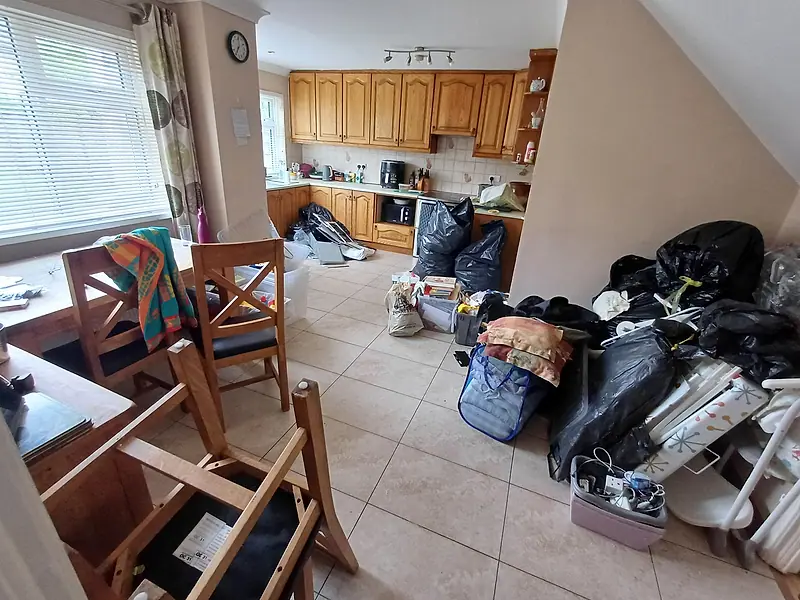
- A safe route. The hall, the stairs and the way to the back door are cleared first, so the property can be walked through.
- Sorting as we go. Household waste, food packaging and soiled items go straight to bags; furniture and appliances are set aside for the van; anything that looks personal goes to the box for you.
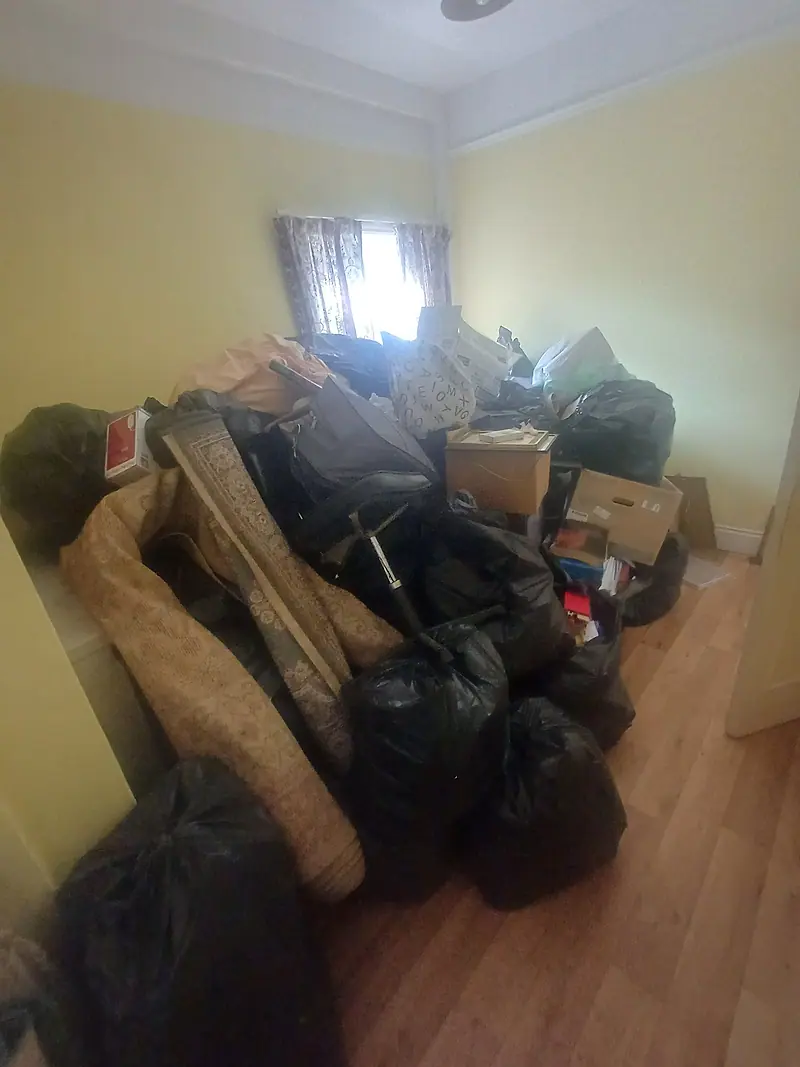
- The landlord's own furniture. Mattresses, sofas and curtains that have been under years of clutter usually go; tell us what you would like kept and we will say honestly whether it is worth it.
- Carpets agreed to go are lifted at the end of the clearance, leaving a bare floor for the fitter.
- Floors swept and photographs taken of every room.
Bags are closed before they leave a room, the van is loaded steadily, nothing is left outside for the street to see, and in an apartment block we work to the management company's rules on the lift and loading. Reusable items are set aside for reuse where there is a use for them, metals and electricals are separated for recycling, and the rest goes to authorised waste facilities under our permit, NWCPO-25-13287-01.
What needs a specialist first
Signs of mice, rats or insects mean a pest controller goes in before us, and we follow their advice. We do not take paint, solvents, oils, fuel, chemicals, batteries or gas cylinders, and we do not handle asbestos or clinical waste. If there are needles or serious contamination, tell us from the photographs and we will say plainly what we can and cannot do; specialist decontamination is not something we offer.
Carpets: save or lift
The carpets are the biggest cost decision in a hoarded rental, and it cannot be made until the floor can be seen.
| What the carpet has been under | Usual outcome |
|---|---|
| Dry clutter: boxes, clothes, paper, bags | Cleans well; the pile is often protected rather than worn |
| Food waste, spills and bottles | Usually cleans; the smell held in the carpet leaves with the extraction |
| Pet soiling over a long period | Often beyond cleaning if it has reached the underlay |
| A leak, a wet floor or standing water | Lift; the underlay and sometimes the floor beneath need attention |
| Burns, tears or a carpet that moves underfoot | Lift; cleaning cannot repair it |
We test a hidden patch once the room is clear and tell you room by room what we would do. A lifted carpet means a fitter before the property can be let, so the decision is yours, and the fixed price is confirmed for the plan you choose. For how wear differs from damage at the end of a tenancy, see carpet cleaning at the end of a tenancy. The method itself is on carpet cleaning in Dublin.
Responsible for a hoarded rental? Send photographs or a short walk-through video in confidence on WhatsApp, with a line about where the tenancy stands. We will suggest an order for the two phases and reply with one fixed price covering the clearance and the clean.
Phase two: the clean, and the smell
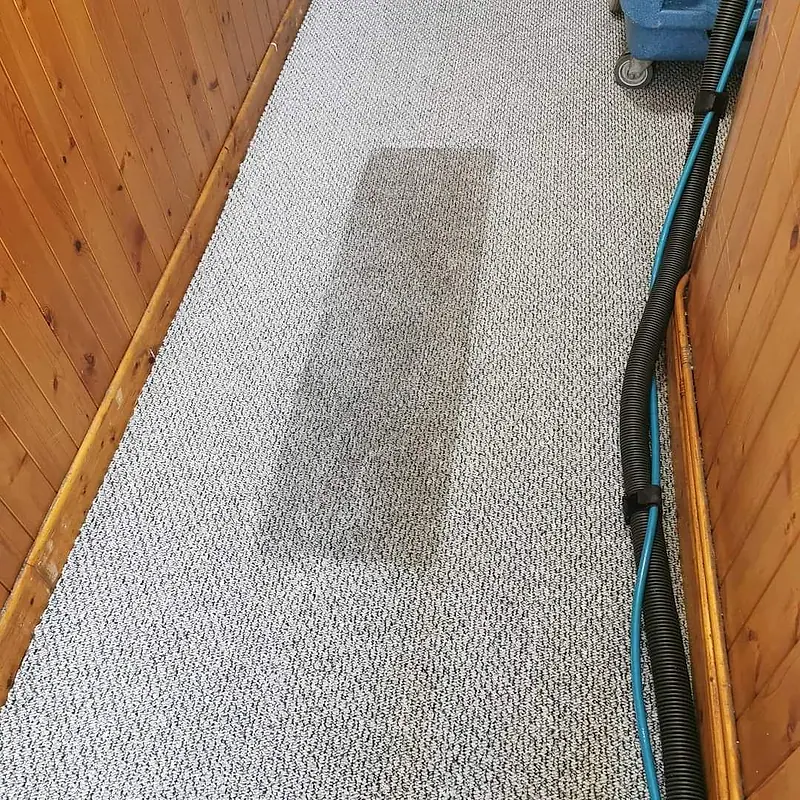
With the rooms empty, the cleaning is quick. Carpets that are staying are vacuumed thoroughly, then cleaned by hot-water extraction, where hot water is worked through the fibres and drawn straight back out with whatever it has loosened. Any fabric upholstery or mattress that is staying can be cleaned the same way, though in a hoarded rental most of it has gone with the clearance.
The smell is the question every landlord asks. Much of it lives in the carpets, the underlay and the soft furnishings, and it leaves with them or with the extraction. What remains after that, with the windows open for a day, is coming from somewhere else, such as damp walls or a wet subfloor, and needs a builder rather than a second clean; we say so rather than clean the same carpet twice.
The kitchen and bathroom are left clear and swept, but a full domestic clean of them is not something we offer; a cleaner belongs in the gap after the clearance and before the carpets. For a house, the paths and the spot where the bins stood can be hot-washed as the very last job, when the carrying has finished; see power washing in Dublin. The washer runs from the property's outside tap and a power socket.
The deposit, the cost and the RTB
Whether any of the cost can be recovered from the deposit is a question for the RTB's guidance and, if the parties disagree, its dispute resolution service; we do not advise on it. What we can do is make sure you have the record:
- dated photographs of every room before anything was moved, and again after the clearance and after the clean
- the written fixed price, which describes what was cleared and cleaned
- a note of which carpets were cleaned and which were lifted, and why
- the inventory from the start of the tenancy, if you have one, kept alongside
Keep the file together with the inspection photographs from during the tenancy.
Getting the property re-let
Once both phases are done, the usual order for a vacant rental applies: repairs and painting, new carpet where the old was lifted, the inspections and servicing that were impossible while the rooms were full, then the agent's photographs. Our guide to preparing a rental property between tenants sets out that order, and property clearance in Dublin covers how we work with letting agents on keys, dates and photographs.
Many landlords also take the chance to furnish differently, with fewer soft furnishings and a washable floor in the hall, which makes the next turnaround simpler.
Getting a price in confidence
Photograph every room from its doorway, plus the hall and stairs, any attic, garage, shed or storage room, and the outside, or walk through with your phone and send the video. Add a line on where the tenancy stands, who is instructing, any date from the agent, and whatever worries you: pests, needles, damp, a smell. It all stays confidential.
The reply is a single fixed price for both phases, confirmed in writing before any booking, with nothing added on the day; if a carpet turns out to be beyond saving once the floor shows, we say so and agree the change with you first. Spotless is a Dublin-based authorised waste carrier, fully insured, covering Dublin and all of Leinster from Monday to Saturday between 8am and 5pm. WhatsApp 085 202 1222 or send the quote form.
