
Why the order matters
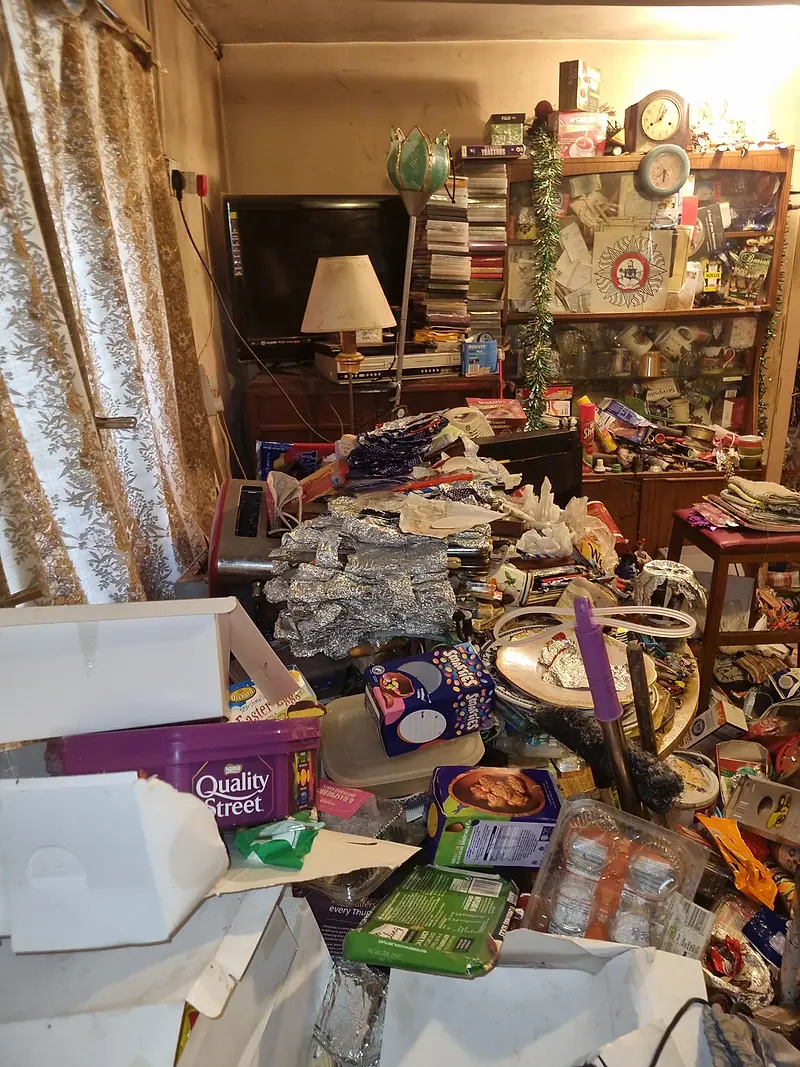
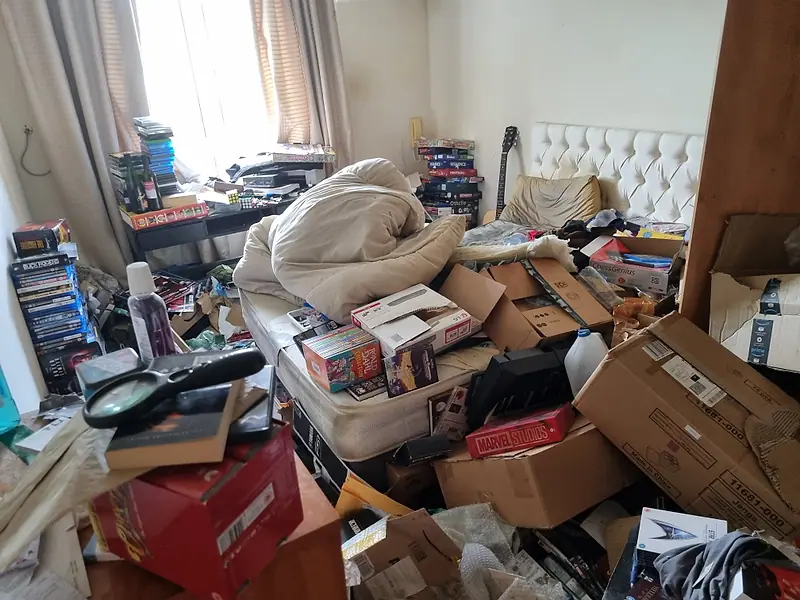
You cannot clean a room you cannot see the floor of. That sounds obvious, but it is the reason a clean-up of a very cluttered home has to happen in two phases. The first phase is a clearance: sorting, finding what matters, bagging, loading and removing. The second is the clean: carpets, upholstery, stair carpets and the outside, done once the rooms are bare.
Done the wrong way round, or by two companies on two timetables, the gap between the phases is where things go wrong. Carpets are cleaned before the last bags have gone and the dirt is walked straight back in, or the clearance finishes and nobody has decided whether the carpets stay.
We do both phases on one booking, from the same photographs, with one point of contact. This guide explains how the two fit together. It is about the practical work, not about the person; we do not diagnose or label anyone. If you are worried about someone whose home has filled up, our guide for families covers the conversation and the consent, and our hoarder clean-up service page explains how we work with the person whose home it is.
Phase one: the clearance
The clearance in a very cluttered home is slower than an ordinary house clearance, because almost every bag has to be opened before it leaves. These are the steps, in order.
A safe route first
Before any room is cleared, we open a route from the hall door to the kitchen, the bathroom, the foot of the stairs and the back door. In a very full house this is a job in itself, and it makes the home safer before a single room is finished.
Sorting into three piles
Everything is sorted into keep, check and let go, with the person or the family making the call. The keep pile goes to one agreed spot, a table or a spare room, so it is never mixed back in. The check pile is for anything nobody is sure about: unopened post, boxes, bags that might hold papers.
Finding what matters
As we sort, we look for the things that are easy to lose in a full house and hard to replace: documents and post, bank books and cards, photographs, keys, phones, glasses and hearing aids, medicines and medical equipment. All of it is set aside and handed to the family. Give us a list of anything in particular you are looking for, and the search starts with the first bag.
Bagging, loading and removing
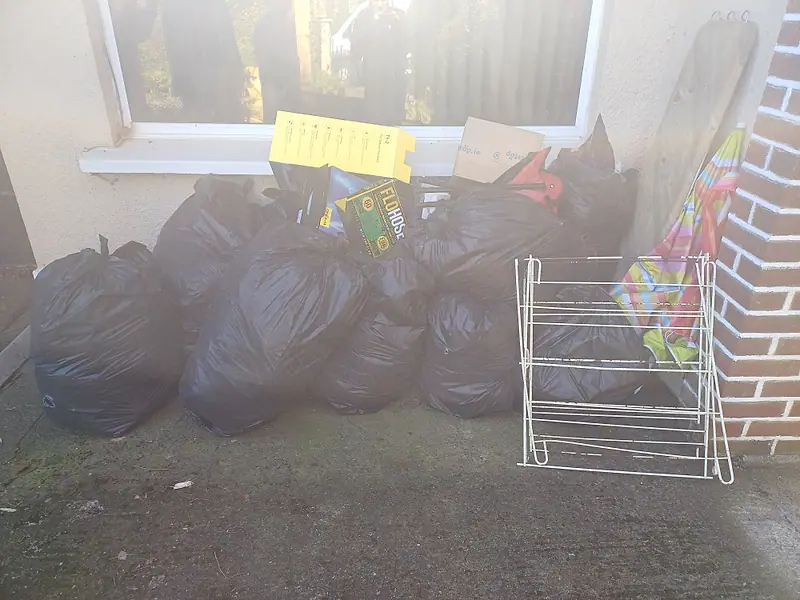
Bags are closed before they leave the room, loaded steadily, and nothing is left sitting outside for the street to see. Furniture and appliances that are going come out last. Anything usable is kept back for reuse where there is a home for it, metal and electrical items are separated for recycling, and the remainder is taken to authorised waste facilities; our permit is NWCPO-25-13287-01.
Leaving the room ready for phase two
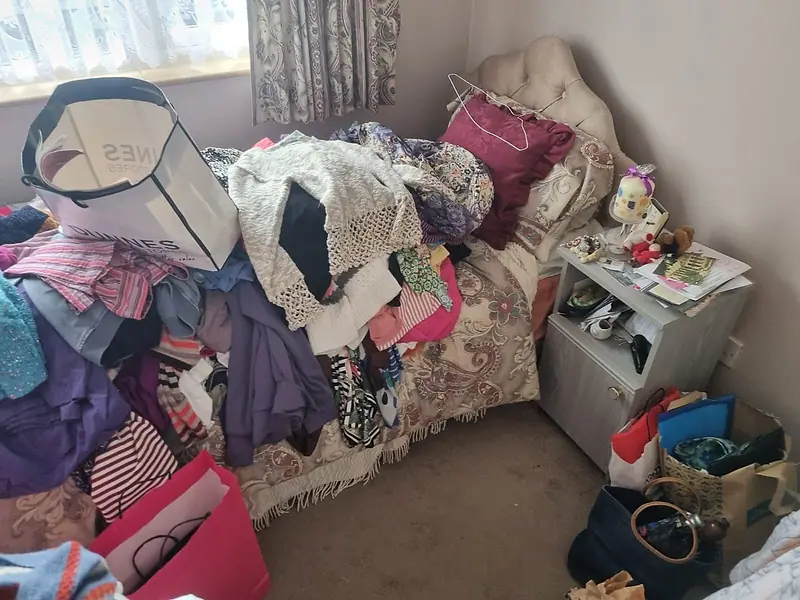
A clearance ends with every floor cleared and swept or vacuumed. In a two-phase job we go a little further: furniture that is staying is moved into a cleared room, carpets that have been agreed to go are lifted, windows are checked to see that they open, and the keep pile is moved somewhere the cleaning will not reach it.
 spotless.ie
The handover between the two phases
Between the clearance and the clean, three decisions have to be made, and they are easier to make when the floors can be seen.
Which carpets stay. A carpet that spent years under dry clutter usually cleans well. One that sat under wet waste, pet soiling or a leak may not, and the honest answer is sometimes to lift it. We walk the rooms with you, or send photographs, and say what we think room by room.
Which soft furnishings stay. Sofas, armchairs, mattresses and curtains hold smells and dust as much as carpets do. Fabric upholstery and mattresses that are staying can be cleaned in phase two; leather cannot, and anything soiled beyond cleaning is better removed in phase one.
Whether the house is ready to be cleaned. The electricity and water need to be on, because hot-water extraction needs both.
Clearing and cleaning a very cluttered home? Send a few photos in confidence on WhatsApp, or a short video walking through the house. We will suggest an order for the two phases and give you one fixed price for both.
Phase two: the clean
With the rooms bare, the cleaning is quick and the result is visible. It happens in this order.
- Carpets and stair carpets. Each carpet is vacuumed thoroughly first, then cleaned by hot-water extraction, which flushes the fibres and draws the water back out. Stairs are done from the top down. Carpets take a few hours to dry, longer in a cold house. See carpet cleaning in Dublin and how long carpets take to dry.
- Rugs, upholstery and mattresses that are staying. Fabric only. See upholstery cleaning and mattress cleaning.
- Odour. Hot-water extraction removes what is held in the carpet and the upholstery, which is where much of the smell in a cluttered home sits. It does not cure damp or a wet subfloor, and if a smell remains once the carpets are clean, we say so rather than cleaning the same carpet twice.
- The outside, last. Paths, steps, the driveway, the patio and the area round the bins, washed with hot water once nothing more is being carried out, so nothing is walked back into the house. Power washing needs an outside tap and a power socket. See power washing in Dublin.
What the clean does not include
It is better to be plain about this before the day. We do not clean kitchens and bathrooms beyond leaving them clear and swept; a full domestic clean is a job for the family or a cleaning company, and the right place for it is between the clearance and the carpets. We do not treat mould or deal with mice or insects; a pest controller should visit before we start if there are signs of either. We do not take paint, solvents, oils, chemicals or gas cylinders, and if there are sharps or serious contamination we tell you first what we can and cannot do.
Three ways to sequence the two phases
| Situation | How the phases run | Why |
|---|---|---|
| A small flat, nobody living there | Clearance in the morning, carpets in the afternoon | Bare floors by lunchtime, dry by evening |
| A house, nobody living there | Clearance over one or two days, the clean a day or two later | The carpets need an empty house and time to dry; the outside goes last |
| The person still lives there | One room at a time over several visits, the clean following room by room | Nothing is forced, and there is always somewhere comfortable to sit |
The staged option is one job at one fixed price, however many visits it takes. How the visits are paced is covered on the hoarder clean-up page.
Briefing us when the person still lives there
When the home is still someone's home, the brief is about them as much as the house.
- Who decides. The person who lives there, if they are able to. We talk to them directly, at their pace, and nothing marked as keep leaves the house. If a family member or support worker is helping, tell us who, and whether they will be there.
- What has already been agreed. Which rooms and which route through the house. Agreeing to clear the hall is not agreeing to clear the bedroom.
- Their routine. Mealtimes, medication times, a favourite chair, a pet that needs to be in one room while doors are open. We plan the order of rooms around it.
- A trusted person. Someone the person is comfortable with, in the house or on the phone, for the moments when a decision is hard.
- When to stop. If a visit becomes too much, we stop and come back another day. Say so beforehand and it is never awkward on the day.
The cleaning follows the clearance room by room, so there is always a finished, dry room to sit in.
Briefing us when the person has moved out or died
When the house is empty, the brief is about authority, deadlines and what is being looked for.
- Who has authority. The executor, the family member acting for them, the landlord or the agent. We take instructions from that person and confirm the price with them in writing. If the person has died, our bereavement house clearance page explains how we work with families.
- The must-find list. A will, deeds, a passport, photographs, a particular set of keys. Everything we find is set aside, but a list makes the search deliberate rather than lucky.
- The deadline. A sale, a re-let, a care placement or a landlord's date. We are honest about what is realistic and plan the two phases to finish inside it.
- What stays. Any furniture the agent wants for photographs, any fixtures that belong to a landlord.
- Access and keys. Who holds them, whether there is an alarm, and where the van can stop.
- Photographs afterwards. We send photographs of every room after the clearance and again after the clean, which is useful for anyone who cannot be there.
What the family should decide before the first day
Most of the delays in a two-phase job come from decisions that could have been made in advance. Settle these first:
- Who is giving instructions, and who is the single point of contact for the day.
- What is being kept, and where the keep spot is.
- Which carpets and soft furnishings are to be cleaned and which are to go, as far as you can tell before the floors are visible.
- Whether the kitchen and bathroom are being cleaned by the family or a cleaner, and when.
- Anything we should know about: medication, sharps, signs of pests, floors or ceilings you are worried about, a pet in the house.
- Whether the electricity and water are on.
- Where the van can stop, and how discreet the day needs to be. We keep bags closed, load steadily and keep the job between us and you.
Getting a price for both phases
Send photographs of each room from the doorway, the hall and stairs, any attic, garage or shed, and the outside, or a short video walking through the house. Everything you send is kept in confidence. We reply with one fixed price covering the clearance and the clean, agreed before anything is booked, with nothing added on the day. If a carpet turns out to be beyond cleaning once the floor is visible, we tell you and adjust the plan. Our house clearance cost guide explains what affects the price.
Spotless is fully insured and based in Dublin, covering Dublin and all of Leinster, Monday to Saturday from 8am to 5pm. WhatsApp 085 202 1222, or use the quote form.
