
What a house clearance is
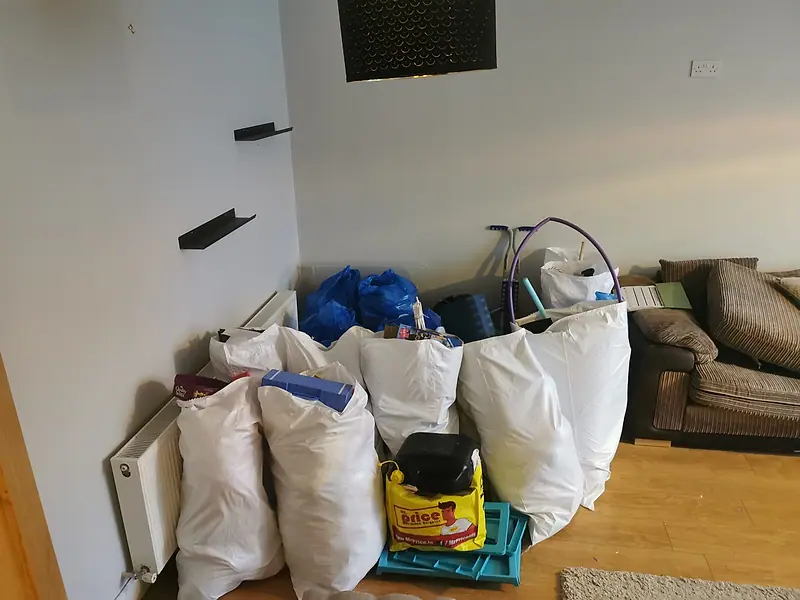
A house clearance means a company empties a property of everything you don't want to keep, carries it out, takes it away legally and leaves the rooms clear. It might be the whole house after a parent has died, the contents before a sale, or the leftovers between tenants. Lofts, garages, sheds and gardens are usually part of it too.
It isn't a removal (nothing is delivered anywhere for you to keep) and it isn't a cleaning service, although the rooms should be left swept and tidy. Our guide to what a house clearance includes goes through it room by room.
How it works, step by step
The details vary from company to company, but a well-run clearance in Ireland follows roughly this pattern. This is how it works with Spotless:
- Photos and an Eircode. Walk through the property with your phone, taking in each room plus any loft, outbuildings and garden, or film one short video instead. The Eircode pins down the exact house, which matters most in rural areas.
- A fixed price. We work out the volume, access and time, and reply with one price for the whole job, usually the same day. A very big or unusual property may need a phone call or a site visit before it can be priced.
- What stays. You mark what you're keeping, or put it in one room, and tell us what to look out for, such as documents, jewellery or photographs.
- Date, keys and parking. We fix a date and sort out access. Plenty of clearances happen with no family member present, particularly when relatives live in another county or abroad, so keys are often left with a neighbour or the auctioneer, or in a key safe.
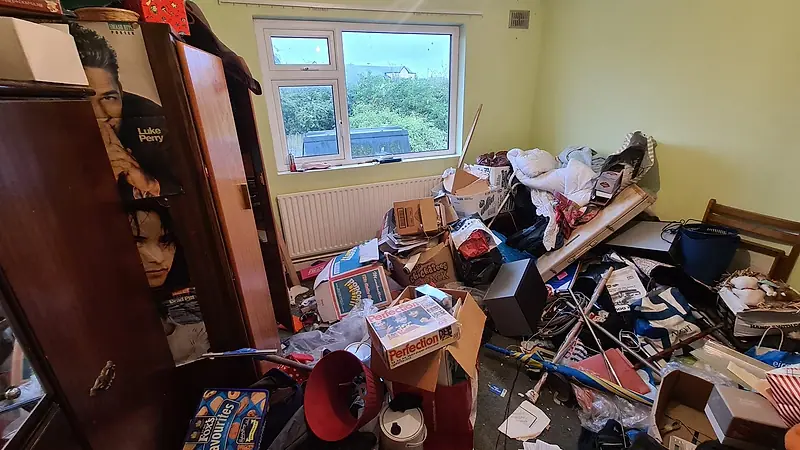
- The clearance. Covers go down on carpets and stairs. The crew works room by room, checking drawers, boxes and pockets as it goes, and sorts everything as it's loaded.
- Disposal. On the van, things are separated into what can be reused, what can be recycled and what has to go to an authorised facility, and every load travels under our waste collection permit.
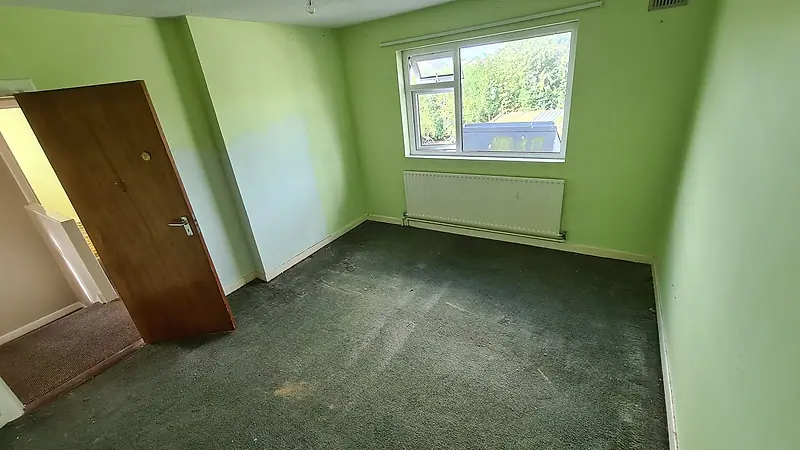
- Handover. You get the property back with every room empty and the floors swept or hoovered as needed. If you're living at the other end of the country, photos of each room arrive on WhatsApp.
For a full house, a crew of two or three people usually needs a day or two on site, although distance, outbuildings and staged visits can all stretch that. You can read the full detail on our house clearance page.
 spotless.ie
Choosing a house clearance company
Anyone with a van can call themselves a clearance company, so it pays to ask a few questions before you book.
Can I see your waste collection permit? This is the most important one. Collecting household waste for a fee is a regulated activity in Ireland, and the permits are issued centrally by the National Waste Collection Permit Office (NWCPO), whichever county you live in. That means one public register covers every collector in the country, from Donegal to Wexford. Ask for the number, look it up, and check that the permit holder is the business you're actually dealing with. Ours is NWCPO-25-13287-01.
Is the price fixed, and is it in writing? A fixed price for the whole job is easier to plan around than an hourly rate or a "from" price. Even a WhatsApp message counts as writing. Our guide to house clearance costs explains what a fair price is based on.
What insurance do you have? Heavy furniture coming down narrow stairs can mark walls and banisters. Ask what cover the company holds and how they'd deal with any damage. Spotless is fully insured on every job.
What do the reviews say? Read recent Google reviews, not just the star rating. Look for jobs like yours and for comments about keeping to the price, turning up when promised and treating the house with respect.
Who actually does the work, and where do things go? Ask whether the company's own crew turns up or the job is passed on, and what happens to the contents. A straight answer to both is a good sign.
The legal side, in plain terms
We're not solicitors, but these are the points that come up most often:
- Your duty as a householder. Irish waste law expects you to give household waste only to an authorised collector, or bring it to an authorised facility yourself. Paying an unpermitted collector doesn't shift that responsibility onto them, so if they dump it, you may still have questions to answer.
- Executors. After a death, decisions about the house and its contents belong to the executor or administrator. Our bereavement clearance guide explains how probate fits in and what to do first.
- Tenancies. If you're a landlord dealing with a former tenant's belongings, check the Residential Tenancies Board's guidance before anything is cleared. Our guide to preparing a rental property explains more.
- Apartments. Management companies often have rules about lifts, loading bays and working hours, so check them before the date is fixed (apartment clearance).
- Skips. A skip on a public road may need a permit from the council, and each local authority sets its own rules and fees. A van clearance doesn't, because nothing is left on the road.
Ready to get a price? Photograph each room, the attic and any outbuildings, add the Eircode, and send it on WhatsApp. You'll get a fixed price, usually the same day.
Eircodes, access and parking
An Eircode is the single most useful thing you can send with your photos. It tells us exactly where the house is, how far it is from Dublin, and what the street and parking look like before we arrive. In rural areas, where several houses can share a townland name, it saves a lot of searching.
Along with it, tell us about the things that affect the day: stairs and lifts, permit parking or clearways, a shared or steep driveway, a long walk to a back shed, or a lane that's tight for a large van. None of these is a problem if we know in advance.
House clearance across Leinster
We're based in Dublin and clear houses in Dublin and all of Leinster: Meath and Louth to the north, Kildare and Wicklow on the capital's doorstep, Wexford, Carlow and Kilkenny to the south, and Laois, Offaly, Westmeath and Longford across the midlands. The clearance itself works the same way everywhere. What changes as you move out from the city is the thing most likely to slow the day down:
| Where | What usually shapes the job |
|---|---|
| Dublin city and suburbs | Parking: permit zones, clearways and bus lanes, plus steep terrace staircases and apartment rules, in every postcode from D1 to D24 |
| Kildare's commuter towns | Volume: family semis in Naas, Newbridge, Celbridge, Leixlip and Maynooth with lofts and garages filled over many years |
| Wicklow | Access: coastal towns like Bray and Greystones, and further south, homes where the van waits at the end of a long lane |
| Meath and Louth | Mixed housing: commuter estates alongside older town-centre houses, as in Drogheda, where a narrow street decides how close the van can get |
| Carlow and Kilkenny | Outbuildings: farmhouses around Tullow, Bagenalstown, Thomastown, Callan and Castlecomer often come with yards, stores and sheds |
| Wexford and the midlands | Travel: Wexford, Laois, Offaly, Westmeath and Longford are a longer run from Dublin, so loads are planned to keep round trips down |
Wherever the house is, the clearance follows the same seven steps described above; only the planning around them changes.
On rural jobs, mention outbuildings. We can't take old farm chemicals, such as sheep dip, pesticides or waste oil, so those need a hazardous waste collection rather than a clearance van.
Before you book: a short checklist
- Decide who's making the decisions and who the company should deal with
- Find documents and valuables, and choose what you're keeping
- Photograph every room, the attic, garage, shed and garden
- Check the company's waste collection permit on the NWCPO register
- Get a fixed price in writing
- Agree the date, keys, parking and anything that needs special handling
If the clearance follows a bereavement, see our bereavement house clearance service. For a single room, an attic clearance or a garage clear-out, the same steps apply on a smaller scale.
