
The short version
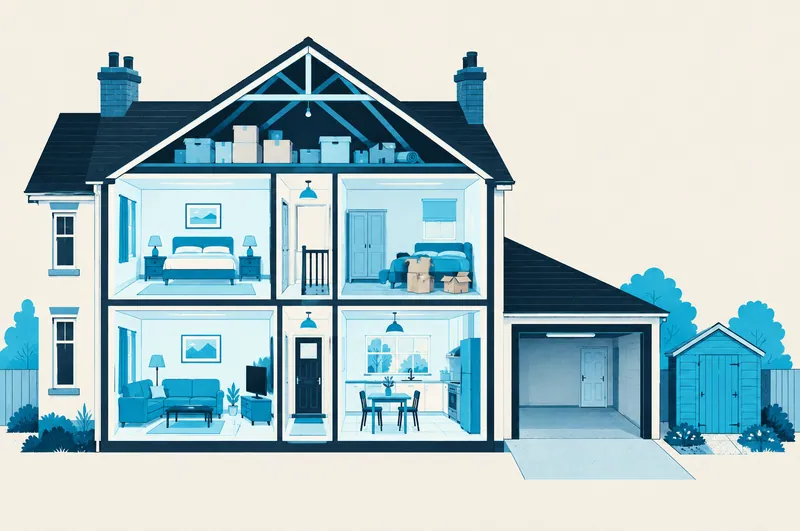
A house clearance includes everything in the property that you don't want to keep: furniture, appliances, contents, and the spaces people forget about, like the attic, the garage, the shed and the garden. The crew carries it all out, sorts it as it's loaded, takes it away and leaves the rooms empty and swept.
What it doesn't include are fixtures (unless agreed in advance), cleaning beyond a sweep or a hoover, and a short list of hazardous materials that need a specialist. The rest of this guide goes through a typical house from top to bottom.
Room by room, from the attic down
The attic
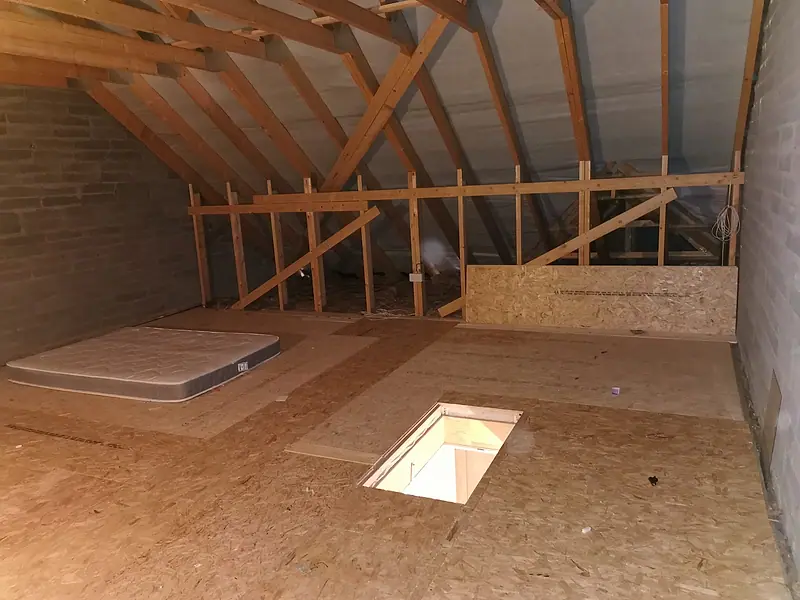
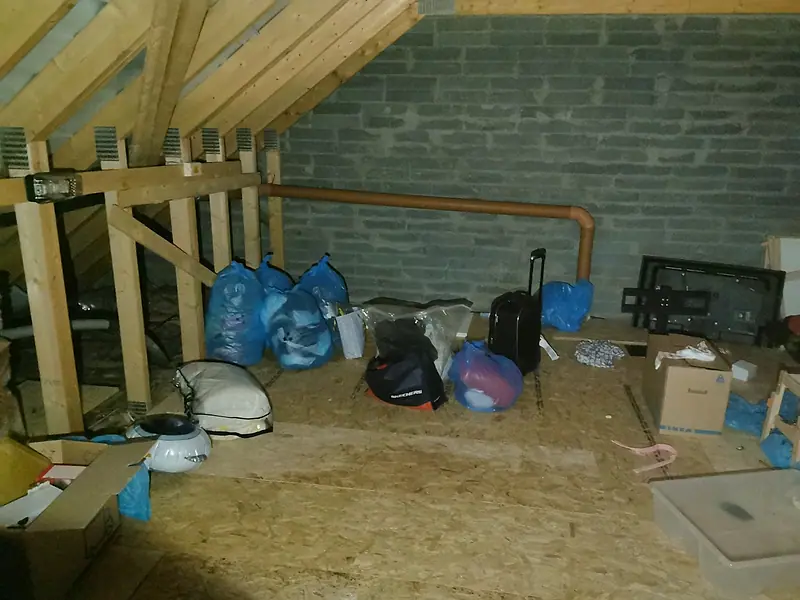
Attics are usually the fullest part of the house and the part nobody has looked at in years. Expect suitcases, Christmas decorations, old toys, boxes of papers, spare timber, rolls of carpet and furniture that was put up "for now" decades ago. It all comes down, with boxes checked for photographs and documents on the way. If the attic isn't fully boarded, tell us, because the crew needs to know where it's safe to stand. Our attic clearance page and the attic clearance guide go into more detail.
 spotless.ie
Bedrooms and the landing
Beds, mattresses, wardrobes, chests of drawers, lockers, mirrors, clothes, shoes, bedding and the contents of every drawer. Wardrobes that were assembled in the room are taken apart so they come out without marking the walls. The hot press gets emptied too: towels, sheets and whatever has been stored on the top shelf.
Living room and dining room
Sofas, armchairs, tables, display cabinets, sideboards, bookcases, rugs, lamps, pictures, ornaments, books, records and DVDs. Pianos and very heavy cabinets need a mention in advance so we bring enough people.
Kitchen and utility
The contents of every press: crockery, pots and pans, glasses, small appliances and any food that's left. Freestanding fridges, freezers, washing machines, tumble dryers and cookers come out too, once they're disconnected. A gas cooker needs to be disconnected by a registered gas installer before we arrive.
Bathroom
Toiletries, towels, freestanding cabinets, laundry baskets and everything under the sink. The bath, toilet and basin stay.
The garage
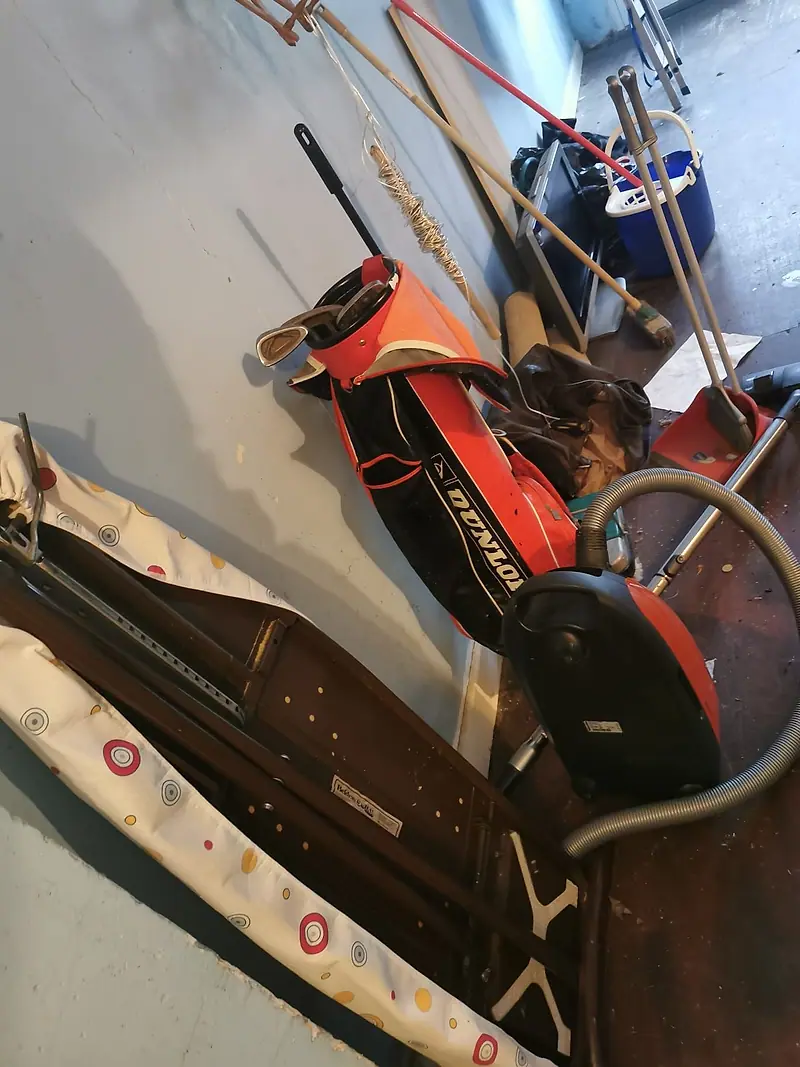
Tools, workbenches, bikes, old furniture, boxes, golf clubs, garden furniture, paint tins, car parts and decades of "might need that". A garage is often fuller than any room in the house. See garage clearance.
The shed and garden
Lawnmowers, strimmers, garden tools, pots, garden furniture, barbecues, trampolines and play equipment. Green waste can go too (garden clearance). If the shed itself has had its day, we can take it down and remove it; see shed clearance.
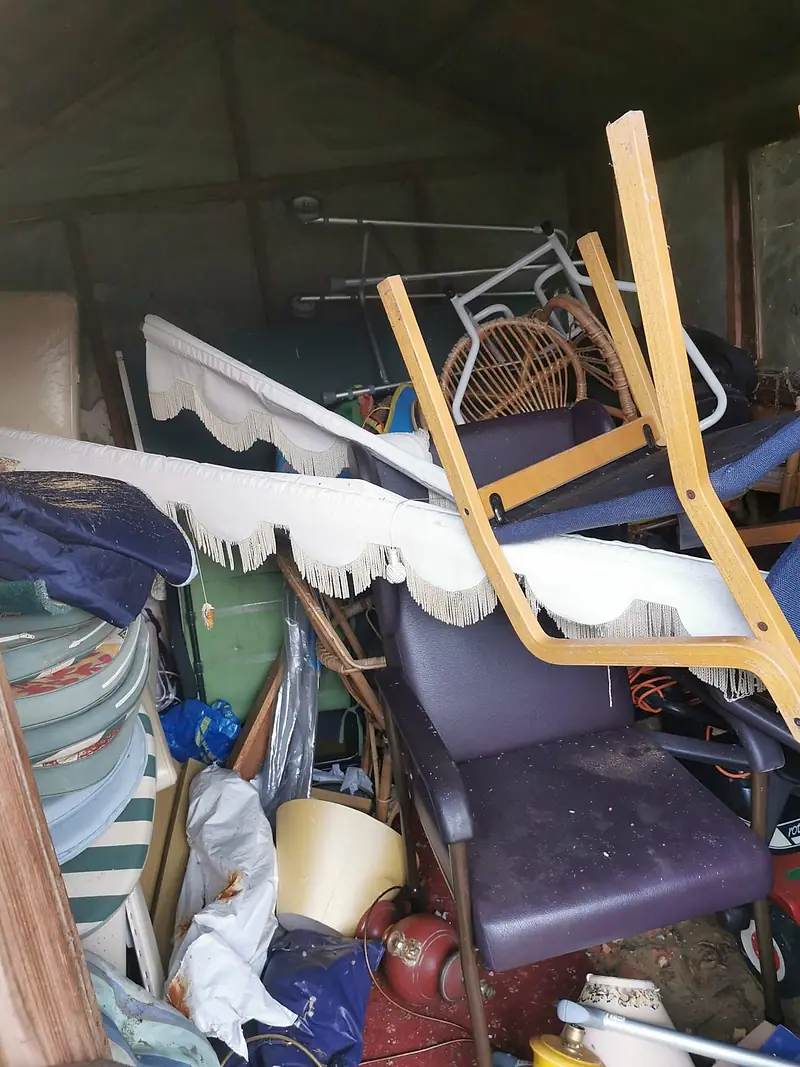
The places people forget to show us
When a job grows on the day, it's usually because of a space nobody mentioned. When you're taking photos for a quote, check these too:
- The under-stairs press, which often holds more than a wardrobe
- The hot press, especially the top shelf
- Under the beds, where suitcases and storage boxes live
- A loft over the garage or an extension
- Outhouses, coal bunkers and boiler houses in older houses
- Behind the shed and down the side passage, where broken furniture and old bikes end up
- Balconies and storage cages in apartments
If it's on the property and you want it gone, show it to us. A quick photo now saves a conversation on the day.
What we check before anything goes
A clearance isn't just carrying things out. Every drawer, box, handbag and coat pocket gets a look before it's bagged, because important things turn up in odd places. Anything that looks personal, valuable or official is set aside for you:
- cash, jewellery, watches and keys
- wills, deeds, bank and post office books, share certificates, insurance and pension papers
- photographs, letters and cards
- passports, medals and anything with a name on it
If you won't be there, we agree beforehand what should happen to anything we find, and keep you posted on WhatsApp.
Want to know what your clearance would cover? Send photos of every room, the attic, the garage and the garden. We'll confirm what's included and give you a fixed price, usually the same day.
What a house clearance doesn't include
Fixtures. Fitted kitchens, bathroom suites, built-in wardrobes, radiators and light fittings stay where they are unless we've agreed otherwise beforehand.
Cleaning. We leave rooms empty, with floors swept or vacuumed where needed. That isn't the same as a full clean of the kitchen and bathroom, which is a job for a cleaning company. If the carpets are staying, we can clean them once the rooms are clear.
Hazardous materials. A few things can't go in with ordinary waste:
| Item | What to do |
|---|---|
| Asbestos (some old shed and garage roofs, old floor tiles, pipe lagging) | Don't disturb it. It needs a specialist asbestos contractor. |
| Gas cylinders | These normally go back to the supplier. |
| Chemicals, solvents and weedkillers | Show us what's there. They can't go in with general waste. |
| Large quantities of paint or oil | Mention them when you send photos and we'll be honest about what we can take. |
| Medicines and sharps | Unused medicines can usually go back to a pharmacy; sharps need a specialist collection. |
Taking it away is part of the job
Removal doesn't stop at your front door. A proper clearance price includes the loading, every van trip, the sorting as things go on board, and the charges that recycling centres and licensed facilities make for accepting each load. That covers the awkward items too: fridges and freezers, washing machines, TVs, mattresses and bags of mixed household waste. None of them should appear as a surprise extra afterwards.
All of it is carried under permit NWCPO-25-13287-01. If you'd like to follow the contents onward, from the pieces that get a second home to the ones that are recycled, read what happens to furniture after a clearance.
Standard, ask first, or not included
Here's the whole picture in one place, so you can check a quote against it:
| Included as standard | Worth asking about first | Not part of a clearance |
|---|---|---|
| Furniture and loose contents in every room you've shown | Lifting fitted carpets and underlay | Fitted kitchens and bathroom suites |
| Freestanding appliances, once disconnected | Taking down and removing a shed | Radiators, light fittings and built-in wardrobes |
| Dismantling beds and wardrobes so they come out cleanly | Large quantities of green waste, soil or rubble | Disconnecting a gas cooker (a Registered Gas Installer's job) |
| Loft, garage, shed and garden contents in your photos | Pianos, safes and other very heavy pieces | Cleaning beyond a sweep or hoover |
| Checking drawers and setting aside papers and valuables | Paint or oil in quantity | Asbestos, gas cylinders, chemicals and sharps |
| Sweeping or hoovering the emptied rooms | A clearance spread over several visits |
Items in the middle column usually aren't a problem; they just need mentioning so the crew, the van space and the time are right. On time, the standard work on a full house is usually a day or two for the crew (reviews mention a two-bed cottage cleared in a day and a half), and anything from the middle column can add to that. You'll know how long to expect before the day.
Full house, contents only, or just part
Not every clearance is the whole house. A contents clearance takes the furniture and belongings but leaves fixtures; a full clearance adds the attic, garage, shed and garden; a partial clearance might be one room or just the attic. For one or two big pieces, furniture removal is simpler.
Some situations need a particular approach. Clearing a loved one's home is covered by our bereavement house clearance service, a home that has become very cluttered by hoarder clearance, and flats with lifts and management rules by apartment clearance. Our house clearance page explains how every type of job is priced and booked, and what house clearance costs goes into the detail.
