Why downsizing is not one job
When people tell us they are downsizing, they are usually describing two different jobs bundled into one. The first is deciding what to bring to the new home, which takes time and thought. The second is emptying the old house so it can be sold, which takes a crew and a date.
Treating them separately makes both easier. You do the first slowly and the second quickly. This guide sets out a plan for a Terenure house, from a 1930s semi near Bushy Park to a larger red-brick off Terenure Road, though the order applies anywhere.
For the sale itself, our guide to preparing a property for sale goes through agents, photographs and viewings. Here we stick to the clearing.
Stage one: before you move
Start about two months before the move, if you can.
Decide how much space you are moving to
Measure the new home's rooms, or ask for the floor plan. A good rule is to bring about what will fit comfortably in the new rooms and leave the rest. If the new place has two bedrooms where you had four, you will not be taking four bedrooms of furniture.
Do the hidden rooms first
Start with the places that hold things nobody uses:
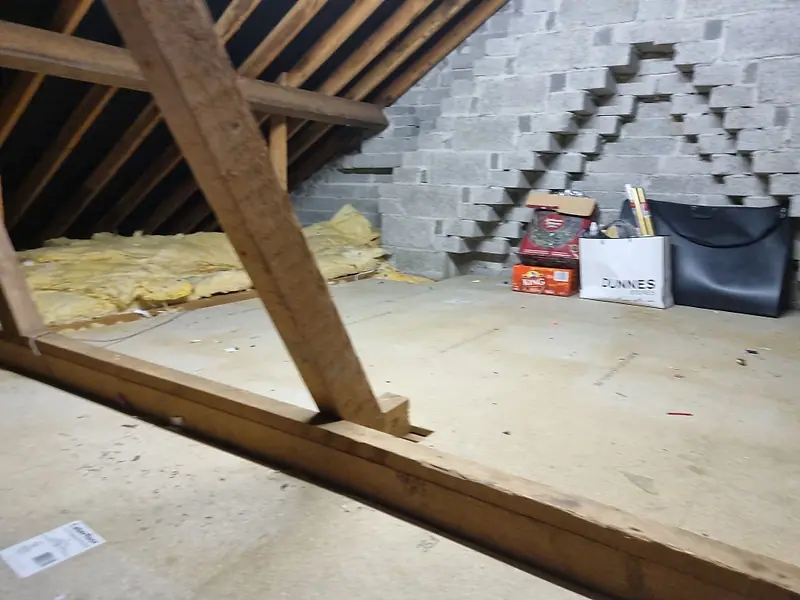
- The attic. In most older Terenure houses it holds decades of boxes, suitcases and Christmas decorations. See our guide to clearing an attic safely.
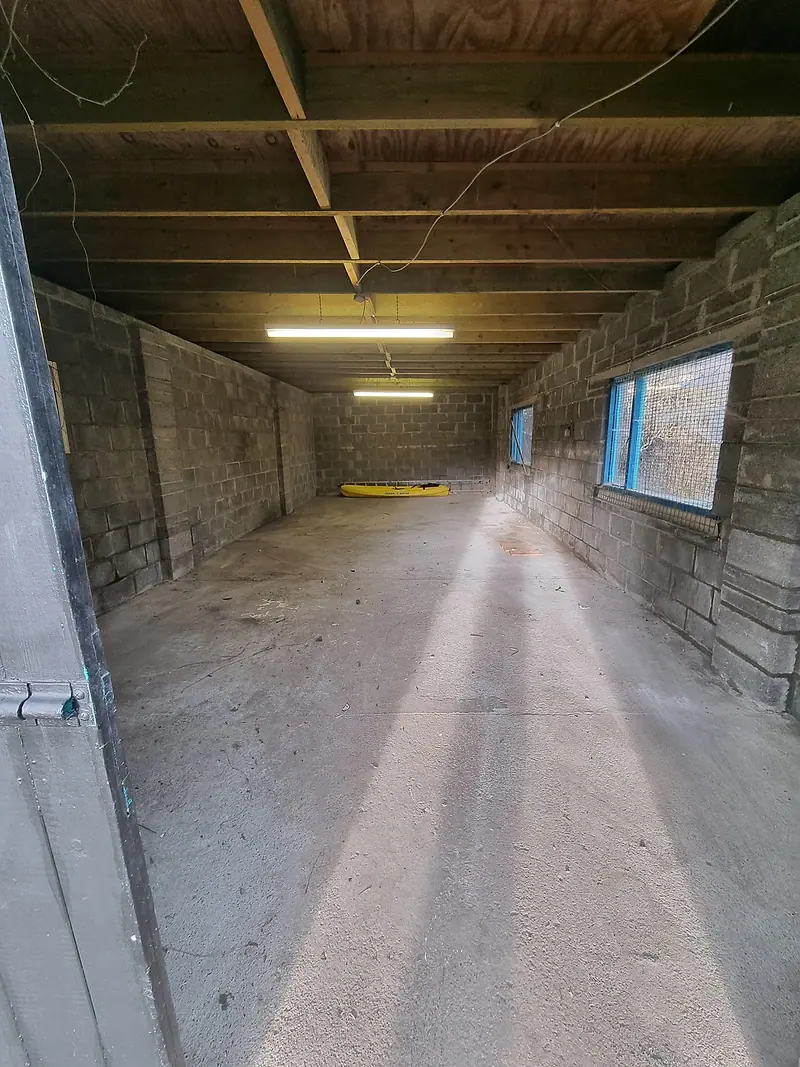
- The garage or side passage. Paint tins, bikes, tools and a spare freezer.
- The shed and back garden. Old furniture, pots, a rusting barbecue.
- The box room. The spare room that became storage.
These are the least emotional parts of the house and the biggest by volume. Clearing them first makes the rest feel manageable. We can clear them as a stand-alone job while you are still living in the house, and we work around you.
Sort the rest into four piles
| Pile | What it means |
|---|---|
| Coming with me | Fits the new home and is genuinely wanted |
| Family | Offered to children and relatives, with a deadline |
| Sell or donate | Good items that others will use; arrange collection |
| Let go | Anything nobody wants |
Photograph things you cannot keep but want to remember. Many people find that a photograph is enough.
Book the movers and the clearance together
Book the removal firm for the move itself. Then book the final clearance for the day after, or a few days after. We price from photos and fix a date to suit, so the house is empty when the movers have finished and before the keys change hands. Our house clearance cost guide explains what affects the price.
Stage two: after the move
The second stage is quick if the first has been done.
What we clear
Whatever is left: the furniture you decided against, the white goods, the bags and boxes, and anything that remained in the attic, garage and shed. We check drawers and cupboards before anything goes, so it is worth leaving a note of anything you are unsure about.
On a terraced street where the van cannot park outside, everything is staged in the hall and loaded in short stops. On a road with a driveway it is easier. Tell us about parking, especially if there is a permit scheme on your road, and mention heavy items such as a piano, a solid wardrobe or a safe.
The finish
At the end, the rooms are empty and the floors are swept or vacuumed where needed. We send photos of every room. It is a clearance, not a house clean, so if you want the kitchen and bathrooms cleaned, you will need a separate cleaner.
 spotless.ie
Stage three: the final touches before the sale
An empty house is easy to improve. In order:
- Repairs and painting. Do these first, while the rooms are empty.
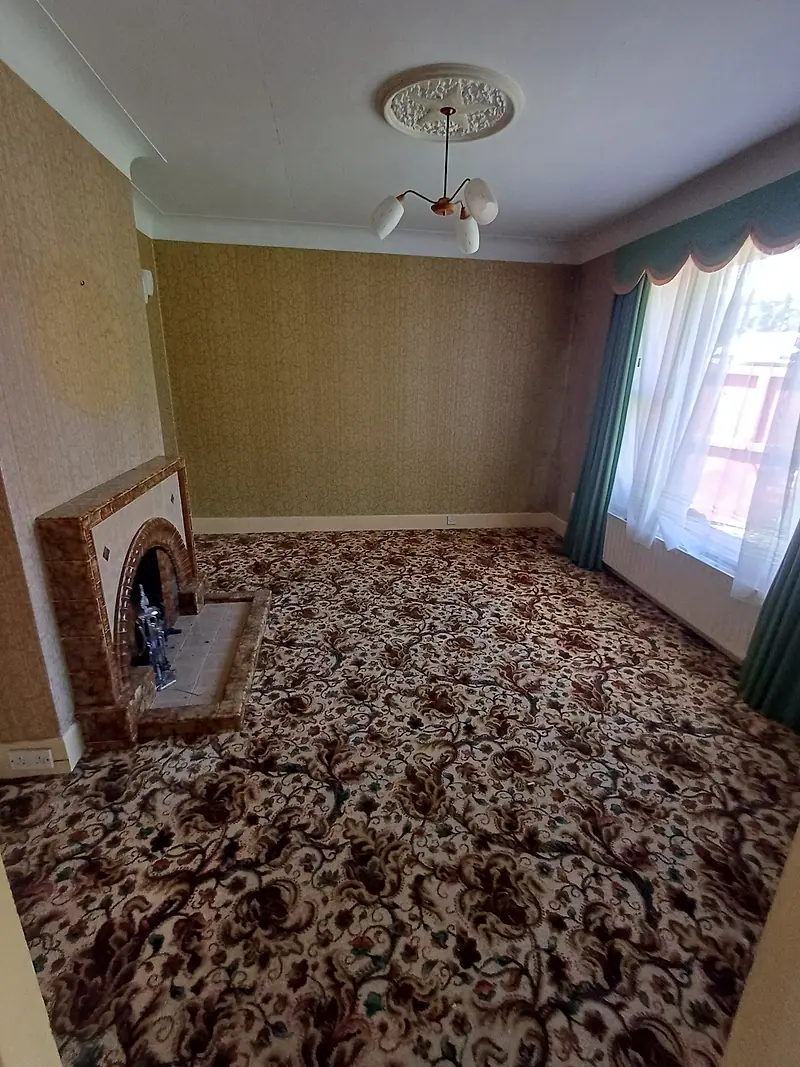
- Carpets. Once the painters and ladders are gone. We clean by hot-water extraction, and in an empty room there is nothing to move. Older wool carpets are tested in a hidden spot first. If the carpets are worn, a buyer may replace them anyway, and we can take old carpet away with the clearance. See carpet cleaning in Terenure.
- The outside. Washing the front path, steps and any driveway near the photographs makes the first picture of the house look cared for. We do power washing with hot water and soft washing for walls, and we need an outside tap and a power socket.
- Photographs and viewings.
A realistic timeline
| When | What |
|---|---|
| 8 weeks before | Measure the new home, start with attic, garage and shed |
| 6 weeks before | Sort the rest into the four piles; offer to family |
| 4 weeks before | Book movers and the final clearance; arrange donations |
| 2 weeks before | Pack what is coming; final clear-out of rooms you no longer use |
| Moving day | Movers take your belongings |
| Day after | Final clearance; photos of the empty house |
| Following days | Repairs, carpets, outside, then the agent's photographs |
Adjust it to your own dates, particularly if the sale closing is fixed.
If it is an estate rather than a move
If you are clearing a house for someone who has died, the order is similar but the pace is different. See our guide to clearing a house after someone dies. The Terenure-specific page for executors is house clearance in Terenure.
A closer look at the sorting stage
Most people underestimate sorting because they picture the big furniture. In practice the furniture is quick. It is the thousands of small things that take the time. These are the categories that usually take longest, and how to deal with each.
Clothes and shoes
Take everything out of the wardrobes and drawers and look at it all at once. Keep what you wear and what you love. Clothes in good condition can go to charity shops, and many take bags at the counter, but call first. Worn-out clothes and odd shoes can go to a textile recycling bank. If there are formal outfits or coats that mean something, photograph them if you cannot keep them. Check every pocket before anything leaves the house.
Books
Books are heavy and slow. A reasonable rule is to keep the books you will actually read again or that carry a memory, and let go of the rest. Libraries and charity shops often take good paperbacks, though some are choosy, so ask first. Open books before donating them, since letters, photographs, cheques and cash are often used as bookmarks. Old textbooks, damaged books and magazines can go for recycling. If you have a few hundred, box them by shelf so you can decide in blocks, not volume by volume.
Crockery, glass and kitchen things
Kitchens are full of duplicates after forty years. Keep a working set for the new home, and offer the good china and glass to family. A second set of everything rarely fits in a smaller kitchen. Chipped or odd items, saucepans with loose handles and baking trays beyond use can go. Charity shops often take clean crockery and cutlery, but check. We take what is left for reuse or recycling.
Photographs and papers
Photographs are the one category that is hard to rush. Gather them into boxes now, even if you do not sort them until later. A flatbed scanner, or a phone with a scanning app, lets you copy albums so that the originals can be shared among relatives. Papers should be sorted into three groups: keep (property documents, insurance, pensions, medical records, tax documents), shred (old bank statements and anything with personal data) and recycle. We do not offer shredding, so arrange that yourself. A good rule is to keep a smaller box of important documents with you in the move and not to pack it in the van.
Hobby and workshop items
Tools, sewing machines, golf clubs, fishing rods, craft supplies and musical instruments are usually kept by one person and not wanted by anyone else. Offer them to a club, a school, a men's shed or a neighbour. Garden tools and a lawnmower in working order are often wanted by someone you know. Things that no longer work go for recycling, and electrical items have their own recycling route.
Electricals
Televisions, computers, chargers, small kitchen appliances and old phones should be checked for personal data first. Wipe or remove memory and hard drives where you can. Metals and electrical waste are separated out by us for recycling, and larger white goods such as fridges and freezers have their own disposal route, which is part of how the price is set.
Furniture
Measure before you decide. A dining table that seated eight may not fit a small kitchen-diner. A wardrobe that was bought for a large bedroom will dominate a smaller one. Keep what fits and what you love, offer the rest to family and sell or donate what is in good condition. Heavy solid wood items are difficult to sell and difficult to donate, since many charities will not take bulky furniture. If a piece cannot find a home, a clearance is the practical answer, and furniture worth reusing is set aside for reuse where possible.
Doing the family conversation early
Downsizing often involves adult children who live elsewhere. A message that says what is being done and gives a date can avoid tension.
- Send photographs of items you think they might want.
- Give a deadline, such as the end of the month, and stick to it.
- Say plainly that after the deadline, unclaimed things will be donated or cleared.
- Ask whether anyone wants to come for a weekend to go through the attic and the boxes in the garage.
It is much easier to say no to a request before the van is booked than to retrieve something afterwards.
Terenure house types and what each means for the plan
Terenure and Harold's Cross have older red-brick houses, 1930s semis and small terraced cottages. They behave differently when you are emptying them.
Red-brick houses over several floors. These tend to have more rooms, higher ceilings and larger furniture. They often have stairs to the first, second and sometimes a lower ground floor, and a large attic. Plan for a longer stage one, since there is simply more to go through. The stairs matter on the day, so tell us if there is a steep or tight staircase, and mention any piece too big to carry down.
1930s semis. Generally a hall, two reception rooms, a kitchen, three bedrooms and a box room, with an attic and often a garage or side passage. These are good candidates for a clear-out of the attic and garage first, since those two spaces hold most of the volume.
Terraced cottages. Smaller, with narrow halls and often a small yard at the back. There is often no room for storage, so everything is in the rooms. The clearance is usually quicker, but the carry is through the front door, which means short van stops.
Wherever you are, the Terenure page lists the house types and loading in more detail; see Terenure.
Parking and permits on the day
On many Terenure roads, parking is controlled, so check the rules for your street. If there is a permit scheme, tell us, and if you can arrange a visitor permit or reserve a space outside, do so. We stage everything inside and load in short runs, so the van stops for as little time as possible. Where there is a driveway, ask us to use it, and keep it clear of cars the night before.
Working around you while you still live there
Stage one can be done while you live in the house. For a partial clear-out we:
- agree in advance which rooms and which areas are to be cleared;
- cover floors and stairs along the carry route;
- leave the rest of the house exactly as it was;
- sweep or vacuum the areas we have cleared;
- send photos if you are not at home.
This works well for an attic, a garage, a shed, a box room or a spare bedroom. It lets you keep going with your normal routine and gives you the feeling of progress. Our attic clearance and garage clear-out pages describe those jobs.
The week of the move
The last week is when the plan is tested. A few habits help.
- Put everything that is moving with you into one room, labelled "moving". Everything outside that room is not coming, which makes the final clearance simple.
- Photograph each room before it is emptied. You will want to remember the house, and the photographs help with the sale.
- Keep a small box of essentials such as kettle, mugs, bedding, phone chargers and important papers, separate from the removal van.
- Confirm the dates with the movers, with us and with your solicitor.
- Arrange the utilities. Do not cancel the electricity until the house is finished. We need light, and for power washing we need a socket and an outside tap. Take final meter readings on the day you hand over.
- Redirect your post and update your address with banks, doctors, insurers and the Revenue.
What happens on clearance day
On the day after the move we arrive at the agreed time. A walk-through confirms what is going and what is staying, such as curtains, blinds or appliances included in the sale. The crew covers the floors and stairs, takes bulky furniture apart where necessary and clears room by room, checking drawers, cupboards and pockets. Items worth reusing are put aside, metals and electricals are separated for recycling, and the rest goes to licensed facilities. We are an authorised waste carrier, permit NWCPO-25-13287-01, and fully insured. When the last room is done, we do a final walk-round, or send photographs if you are not there.
The attic and the BER
If the house is going on the market, the attic matters. A BER assessor needs to see the insulation, and if the attic is too full to inspect, the assessment may have to fall back on default values. A buyer's surveyor will also want to get in to check the roof and the water tank. Clearing the attic before the sale avoids last-minute problems. Our guide to clearing an attic safely explains what to watch for, including insulation and loose boards.
Common questions from people downsizing
Can I keep some furniture in the house for the photographs? Yes. Many agents like a few good pieces, and we can come back for them after the sale is agreed. Both visits are priced together.
What if I am not sure what to keep? Keep it for now. You can always clear more later. It is much harder to retrieve something that has gone.
How much notice do you need? There is often a free day within the week after we quote. If your date is fixed, say so in your first message, and we will plan backwards from it.
Do you move my furniture to the new house? We are a clearance company, not a removal firm. We can drop kept items to a relative's home if reasonably local, but for the main move you need a removal company.
Can the house be cleaned after the clearance? We leave rooms clear and swept, but it is not a house clean. We clean carpets and power wash outside. For a full clean of the kitchen and bathrooms you will need a cleaning company.
What about the garden? Garden furniture, pots, tools and green waste can all be cleared in the same job. See garden clearance for how we deal with overgrown gardens and green waste.
What drives the price of the final clearance
You can influence the cost of stage two by what you do in stage one. We price by the job, not by the hour, and the fixed price is agreed before booking. These are the factors that move it.
- Volume. The number of van loads is the biggest factor. Every box you donate, sell or give away in stage one is a box we do not have to carry.
- Access. Stairs, the carry from the room to the van, a long drive or a street where the van has to stop some distance away all add time. A house with a basement and three floors takes longer than a bungalow of the same volume.
- Items with their own disposal route. Fridges, freezers, mattresses and electricals are handled separately, and that is part of the price.
- Time on site. A crew of a given size working a day costs what it costs. Clear rooms with fewer items shorten the day.
Our house clearance cost guide goes into each of these. The practical advice is to send photographs after stage one is done, not before, so the quote reflects what will actually be left.
Mistakes to avoid when downsizing
- Leaving everything to the last week. Two months is comfortable. Two weeks is stressful.
- Keeping things "just in case". If you have not used it in five years and it does not fit the new home, it is unlikely to be missed.
- Booking the clearance before the move. If it happens first, you cannot decide on the last pieces. Book it for after.
- Forgetting the attic and the shed. They are in the sale photographs and the surveyor's report.
- Cancelling the electricity too early. You need power for cleaning, viewings and, if you want the outside washed, the power washer.
- Throwing out papers. Keep documents about the house, pensions, insurance and tax until your solicitor or accountant says otherwise.
- Putting things out on the street. It is a nuisance to neighbours, and waste left outside can be traced to the household that left it.
Reviews from people who have used us
"Ciprian and the team at Krystal Klean did a great job clearing out the house, they were very polite, arrived on time and took the headache away from my family having to do the clear out, would highly recommend the service"
Richard Case, Google review
"An excellent service! Ciprian arrived promptly and worked flat out with his team until the house was clear. It really was a job well done and a big relief for me. Thank you Ciprian."
Fiona White, Google review
Getting a price
Send photos of every room, the attic, the garage and the garden, and tell us the date you need the house empty. We will reply with a fixed price, usually the same day.