A different kind of clearance
Most advice about clearing a house assumes the owner has died. This guide assumes they have not. A parent or relative is moving out of the family home, usually into a nursing home or other long-term care, and the house will be sold, let, kept or left. The decisions are real and urgent, and the person they affect most is still here to have an opinion.
That changes the job in three ways.
- The owner has a voice. Their wishes about what goes with them and what happens to the rest matter, and where they are able to take part, they should.
- The timing is shaped by care, not by probate. A bed becomes available, or a hospital discharge date is set, and the family has days, not months.
- The family is dealing with grief that has nowhere to go yet. Nobody has died, but something has ended.
We have cleared many Dublin family homes in these circumstances. This guide sets out a gentle order for doing it, with practical notes for Foxrock and the larger houses in the area. For the more common situation after a death, see our guide to clearing a house after someone dies.
First, who decides?
Before anything is sorted, be clear about who has the authority to decide. It is a practical question, not a legal one in the first instance.
If your parent is well enough to decide, they decide. Ask them what they want, and write it down. They may want to keep a few particular things, give others to named people, or leave the house as it is for now.
If they cannot decide for themselves, someone else may be acting for them. In Ireland that may be a person appointed under an enduring power of attorney, or a person acting under a court process, or a family member informally for day-to-day matters. What each person can do is different. Your solicitor can explain who has authority to make decisions about the home and its contents, and what has to be in writing.
If the house is jointly owned, a spouse or co-owner has their own rights. Do not clear a house without their agreement.
If the house is part of a financial arrangement for care, such as one involving the State's nursing home support scheme, the value or future of the house may matter. The HSE and your solicitor or a financial adviser can explain how that works. We cannot, and we do not give financial advice. What we can say is that it is worth finding out before the house is sold or let, since that may affect decisions about the contents.
Whatever the arrangement, we take instructions from the owner or from the person they have authorised, and we confirm the price in writing, on WhatsApp or by email.
Involving your parent
Where it is possible and kind, involve them. A few suggestions.
- Ask what they want to bring. A room in a nursing home is small. A few favourite things, such as a chair, a lamp, photographs, a rug, a clock or a bedspread, can make it feel like theirs. Check with the home about what they allow, since some have rules on furniture and electrical items.
- Choose the visit carefully. A walk through the house with a parent who is anxious or confused may do more harm than good. Choose the time of day when they are at their best, keep it short and have a second person with you.
- Use photographs. If a visit to the house is too much, take photographs of the objects and look at them together. Which of these matters? Who would like this?
- Let them give things away. Many older people find comfort in choosing who gets what. A named person receiving a particular clock or brooch is easier than a general "clear-out".
- Do not rush the emotional rooms. The bedroom, the kitchen and the sitting room may be where the memories are. Do them last.
- Tell them what is happening, honestly. Do not say the house is being left alone if it is being sold. People usually cope better with the truth, kindly told, than with finding out later.
If your parent cannot take part, keep a record of what you decided and why. It will help the family later.
What goes into care, and what the home allows
A care home room is not a house. Space is limited, and homes have rules about fire safety, electrical items and furniture.
Ask the home for a list of what they provide and what they allow. Many supply the bed, the mattress and basic furniture.
Choose a small number of significant objects. A favourite armchair may or may not fit. Photographs in frames, a small table, a rug, a radio, a clock, books, a bedspread and cushions are common choices. Label everything with the person's name. Items are easily lost in a home.
Clothes. The home will say what is needed. Choose items that are easy to put on, wash easily and are comfortable. Name-tag every item.
Documents and valuables. Keep passports, cards, medical papers and legal documents with a family member. Do not leave cash or jewellery in the room unless the home advises it is safe.
Medication. The home handles this. Bring the existing medication to the pharmacy or ask the home to advise.
Mobility aids. Walking frames and wheelchairs may belong to the HSE or a supplier. Ask before you dispose of them.
These items are not our business, but if the family tells us what is going with your parent, we keep it separate, and if you need us to drop things somewhere local, we can do that if reasonably local.
Keeping the house safe while decisions are made
If the house will be empty for weeks or months, a few steps protect it.
- Tell the home insurer that the house is or will be unoccupied. Many policies have conditions about empty homes, and a claim can be affected if you do not.
- Keep the heating on low in cold months to prevent damp and frozen pipes.
- Have someone check the house regularly and collect post. Redirect the post if you can.
- Lock up valuables or take them to a safe place.
- Ask a neighbour to keep an eye on the property.
- Keep the garden tidy. An overgrown garden signals an empty house.
Foxrock houses, and why clearing one takes planning
Foxrock has many large family homes on generous plots: detached houses, bungalows that have been extended, houses with garages, garden rooms and long drives. These houses hold a lot, partly because they have the space to. A house that has been home for forty or fifty years may have rooms that have not been fully opened in a decade.
Typical features:
- Several reception rooms, each with its own furniture, books and pictures.
- Four or more bedrooms, with wardrobes, chests and under-bed storage.
- A large attic, often boarded, with boxes and suitcases.
- A garage, sometimes with a workshop.
- A garden shed or garden room, with tools, furniture and equipment.
- A long drive or gates, which help the van and sometimes get in its way.
Our pages on house clearance in Foxrock and large-home clearances in Foxrock cover the practical side of big-house jobs, including the holding room and the staging of work over more than one day. This guide is about the family side.
A staged approach
For a move into care, staging is usually better than one big day.
Stage one: the quiet parts
Start with the attic, the garage, the shed and any spare rooms. These hold the most volume and the least emotion. Clearing them takes pressure off, shows progress and lets the family build confidence. We can do this while the house is still lived in, if your parent is still there, and we leave the rest as it is. See our guides to clearing an attic safely and clearing a garage.
Stage two: choosing
With the quiet parts clear, the family can go through the main rooms. Mark what is coming with your parent, what family wants, what is going to charity and what is going. Use tape or sticky notes. Photograph things that cannot be kept but should be remembered.
Stage three: the move
Your parent moves. The care home gets their things. The house is now empty of people but full of things.
Stage four: the main clearance
Once the move has settled, and the family has had time to take what they want, the main clearance can happen. It is shorter than it would have been, since the first stage has removed much of the volume. We check drawers, cupboards and pockets before anything is carried out, and keepsakes found are set aside for the family.
Stage five: the house
After the clearance, the house can be prepared for whatever comes next. If it is being sold, repairs and painting, carpet cleaning and washing the outside follow. If it is being let, the tenant will expect a clear house. If it is staying in the family, the family may want a fresh start.
Doing it over time
There is no rule that the whole house has to be cleared at once. If the family wants time, take it. A staged clearance costs the same per van load and lets decisions be made at the right pace. If the house is going to be kept, a partial clear-out may be all that is needed.
Equally, if the house is being sold and a closing date exists, the stages can be compressed. Tell us the date, and we plan backwards from it.
Pets, plants and the living things
A house that has been lived in for decades often has living things in it: plants, a garden with its own stories, and sometimes a pet. Make a plan for each.
- Pets may need a new home or may move with the family. Do this before the clearance.
- Houseplants can go to family, neighbours or the care home if allowed.
- Garden plants of sentimental value, such as a rose or a tree, can be dug up and potted by the family. See our page on garden clearance for overgrown gardens and green waste.
Papers, photographs and personal data
Older households keep important papers in the house. As the clearance approaches:
- Gather bank and post office books, insurance, pension letters, deeds and the will into a single box.
- Collect photographs into boxes. Albums can be photographed or scanned page by page so that copies can be shared.
- Keep identity documents with a family member.
- Do not leave bank statements or personal papers in anything being removed. We do not offer shredding or data destruction, so arrange that yourselves.
- Check devices. Phones, tablets and computers hold photographs and accounts. Keep them with the family.
What happens on the day
When the main clearance happens, it follows the same pattern as our other jobs.
- The crew arrives at the agreed time, with the van and covers to protect floors and stairs.
- We walk the house with you or your nominee and confirm what stays.
- Rooms are cleared in order, usually top to bottom. Drawers, cupboards and pockets are checked.
- Papers, photographs, jewellery and anything that looks personal are put aside for the family.
- Items worth reusing are kept aside where possible, metals and electricals are separated for recycling, and the rest goes to licensed facilities.
- The rooms are left clear, with the floors swept or vacuumed where needed, and we send photographs.
A large Foxrock house is often a two-day job, and sometimes more. We tell you when we send the price. We work Monday to Saturday, 8am to 5pm, and not Sundays.
What affects the price
We price by the job, not by the hour, and the fixed price is agreed before booking.
- Volume. How many van loads there are.
- Access. Stairs, the carry to the van, the drive and the gates, and whether the van can pull in.
- Items with their own disposal route, such as fridges, freezers, mattresses and electricals.
- Time on site. The crew's hours.
- Outbuildings. A garage, shed and garden room add volume.
Our house clearance cost guide explains each factor. Sending photographs after the first stage gives the most accurate price for the second.
Looking after yourself
You are carrying a lot: the care decision, the paperwork, the house and your parent's feelings. A few things help.
- Share the load. Ask siblings to take specific jobs.
- Accept that it will be emotional. You might cry over a tea towel.
- Do not decide everything on one day.
- Eat, rest and ask for help.
- Visit your parent without the clearance on the agenda. Not every visit has to be about the house.
If it helps to have a team take on the heavy and repetitive parts, that is what we are for.
A short checklist
- Establish who has authority to make decisions.
- Involve your parent as far as is kind and possible.
- Ask the care home what is allowed.
- Choose a few meaningful things to go with your parent.
- Tell the insurer if the house will be empty.
- Gather papers and valuables.
- Offer items to family with a deadline.
- Photograph rooms and objects.
- Stage the work: quiet parts first.
- Send photographs for a fixed price and agree a date.
- Plan what happens to the house afterwards.
Room by room: what to expect in a large family house
In a big house that has been lived in for decades, each room has its own questions. This is a general guide to the main ones.
The hall and the cloakroom
Coats, shoes, umbrellas, walking sticks and the occasional forgotten bag. Check every pocket. Keys on hooks often belong to places that no longer exist, such as an old shed or a car long since sold, so ask your parent before binning them. The hall table often holds letters, bills and notes with phone numbers. Keep any that look important.
The sitting room and the dining room
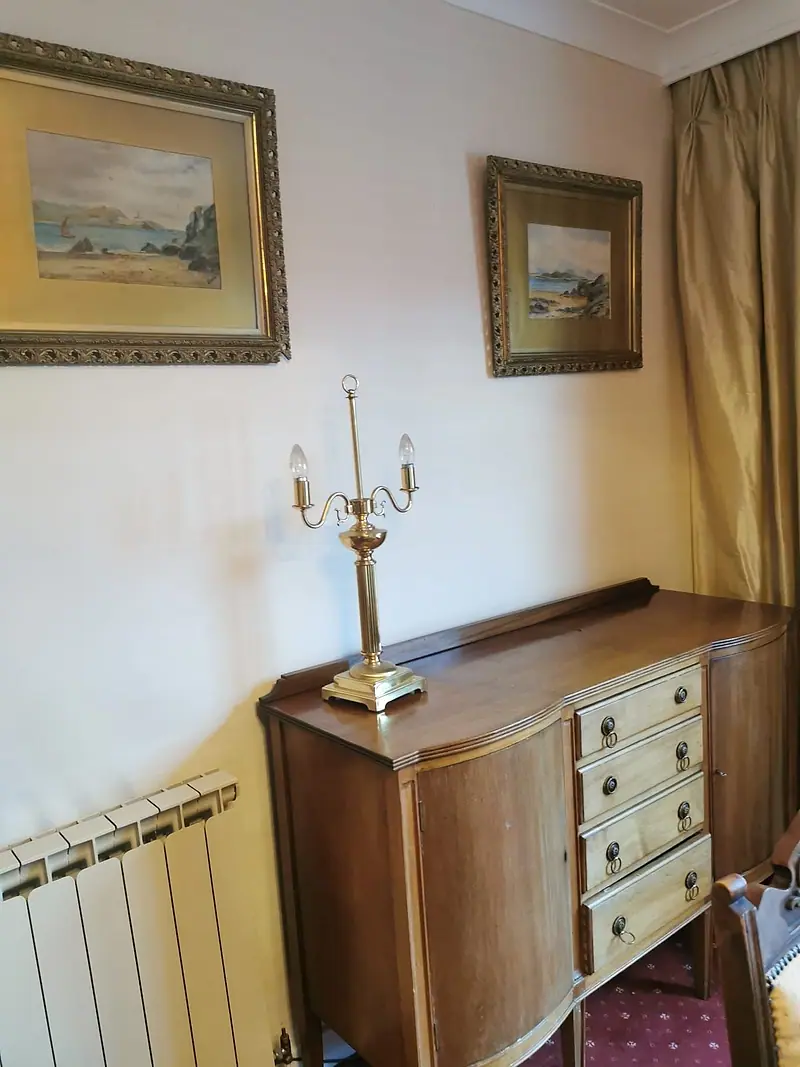
These hold the best furniture, the good china and the pictures. Ask your parent which pieces matter to them, and which to other family members. Dining tables and sideboards are large and hard to sell, so decide early who wants them. The sideboard drawers often hold cutlery, linen, candles and a surprising quantity of old paperwork. Pictures on the wall are best photographed in place before they come down, so you remember where each hung.
The kitchen
Kitchens are full of small things. Keep what your parent will use in their new setting, which may be nothing if the home provides meals. Offer good pots, a favourite mixing bowl or a particular teapot to family. Check the presses for tins and jars with cash or papers in them. Food should be binned, and the fridge and freezer emptied and defrosted. Large appliances such as a fridge freezer or a washing machine have their own disposal route, which is part of how the price is set.
The bedrooms
The main bedroom is the most personal room. Take your time there, and do it last. Check the bedside tables, the wardrobe shelves, shoe boxes and the space under the bed. Jewellery, watches, diaries and religious items are often kept in the bedside drawers. Wardrobes are full of clothes, many of which have not been worn for years. Clothes your parent will want in the home should be chosen with the home's guidance and name-tagged. The rest can go to charity if clean, and otherwise be recycled.
Children's old bedrooms are often storage rooms now. Offer their contents to the people they belonged to.
The study or box room
Papers, books, files and a computer. This is where the important documents tend to be. Do not clear it without going through it first, and keep the computer for the family.
The bathroom and the hot press
Medication goes to a pharmacy. Towels and bedding in good condition can go to charity if you phone first. The hot press in older houses often holds a store of linen, and sometimes a surprising stash of things the owner did not know where else to put.
The attic
Often the largest store in the house. Boxes, suitcases, Christmas decorations, old toys, and sometimes furniture that was put away "just for now". Go through it in daylight, with a torch, and take care with boards and insulation. See our guide on clearing an attic safely.
The garage and workshop
Tools, the lawnmower, spare bits of timber, bicycles and, often, a second fridge or freezer. We can't take paint, chemicals, fuel or gas cylinders; a civic amenity site or hazardous waste collection can. Our guide on clearing a garage explains what to watch for.
The garden and sheds
Garden furniture, pots, tools and green waste. A greenhouse or garden room can hold more than the house. See our guide on clearing or removing a shed.
The first visit after the move
Many families find that the first few weeks after a parent moves into care are the hardest. The house is quiet, the parent is adjusting and the family is tired. A few suggestions for the house during this period.
- Do not clear in a hurry. The decision has been made, but the house does not need to be empty tomorrow unless a sale or a lease requires it.
- Visit the house with someone else. It is harder alone.
- Take what your parent has asked for to them as soon as you can. Familiar things help.
- Keep one room as it was for a while, if that helps.
- Continue to look after the house. Heating, post, security and the garden still need attention.
When the family is ready, the main clearance can go ahead. Sending photographs at that point gives us an accurate picture of what is left.
When a parent's wishes and the family's views differ
Sometimes a parent wants to keep everything, and the family knows that is impossible. Sometimes the parent wants to give things away that others value. Sometimes a parent changes their mind from day to day.
- Listen first. Understand what a particular object means before deciding.
- Offer choices, not ultimatums. "Which three of these would you like to take?" is easier than "You cannot take all of them."
- Keep a record. A list of what your parent said, with dates, helps the family later.
- Use a neutral person. A solicitor, a social worker or a care home manager can sometimes help with disagreements.
- Accept imperfection. Not every decision will be right. Some things will be missed. That is normal.
If a parent has dementia or another condition that affects decisions, speak to their doctor, the care home and a solicitor about who can decide what.
Questions families ask us
How long does a Foxrock house take? A large detached house with an attic, garage and garden buildings can take two days or more. A smaller house or bungalow is often a day. We tell you when we send the price.
Can you work while my parent is still in the house? Yes, for partial jobs such as the attic or garage. We work around you and leave the rest as it is.
Can we keep some furniture in the house for a while? Yes. We clear what you mark, and leave the rest.
Do you take items to the care home? For a short drop to somewhere reasonably local, ask when you book. The main move itself is best done by a removal firm.
What if my parent comes home? Plans change. If the move into care is temporary, a lighter clear-out of the attic, garage and spare rooms may be all that is needed.
Reviews from people who have used us
"Ciprian was a pleasure to work with and he and his crew worked exceptionally hard to clear my dad's house. I am very pleased with the service and the results. Two thumbs up and I would recommend them to anyone."
Brian Plumley, Google review
"Excellent service, really responsive, came on time and got the job done very efficiently while taking care not to damage the house. Great guys to chat to, would definitely use again"
Declan Tormey, Google review
Getting a price
Send photographs of each room, the attic, the garage, any garden buildings and the approach from the road, with your Eircode. Tell us your timing and anything that is going into care. We will reply with a fixed price, usually the same day, and go at the pace the family needs.
 spotless.ie