
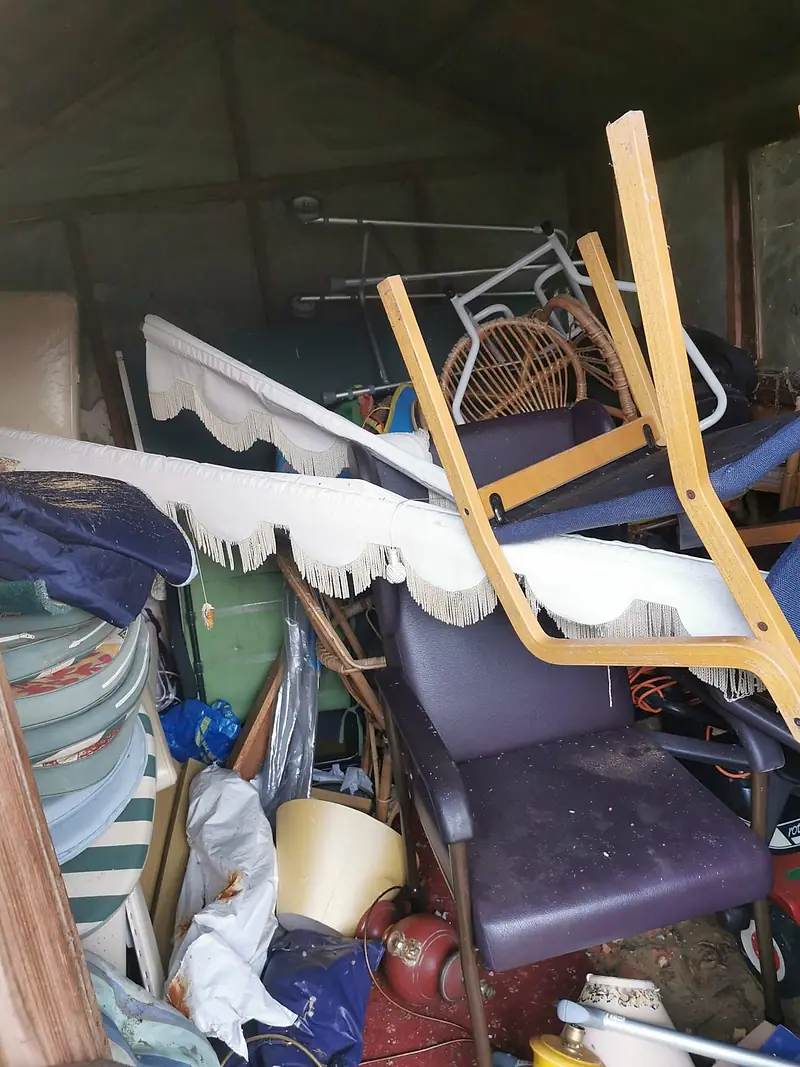
Look before you reach in
Sheds get damp, dark and forgotten, which makes them a favourite spot for things that bite, sting and cut. Before you start pulling things out, take a minute to look.
- The floor. Soft or spongy boards may give way. Step near the edges, where the frame is.
- The roof. A sagging roof, or one letting in daylight, may not be safe to work under.
- Wasps and rodents. Listen for buzzing, and look for droppings and gnawed bags. Leave an active wasps' nest to a pest controller.
- Glass. Old shed windows are often ordinary glass, and cracked panes can drop out when the door swings.
- Sharp tools. Shears, saws and slashers hang at head height or lie hidden under other things.
- Dust and cobwebs. Gloves, long sleeves and a dust mask make it far more pleasant.
Prop the door open for light and air, and work in daylight. If the shed has power, don't touch damaged sockets or cables.
What's usually inside, and where it goes
| Item | What to do with it |
|---|---|
| Lawnmower, strimmer, hedge trimmer | Keep, sell or pass on if it works. Deal with the petrol first (see below) |
| Hand tools | Keep one good set and pass on the duplicates |
| Garden furniture and parasols | Clean and keep, or pass on; broken pieces go |
| Barbecue | Disconnect and remove the gas bottle before moving it |
| Flowerpots, seed trays, hoses | Keep what you'll use; cracked pots and split hoses go |
| Timber offcuts, broken trellis | Clean wood can be reused; painted or treated timber goes for disposal |
| Bikes, toys, sports gear | Pass on if usable; metal goes for recycling |
| Paint, chemicals, slug pellets | Specialist disposal, never the bin |
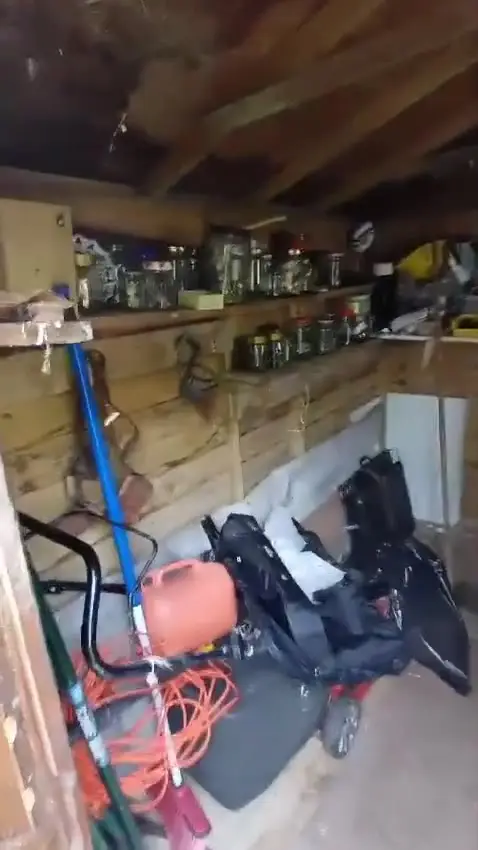
That short video shows a packed shed before we cleared it: tools, paint tins, a lawnmower and shelving. It's a very typical mix.
Fuel, chemicals and the dangerous shelf
Every shed seems to have a shelf of half-used bottles. Treat it with care.
- Petrol. Empty mowers and strimmers by running them dry outdoors, or ask the place that services them. Old petrol cans should be sealed, kept upright and stored away from heat until they go.
- Garden chemicals. Weedkiller, insecticide and slug pellets stay in their original containers. Some older products are no longer allowed, so don't use or decant unlabelled bottles. Bring them to a facility that accepts household hazardous waste.
- Gas bottles. Barbecue and patio heater cylinders usually go back to a stockist.
- Paint and wood treatments. Original tins, labelled, to the right facility.
Keep children and pets away while you work on this part, and wash your hands afterwards.
Is the shed worth keeping?
Once it's empty, you can see the shed properly. Some just need a sweep and new roof felt. Others are finished.
| Signs it can be saved | Signs it's time to go |
|---|---|
| Solid floor, sound frame | Floor soft, sagging or rotten through |
| Roof felt worn but the boards dry | Roof boards rotten or collapsing |
| Some surface mould on the outside | Rot at the base of the walls |
| Door sticks but the frame is square | Shed leaning, frame twisted |
If it's sound, a re-felt and a coat of timber treatment can give it years more. If not, taking it down usually makes more sense than patching it.
Taking a shed down safely
Dismantling a shed is a two-person job and takes longer than people expect. Pick a dry, calm day, because loose panels catch the wind.
- Power off. If the shed has electricity, have an electrician disconnect it safely first.
- Empty it completely, including shelving and anything screwed to the walls.
- Glass out. Take out the windows before anything else, wearing gloves, and wrap the glass.
- Roof next. Strip the felt, then lift off the roof boards or sheets, working from the top down.
- Walls. Unscrew or prise the panels apart one at a time, with someone holding each panel.
- Floor and clean-up. Lift the floor and collect every nail, screw and splinter from the ground.
Metal sheds unbolt panel by panel, so keep the bolts in a tub as you go. The concrete or slab base is usually left in place, as breaking it out is a separate job.
Old sheds and asbestos: leave it alone
This is the one part of a shed job you shouldn't do yourself. Some older sheds, garages and outbuildings have corrugated cement roof sheets or wall panels that may contain asbestos. Asbestos is dangerous when its fibres get into the air, which happens when the material is broken, cut, drilled, sanded, power washed or even swept hard.
As a rule of thumb, treat grey corrugated sheets on any older shed as possibly containing asbestos until someone qualified says otherwise. If you're not sure:
- don't break, drill, cut or power wash the sheets
- don't try to take the roof off yourself
- don't put pieces in a skip or your bin
- have it checked and removed by a specialist asbestos contractor
You can still clear the contents carefully, and once a specialist has dealt with the roof, the rest of the shed can be taken away as normal. That's how we work: we don't break up or remove asbestos materials, but we're happy to clear the contents and remove the rest once it's been dealt with.
Shed full, or ready to come down? Send a photo of the inside, one of the whole shed and one of the route to the road. We'll reply on WhatsApp with a fixed price, usually the same day.
Garden waste around the shed
Sheds rarely stand alone. Behind and beside them you'll often find hedge cuttings, branches, old compost bags, rubble from an old patio and the odd broken trampoline.
- Green waste. Small amounts can often go in a brown bin; check what your bin provider accepts. Larger amounts can go to a recycling centre that takes garden waste.
- Soil and rubble. Heavy, and not accepted everywhere, so check before you load the car.
- Bigger garden jobs. Overgrown corners or a whole garden to clear are covered by our garden clearance service.
After the shed: the base and the paving
When a shed comes down, the slab or paving underneath is usually green, mossy and stained. A good wash shows whether the base is worth keeping for a new shed or a seating area. We also do patio cleaning and moss removal if you'd like it brought back.
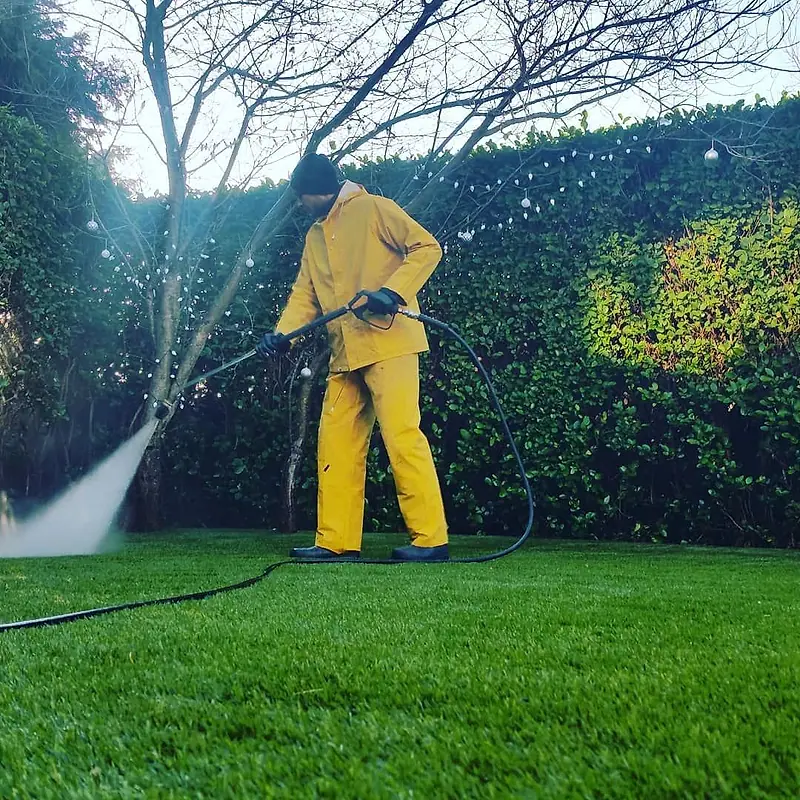
 spotless.ie
When to get help
A small shed can be emptied in an afternoon. Taking down a large, rotten shed and getting it through the house to a van is another matter, particularly in a terrace with no side access. Our shed clearance and removal service empties sheds or dismantles them completely, with a fixed price from photos.
If the garage needs doing too, read our garage clear-out guide or see garage clearance. For loose rubbish you've already gathered, junk removal is the quickest option, and for the whole property, house clearance covers everything from the attic to the end of the garden. Wondering whether a skip would be easier? Read house clearance vs skip hire.
