
Why a Rathgar house suits a staged clearance
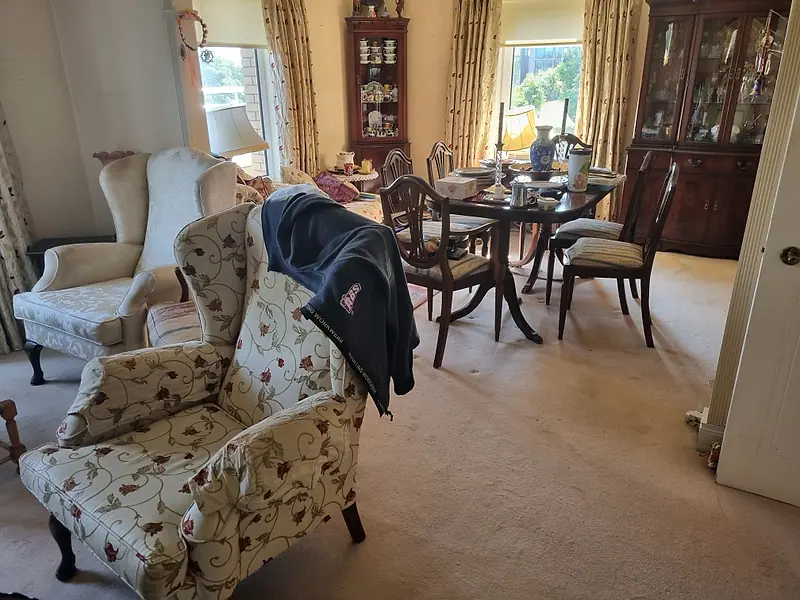
A period house in Rathgar is big in every direction. Three or four floors, a return at the half-landing, a garden level or basement with its own door under the steps, an attic over a narrow hatch, and a long garden with a shed at the end. A parent who lived there for forty or fifty years filled every one of those spaces, and the family is now expected to decide what happens to all of it.
Trying to do that in a single push rarely works. Decisions get made in a hurry, papers get thrown out with newspapers, and the person who lives furthest away never gets to see the house full one last time. A staged clearance spreads the decisions over several visits, so each one is small enough to manage.
This guide is a plan for doing that in a Rathgar house, in five stages. It is general practical guidance rather than legal advice; the executor decides what happens to the estate, and the solicitor tells the executor when the house may be cleared and put on the market. For who does what among the family, the executor, the solicitor and the agent, see our Ranelagh guide to roles and timing. For how a bereavement clearance works in general, see clearing a house after someone dies, and for the service itself, bereavement house clearance in Dublin.
The five stages at a glance
| Stage | What happens | Where in the house |
|---|---|---|
| 1. Papers and valuables | Find, gather and hand to the executor | Bureau, sideboard, bedrooms, attic trunks |
| 2. Keepsakes | The family walks through and chooses | Every room, top to bottom |
| 3. Donations and reuse | Offer, give and arrange collection | Whatever is left after stage two |
| 4. The clearance | We clear the house, floor by floor | Attic down to the garden and shed |
| 5. The clean | Carpets, upholstery and the outside | Empty rooms, steps and paths |
Stages one to three belong to the family, and they take as long as they take. Stages four and five are ours, and they are the quick part. Between each stage the house has to be looked after, and that is covered towards the end.
Stage one: papers and valuables
The first job in any bereavement clearance is to find the paperwork, and in a period house there are more places for it to be. Start with the obvious ones: the bureau or writing desk, the sideboard drawers, the bedside lockers and the wardrobe shelves. Then the less obvious: biscuit tins, handbags, coat pockets, the drawer of the kitchen table, suitcases in the return room and the trunks in the attic.
Gather everything into one box with a lid and give it to the executor to sort later. Do not read through it on the day, because that is how an afternoon disappears. What the executor is likely to need is set out in the Ranelagh guide linked above, and what to do with silver and anything that might be valuable is covered in our Dalkey guide to valuables and keepsakes.
If something valuable may still be in the house when we arrive, tell us. We check drawers, pockets, books and boxes as we clear, and anything that looks personal or valuable is set aside and shown to the family, never loaded.
Stage two: keepsakes for the family
Once the papers are safe, the family chooses. In a house of this size the walk-through works best one room at a time, in a set order, with each person's choices marked with tape and a name. Photograph everything that is not being claimed so relatives who cannot be there can see it, and give them a deadline that is kind but real.
Put the keepsakes in one room, or in a corner of each room, and tell us which. Nothing marked for the family leaves the house during the clearance. Where two people want the same thing, leave it unmarked and move on; the clearance date should never force that decision.
 spotless.ie
Stage three: donations and reuse
This is the stage families most often skip, and then regret. Before the clearance, offer what nobody wants to friends, neighbours and local charities. Phone first. Charity shops are selective about furniture, bedding and electricals, and large pieces of solid furniture are hard to place. Clean clothes in good condition and books are the easiest to give.
Whatever remains when we arrive is sorted as we clear: sound furniture is kept back for reuse where there is a use for it, metal and electrical items are separated for recycling, and what is left is taken to authorised waste facilities. Spotless is an authorised waste carrier (permit NWCPO-25-13287-01) and fully insured on every job. For the detail, see what happens to furniture after a clearance.
Clearing a parent's house in Rathgar? Send photographs of each floor, the attic, the garden level and the garden on WhatsApp, and tell us you would like to work in stages. We will reply with a fixed price for the whole house.
Stage four: the clearance, floor by floor
By the time we arrive, the hard decisions are made and the house can be cleared quickly. We start at the top of the house and finish in the garden, so each floor is dealt with once and the stairs are used in one direction.
The attic
Trunks, suitcases, Christmas decorations and bundles of papers, usually reached through a hatch with a ladder rather than stairs. Every box is opened on the landing before it goes down. See attic clearance.
The upper floors and the return
Bedrooms and the return room, where the wardrobes are often too big ever to have come up the stairs whole. They go down in pieces, taken apart in the room, and the stair carpet, banisters and hall floor are protected before the first one moves.
The hall floor
The reception rooms, with the heaviest furniture in the house: sideboards, bookcases, dining tables, pianos. Tell us about a piano or a safe when you send photographs, so the right number of people come.
The garden level
Sometimes a flat that was let for years, sometimes a store full of paint tins, tools and garden furniture. Where it has its own door, the whole level is cleared through that door and the main hall is left alone. Paint, solvents and oils are not something we take, so check for them here before the day.
The garden and the shed
Garden furniture, tools, bikes, pots and the shed itself if it is going. A back lane with space for the van turns this into a separate, quicker job. See shed clearance and garden clearance.
A large Rathgar house with a basement and a full attic is often a two-day job, and a staged plan lets those days be separated by weeks if that suits the family. Our house clearance in Rathgar page covers the steps, the permit parking and the back lanes in more detail.
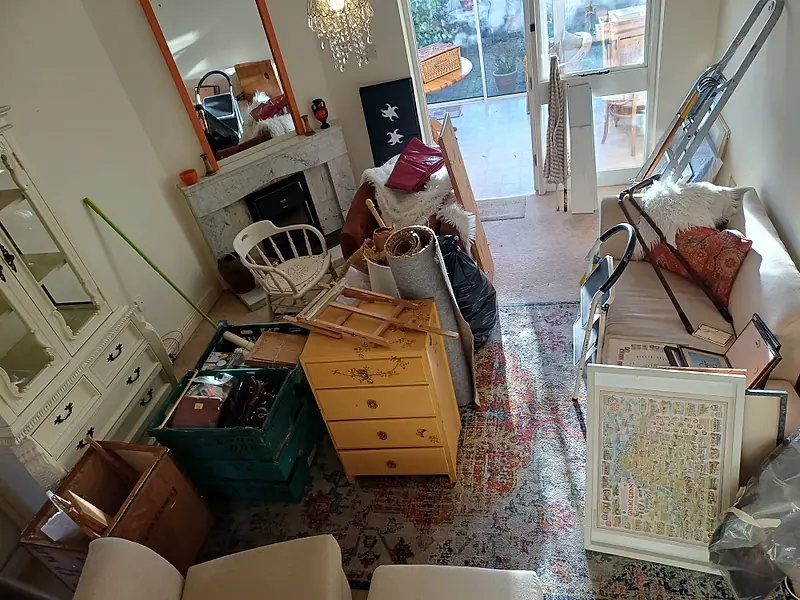
Stage five: the clean
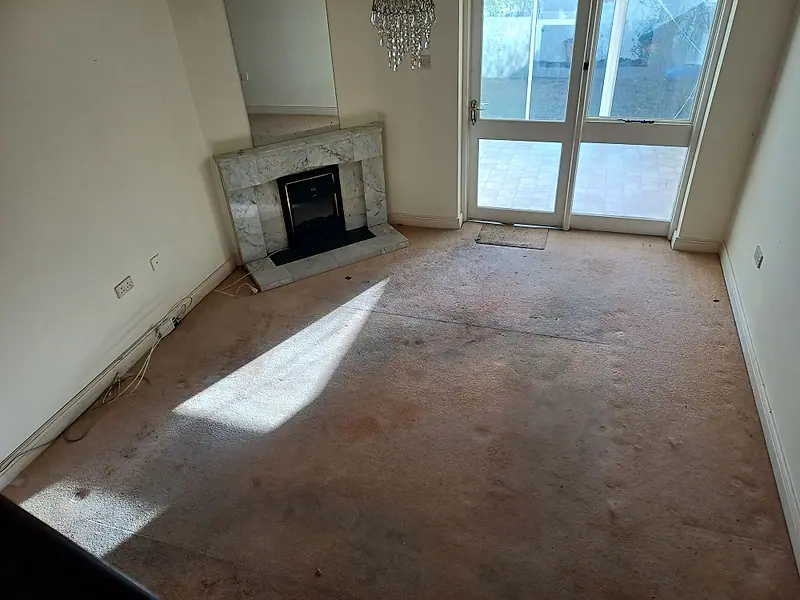
An empty house shows its floors. In a Rathgar house that often means original boards, tiled halls and wool carpets that have not been seen fully for years.
- Carpets are cleaned by hot-water extraction after the rooms have been emptied, so no corner is missed. An old wool carpet is tested on an unseen patch before the whole room is done. Drying takes a few hours, and longer in an unheated house, so leave some heat on.
- Upholstery that is staying for the photographs, or going to a family member, can be cleaned at the same time; see sofa cleaning in Rathgar. We clean fabric only, not leather.
- The outside comes last: granite steps, the path, the front garden and any patio or side passage, washed with hot water and swept down afterwards. For power washing we use the house's outside tap and a power socket, so make sure both still work before you book it.
We do not offer a full domestic clean of kitchens and bathrooms, so if the agent wants one, book a cleaner for after the clearance and before the carpets. Our guide to preparing a property for sale gives the full order: clear, repair and paint, carpets, outside, photographs.
Between visits: keeping the house secure and insured
A staged clearance means the house sits part-empty for weeks, and an empty house needs minding.
- Tell the insurer. Many home policies have conditions for unoccupied houses, and the executor should check what applies before the first visit. Your insurer or broker will explain the conditions.
- Know where every key is. Front door, garden-level door, side gate, shed, alarm code. Keep a written list and tell the solicitor who holds what.
- Keep some heat on in winter, and leave internal doors open so air moves through the house.
- Redirect the post and clear the hall of anything that shows through the glass.
- Do not leave cleared items outside. Everything we remove leaves on the van on the day, so nothing sits in the front garden to signal an empty house.
- Ask a neighbour to look in, and give them a number to ring.
- Check after each visit for leaks, open windows and the alarm.
If the house will be empty for months while probate goes through, our Carrickmines guide to looking after an empty house goes further on security, heating and damp. The first weeks after a death, before any of this begins, are covered on our house clearance after bereavement page.
Setting the pace
The pace is set by the family, the solicitor and the estate agent, in that order.
The family decides how many visits it needs for stages one to three. One walk-through is sometimes enough; three or four short ones are often better in a big house. The solicitor decides when the house may be cleared and sold, and in some estates contents must be listed before they leave. The agent decides when the photographer comes, and the clearance and the clean should finish about a week before that.
Whatever the pace, the price is agreed up front. A staged clearance over several visits is priced together from the photographs before the first visit, and nothing is added on the day. If the plan changes between visits, tell us and we confirm the figure before the next one. Tell us the dates as they firm up and we plan each visit around them. Our working days are Monday to Saturday, 8am to 5pm; we do not work on Sundays.
Getting a price
Send photographs of each floor, the attic, the garden level, the garden and the shed, with a photograph of the street and any lane at the back. Tell us who is giving instructions, whether the family wants to work in stages, and any date from the solicitor or the agent. We reply with a fixed price in writing for the whole house, and the clean can be quoted from the same photographs. Photos can go to 085 202 1222 on WhatsApp, or through the quote form. We go at the family's pace.
