Why a clearance needs a plan
When a parent or relative dies, the house they leave behind has to be looked after, sorted, emptied and, usually, sold or let. Several people have a part in that, and each of them sees only their own piece. The solicitor sees the estate. The agent sees the sale. The family sees the memories. The clearance team sees a van and a date.
Without a plan, families end up with the same job done twice, or not at all. A sibling throws out papers the executor needed. The agent books a photographer for a house that is still full. A key is held by someone who cannot be reached. None of it is dramatic, but all of it adds to an already painful time.
This guide is a map of who does what, written for a family clearing a home in Ranelagh and the streets around it. It is not legal advice, and your solicitor decides the legal questions. For the wider picture, see our guides to clearing a house after someone dies and what to do in the first weeks.
The cast
The executor or administrator
The executor is named in the will. If there is no will, an administrator is appointed. They are responsible for the estate and make decisions on behalf of everyone who has an interest in it. In practice they give instructions to the solicitor, the agent and, when the time comes, to us.
What they do: hold or arrange keys, decide who takes what, approve the price, sign off the work, pay invoices from the estate.
Tip: if there are two executors, agree who gives instructions, and tell everyone.
The solicitor
The solicitor handles the legal side of the estate, including the application for a grant of representation, and the sale of the property if there is one.
What they do: tell the family what has to happen first, advise on listing or valuing contents, handle the sale or transfer of the house, and tell the executor when the house can be cleared and sold.
What to ask them: whether contents need to be listed before they leave; whether anything is left to a specific person in the will; when a clearance can start; and what to do if the family disagrees.
The family
Brothers, sisters, children, grandchildren, nieces, nephews, friends. Each has a view of the house and its contents.
What they do: say what they would like, attend the sorting, help with the first walk-through, and agree to a deadline.
Tip: one person should act as the family's point of contact, collecting requests and passing them to the executor.
The estate agent
If the house is being sold, the agent advises on price and timing, books the photographer and arranges viewings.
What they do: tell you what state the house should be in for photographs and viewings, and whether a few pieces of furniture should stay.
What to ask them: whether the house should be empty, when the photographer comes, and which fixtures and fittings go with the sale.
The neighbours
In Ranelagh, neighbours often knew the person for decades. They may hold a key, have noticed a problem or want to be told when the house is empty.
What they do: keep an eye on the house, accept a delivery, and sometimes want a keepsake.
Tip: tell the neighbours who is in charge, and give them a contact number.
The insurer
The home insurer needs to know the house is empty. Many policies have conditions about unoccupied homes. Your insurer or broker will explain what applies.
The clearance team
That is us. We clear the property, check drawers and cupboards, set aside papers and personal items, sort and remove the rest, and send photographs of the empty rooms.
What we need from you: photographs of each room, the attic and any outbuildings; the date; keys or access; parking details; what is staying; and the name of the person giving instructions.
The carpet and washing teams
Once the house is empty, carpets can be cleaned by hot-water extraction and the outside washed, which is useful before a sale. We do both, and they can be booked with the clearance.
A month-by-month plan
Every estate is different. This plan is a general shape.
Week one
- Secure the house. Know who has keys.
- Contact the solicitor.
- Tell the insurer the house is, or will be, empty.
- Redirect the post.
- Empty the fridge and freezer.
Weeks two to four
- Gather papers into one box.
- Find the will, if it has not been found.
- Make a list of valuables and keepsakes.
- Ask the solicitor about timing.
- Photograph each room for reference.
Month two
- Family walk-through. Mark what is wanted.
- Agree on a deadline for claims.
- Speak to an estate agent, if the house is being sold.
- Send photographs to us for a fixed price.
- Fix a date for the clearance, subject to the solicitor.
Month two or three
- Clearance. Attic, garage and shed first if staging.
- Repairs and painting, if the house is being sold.
- Carpet cleaning.
- Power washing of the driveway, steps and front.
Month three or later
- Photographs and viewings.
- Return the keys.
- Close utility accounts after the handover.
The dates will shift, and that is normal. The important thing is that each step has an owner.
Ranelagh houses and what each means for the plan
Ranelagh is known for red-brick terraces, artisan cottages and larger period houses, as well as flats. Each affects the clearance.
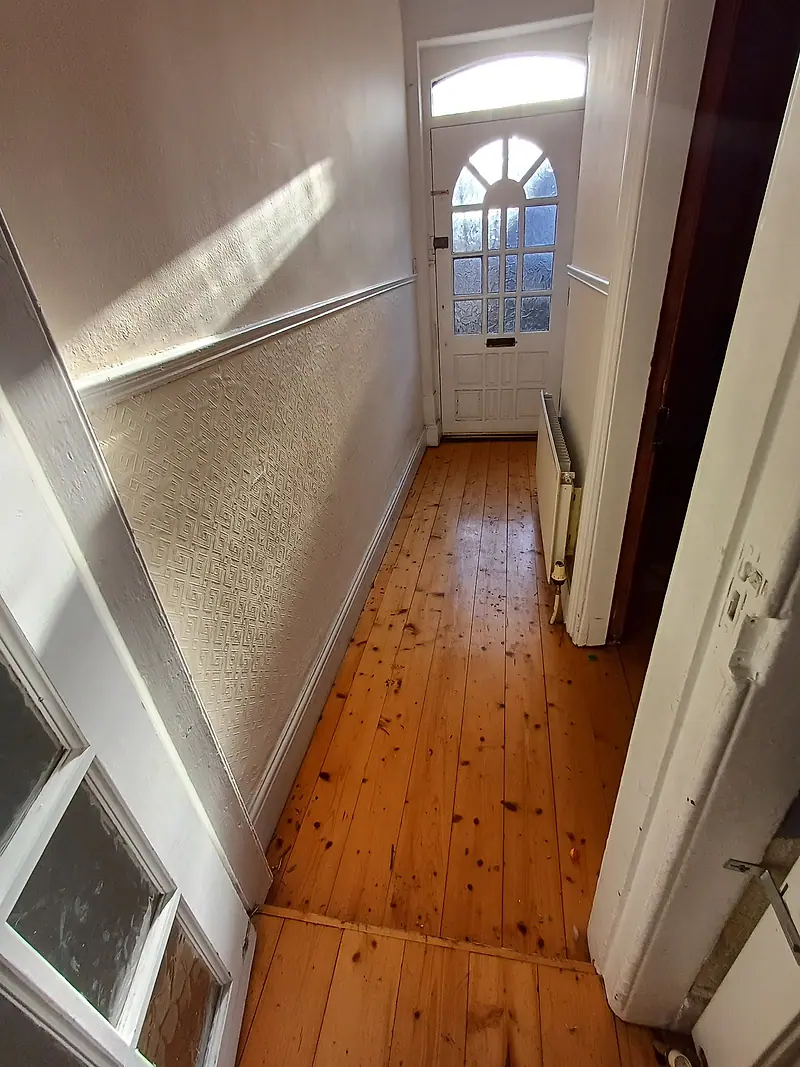
Red-brick terraces. Narrow halls, steep stairs and no side passage. Everything comes out through the front door. Plan for short van stops, and tell us about parking on the street. See our page on house clearance in Ranelagh.
Artisan cottages. Small rooms with a lot in them. Furniture is often large for the space. We take it apart indoors.
Larger period houses. Basements, attics and gardens. More volume, and often more time.
Flats. Shared halls and sometimes a lift. Ask the managing agent or landlord for rules.
Many Ranelagh houses have a basement or garden level, and some have a shed or outhouse at the back. Photograph all of them.
Dividing the contents fairly
This is where families struggle. Some principles help.
- Agree the rules before you begin. Taking turns to choose works well. A tie-break by the executor is simple.
- Separate sentimental from financial value. A cheap clock may matter more than a pricey vase.
- Respect the will. If it leaves particular items to named people, those are not up for discussion.
- Do not decide under pressure. If two people want the same thing and cannot agree, leave it and move on.
- Put it in writing. A list of who took what, with dates, avoids arguments later.
- Photograph what nobody takes. It gives people comfort.
If the disagreement is serious, the solicitor can advise. A clearance date should never force a decision about something contested.
Keys and access
Make a list of every key and who has it.
- Front door.
- Back door and side gate.
- Shed, garage or outhouse.
- Alarm code.
- Any meters in locked cupboards.
Tell us who will let us in. We can collect keys from the solicitor, the agent, a neighbour or a relative, and return them at the end. If an alarm is fitted, make sure the code is passed on and the monitoring company knows.
What happens on the day
- Arrival. The crew arrives at the agreed time and agrees where the van will stop.
- Walk-through. With you or your nominee, confirming what stays, such as items marked for family, fixtures included in the sale and anything uncertain.
- Protection. Covers go down on the stairs and hall.
- Clearing. Rooms are cleared in order. Large pieces come apart indoors. Drawers, cupboards, pockets and boxes are checked.
- Setting aside. Papers, photographs, jewellery and personal items are kept for the family.
- Sorting. Furniture worth reusing is set aside where possible, metals and electricals are separated, and the rest goes to licensed facilities. We are an authorised waste carrier, permit NWCPO-25-13287-01, and fully insured.
- Finish. Rooms left clear, floors swept or vacuumed where needed, and photographs sent.
A terrace or cottage is usually a day. A larger house may take longer. We work Monday to Saturday, 8am to 5pm, and not Sundays.
Communication: one thread, one contact
A bereavement clearance goes wrong when information is scattered. Keep it simple.
- One family contact collects questions and decisions.
- One WhatsApp thread with us, or one email chain, so nothing is lost.
- Photographs shared in one place, such as a shared album.
- Decisions in writing, even if it is a text message.
We keep in touch by WhatsApp during the day, and send photographs when each stage is finished.
Money: who pays
Usually the estate pays, through the executor. We agree the price with the person authorised to book, and the invoice can be made out to the estate. Check with the solicitor before booking, so payment is straightforward. Our house clearance cost guide explains what affects the price.
Dealing with the unexpected
A relative turns up and wants something. Check the list, check the will and agree with the executor.
You find something you did not expect. Papers, cash, a box of letters. Put it aside and tell the executor.
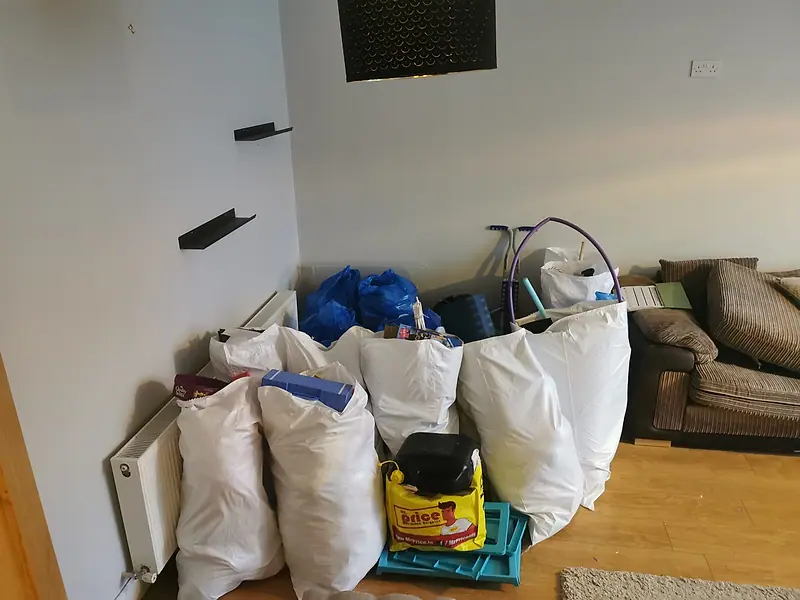
The house is more cluttered than you thought. We can clear in stages and work at a pace the family is comfortable with. Our hoarder clearance page explains how.
Damp, leaks or damage. Tell the insurer and, if rented, the landlord. If we notice it on the day, we tell you straight away.
The sale falls through or moves. Tell us as soon as you know. We can rearrange.
After the clearance
When the rooms are empty, the house is ready for the next step. If it is being sold, repairs and painting, then carpets, then the outside, then photographs. Our guide to preparing a property for sale sets out the order. Carpets can be cleaned by hot-water extraction once the rooms are bare; see carpet cleaning in Ranelagh.
Hand back keys to the people who need them. Keep the photographs we send until the sale is complete.
Looking after each other
Families sometimes mistake the clearance for the grief. It is not. It is a job, and it is often a relief to have it done, and then a sorrow to see the empty rooms. Both are normal. If you are the one in charge, ask others to share tasks. If you are not, offer.
A checklist to print
- Who is the executor? Who gives instructions?
- What has the solicitor said about timing?
- Who holds each key?
- Has the insurer been told?
- Are papers and valuables in one place?
- Has the family had a walk-through, and is there a deadline for claims?
- Has the agent given dates?
- Have photographs gone to the clearance team?
- Is the date fixed, and does everyone know?
- Who will be the family contact?
What the executor actually needs from the house
An executor often becomes responsible for a house they have barely thought about. These are the things from the property that they are likely to need, and where to look.
For the estate paperwork. Bank and post office books, savings certificates, prize bonds, share certificates, pension and insurance letters, recent statements, tax papers, and the deeds or proof of ownership of the house. In older homes these are kept in a sideboard, a bureau, a biscuit tin, a shoebox in the wardrobe or a folder under the bed. If you find them, put them in one box with a lid, and do not sort them on the day.
For the sale. The deeds, any planning documents, certificates for work done to the house, the BER certificate if there is one, and a note of fixtures and fittings.
For closing accounts. Recent utility bills, the broadband account, phone and television contracts, subscriptions, and any standing orders for services that will keep billing.
For identity and health. Passports, medical cards, hospital letters and anything the solicitor asks for. Hand these to the executor or the solicitor.
For the family. Photographs, letters, diaries, certificates, cards and the contents of any memory box.
The clearance team checks drawers and cupboards as it goes, and puts papers aside in one place. It is still much better if the main papers have been gathered before the day.
The first walk-through, step by step
The family walk-through is the most useful single hour in the whole process. A good one takes about an hour for a terrace and longer for a bigger house.
- Meet at the house with the executor and anyone with a strong interest.
- Agree the rules for choosing, out loud, before anyone picks anything up.
- Go room by room, in the order you decided. Mark wanted items with tape or a note and the person's name.
- Photograph everything that is not being claimed but that people want to remember.
- Open the drawers and look in the wardrobes, the press and the attic hatch. Do not skip them.
- Set a deadline for people who are not there to claim items, and make sure they receive the photographs.
- Agree what happens to the unclaimed items: donate, sell or clear.
- Write down the decisions and send the list to everyone.
After the walk-through, there is a clear list of what is staying, and the rest can be priced from photographs.
Ranelagh logistics: the street, the Luas and the neighbours
Ranelagh is a busy neighbourhood with a lot of people living close together. That affects how the day runs.
- Narrow roads and parking. Many side roads are tight, and parking is permit or pay-and-display. If you can arrange a visitor permit or a reserved space, do. Tell us what the rules are on the street, and send a photograph of the road outside the house. We stage everything inside and load in short runs.
- The Luas and the village. Traffic around the village can be heavy at busy times. A mid-morning start often avoids the worst of it.
- Red-brick stairs and halls. Steep stairs, narrow halls and period features such as tiled floors, banisters and fireplaces. We cover floors and stairs before anything moves and take big pieces apart where they stand.
- Basements and attics. Check that you have photographs of both. Both can hold a lot.
- Neighbours. A word the day before is courteous, and neighbours who knew the person may want to say hello, or may be holding something for the family.
- Shared hallways. If the house is divided into flats, tell the other occupants when the van will be there.
Our page on house clearance in Ranelagh describes the homes and the side roads, and clearing before the builders covers renovation after a sale.
When the house is going to be renovated
Ranelagh houses are often bought to be done up. If the buyer or the family intends to renovate, the clearance may be part of a longer chain.
- Ask the buyer or builder what they expect. Some want the house empty, with carpets and fittings left for them to remove. Some want fixtures taken out.
- Do not clean carpets that are about to be ripped up.
- Take care with fixtures. Items such as fireplaces, light fittings and built-in units may be included in the sale. Check with the solicitor.
- Give builders time. If the clearance finishes late, the builders may be delayed.
Dealing with different kinds of items
The same decisions come up in almost every house. These are some of the less obvious ones.
Clothes and shoes. Family often wants one or two pieces. Clean clothes in good condition can go to charity, and many shops take bags at the counter. Phone first. Worn textiles can go for recycling.
Books. Check inside for letters, photographs and money. Keep what the family wants. Good books can be boxed for reuse where possible.
Pictures and frames. Family portraits are best handled by the family. Decorative prints and frames can go, but if you are unsure, keep them aside.
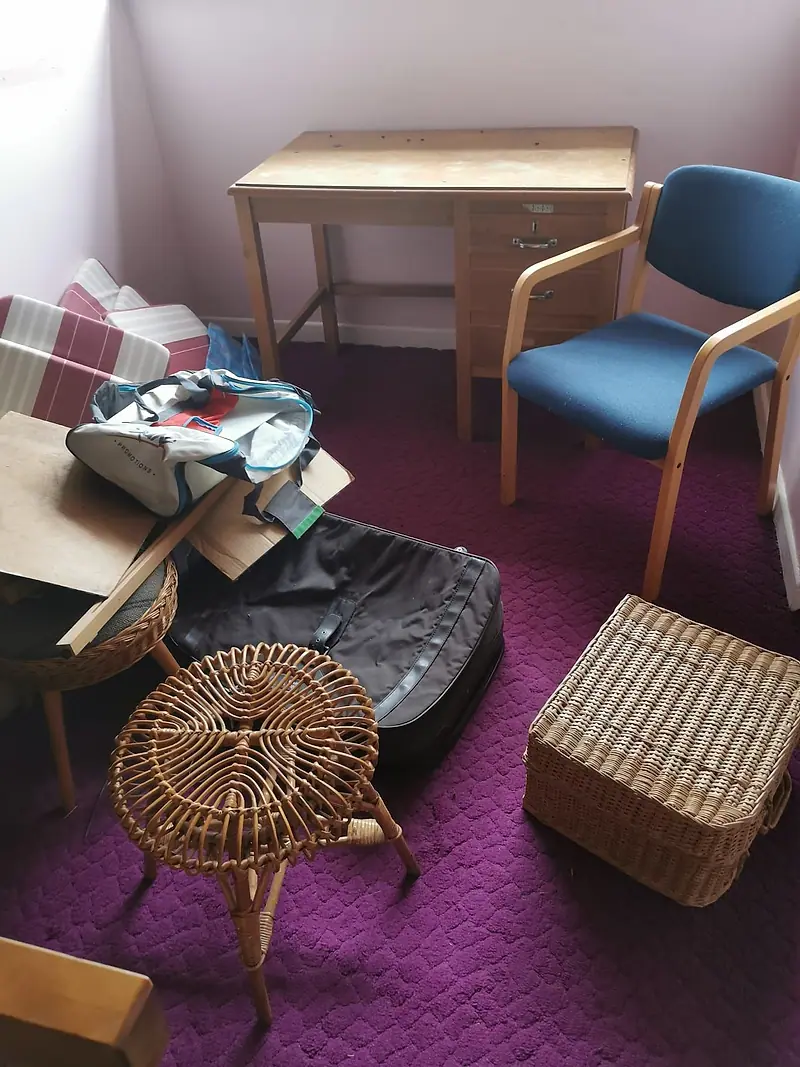
Furniture. Offer it to the family first. Solid wood furniture is difficult to sell, and charity shops rarely take large pieces. What nobody wants is cleared. Furniture worth reusing is set aside for reuse where possible.
Bedding and towels. Charities are selective. Phone first.
Electricals. Televisions, computers and phones should be checked for personal data. We do not offer data destruction, so wipe or remove what you need to. Electrical items are recycled.
Medical items. Medication goes to a pharmacy. Equipment such as hoists, commodes and walking frames may belong to the HSE or a supplier. Contact them.
Cars and bikes. These are separate matters for the executor and the solicitor.
Religious items. Statues, rosaries, Mass cards and prayer books are set aside for the family to decide on.
Food and drink. Bin perishable food. An unopened bottle might be something the family wants to keep.
If the house is rented
If the deceased was a tenant, the landlord and the tenancy terms set the timetable. Contact the landlord early and ask what they need. The Residential Tenancies Board has guidance on tenancies, and your solicitor or a housing advice service can help if there is a dispute. We can clear the property to the landlord's date, leave anything that belongs to the landlord, and send photographs of the empty rooms for your records.
If the house is jointly owned or shared
If the house was shared with a partner, a sibling or a housemate, they have their own interest. Do not clear anything that may belong to them. Agree what is theirs before the day, and tell us what is staying. A solicitor can advise where ownership is unclear.
Common questions from Ranelagh families
How long does a Ranelagh terrace take? A terrace or cottage is usually a day. A larger house with a basement and a full attic can take longer. We tell you when we send the price.
Can we be there? Yes, and many families are for at least the walk-through. Others prefer not to be and see photographs instead.
What if we are not ready on the date? Tell us as early as you can. We will do our best to move it.
Can you take things to a charity? We can separate items you want to give to a named charity, but check that they accept them first. Not every charity takes every item.
What if we find something personal? We set it aside and tell the executor.
What if the house is very full? We can clear in stages and at the family's pace. See our page on hoarder clearance if the house has become hard to manage.
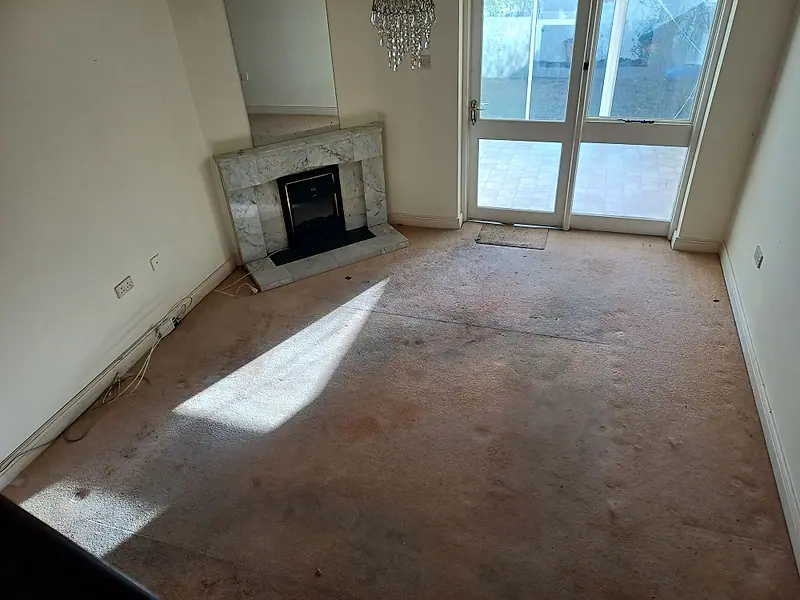
What about the carpets? Once the rooms are empty, carpets can be cleaned by hot-water extraction. Older wool carpets are tested in a hidden spot first.
Reviews from families we have helped
"Ciprian and Brian and Willie were great. They cleared out our mom's house after she passed away last year. Professional, organized, empathetic and resourceful. It was a job we were dreading but they did it quickly with no fuss. I've never made an effort to make a recommendation online but Ciprian exceeded expectations."
Denis Nolan, Google review
"Following the sad passing of our mother, Cyprian and his team cleared her property with kin efficient sensitivity that made the process very easy. Very grateful for the good work and would highly recommend them."
Patricia Charles, Google review
Getting a price
Send photographs of each room, the attic, any basement, the garden and the street outside, with your Eircode. Tell us who is giving instructions and any date from the solicitor or agent. We will reply with a fixed price, usually the same day, and go at the family's pace.
 spotless.ie