Power washing for Dublin homes and businesses
Dublin's weather is mild and damp, which is exactly what moss and algae like. A driveway that looked fine in September can be green and slippery by February, especially if it faces north or sits under trees. Add traffic film, oil drips and the odd bit of chewing gum on the path outside, and most Dublin paving needs a proper clean every year or two.
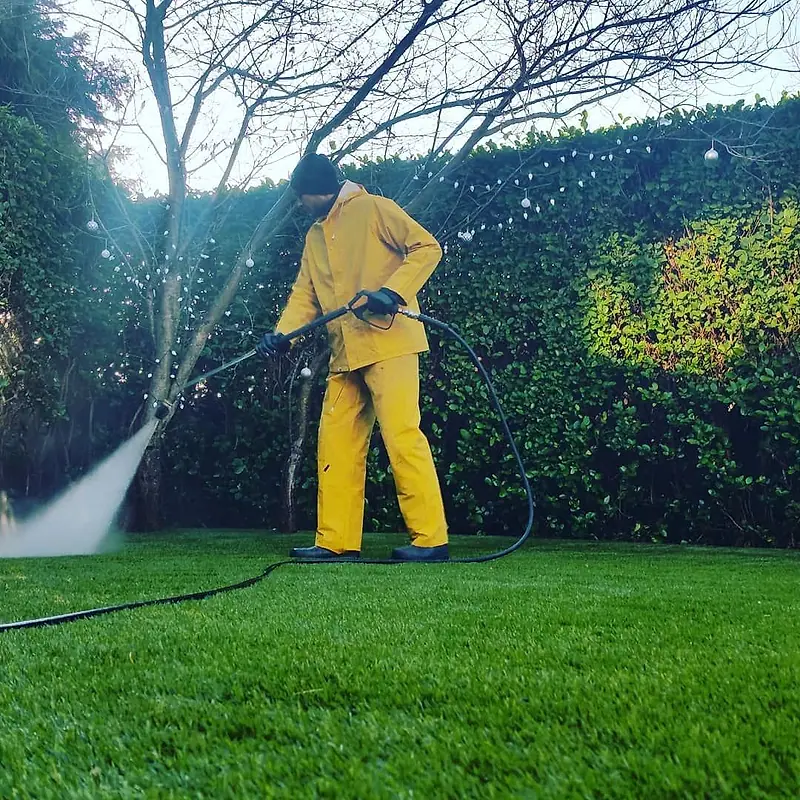
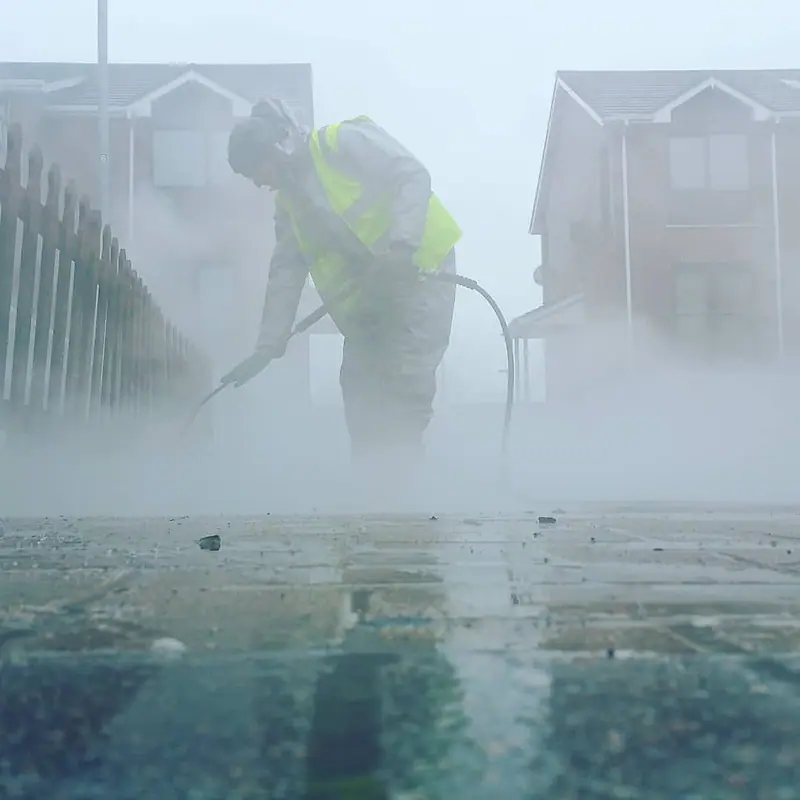
We power wash right across the city and county, from red-brick terraces in Dublin 3 to estate driveways in Dublin 24 and apartment car parks in Dublin 18. Most jobs are a hot-water pressure wash on hard paving. For roofs, render and painted walls we switch to a low-pressure soft wash, because blasting them does more harm than good.
- Driveways and paths: cobble-lock, block paving, concrete and tarmac (driveway cleaning)
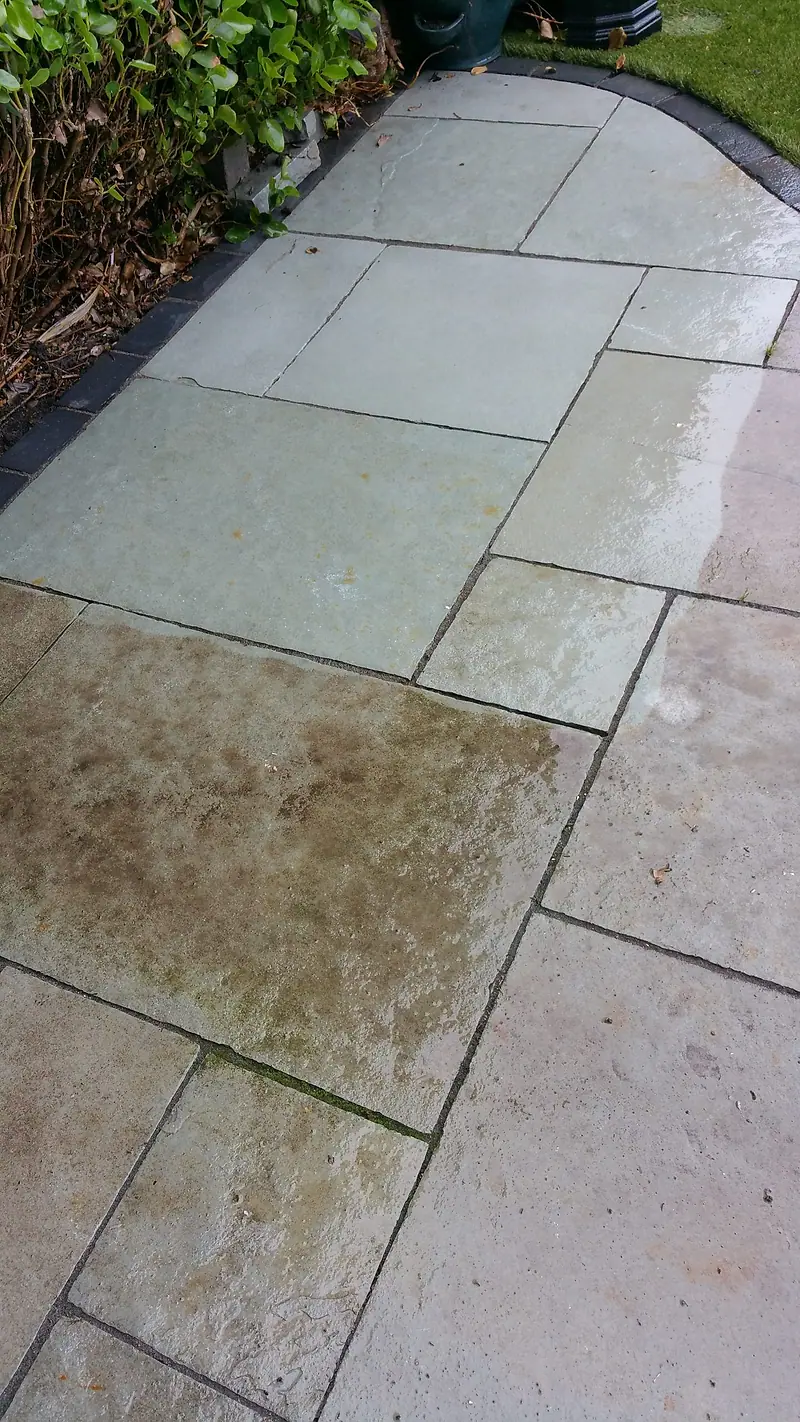
- Back gardens: sandstone, limestone and granite slabs, porcelain and concrete (patio cleaning)
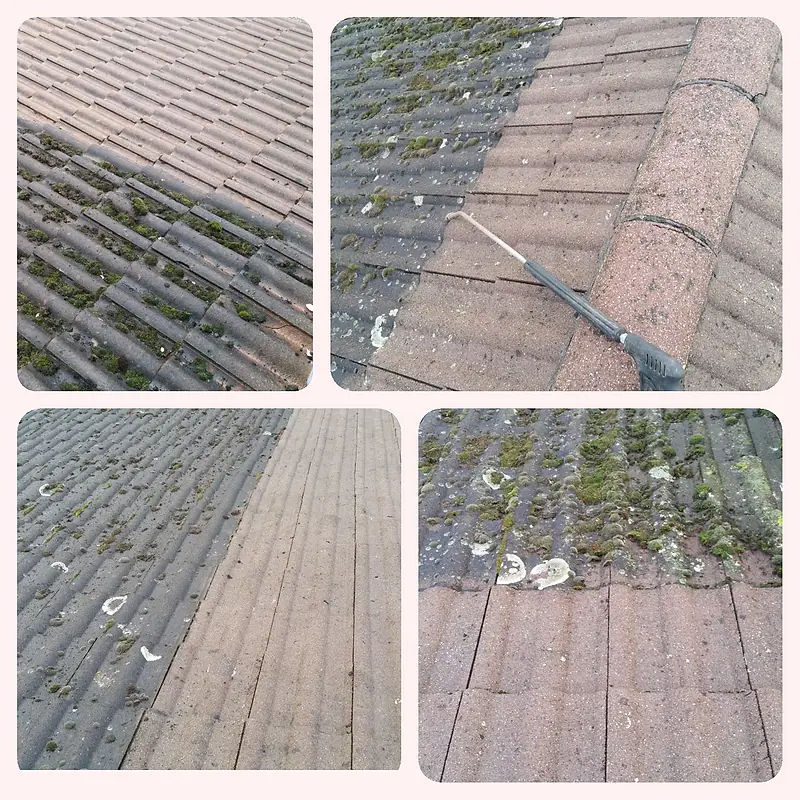
- The roofline: roof moss removal, gutters, fascias and soffits
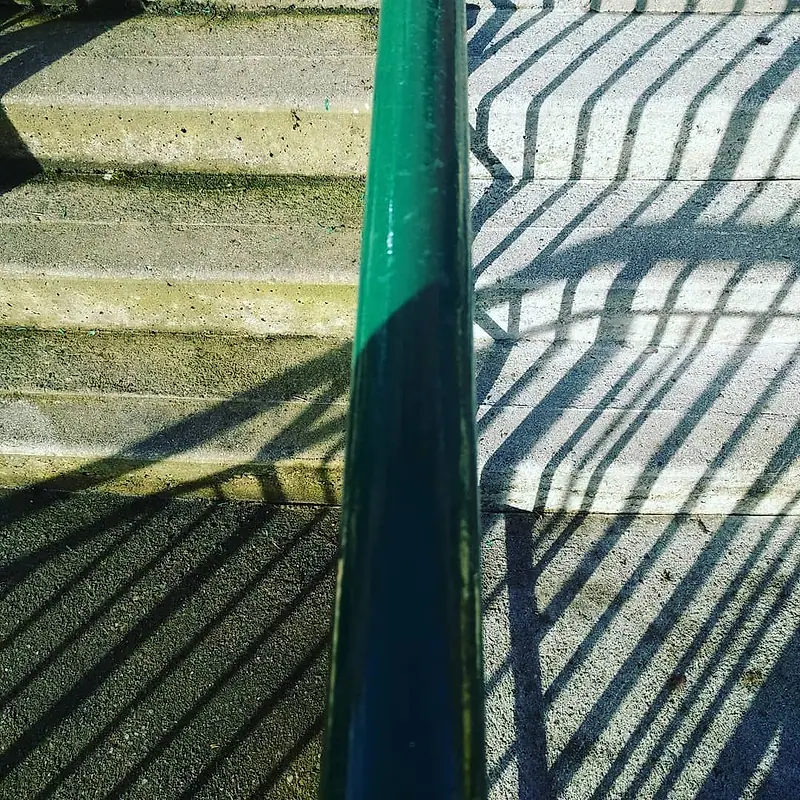
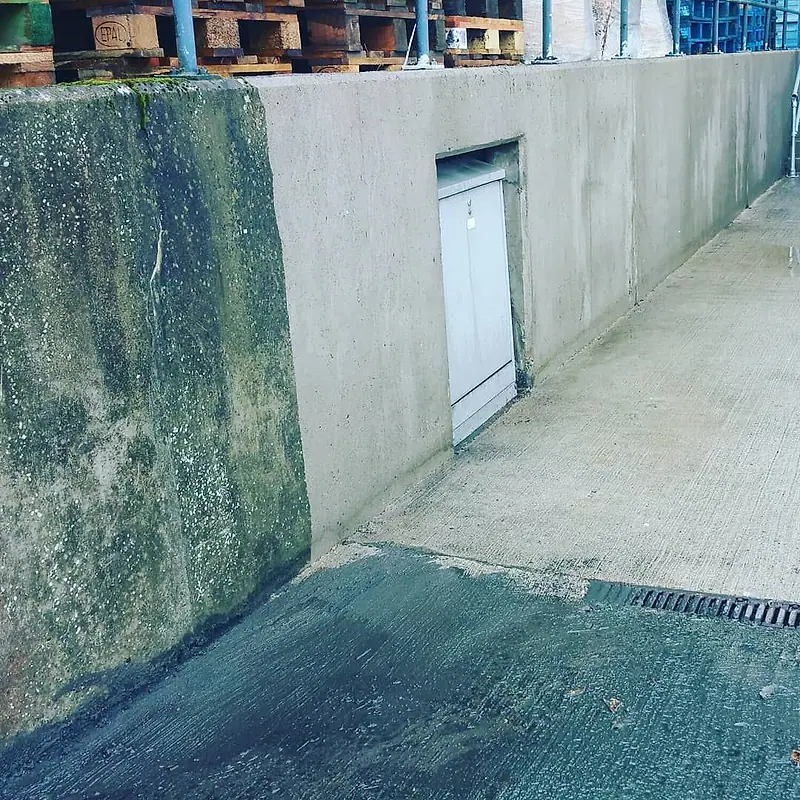
- Walls and steps: render, pebble-dash, brick and granite steps
- Commercial: shopfronts, forecourts, car parks and communal areas
Cobble-lock country
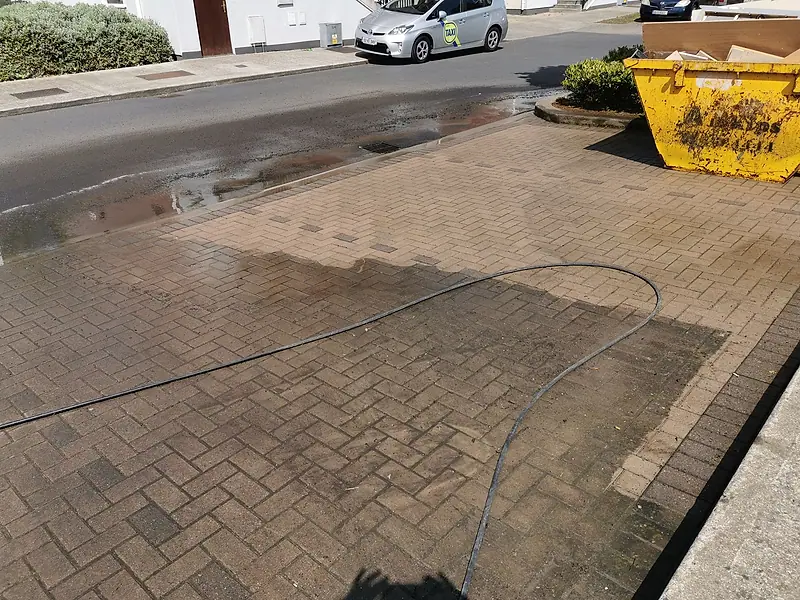
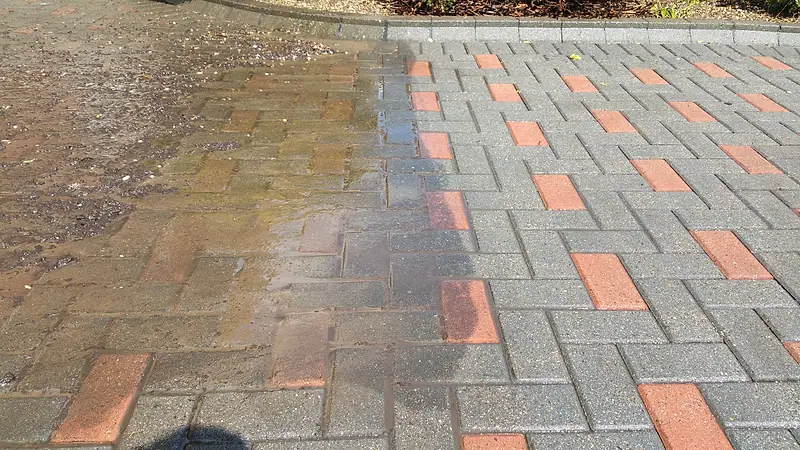
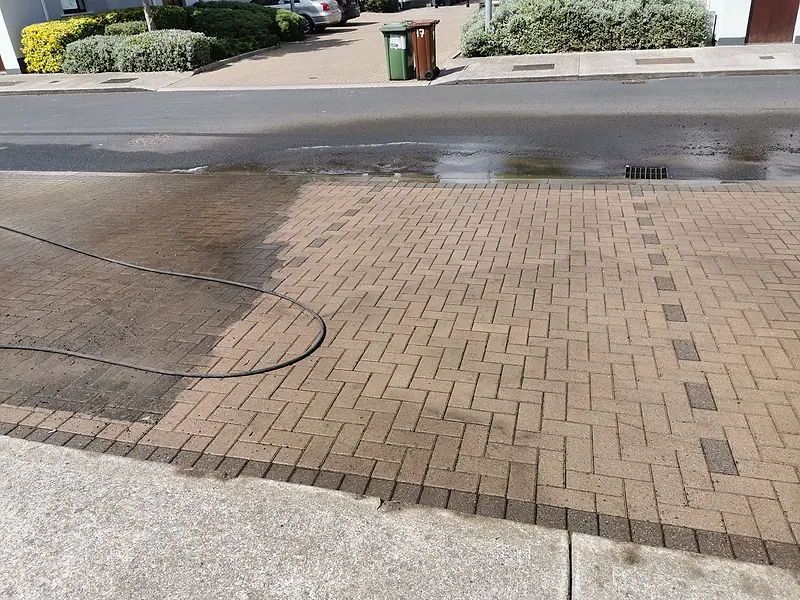
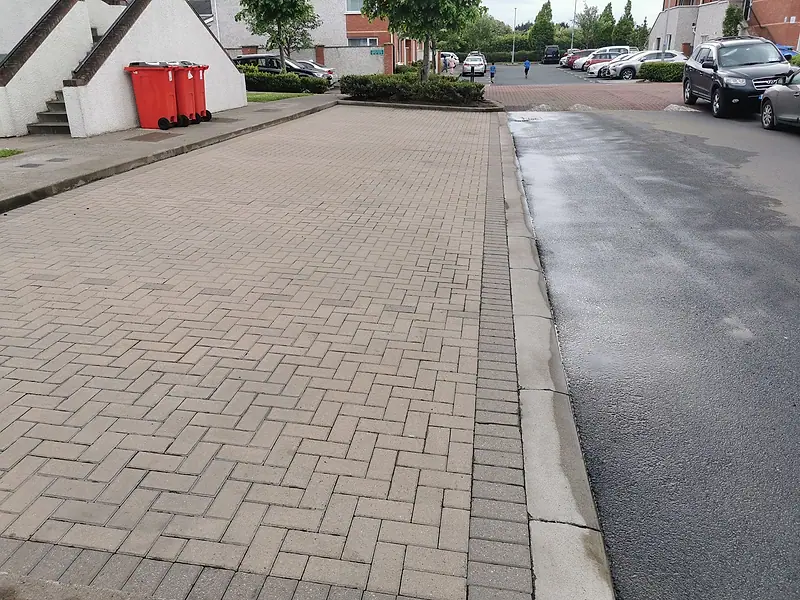
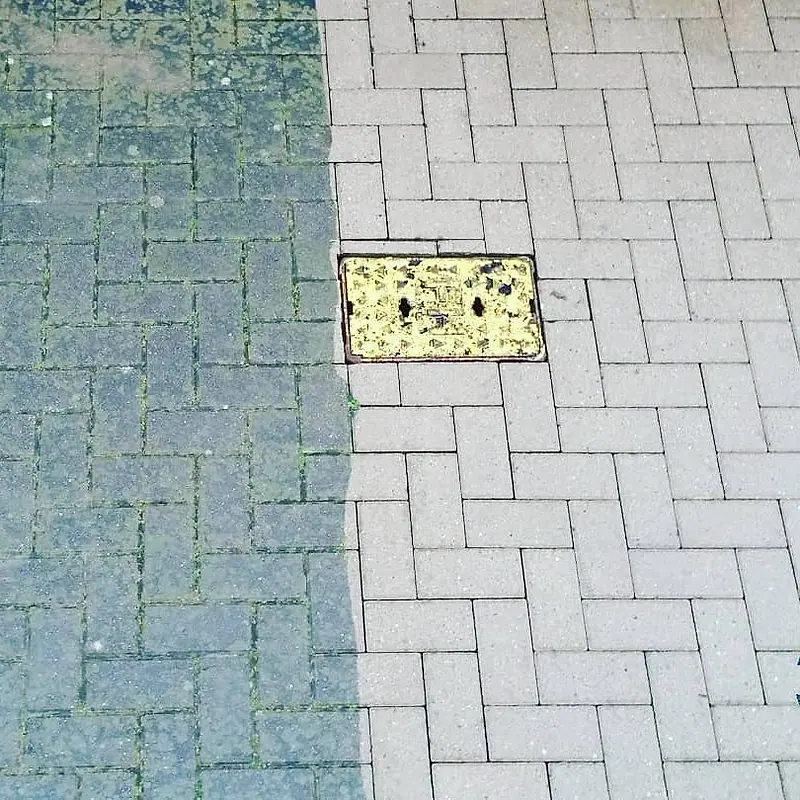
Drive through almost any Dublin estate built or done up in the last few decades and you'll see cobble-lock. It's hard-wearing and it cleans up well, but it has a weak spot: the joints. Sand washes out over time, moss and weeds move in, and the whole drive turns a dull green-grey.
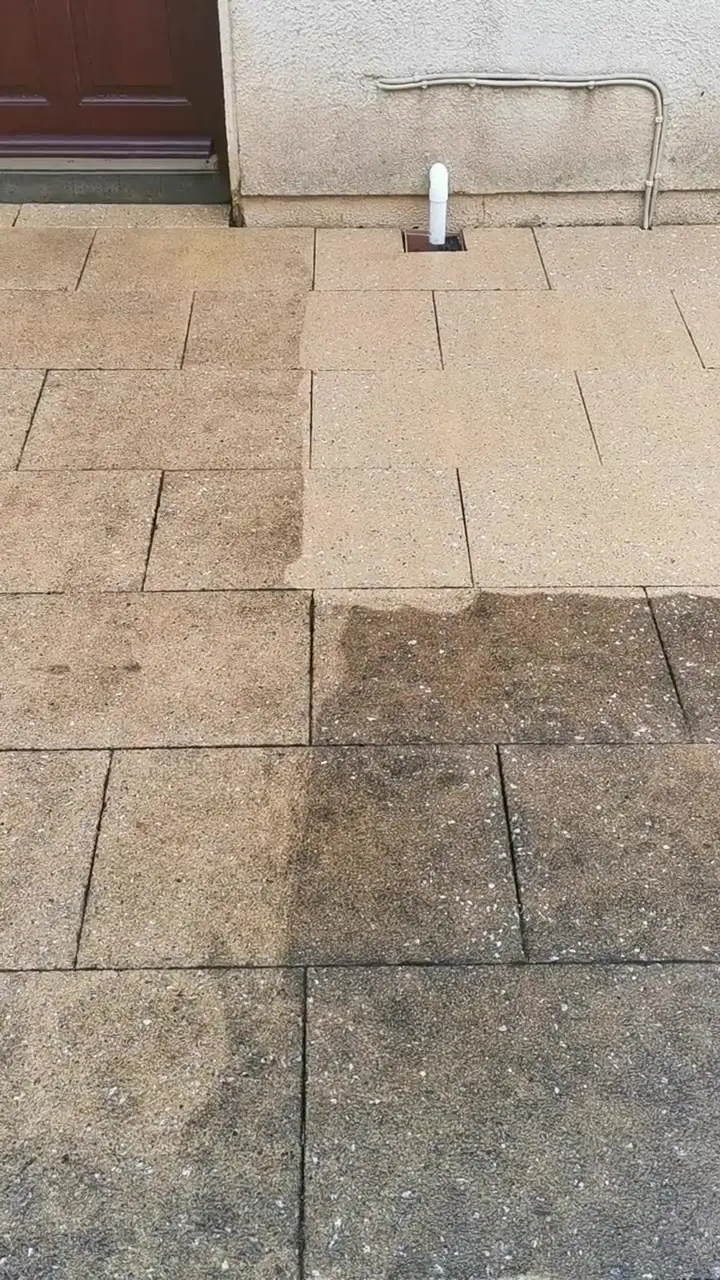
Hot water lifts the moss, algae and grime from the face of the blocks and clears the growth out of the joints. Afterwards, some joints will be lower than before, because the sand that was holding moss comes out with it. We'll look at the joints once the drive is clean and advise you on whether it needs re-sanding to keep the blocks firm and slow down the weeds.
Older estates often still have plain concrete drives and paths. Concrete is tough and responds well to hot water, so the green and the tyre marks usually lift easily. Oil that has soaked in over years is harder: it often lightens a lot rather than disappearing completely, and we'll tell you from the photos what to expect.
 spotless.ie
Different postcodes, different jobs
Dublin's housing changes every few streets, and so does the power washing:
| Area type | What we usually find |
|---|---|
| Older terraces and red-bricks (Clontarf, Fairview, Marino, East Wall) | Small front gardens, tiled or granite paths, steps up to the door, on-street parking. Careful work in tight spaces. |
| Estates (Tallaght, Firhouse, Kilnamanagh, Lucan, Swords) | Cobble-lock or concrete drives, side passages, patios out the back. Straightforward access and plenty to clean. |
| Apartments (Sandyford, Leopardstown, Citywest, the Docklands) | Car parks, podium paths, bin stores and courtyards, arranged through the management company. |
| Larger houses (Foxrock, Castleknock, Howth) | Long drives, big patios, steps and garden walls. A bigger job, so we give you a realistic time with the quote. |
| City centre (Dublin 1, Dublin 2) | Shopfronts, basement areas, gum on footpaths, graffiti on shutters. |
If you're in Dublin 4, our Sandymount page has more local detail, and the same goes for Sandyford in Dublin 18.
Parking, permits and tight spaces
In the inner suburbs, parking is often the hardest part of the job. On permit-parking streets the van still needs to be close to the house, so let us know what's outside before we come: a driveway we can use, a visitor permit, a pay-and-display bay or a loading spot.
Terraced houses with no side entrance are another Dublin classic. If the back garden can only be reached through the hall, we plan how to bring the equipment through and protect the floors on the way. Washing in a small, walled garden also throws spray, so we rinse down walls, windows and back doors before we leave.
Before we arrive
A few small things make the day go smoothly:
- move cars off the drive, and bins and light pots out of the way if you can
- close the windows and doors nearest the area we're washing
- tell us if there's an outside tap and whether the side gate will be open
- give the neighbours a heads-up if their car is parked close to your drive, since spray can travel on a windy day
Apartment complexes and commercial premises
For management companies, we clean car parks, paths, steps, entrances and bin stores. We agree the timing and the notice to residents in advance, and work in sections where cars need to be moved.
For businesses, hot water is the right tool for grease around takeaways and restaurant yards, gum on the footpath outside shops, and the general grime that builds up on a busy street. Granite steps on older buildings need a gentler touch, which we cover under stone cleaning.
Need a Dublin price? Send photos of the area on WhatsApp with your postcode, plus a note about parking. We'll come back with a fixed price, usually the same day.
Why Dublin driveways go green
The pattern is the same all over the city. Front gardens that face north get almost no direct sun between October and March, so the paving never fully dries. A thin film of algae comes first, which is what makes it slippery, then moss settles into the joints and along the edges. Trees make it worse, dropping leaves and keeping the drive damp underneath.
A clean resets all of that, but it doesn't change the orientation of the house. To keep a north-facing drive cleaner for longer:
- sweep it regularly, especially in autumn, so leaves don't rot on the surface
- keep the joints filled, because moss loves a gap
- trim back anything that overhangs
- rinse off oil drips as soon as you see them
Getting a price in Dublin
Send us a wide photo and a close-up of each area, your postcode and a word about parking. We price on size, surface, condition and access, and you'll get a fixed price before anything is booked. Our guide to how power washing is priced explains what affects the cost, and the power washing overview covers every surface we clean.