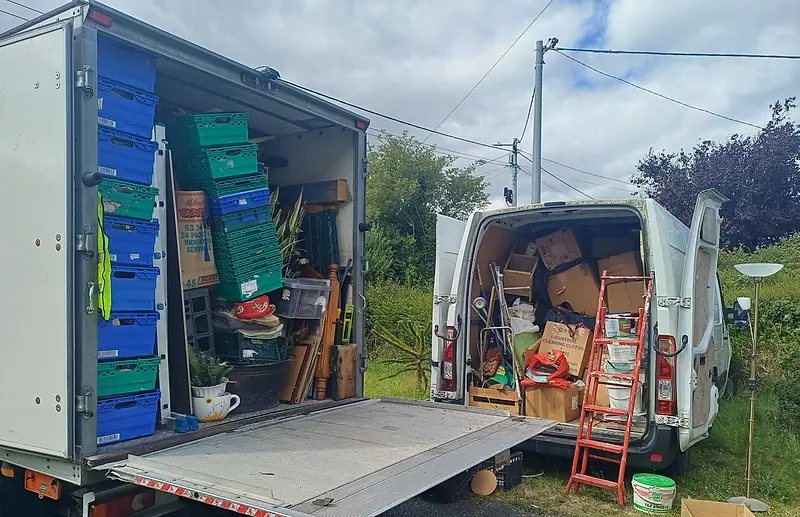
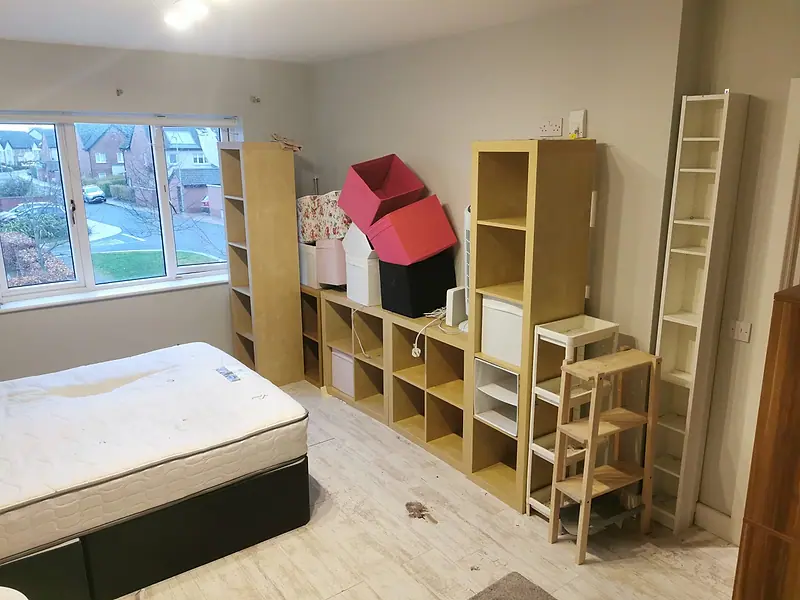

A town that grew in stages
Swords is the county town of Fingal, and its castle is medieval, but most of its homes are far younger. The town grew in waves from the 1970s onward, and each wave left a different kind of house behind. For a clearance that matters: a top-floor duplex in a 2000s scheme and a 1970s semi-d in Rivervalley can hold the same amount of furniture and still be two very different days' work.
Here's roughly how Swords breaks down:
| Area | Typical homes | What it means for the clearance |
|---|---|---|
| The old town, around Main Street and North Street | Older terraced houses, cottages and some bungalows | Small frontages and on-street parking, so we plan the loading to keep the van outside for as short a time as possible |
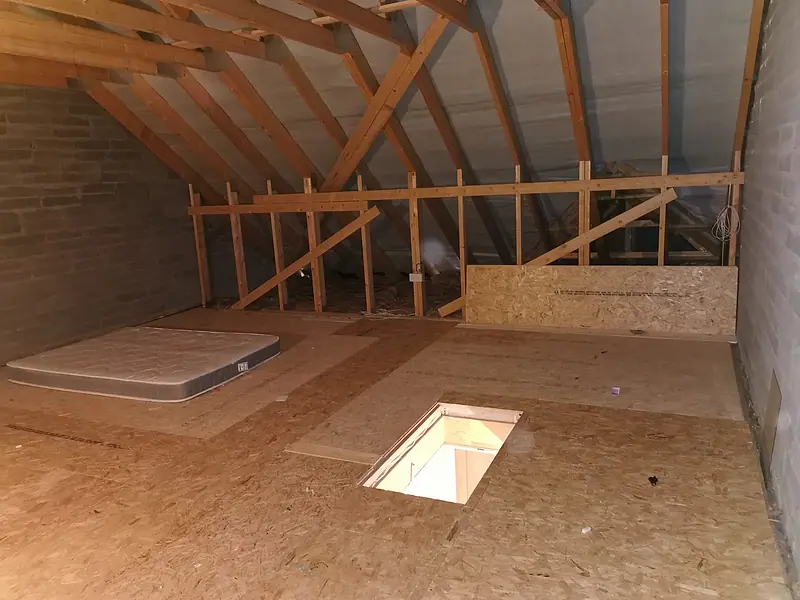
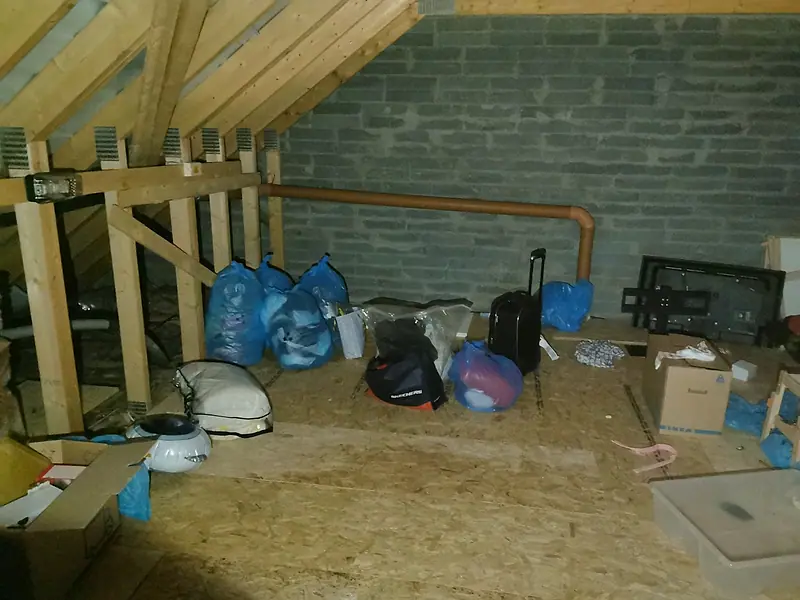
| 1970s and 1980s estates, such as Rivervalley and Brackenstown | Three- and four-bed semi-ds with attics, garages and sheds | Loading from the driveway is easy; most of the volume is up in the attic and out in the garage |
| Estates from the late 1990s on, such as Boroimhe, Holywell and Applewood | Houses, duplexes and apartment blocks | Internal stairs, allocated parking and management company rules |
Duplexes: two front doors, one long staircase
Duplexes are a big part of the newer Swords estates. If you're in the upper unit, everything you own comes down an internal staircase and out a ground-floor front door, and that changes how we plan the job.
For duplex and apartment clearances we:
- Cover the stairs first. Duplex stairs are narrow and usually carpeted, so covers go down before anything heavy moves.
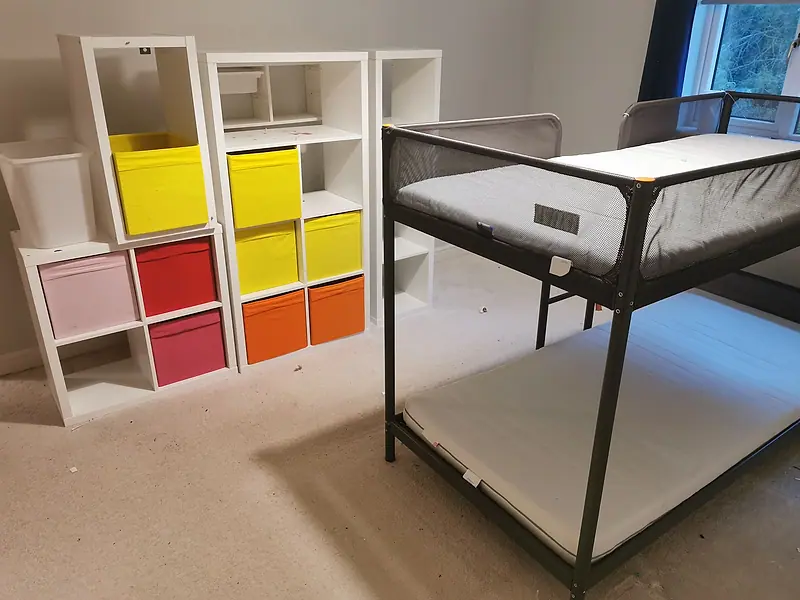
- Take big pieces apart. Wardrobes, bunk beds and corner sofas that were assembled in the room usually need dismantling to get out.
- Work to the management company's rules. Some schemes ask for notice, limit where vans can stop, or don't allow anything to be left in the bin store. Tell us what yours expects.
- Keep shared areas clear. Nothing gets stacked in common hallways or on a neighbour's doorstep while we load.
Our apartment clearance page goes into more detail on lifts, stairwells and managed blocks.
Why people in Swords book a clearance
Clear-outs around Swords usually come from one of a handful of situations:
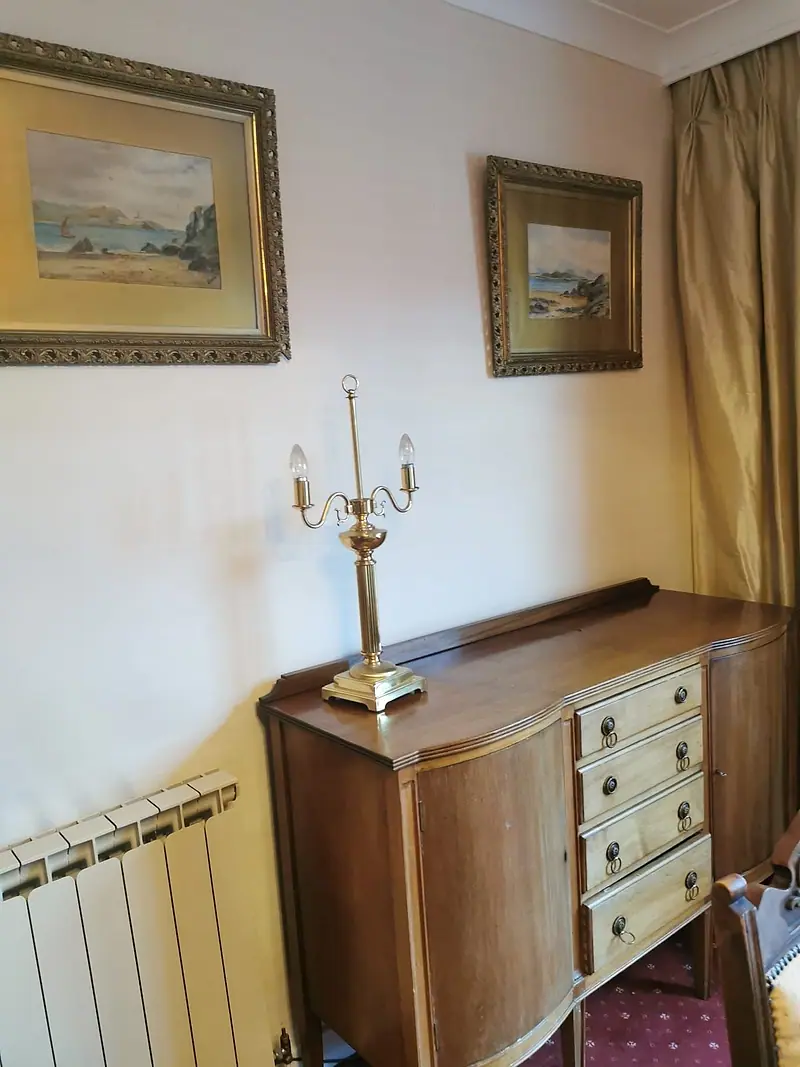
- A parent's house in one of the older estates. Some of the 1970s and 80s houses have had the same family in them since they were built, so there can be decades of contents to go through. We work at the family's pace and hand over anything personal we find. There's more on how we handle bereavement house clearances.
- A rental between tenants. Landlords need beds, sofas and whatever the last tenant left behind gone before the next viewing.
- A move or a sale. The attic and the garage are what people leave until last. We clear both: see attic clearance and garage clear-outs.
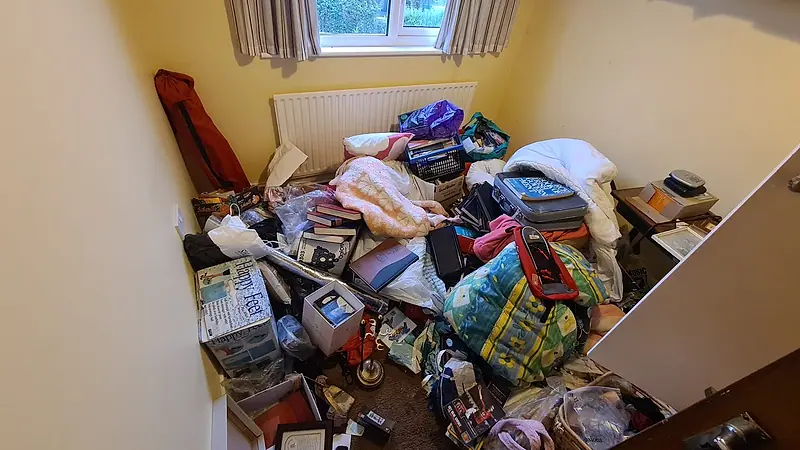
- A home that's become hard to manage. If a relative's house has filled up over the years, we can clear it quietly, in stages if that's easier for them. Our hoarder clearance page covers that side of the work.
 spotless.ie
Out the back: sheds and gardens
Back gardens collect things too: a shed full of tools and flowerpots, a broken trampoline, garden furniture that has seen better summers. We empty sheds and, if you want it gone, take the shed itself down and away. See shed clearance. Cuttings, broken pots and old play equipment can go as well, through our garden clearance service.
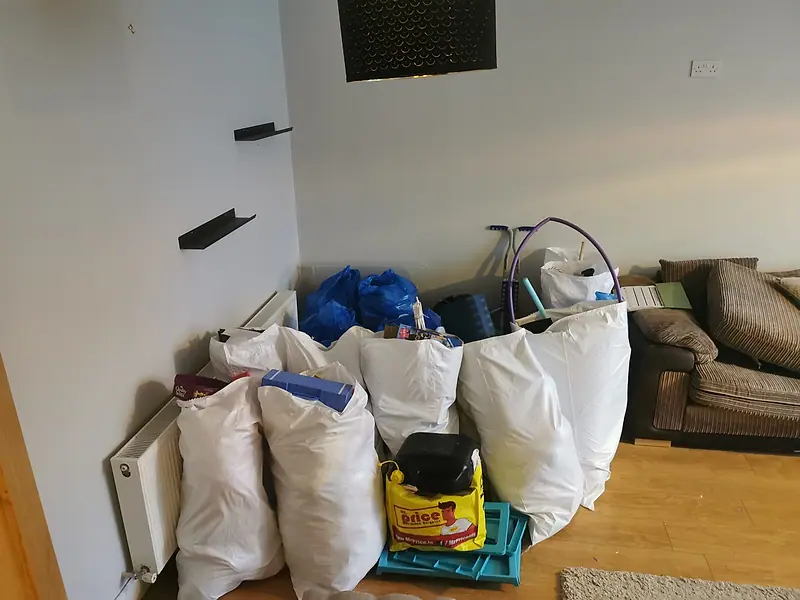
Moving out of a house in Swords? Photograph each room, the attic and the garage or shed, add your Eircode, and send it on WhatsApp. We'll reply with a fixed price.
How we price a Swords clearance
You get one fixed price before anything is booked, worked out from your photos. What moves it up or down:
- Volume: how many van loads the house, attic, garage and shed add up to
- Access: stairs, an upper duplex, a long walk from the parking to the door
- Special items: fridges, freezers, mattresses and electricals, which are disposed of separately
- Time: a full house usually takes one to two days with a crew of two or three
For a very large or unusual job we may ring or call out first. Everything we take is sorted: reusable items are set aside where possible, metals and electricals go for recycling, and the rest goes to licensed facilities under our waste collection permit, NWCPO-25-13287-01. For the wider picture, see house clearance in Dublin, or read our cost guide.