
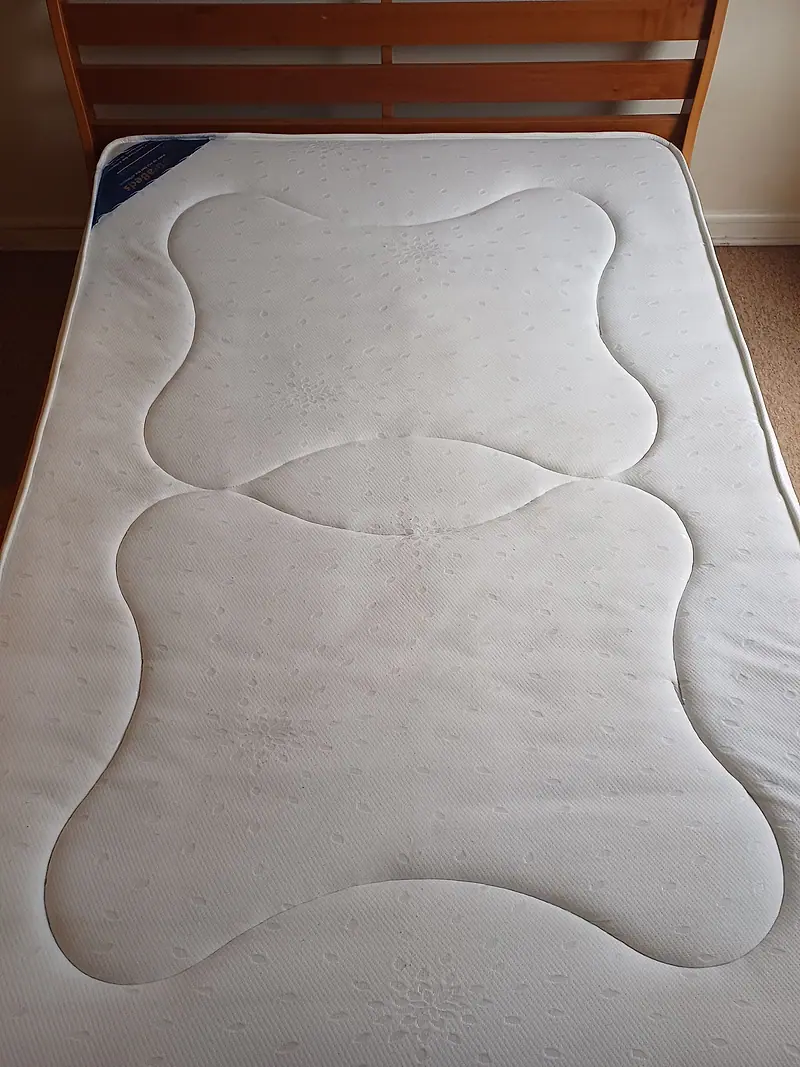
A protector does most of the work
If you do one thing for your mattress, use a good washable protector. It sits between you and the mattress, catching sweat, skin flakes, spills and accidents before they reach the filling, and it can go in the wash while the mattress can't.
There are a few kinds, and each suits a different situation:
- Quilted protectors add a soft layer and soak up everyday sweat. They suit most adult beds.
- Waterproof protectors have a thin membrane that stops liquids getting through. They're the sensible choice for children's beds, beds shared with pets and anyone who's unwell or elderly. Look for one described as breathable, because a plastic-feeling protector can make the bed hot and noisy.
- Zipped encasements cover the whole mattress, top, bottom and sides. They're useful on a guest bed or in a rental.
Wash the protector every few weeks, and immediately after any spill. A second one in the press means the bed is never left bare while the first is drying.
Turning, rotating and flipping
Mattresses wear where you lie, and turning them spreads that wear so dips don't form in one place. What you should do depends on the type:
| Mattress type | Rotate head to foot | Flip over | Notes |
|---|---|---|---|
| Two-sided sprung | Every few months | Every few months | Alternate rotating and flipping |
| One-sided ("no-turn") sprung | Every few months | No | Built with a top and bottom |
| Memory foam or hybrid | Every few months | Usually no | Layers are in a set order |
| Children's mattresses | Every few months | If two-sided | Worth doing more often with a waterproof protector on |
The manufacturer's label always comes first. In the first few months of a new mattress, rotating it more often helps the fillings settle evenly.
Airing the bed
Every night, a body gives off moisture as heat and sweat, and some of that soaks into the mattress. Letting it out again is easy:
- Pull the duvet back when you get up and leave the bed unmade for half an hour or so.
- Open the window for a while in the morning, even in winter.
- Strip the bed completely now and then, and leave the mattress uncovered for a few hours with a window open.
- Let air underneath. A slatted base or a frame with space below lets the underside breathe. A mattress kept directly on the floor for months can get damp underneath, especially in a cool room.
Irish homes can be damp, and bedrooms with condensation on the windows on cold mornings are common. Good ventilation helps the mattress as much as the room.
Spills and accidents
The same rules apply whatever's been spilled: act fast, keep water to a minimum, and don't use heat.
- Strip the bed straight away, including the protector.
- Blot firmly with a towel or kitchen paper, pressing hard to soak up as much as possible. Don't rub.
- Dab with a little cold water, then blot again. Never pour water on.
- Get air to it. Stand the mattress on its side if you can, open a window and let it dry fully before making the bed.
Some specifics:
- Urine. Blot thoroughly and quickly. The faster it's dealt with, the less reaches the filling.
- Blood. Cold water only. Warm water and heat set blood.
- Tea, coffee and drinks. Blot and dab with cold water as above.
- Sick. Lift what you can with a piece of card first, then blot.
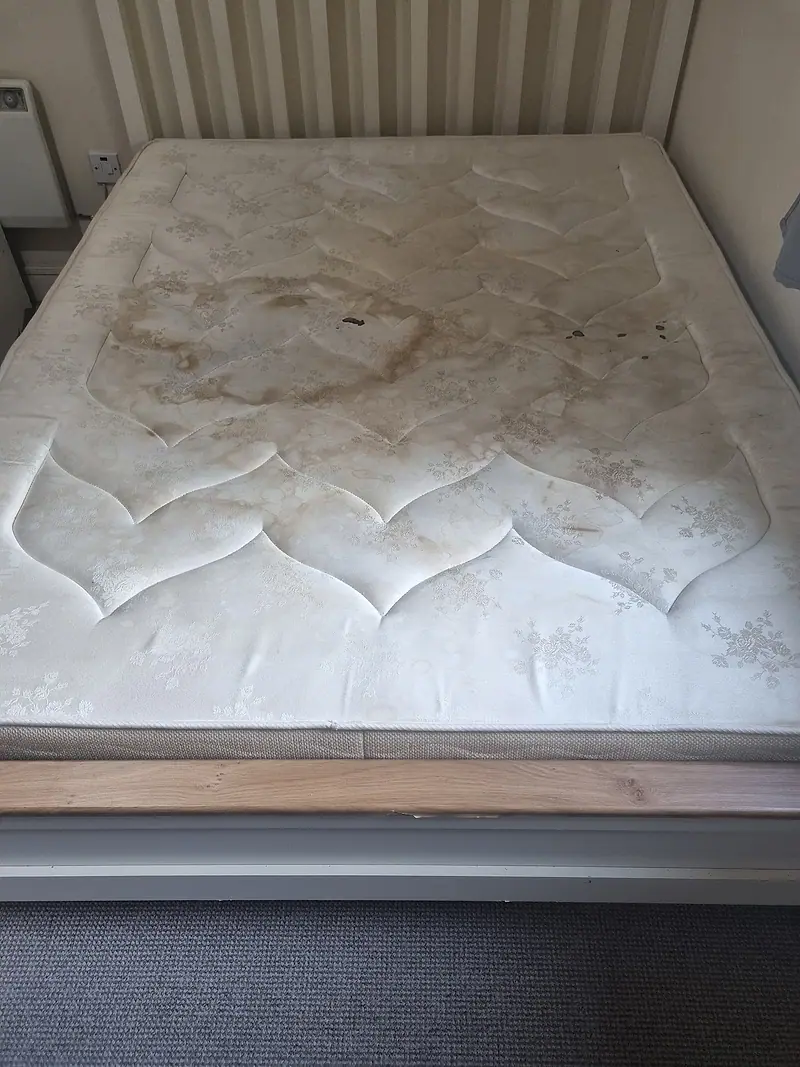
- Sweat marks and yellowing. These build up slowly and don't respond much to home treatment. A protector prevents most of it.
Avoid bleach, strong household sprays and anything that leaves a residue. They can spread a stain, damage the fabric and leave a smell of their own.
 spotless.ie
Guest beds, children's beds and rentals
Some beds need a little more thought:
- Guest beds can go months without use. Air the room before visitors come, and vacuum the mattress when you make up the bed.
- Children's beds see accidents, drinks and the occasional bout of sickness. A waterproof protector is the best investment, and a professional clean after the bed-wetting years usually freshens the mattress a lot.
- Furnished rentals need a mattress that looks and smells clean for each new tenant. A zipped encasement helps, and so does a clean between lets.
Moving and storing a mattress
Mattresses pick up a lot of damage on moving day and in storage, mostly from damp and dirt rather than wear:
- Bag it for the van. A mattress bag keeps off dust, dirt from the van floor and rain between the door and the truck.
- Keep it flat or on its side. Don't fold or bend a mattress unless it's designed for it, as that can damage springs and foam.
- Store it somewhere dry. A breathable cover is better than sealed plastic for anything longer than a few weeks, because plastic can trap moisture against the fabric.
- Air it before use. A mattress that's been in storage benefits from a few hours uncovered in a warm, ventilated room before anyone sleeps on it.
If a mattress comes out of a damp shed, garage or storage unit smelling musty or with spots of mould, a clean may not be enough. That's worth a photo and an honest opinion before you decide.
When a professional clean makes sense
Home care keeps a mattress fresh, but some things need more. A professional clean is worth it when:
- there's a stain that's dried in and won't shift
- the mattress has a smell that airing doesn't fix
- you've had a bout of illness in the house, or a child's accident has soaked in
- you're moving into a home with a mattress already there
- it's simply been years, and the surface has yellowed or darkened
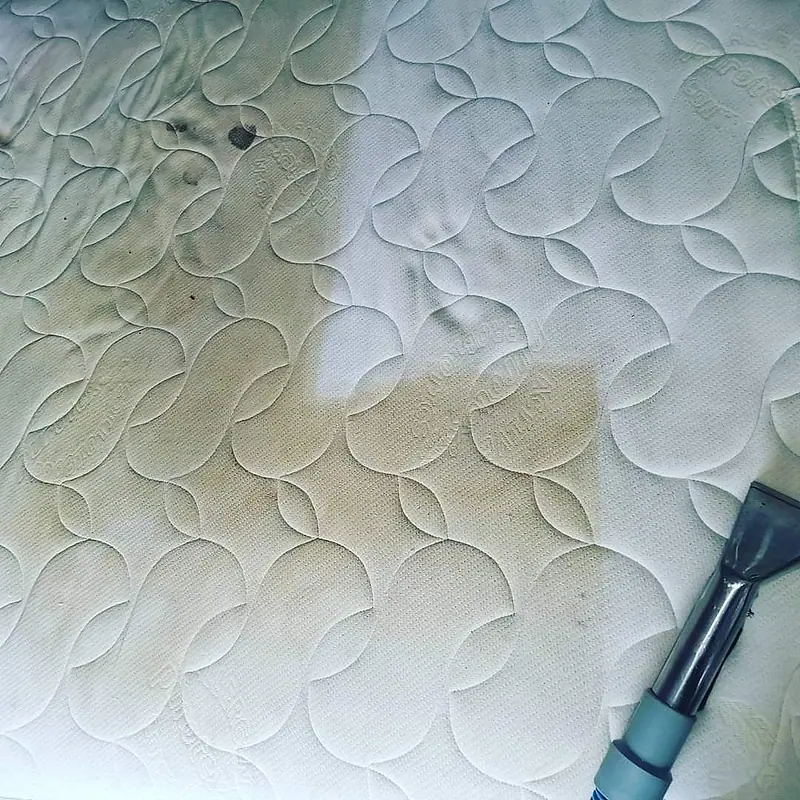
A clean can't fix sagging, broken springs, a mattress soaked right through, or mould inside it. If it's at that point, replacing it is the better option, and our furniture removal service can take the old one away.
Our page on mattress cleaning in Dublin explains how we clean a mattress, what usually comes out and how long it takes to dry. Outside Dublin, see mattress cleaning across Leinster. If dust is a worry in your home, our guide to carpets, dust and allergies covers what cleaning can and can't do. We can do the carpets and the sofa on the same visit.
